Where can you scatter or bury your pet's ashes? Who to ask, place by place
In the US there's no single national rule for scattering pet ashes: on land you own it's usually your decision, and almost everywhere else the answer comes from whoever owns or manages the place. The useful move is knowing who to ask and what to ask them.
By the Bio Urns & Eco Memorials editorial team · Updated September 24, 2026 · 6 min read · Sources
- Who holds the answer for each kind of place
- Questions to ask before you scatter or plant
- Carrying ashes on a flight or across a border
The short answer
Do you need permission to scatter pet ashes?
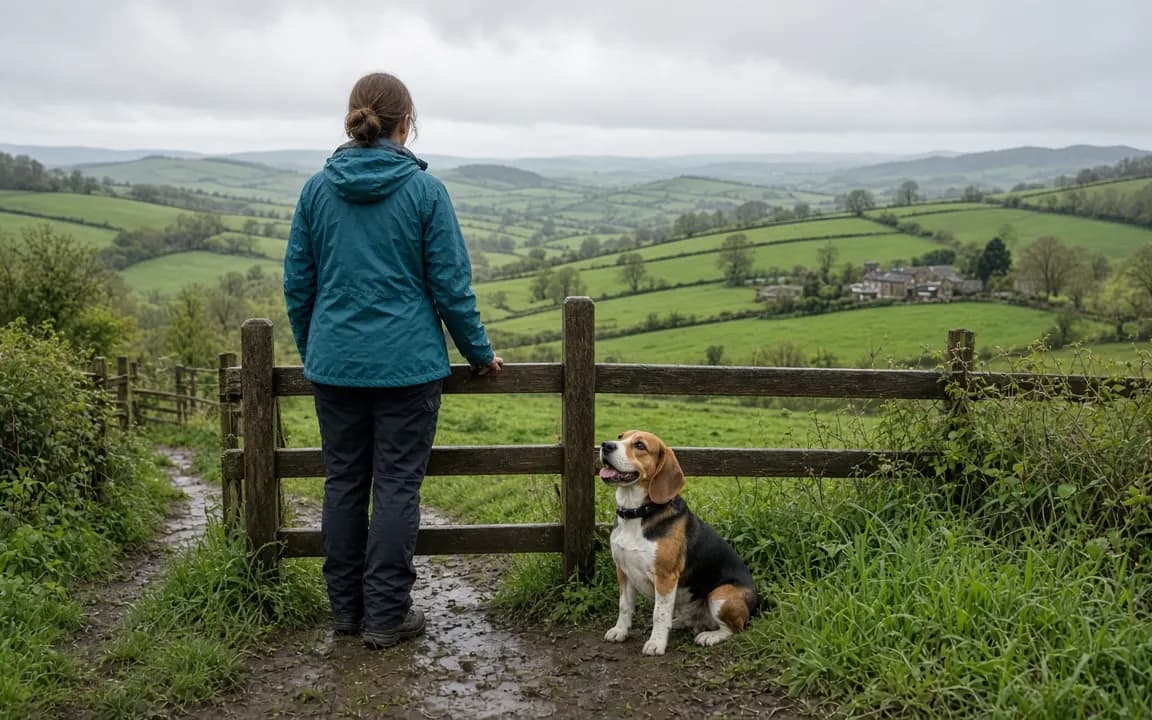
Usually only from the owner of the place. Cremated pet remains are clean, dry mineral, and in the US there isn't one national rule that covers where they can go. On your own land the choice is generally yours; on anyone else's land, public or private, you ask the owner or the agency that manages it. Water releases work the same way, with a few extra wrinkles covered in our guide to scattering ashes in water.
A lot of what you'll read online is about human ashes, which often have their own permits and paperwork. Those rules aren't written for pets, but many landowners and park offices apply similar thinking, so it's worth asking rather than assuming either way.
Land you own
Can you scatter or plant ashes in your own yard?
In most places, yes. The questions to check are narrower than people fear. Does your deed or a homeowners' association have covenants about structures, trees or memorial markers in the front yard? Are there buried utility lines where you want to dig? Is the spot close to a well or stream, where a large amount of ash might be better spread thinly?
Then think about the future. Ashes worked into soil can't be recovered, and a memorial tree stays with the house. A future owner may never know it's there, and you won't be able to visit once you've moved. Some families plant only part of the ashes for that reason and keep a keepsake portion that travels with them.
Ash chemistry matters for the lawn, not the law. Ashes measure a pH of about 11.7[1], so a heap on grass leaves a pale patch for months. Rake them thinly or dilute them first, as described in planting memorials with ash.
Shared or rented land
What if you rent, or the land belongs to family?
If you rent, the landlord owns the ground, so ask before you scatter or plant anything permanent. Most landlords won't mind a light scattering in a flower bed; fewer will want a tree. A large planter is the easy workaround, because it's your property and leaves with you.
If you rent or might move, how would you handle a memorial planting?
Tap an answer to vote and see how others answered. Anonymous.
Family land is gentler but not simpler. Ask whoever holds the title, not just whoever lives there, and talk about what happens if the farm or cottage is sold. It helps to agree on the exact spot and write it down. Siblings sometimes remember a promise differently ten years on.
Public land
Can you scatter pet ashes in a public park or a national park?
Public parks belong to a city, county, state or federal agency, and each sets its own policy. Some have a clear process for scattering ashes; others have never been asked about a pet. Call or email the park office and ask plainly whether scattering a pet's ashes is allowed, whether you need a permit, and whether there are areas to avoid such as trails, picnic grounds and water sources. For US national parks, the federal memorialization rule only allows scattering human ashes under a permit or in designated spots, and Yosemite's scattering page shows how one park handles it. Neither mentions pets, which is exactly why asking matters.
Burying is a different request from scattering. Digging is restricted in many parks, and a buried urn or planted tree on public land is a much bigger ask than a handful of ash scattered off-trail. Other countries can be strict too: in Japan, for example, burying animals in public places such as parks or forests is illegal[2]. At sea, the US EPA's burial-at-sea permit is written for human remains, and the agency says pet ashes aren't covered by it.
Everywhere else
What about cemeteries, private land, beaches and trails?
| Place | Who to ask | Questions worth asking |
|---|---|---|
| Your own yard | Check your deed and any HOA | Covenants on markers or trees? Utility lines? |
| Rented home | Landlord or property manager | Scatter only, or may I plant? In writing? |
| Family land | Whoever holds the title | What happens if the land is sold? |
| City or county park | Parks department | Allowed? Permit? Areas to avoid? |
| State or national park | The park or ranger office | Does the ashes policy cover pets? |
| Pet cemetery | Cemetery office | Scattering garden or plot? Fees? Marker rules? |
| Human cemetery | Cemetery office | Are pet ashes accepted in a family plot? |
| Farm, trail or woodland | The landowner | Where exactly, and may I return? |
| Beach | Town, county or state beach authority | Allowed from shore? Seasonal limits? |
Pet cemeteries are the easiest yes, because accepting ashes is their business. As a reference point, one UK pet cemetery charges £60 for an unattended ashes burial and £145 attended[3]. Some human cemeteries now allow pet ashes in a family plot, but many don't, so ask the office before promising anyone. By our estimate, that unattended ashes burial costs about one-eleventh of a whole-body green burial at the same cemetery[4].
Private land such as a friend's farm or a favorite hiking trail needs the owner's permission, even if the public walks through it every day. A trail running through a land trust or conservation area is usually managed by an organization with an email address; they tend to be sympathetic and clear.
Digging in
Are there different rules for burying ashes than for scattering?
Often, yes, because digging disturbs ground and leaves something behind. Most published burial rules for animals deal with whole bodies rather than ashes, but they show what authorities worry about: water. Pennsylvania's on-farm burial guidance sets a 100 ft setback[5] from wells, sinkholes and waters, and in England a buried horse must be at least 50 m[6] from any well, borehole or spring, with most other animal burials kept further still from drinking water. England's groundwater guidance for animal burials sets similar distances from wells and springs.
Ashes carry none of the disease or drug risks of a body, so those distances don't strictly apply. They're still a useful guide to where a landowner will be comfortable. Keep a buried urn away from wells, springs and streams, and you'll rarely get a no. For planting a tree or a garden with ashes, the memorial garden guide helps you pick a spot.
Moving ashes
Can you take pet ashes on a plane or across a border?
Often yes, but check each step rather than relying on a rule you've heard. Ask the airline whether cremated remains may go in carry-on or checked baggage, and whether the container needs to be something airport scanners can see through. Metal and stone urns can cause delays, so many people travel with a plain plastic or wooden temporary container and transfer the ashes later.
- Does the airline require the ashes in carry-on only?
- Will security need to scan the container, and can they see through it?
- Does the destination country ask you to declare cremated remains at customs?
- Should you carry the cremation certificate or a letter from the provider?
- Are there limits on scattering at the destination that change your plan?
Small containers make travel easier. A scattering tube can cost as little as $18[7], and one retailer lists keepsake or mini urns at $15–$60[8], both of which fit easily in a bag. If you're planning a trip around a scattering, the farewell planner helps you list what to bring and who to contact.
Asking well
How do you ask for permission without it feeling awkward?
Keep the request short and specific. Say what you'd like to do, where, roughly how much ash is involved and when. People say yes far more readily to "a small amount of my dog's ashes, scattered by hand near the old oak on a weekday morning" than to a vague question about ashes on their land.
- Name the exact spot and whether you'll scatter, bury or plant.
- Give an idea of quantity; a cat returns only a few ounces.
- Offer a time with few other visitors around.
- Say you'll leave nothing behind, or describe the marker if there is one.
- Ask whether you may come back on anniversaries.
Scattering is already one of the most common choices for ashes: in US consumer research, 33.5%[9] said they'd scatter cremated remains, just behind keeping them at home. If you'd like a hand choosing a place, a scattering urn or a provider, send us your plans, or see how soil and water urns compare first. You can also browse the local pages for your area. Our bio urn options cover what to bring for each kind of place, and the poll results show where other readers hope to scatter.

Reader polls
What would you choose?
Vote anonymously and see how other readers answered. The results are live counts from people who visit this site, so they show real opinions, not a scientific sample.
If you rent or might move, how would you handle a memorial planting?
Tap an answer to vote and see how others answered. Anonymous.
Where are (or will be) your pet's ashes?
Tap an answer to vote and see how others answered. Anonymous.
Who made (or will make) the aftercare decision in your household?
Tap an answer to vote and see how others answered. Anonymous.


Questions people ask
Can I scatter my pet's ashes at a place I used to walk them every day?
Probably, once you know who owns it. A neighborhood park means the city parks department; a woodland path may belong to a land trust or a private owner. A short request describing a small, discreet scattering is usually well received, and it saves worry if someone asks what you're doing.
Do I need to tell anyone if I bury ashes in my own garden?
Generally no one needs to be notified for ashes on your own land, though your HOA or deed may cover markers and trees. It's kind to tell anyone who shares the garden, and worth noting the spot somewhere in case you sell and want to take a cutting of the plant with you.
Can pet ashes be buried with me or a family member later?
That depends entirely on the cemetery. Some accept pet ashes placed in a human grave or niche, and a growing number of cemeteries have sections where people and pets can rest together. Many still refuse. Ask the cemetery office directly, and write the wish into your funeral plans so relatives know.
What if a landowner says no?
Take it gracefully and look for a nearby alternative. A spot just outside the property line, a view of the place from a public road, or a planter at home with a photo of the favorite walk can carry the same meaning. You could also plant part of the ashes and keep a keepsake.
Do I need a certificate to carry my pet's ashes?
You may never be asked for it, but paperwork can smooth things over at airport security or a border. Most providers issue a cremation certificate or letter with the ashes. Keep a copy with the container, and check the destination country's customs guidance before an international trip.
Is it disrespectful to scatter ashes somewhere public?
Not when it's done with permission and care. Choose a quiet moment, scatter low and downwind so nothing blows onto people or paths, and leave no plastic, ribbons or wrappers behind. Most people who notice will simply give you space.


Sources and our estimates
- [1] Cremated remains have a very high pH of approximately 11.7, which is toxic to plants without amendment. Larkspur Conservation — Giving Cremated Remains a New Life Through Science, 2024.
- [2] In Japan, communal (goudou) pet cremation is often about half the price of higher-tier individual services, and it is illegal to bury animals in public places such as parks or forests. GaijinPot - When Your Pet Dies in Japan (Feb 2024), 2024.
- [3] Burying a pet's ashes at Chestnut Lodge costs £60 unattended or £145 attended. Chestnut Lodge Pet Cemetery – Burial fees, 2026.
- [4] Burying a pet's ashes (unattended) costs about one-eleventh of a whole-body green burial at the same UK cemetery. Our estimate: £650 / £60. How we calculate.
- [5] Pennsylvania on-farm burial requires at least 2 feet of soil cover, 2 feet of clearance above bedrock and the seasonal high water table, and at least 100 feet from wells, sinkholes, waters and property lines (200 feet recommended). Penn State Extension - Livestock and Poultry Mortality Disposal in Pennsylvania (J. Craig Williams, updated Oct 2025), 2025.
- [6] In England, a buried horse or other large pet must be at least 50 m from any well, borehole or spring; most other animal burials need 250 m from drinking-water sources, 30 m from watercourses and 10 m from field drains. GOV.UK (Environment Agency) - Animal burials: prevent groundwater pollution, 2024.
- [7] Outdoor rock and sandstone pet urns cost $300–$395 at Final Gift; a scattering tube costs $18. Final Gift Pet Memorial Center – Memorial Products, 2026.
- [8] Keepsake or mini pet urns cost about $15–$60, versus $25–$100 for small and $40–$200 for medium urns (Memorials.com). Memorials.com – Pet Urn Cost Guide, 2025.
- [9] In NFDA's 2025 consumer research, 37% said they would keep cremated remains at home in an urn, and 33.5% would scatter them. Cremation.Green summary of NFDA 2025 Cremation & Burial Report, 2025.
Plan a scattering or planting with help
Tell us what you need and where you are. We'll reply by email with clear options and prices so you can decide in your own time.