Living memorials near you: what changes from place to place
A red maple that thrives in Ohio will sulk in Phoenix, and a lake release that's fine in one county needs a permit in the next. Local pages bring the climate, rules and providers for your area together.
- Trees matched to your local climate
- Water-release and scattering rules by area
- Where water cremation is offered for pets
Why location matters
Why a living memorial depends so much on where you live
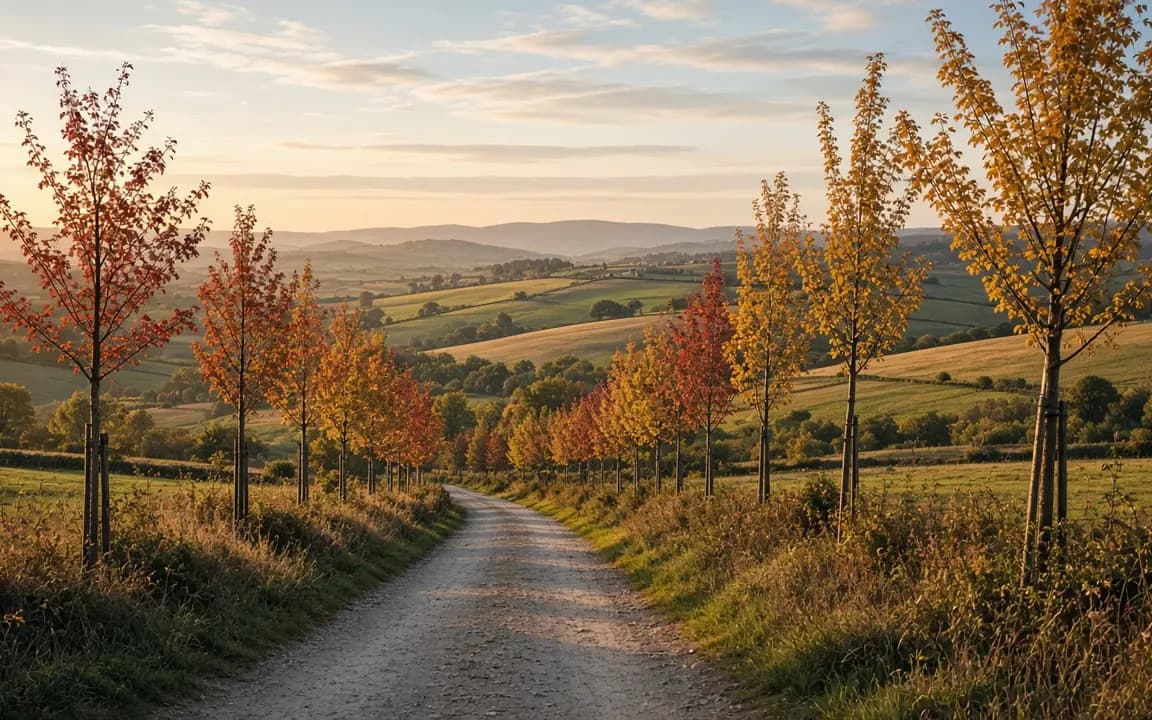
A display urn works the same in Maine and Melbourne. A living memorial doesn't. Three local things decide whether it succeeds: your climate, which limits the trees and shrubs that will survive; your soil, which may already be alkaline before any ash goes in; and local rules on scattering, water releases and planting in public places.
Our local pages pull these together for your area, along with pet cremation and water cremation providers that serve it. Pick your country and region in the directory below, or send us your town and we'll do it for you.

Find your city
Start with the most-searched cities, or choose your country below to browse every region.
- ShanghaiChina
- BeijingChina
- TokyoJapan
- MumbaiMaharashtra
- Sao PauloBrazil
- DelhiIndia
- JakartaIndonesia
- SeoulSouth Korea
- Mexico CityMexico
- LondonEngland
- New York CityNew York
- BangaloreKarnataka
- BangkokThailand
- Hong KongHong Kong Island
- Rio de JaneiroBrazil
- SingaporeCentral
- SydneyNew South Wales
- MelbourneVictoria
- Los AngelesCalifornia
- YokohamaKanagawa
- BerlinGermany
- BusanSouth Korea
- DubaiUnited Arab Emirates
- MadridSpain
Browse by country
- United States2458 cities
- United Kingdom40 cities
- Canada30 cities
- Australia29 cities
- Germany26 cities
- France21 cities
- Japan18 cities
- Italy17 cities
- Spain17 cities
- Switzerland8 cities
- Netherlands7 cities
- South Korea7 cities
- Singapore5 cities
- United Arab Emirates4 cities
- New Zealand4 cities
- Sweden3 cities
- Norway3 cities
- Denmark3 cities
- Belgium3 cities
- Austria3 cities
- Ireland3 cities
- Portugal3 cities
- Brazil3 cities
- Mexico3 cities
- India3 cities
- Hong Kong2 cities
- China2 cities
- Luxembourg1 city
- Qatar1 city
- Kuwait1 city
- Macau1 city
- Finland1 city
- Poland1 city
- Czech Republic1 city
- Hungary1 city
- Thailand1 city
- Malaysia1 city
- Indonesia1 city
Climate and soil
Matching the tree to your climate and your soil
In cold northern regions, hardy natives such as serviceberry, bur oak or white spruce usually outlast ornamental imports. In mild, wet climates the choice is wide open. In hot, dry regions a desert willow, mesquite or olive will need far less water through its first summers than a maple or birch. The USDA plant hardiness zone map is the quickest way to find your US zone before choosing.
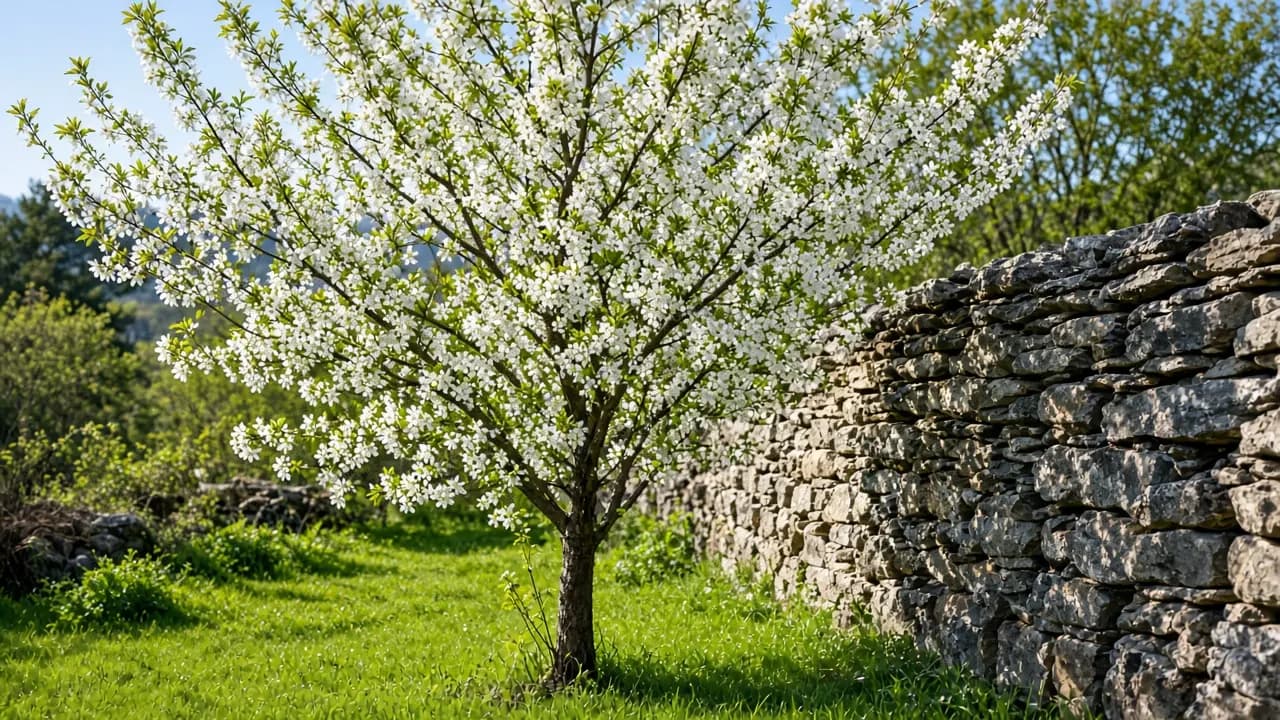
Soil matters too. Much of the western US, parts of the UK's chalk country and many Australian inland areas already have alkaline soil. Adding ashes at a pH of about 11.7[1] pushes it further, so in those places you'll want to dilute more, add more acidic compost, and choose trees that tolerate lime. The memorial tree finder starts from your climate zone. Our soil-mix guide shows how much extra compost to allow in chalky or desert ground.
Scattering and water releases
How scattering and water-release rules differ by country
Most rules about ashes were written with people in mind, and pet ashes often fall into a grey area. That's a reason to ask, not a reason to assume anything is allowed.
- United States. The EPA's burial-at-sea permit covers human remains only; lakes and rivers fall to state and local authorities. National and state parks usually need permission (the federal rule for national parks requires a permit even for human ashes), and some ban scattering outright.
- United Kingdom. Environment Agency guidance for human ashes asks people to avoid spots near anglers, bathers and water-supply intakes, and to let nothing float away. It's a sensible standard to follow for a pet.
- Canada. Provinces and municipalities set the rules; Crown land and parks may need permission.
- Australia. State environment agencies and local councils decide, and many beaches and waterways have their own guidance.
Private land always needs the owner's consent. Our article on permission questions before scattering has a short checklist you can take to a park office or landowner.
Would you consider releasing your pet's ashes in water?
Tap an answer to vote and see how others answered. Anonymous.
Water cremation
Where water cremation for pets is easier to find
Access to water cremation for pets is patchy, and it doesn't follow the human rules neatly. For people, the US count stands at 26[2] states, while in the UK water cremation is not legal[3] for humans in England and Wales. Pet providers have moved faster: in the US there are about 30[4] practitioners, and one industry source says pet aquamation is available in every state. If you're weighing it for green reasons, our article on whether aquamation is better for the environment is a good place to start.
In practice, availability depends on whether a provider near you has invested in the equipment. Our local pages list the ones we know about, and our aftercare options comparison shows how it stacks up against flame cremation where you live. The bio urn options page explains how water cremation fits with a planting or water urn afterwards, and the poll results show how many readers would consider it.
The bigger picture
How cremation habits shape local options
Where cremation is the norm, there are more providers and more choice. The latest industry figures put human cremation rates for the US and Canada at 62.8% US / 77.4% CA[5], with the UK at 80.6%[6]. Those are human figures, but they track how easy it is to find a crematory nearby that returns ashes.
66% / 86.9 million[7]
CANA reports 66% of U.S. households (86.9 million homes) own a pet.
73%[8]
73% of Australian households have at least one pet.
68%[9]
68% of respondents to NFDA's 2024 Consumer Awareness and Preferences Survey expressed interest in green funeral or natural burial options.
Interest in greener goodbyes is widespread too. In a national US survey, 68%[9] said they were interested in green funeral or natural burial options, and that shift is slowly reaching pet aftercare. For a plain-English overview, read our guide to eco-friendly aftercare without greenwash. Applying that 68% to the country's pet-owning homes, our estimate is that ~59 million households[10] in the US may be open to a greener option for a pet, though interest is a long way from a decision.
How to use them
Getting the most from your local page
- Find your state, province or region in the directory, then your city if it's listed.
- Check the climate notes and the suggested trees before choosing a planting urn.
- Read the scattering and water notes, and note who to ask for permission. Our guide to scattering pet ashes in water explains the rules that tend to apply.
- Look at which cremation and water cremation providers serve your area.
- Use the memorial budget planner to add up the whole plan.
If your town isn't listed yet, that doesn't mean nothing is available. Contact us and we'll look into it for you.

Reader polls
What would you choose?
Vote anonymously and see how other readers answered. The results are live counts from people who visit this site, so they show real opinions, not a scientific sample.
Would you consider releasing your pet's ashes in water?
Tap an answer to vote and see how others answered. Anonymous.
What kind of tree or plant would you choose?
Tap an answer to vote and see how others answered. Anonymous.
If you had to decide today, which aftercare would you choose for your pet?
Tap an answer to vote and see how others answered. Anonymous.



Questions people ask
Can I scatter my pet's ashes in a national park?
Usually only with permission, and some parks don't allow it at all. Rules vary between parks and countries, and many were written for human ashes. Contact the park office before you go, explain it's a small amount of pet ash, and ask whether there's a preferred area.
Can I bury pet ashes in my garden anywhere in the US?
On land you own, burying ashes is generally allowed across the US, because ashes don't carry the health concerns that rules for burying a whole body address. Keep them away from wells and vegetable beds, and check any homeowners' association rules if you live in a managed community.
Is pet water cremation legal where I live?
Pet rules differ from human ones and are often less specific. Many US states without human water cremation still have pet aquamation providers. In the UK and elsewhere it's much less common. The simplest check is to ask local pet crematories directly, or tell us your area and we'll look.
What if my climate is too harsh for most trees?
Choose a shrub, a native grass or a hardy perennial that already grows well locally, or keep the memorial in a container you can shelter in winter or shade in summer. A living memorial doesn't have to be a tree to be meaningful.
Does my soil type matter for a memorial planting?
Yes. If your soil is already chalky or alkaline, ashes make it more so, and you'll need extra compost or acidic material and a lime-tolerant plant. On acidic soils the ash has more room to be buffered. A simple pH test before and after mixing tells you where you stand.


Sources and our estimates
- [1] Cremated remains have a very high pH of approximately 11.7, which is toxic to plants without amendment. Larkspur Conservation — Giving Cremated Remains a New Life Through Science, 2024.
- [2] CANA lists alkaline hydrolysis (water cremation) as legal for humans in 26 US states as of March 2026. CANA: Alkaline Hydrolysis, 2026.
- [3] Water cremation is not yet legal in England and Wales; Scotland is set to be the first UK nation to legalise it. NAFD Funeral Directory guide, 2026.
- [4] CANA notes pet crematories have adopted alkaline hydrolysis more widely than human funeral providers; about thirty practitioners operate where it is legal. CANA: Alkaline Hydrolysis, 2026.
- [5] CANA reports a 2025 cremation rate of 62.8% in the U.S. and 77.4% in Canada. Cremation Association of North America — Industry Statistical Information, 2025.
- [6] In 2024, 80.6% of deaths in the UK ended in cremation. Federation of Burial and Cremation Authorities (FBCA) death & cremation statistics, 2024.
- [7] CANA reports 66% of U.S. households (86.9 million homes) own a pet. Cremation Association of North America — Pet Aftercare, 2025.
- [8] 73% of Australian households have at least one pet. Animal Medicines Australia, Pets in Australia 2025 (media release), 2025.
- [9] 68% of respondents to NFDA's 2024 Consumer Awareness and Preferences Survey expressed interest in green funeral or natural burial options. NFDA — Green Burial Resources for Funeral Professionals, 2024.
- [10] About 59 million U.S. pet-owning households may be open to eco-friendly aftercare options. Our estimate: 86.9M pet households x 68% interested in green funeral options. How we calculate.
Find bio urn options in your area
Tell us what you need and where you are. We'll reply by email with clear options and prices so you can decide in your own time.