Planning a living memorial? Start with the question that matters most
Pure cremated remains measure a pH of about 11.7[1], alkaline enough to harm a young tree, so the order you decide things in really matters. This short quiz helps you pick your first step.
- Three taps, nothing to sign up for
- Points you to the right planting guide
- Take your result straight to the worksheet
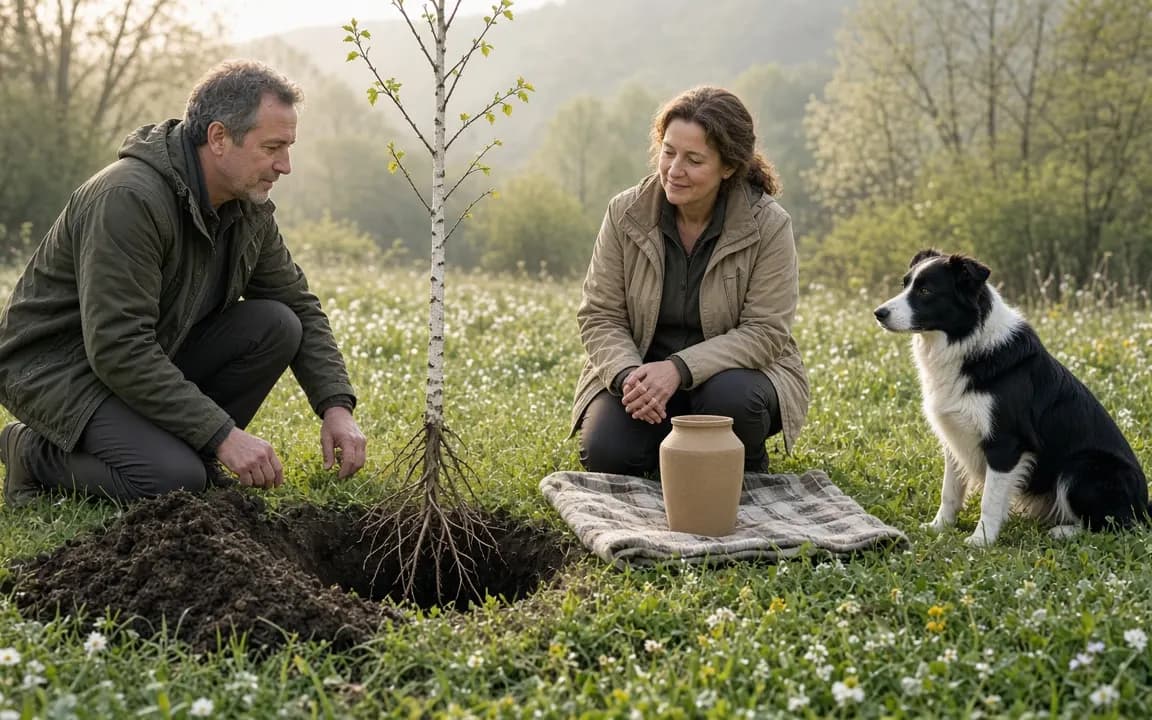
Bio Urns & Eco Memorials · planning preferences
Bio urns and living memorials: choose your next question
Use Bio Urns & Eco Memorials to choose your next bio urns and living memorials question, wherever you are worldwide. Select one guide topic, one detail to clarify and your current planning stage. The result repeats your choices and links to that guide. It does not estimate a price or confirm an arrangement.
Your choices stay in this page’s memory. They are shared only if you choose to send an email draft. Clear them below or reload to start again.
Prefer to ask our team directly?Question 1 of 3
Which decision would you like to explore first?
Bio Urns & Eco Memorials organizes this worldwide bio urns and living memorials selector around four guide topics. Choose the question closest to what you want to understand first. The next two choices identify one detail and your planning stage. You can change the topic later; selecting it does not submit an inquiry or authorize any arrangement.
Using the quiz
How the living memorial quiz works
The quiz above has three steps. Step one asks which topic you want to explore: telling real eco claims from greenwash, planting a memorial garden, planning the timeline of a living memorial, or getting the soil mix right when ashes go in the ground. Step two asks which detail you most need to clarify, from the product's own instructions to who will water the tree next summer.
Step three asks where you are: just reading, holding some preferences, or looking at written instructions or a quote. The result gathers your three answers, links to the matching guide and suggests one next move. It doesn't recommend a product, and nothing leaves your browser unless you copy it or open an email draft.
You can go back a step or clear everything at any point. There are no right answers; the quiz simply reflects the order in which you want to think things through, and many people take it twice, once for the planting and once for the ceremony around it.
Your result
Turning your quiz result into a planting plan
If you're still exploring, open the linked guide and jot down the one question it leaves open. If you have a plan with gaps, take the detail you chose into the planning worksheet, where there's a box for each of the six planting details, including a backup plan if the first tree fails.
If you already have product instructions or a quote, compare them against your site before you combine anything. The instructions for one tree urn might assume a sunny, well-drained spot, while your garden is shaded clay. That mismatch is much easier to fix before the ashes are mixed in.
Why order matters
Soil chemistry comes before choosing a tree
Cremated remains are mostly calcium phosphate with a lot of salt and a very high pH. Put pure ashes straight against young roots and the plant can struggle or die. That's why good bio urn systems include a soil amendment, and why gardening guidance suggests letting an ash and amendment mix rest for 90–120 days[2] before planting. Soil scientists at Colorado State University note that lowering an alkaline soil's pH can take months to a year even with sulfur, so it pays to get the mix right the first time.
Before today, did you know pure pet ashes are too alkaline for most young plants?
Tap an answer to vote and see how others answered. Anonymous.
The soil-mix guide for planting with ashes explains how to read a product's ratio, and why no single ratio suits every soil. If the quiz sends you there, read it before buying the tree.
The right plant
Picking a plant that suits the site, not just the sentiment
It's natural to want a tree that feels like your pet: a cherry for a spring puppy, an oak for a steady old dog. Site comes first, though. Hardiness zone, sun, drainage and the tree's mature size decide whether it lives. One major planting system offers a choice of 30+ species[3], so there is plenty of room to match a tree to your conditions. You can find your zone in a few seconds on the USDA's hardiness map.

Free tool
Memorial tree finder
Pick a tree for a planting urn that suits your climate, space and pet.
If a full tree won't fit, a shrub, a rose or a bed of perennials can be just as meaningful. Our guide to planting a living memorial garden covers smaller spaces.
Think about the tree's size in twenty years, too. A weeping willow planted six feet from the house becomes a problem long before your memories fade. If you choose "plant suitability for the chosen site" as your detail, write down the mature height and spread from the nursery label and measure the space it will need, including clearance from paths, drains and your neighbor's fence.
If things change
Renting, moving house and planning for a tree that fails
If you rent or may move within a few years, a large pot on a patio lets the memorial come with you. Some families plant only part of the ashes and keep the rest in a small urn, which also gives them a second chance if the first tree doesn't take.
If you rent or might move, how would you handle a memorial planting?
Tap an answer to vote and see how others answered. Anonymous.
Young trees do fail, especially in their first summer. Picking "replacement plan if planting fails" in the quiz is a sensible choice if you're anxious about that. Our bio urn buying checklist has the questions to ask a seller about it. Container and garden options are compared side by side on our services page.
Other green routes
Soil, water or a gentler cremation method?
Not every eco memorial is a tree. Water urns are designed to float briefly and then dissolve; one popular model costs $149[4]. Some families look further back, at aquamation, a water-based alternative to flame cremation; at one US provider, private aquamation costs ~2.5×[5] the communal price, by our estimate.
Planting kits themselves range from about $99[6] for a seed-capsule urn to $119[7] for a full planting system without the tree. The guide to eco-friendly aftercare without greenwash helps you judge which environmental claims hold up. For climate and permission notes where you live, see our location pages, or look at how other readers answered on the poll results page.

Reader polls
What would you choose?
Vote anonymously and see how other readers answered. The results are live counts from people who visit this site, so they show real opinions, not a scientific sample.
Which living memorial feels most like your pet?
Tap an answer to vote and see how others answered. Anonymous.
Before today, did you know pure pet ashes are too alkaline for most young plants?
Tap an answer to vote and see how others answered. Anonymous.
Where are (or will be) your pet's ashes?
Tap an answer to vote and see how others answered. Anonymous.


Questions people ask
Will the bio urn quiz tell me which urn to buy?
No. It helps you decide which question to answer first, such as soil treatment or landowner permission, and links to the guide that covers it. When you want product options and prices for your area, send the form and we'll reply by email.
Can I plant a tree with my pet's ashes straight away?
You can plant as soon as you're ready, but not with pure ashes against the roots. Their high pH and salt content can harm young plants. Use a system with a soil amendment, follow its instructions, and plant in a mild season when the tree can settle in.
What if I'm not sure I'll stay in my home?
Choose "landowner permission" or "replacement plan" as your detail in the quiz. A large container tree, or planting only part of the ashes, keeps your options open if you move. Renters should get the landlord's agreement before planting in the ground.
Are my quiz answers stored or shared?
They stay in your browser while the page is open. Nothing is sent to us or to any seller unless you open the email draft and choose to send it. Clearing the choices or reloading the page wipes them.
Which is greener: a tree urn or a water urn?
Both are designed to break down, so the bigger differences are elsewhere: how the pet was cremated, how far products travel, and whether a tree actually survives. Reading the maker's material list and intended use tells you more than the word "eco" on the box.


Sources and our estimates
- [1] Cremated remains have a very high pH of approximately 11.7, which is toxic to plants without amendment. Larkspur Conservation — Giving Cremated Remains a New Life Through Science, 2024.
- [2] Gardening Know How advises letting an ash/soil-amendment mixture sit for at least 90 to 120 days before planting. Gardening Know How — Planting With Cremains: Is There a Safe Way to Bury Ashes, 2024.
- [3] The Living Urn offers more than 30 tree species for its bio-urn planting system. The Living Urn — FAQ, 2026.
- [4] The Living Urn's Eco Water Urn for water burial costs $149 and holds up to 225 cubic inches; it floats for several minutes before dissolving. The Living Urn – Eco Water Urn, 2026.
- [5] Private pet aquamation costs about 2.5 times communal aquamation at the same provider. Our estimate: mean of tier ratios 150/50, 200/75, 250/100, 350/150, 450/225. How we calculate.
- [6] The Bios Urn for pets, a biodegradable urn with a seed capsule, costs $99. Bios Urn – Pets, 2026.
- [7] The Living Urn's pet bio-urn planting system (without a tree) costs $119. The Living Urn – Pet tree urn, 2026.
Get bio urn and planting options
Tell us what you need and where you are. We'll reply by email with clear options and prices so you can decide in your own time.