Living Memorials
Contact our team

Live results: how readers are planning their living memorials

These numbers move every time someone votes. Read them next to the research below, where 61.4%[1] of US consumers say they'd explore green funeral options, and you get a clearer picture than either gives alone.

  • Updated live as readers vote
  • Anonymous totals, one vote each
  • Set beside published research

Get advice for your own pet's memorial

Polls show the crowd. For your pet, your yard and your local rules, send us a few details.

Free, no obligation and no phone calls. We reply by email. Privacy

Or email info@bio-urns.online

Live results: how readers are planning their living memorials

How we count

How these results are counted

Each poll records one vote per person per question. We don't collect names or emails, and results are shown only as percentages of everyone who has answered so far. The board below updates live, so the figures you see today may look different next month.

These are not scientific surveys. Only people who found this site and chose to answer are included, and they're more interested in bio urns and green aftercare than most pet owners. Treat the results as a conversation with other readers, not as facts about pet owners in general. You can still add your vote on the polls page.

Live results

Which living memorial feels most like your pet?

A tree we can watch grow0%
A bed of flowers or a flowering shrub0%
A water urn released at a lake or the sea0%
A potted plant I can keep indoors0%
None of these, I'd keep the ashes in an urn0%

Loading...
Before today, did you know pure pet ashes are too alkaline for most young plants?

Yes, I knew they needed mixing or amending0%
I'd heard something vague about it0%
No, I thought ashes were like fertilizer0%
No, and I've already planted with ashes0%

Loading...

If you rent or might move, how would you handle a memorial planting?

Plant it in a large pot that can move with me0%
Plant it at a relative's or friend's home0%
Keep some ashes back for a future garden0%
Wait until I have a place of my own0%
I own my home, so it isn't a worry0%

Loading...

What kind of tree or plant would you choose?

A native tree that suits our area0%
Something that flowers every spring0%
A fruit tree we can pick from0%
An evergreen that stays green all year0%
I have no idea what would grow here0%

Loading...

Would you consider releasing your pet's ashes in water?

Yes, at the sea or a beach they loved0%
Yes, at a lake or river we walked by0%
Maybe, if I knew the rules allowed it0%
No, I'd rather have a place to visit0%

Loading...

If water cremation (aquamation) were offered near you, would you choose it?

Yes, mainly for the lower energy use0%
Yes, it sounds gentler to me0%
Only if it cost about the same as flame0%
No, I'd stay with flame cremation0%
I'd need to understand it better first0%

Loading...

What matters most to you in a greener goodbye?

No plastic or metal left in the ground0%
Lower energy and carbon0%
Using local, native plants0%
Keeping it simple and low cost0%
Honestly, the meaning matters more than the footprint0%

Loading...

Who would you want with you at a planting or release?

Just me, quietly0%
The people who lived with them0%
The whole family, with the children helping0%
Friends and neighbours who knew them0%
Nobody yet, I'll plant when I'm ready0%

Loading...

In context

How our readers compare with published research

The most useful way to read a live poll is beside a proper survey. Here's what national research says about the choices our polls ask about.

40.4% cremation; 34.9% home burial; 1.9% aquamation[2]

Asked their preferred future after-death care, 40.4% of US owners chose traditional flame cremation and 34.9% home burial; 10.7% chose cemetery burial and 1.9% alkaline hydrolysis (aquamation).

27% home burial; 2% burial elsewhere[3]

In the same CMA survey, 27% of UK owners buried their pet at home and 2% used a pet burial company elsewhere.

68%[4]

68% of respondents to NFDA's 2024 Consumer Awareness and Preferences Survey expressed interest in green funeral or natural burial options.

In a US study of dog and cat owners, very few named water cremation as their preferred future aftercare. The figure was just 1.9%, though many had never been offered it. For owners whose pet died recently, the UK competition regulator's survey found this burial split: 27% home burial; 2% burial elsewhere[3]. Home burial of a body and planting ashes aren't the same thing, but both show how many people want their pet close to home.

If our aquamation poll shows far more interest than 1.9%, that's likely a mix of two things: readers here care more about the environment, and more people now know the option exists. Our aftercare options comparison lets you weigh it for your own situation.

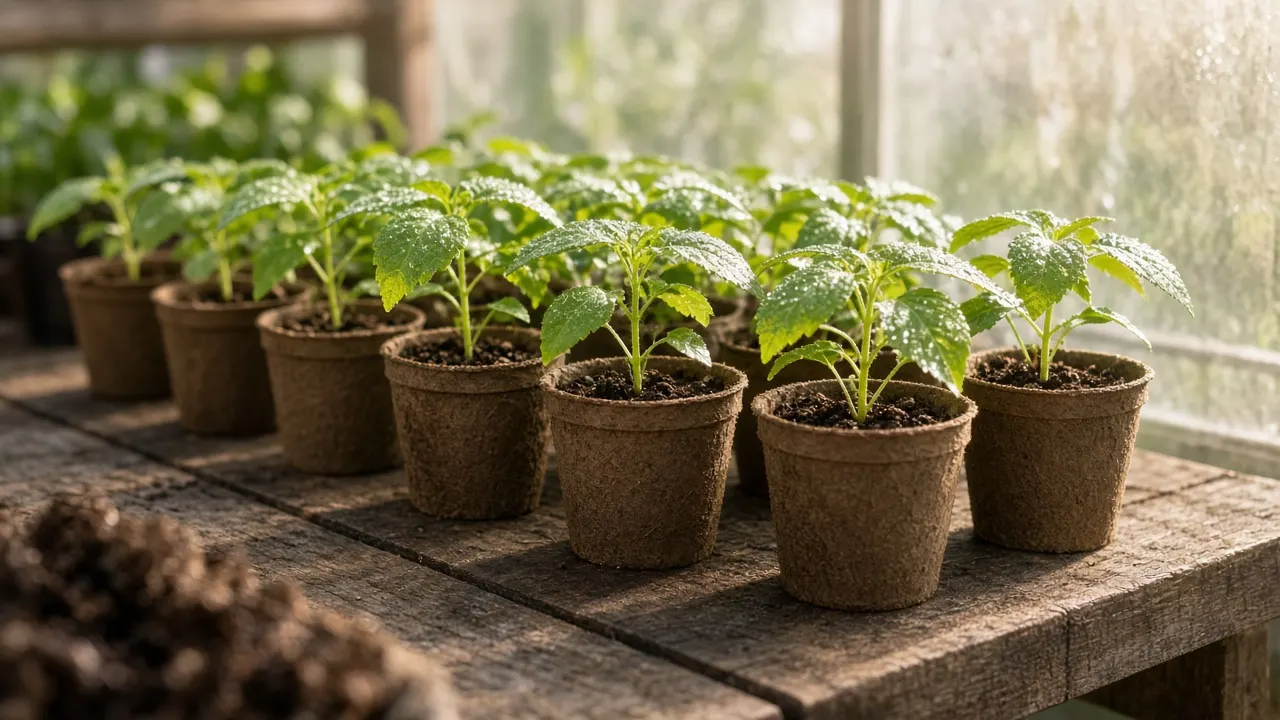
A row of young tree seedlings in biodegradable paper pots on a potting bench in soft morning light
Every living memorial starts small, and so do these poll results.

Reading between the numbers

What to take from the results, and what not to

  • Do use them to see whether your plan is common or unusual among people considering the same thing.
  • Do notice where readers are split. A close result often means the trade-off is genuine, as with a water release versus a place to visit.
  • Don't read a popular answer as the right answer for you. A tree that suits most readers' gardens may not suit a rented flat.
  • Don't quote the numbers as statistics. They change daily and come from a self-selected group.

One poll we watch closely asks whether readers knew pure ashes are too alkaline for young plants. If many didn't, it's a sign we need to keep explaining the soil side, which is why our soil-mix guide exists.

Before today, did you know pure pet ashes are too alkaline for most young plants?

Tap an answer to vote and see how others answered. Anonymous.

What nobody has measured

Where published research on bio urns runs thin

Part of the reason we run polls at all is that some questions have never been properly studied. We couldn't find a large survey of how many pet owners plant ashes under a tree, how many of those trees survive, or how often people regret a water release. The honest answer to those questions is: nobody knows yet.

The environmental figures have a similar gap. The most detailed carbon comparison of flame and water cremation was done for human funerals in the Netherlands, not for pets, and pet-specific life-cycle studies are scarce. Soil research on cremated remains is mostly small-scale horticultural testing. We still use these sources, because they're the strongest evidence available, and we tell you where they come from.

Reader polls don't fill those gaps. They can, though, show which questions people are wrestling with, which helps us decide where to dig for better evidence. If you know of a study we've missed, let us know.

From results to a plan

Using the results to plan your own memorial

If the results made you lean toward a tree, try the memorial tree finder. If you're drawn to a water release, read up on local permission first. And if you'd like a person to look at your plans, send us a few details and we'll reply by email. You can also compare every kind of memorial on our bio urn options page, or check local notes on our location pages.

Who would you want with you at a planting or release?

Tap an answer to vote and see how others answered. Anonymous.

Reader polls

What would you choose?

Vote anonymously and see how other readers answered. The results are live counts from people who visit this site, so they show real opinions, not a scientific sample.

If water cremation (aquamation) were offered near you, would you choose it?

Tap an answer to vote and see how others answered. Anonymous.

Which living memorial feels most like your pet?

Tap an answer to vote and see how others answered. Anonymous.

What matters most to you in a greener goodbye?

Tap an answer to vote and see how others answered. Anonymous.

Questions people ask

Why do the percentages keep changing?

Because the results are live. Every new vote shifts the totals slightly, and on a question with few answers so far, one vote can move a figure by several points. The more people answer, the steadier the numbers become.

Can I see how many people have voted?

Yes. Each result shows the total number of votes counted so far alongside the percentages, so you can judge how much weight to give it. A result based on a handful of answers is a hint, not a pattern.

Do you use these results in your advice?

We use them to decide what to explain more clearly, not to decide what's right. If many readers didn't know ashes affect soil pH, we write more about soil. Our advice itself rests on published research and horticultural guidance.

Why compare with surveys about human funerals?

Because far more research exists on human funeral choices than on pet aftercare, and the two often move together. We label clearly when a figure comes from human data, so you can decide how much it applies to your pet.

What's the most surprising thing a poll can show?

Usually it's a split we didn't expect, such as readers dividing almost evenly between a place to visit and a water release. We don't report those splits as findings, but they tell us a choice is harder than it looks, so we write more to help people think it through.

Sources and our estimates

  1. [1] 61.4% of US consumers say they are interested in exploring green funeral options. NFDA 2025 Cremation & Burial Report (press release), 2025.
  2. [2] Asked their preferred future after-death care, 40.4% of US owners chose traditional flame cremation and 34.9% home burial; 10.7% chose cemetery burial and 1.9% alkaline hydrolysis (aquamation). Cooney, Kogan, Brooks, Ellis - Pet Owners' Expectations for Pet End-of-Life Support and After-Death Body Care, Topics in Companion Animal Medicine (2020), 2020.
  3. [3] In the same CMA survey, 27% of UK owners buried their pet at home and 2% used a pet burial company elsewhere. UK Competition and Markets Authority - Veterinary services for household pets, Provisional decision report Part A (Oct 2025), 2025.
  4. [4] 68% of respondents to NFDA's 2024 Consumer Awareness and Preferences Survey expressed interest in green funeral or natural burial options. NFDA — Green Burial Resources for Funeral Professionals, 2024.
  5. [5] If just 10% of U.S. pet cremations moved to aquamation, about 4,200 t CO2e a year would be avoided. Our estimate: 1.5M x 10% x 31.3 kg x 90% reduction. How we calculate.

Get advice for your own pet's memorial

Tell us what you need and where you are. We'll reply by email with clear options and prices so you can decide in your own time.

Get my options

Free, no obligation and no phone calls. We reply by email. Privacy

Or email info@bio-urns.online

