Soil or water: choosing the right bio urn for your pet's ashes
Choose a soil urn if you want a spot to return to on ground you'll keep; choose a water urn if a lake, river or stretch of coast meant something and you don't need a marker. A water urn such as the Eco Water Urn costs about $149[1] and floats for a few minutes before it sinks.
By the Bio Urns & Eco Memorials editorial team · Updated September 24, 2026 · 5 min read · Sources
- How each type behaves once it's placed
- Capacity by pet size, so nothing is left over
- A side-by-side table of cost, time and upkeep
The quick decision
Should you choose a soil urn or a water urn?
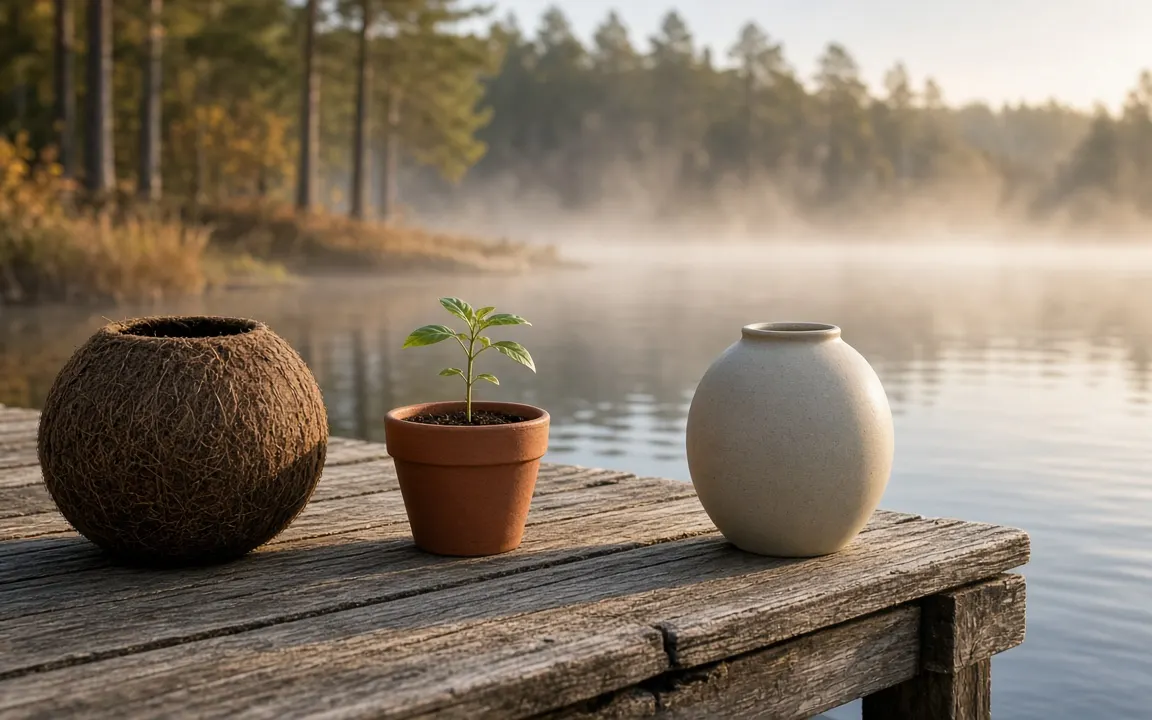
Pick a soil urn when you want a place to come back to and you expect to keep the land, whether that's your own garden or a spot a relative will look after. Pick a water urn when your pet's favorite place was a beach, lake or river and a marker matters less than the moment itself. Both break down fully; they just leave very different kinds of memorial behind.
A third answer is often the right one: split the ashes. A little goes into the water, the rest into the ground or a keepsake. We cover that at the end, along with how to size each part.
Would you consider releasing your pet's ashes in water?
Tap an answer to vote and see how others answered. Anonymous.
In the ground
How does a soil burial urn break down underground?
Soil urns are made from materials that fungi and bacteria can eat: recycled paper, coconut coir, cornstarch, untreated wood or unfired clay. Buried in damp, living soil, the shell softens within weeks and falls apart over a few months. Dry, sandy or frozen ground slows everything down, so a spring burial usually disappears faster than a winter one.
The ashes don't vanish with the shell. They're mostly mineral bone, strongly alkaline at a pH of about 11.7[2], and they stay in the soil for years. That's why a planting urn or a tree on top needs the ash diluted with compost and soil, and why some gardeners let the mix rest for 90–120 days[3] before planting. Our guide to mixing soil for ash planting covers the method.
Some soil urns come with a seed pod or space for a sapling; others are plain containers you simply bury. If you want to know which material lasts longest, see how biodegradable urn materials compare.
On the water
What happens when a water-soluble urn is released?
Water urns are built to dissolve rather than rot. The common ones are pressed salt, sand bound with a natural gum, recycled paper, or gelatin. Most are designed to float briefly, long enough to say a few words or watch it drift, then take on water and sink. The ashes settle to the bottom as the shell breaks apart.
How fast depends on the material and the water. Salt and gelatin urns go quickly in warm water; paper can take longer and may drift in a current. Calm, deep water gives the gentlest release. Rolling surf can push an urn back to shore, which is upsetting if you aren't expecting it.
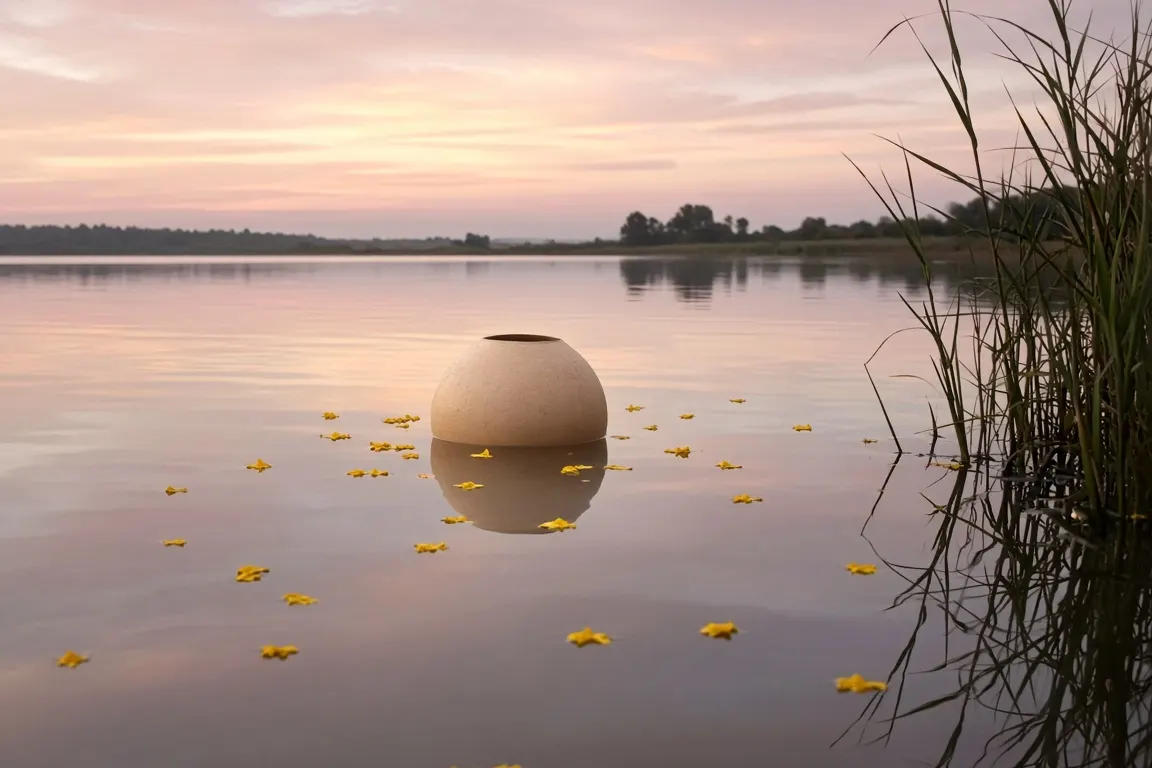
If you're planning a release, scattering pet ashes in water has the practical side: wind, tides, boats and what to throw in alongside.
Sizing
How much ash does each type of urn need to hold?
Ashes usually weigh about 3-5% of body weight[4]. By our estimate, that means a 12 lb cat returns about 6.7 oz[5], while a median giant-breed dog returns closer to 3.8 lb[6]. Urns are sold by volume, and the working rule is one cubic inch per pound of body weight, so a cat and a big dog need very different containers: about 12 cubic inches against 70[7].
Water urns tend to be generous. The Eco Water Urn, for example, holds up to 225 cubic inches[1], enough for most dogs. Tree and planting urns are often smaller, because the ash has to share space with soil and a buffer. If your pet's ashes won't fit, the rest can be worked into the soil around the planting or kept aside.
Free tool
Urn size calculator
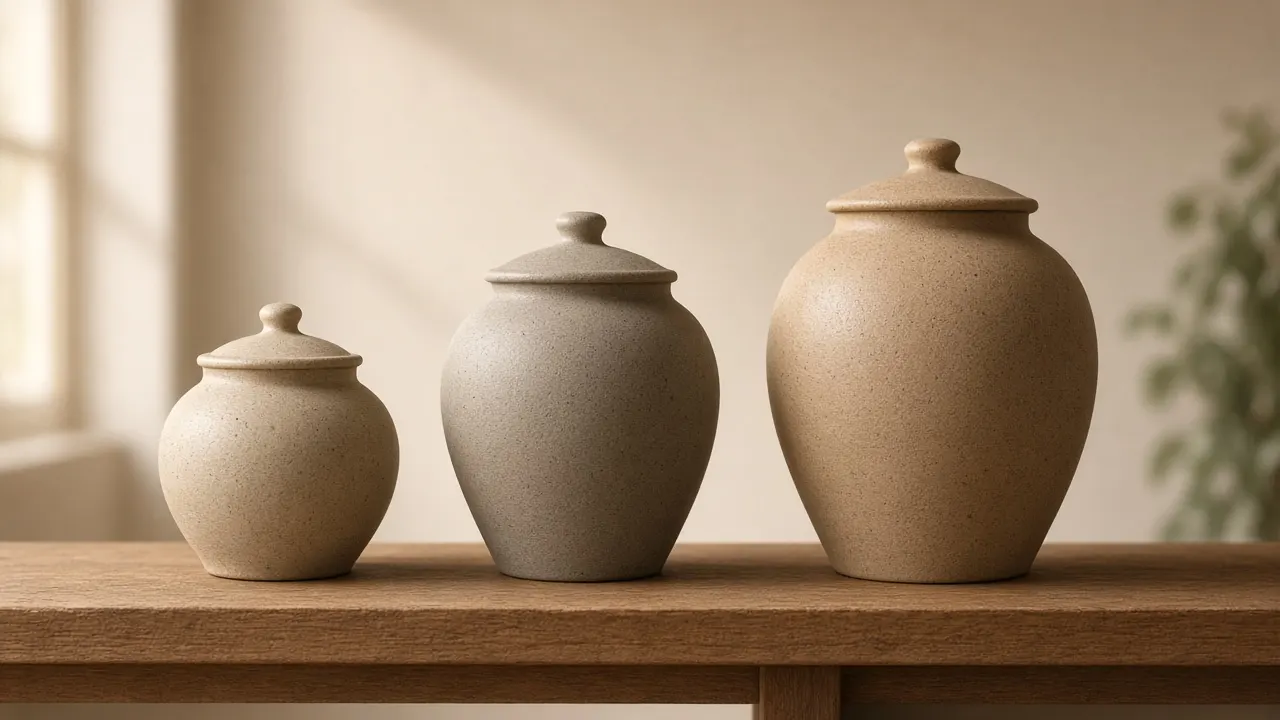
Find the urn volume you need from your pet's weight, plus keepsake and sharing options.
Choosing the place
Where can you use a soil urn versus a water urn?
A soil urn needs ground where digging is allowed and where the memorial won't be disturbed. Your own garden is the usual choice, but family land, a natural burial ground or a pet cemetery that accepts ashes all work. If you rent, a large planter can hold a soil urn and move with you. Before you dig anywhere, call 811 so buried utility lines are marked.
A water urn needs water deep and calm enough for the urn to sink, and permission from whoever manages it. Public lakes, reservoirs, marinas and rivers each have their own owner or authority. Before you choose either, read our permission questions before scattering, which covers who to ask about each kind of place. At sea in the US, the EPA's burial-at-sea rules cover human remains only, so a pet release is a question for your state or harbour authority.
Afterwards
Will you be able to visit the memorial afterwards?
This is the question people tend to feel most strongly about after the fact. A soil urn gives you a fixed point: a tree to sit under, a stone to clean, a plant that flowers each spring. A water release gives you a place, but not a spot. The lake is still there; the exact patch of water is not.
Neither is the more common choice by a mile. In US research on human cremation, 37% said they'd keep ashes at home and 33.5%[8] said they'd scatter them. For pets, many families land somewhere in between, and some plant a small shrub at home even after a water release, just to have somewhere to stand.
Ask yourself where you'll want to go on the first anniversary. That answer usually picks the urn.
Side by side
How do soil and water urns compare on cost and care?
| Soil urn | Water urn | |
|---|---|---|
| Common materials | Paper, coir, cornstarch, clay, untreated wood | Pressed salt, sand, paper, gelatin |
| Breaks down in | Weeks to months, slower in dry or cold soil | Minutes to hours after sinking |
| Place to visit | Yes, a fixed spot | A place, not a spot |
| Ongoing care | Watering and weeding if planted | None |
| Ash chemistry to manage | Yes, dilute before planting | Water dilutes it |
| Moving house | Stays with the land | Nothing to leave behind |
| Example prices | $99 to $119 for pet planting kits | About $149 for one water urn |
Those example prices come from two planting systems, the Bios Urn for pets at $99[9] and a Living Urn pet kit at $119[10] without a tree, plus the Eco Water Urn above. Across the wider market, one price survey puts biodegradable urns at $70–$260[11]. Add a sapling, compost and a marker stone for a soil memorial, and the gap between the two narrows.
The middle path
Can you split the ashes and use both kinds of urn?
Yes, and it's a common answer when family members want different things. Ask the cremation provider to divide the ashes into two or three bags when they're returned; it's easier than doing it yourself at the kitchen table. Label each one with where it's going.
Keep proportions in mind. A planting urn usually wants the larger share, since it's the permanent memorial, while a release can be a small, symbolic amount. A tiny keepsake portion kept at home means nobody has to feel that everything is gone. The memorial budget planner adds up both urns and any extras, and you can send us your pet's size and places for urn suggestions that fit each part. For the broader choice between a bio urn and a lasting one, see bio urns vs display urns. The urn size calculator splits the volume for you; our bio urn options and location pages cover the rest, and the poll results show how many readers plan to split.

Reader polls
What would you choose?
Vote anonymously and see how other readers answered. The results are live counts from people who visit this site, so they show real opinions, not a scientific sample.
Which living memorial feels most like your pet?
Tap an answer to vote and see how others answered. Anonymous.
Where are (or will be) your pet's ashes?
Tap an answer to vote and see how others answered. Anonymous.
Do you keep more than one memorial for the same pet?
Tap an answer to vote and see how others answered. Anonymous.


Questions people ask
Can I bury a water-soluble urn in the ground instead?
You can, and it will break down, but it isn't designed for it. Salt urns release a lot of sodium into a small patch of soil, which plants dislike. If you think you might want a garden burial, buy a soil urn from the start, or choose a paper urn that's labeled for both uses.
Will a water urn work in a river with a current?
It can, but it may travel before it sinks. Gentle rivers are fine; fast ones can carry the urn downstream or into rocks. Release it in a slow, deep pool, or scatter loose ashes close to the surface instead, which settle within moments.
Do soil urns attract animals that might dig them up?
Ashes have almost no scent, so digging animals rarely take an interest. The compost around a planting can draw curious dogs or raccoons for a few days. Burying the urn at least a foot deep and laying a flat stone or wire mesh on top until the soil settles solves most problems.
Is a soil urn or a water urn better for a small pet like a hamster?
Both work, but most urns are far too large for a very small pet, so the ashes can look lost inside. A small paper burial urn under a potted plant, or a pinch released by hand into water, often feels more proportionate. Keepsake-size biodegradable urns are made for exactly this.
Can I use a soil urn on a balcony or in an apartment?
Yes, in a large pot with drainage holes. Use only part of the ashes, mix them well into potting compost, and water deeply so salts wash through. A container planting can move with you, which a tree in the ground can't.
How long can I keep ashes before deciding which urn to use?
As long as you like. Ashes are stable and don't spoil, so there's no deadline. Many families wait for a season that suits planting, or for an anniversary or trip. Keep them sealed in their original bag, somewhere dry, until you're ready.


Sources and our estimates
- [1] The Living Urn's Eco Water Urn for water burial costs $149 and holds up to 225 cubic inches; it floats for several minutes before dissolving. The Living Urn – Eco Water Urn, 2026.
- [2] Cremated remains have a very high pH of approximately 11.7, which is toxic to plants without amendment. Larkspur Conservation — Giving Cremated Remains a New Life Through Science, 2024.
- [3] Gardening Know How advises letting an ash/soil-amendment mixture sit for at least 90 to 120 days before planting. Gardening Know How — Planting With Cremains: Is There a Safe Way to Bury Ashes, 2024.
- [4] Embrace notes cremated remains typically weigh about 3-5% of the pet's original body weight. Embrace Pet Insurance - Bury or Cremate Your Dog? Costs, Pros & Cons, 2025.
- [5] A 12 lb cat would be expected to return about 6.7 oz (0.42 lb) of cremated remains. Our estimate: 12 lb x 3.5% x 16 oz/lb. How we calculate.
- [6] A median-weight giant-breed dog (48.8 kg / 108 lb) would be expected to return about 1.71 kg (3.8 lb) of cremated remains, needing an urn of about 108 cubic inches. Our estimate: 48.8 kg x 3.5% x 2.2046 lb/kg; urn = 108 lb x 1 cu in/lb. How we calculate.
- [7] Using the industry rule of thumb of 1 cubic inch of urn space per pound of body weight, a 12 lb cat needs an urn of about 12 cubic inches; a 70 lb dog needs about 70 cubic inches. Our estimate: urn cu in = body weight lb x 1 (industry rule of thumb, not a measured value). How we calculate.
- [8] In NFDA's 2025 consumer research, 37% said they would keep cremated remains at home in an urn, and 33.5% would scatter them. Cremation.Green summary of NFDA 2025 Cremation & Burial Report, 2025.
- [9] The Bios Urn for pets, a biodegradable urn with a seed capsule, costs $99. Bios Urn – Pets, 2026.
- [10] The Living Urn's pet bio-urn planting system (without a tree) costs $119. The Living Urn – Pet tree urn, 2026.
- [11] Funeral.com cites U.S. Funerals Online that biodegradable urns typically cost about $70–$260. Funeral.com – How Much Do Cremation Urns Cost in 2025, 2025.
Get soil and water urn options for your pet
Tell us what you need and where you are. We'll reply by email with clear options and prices so you can decide in your own time.