🌱
Tree memorials
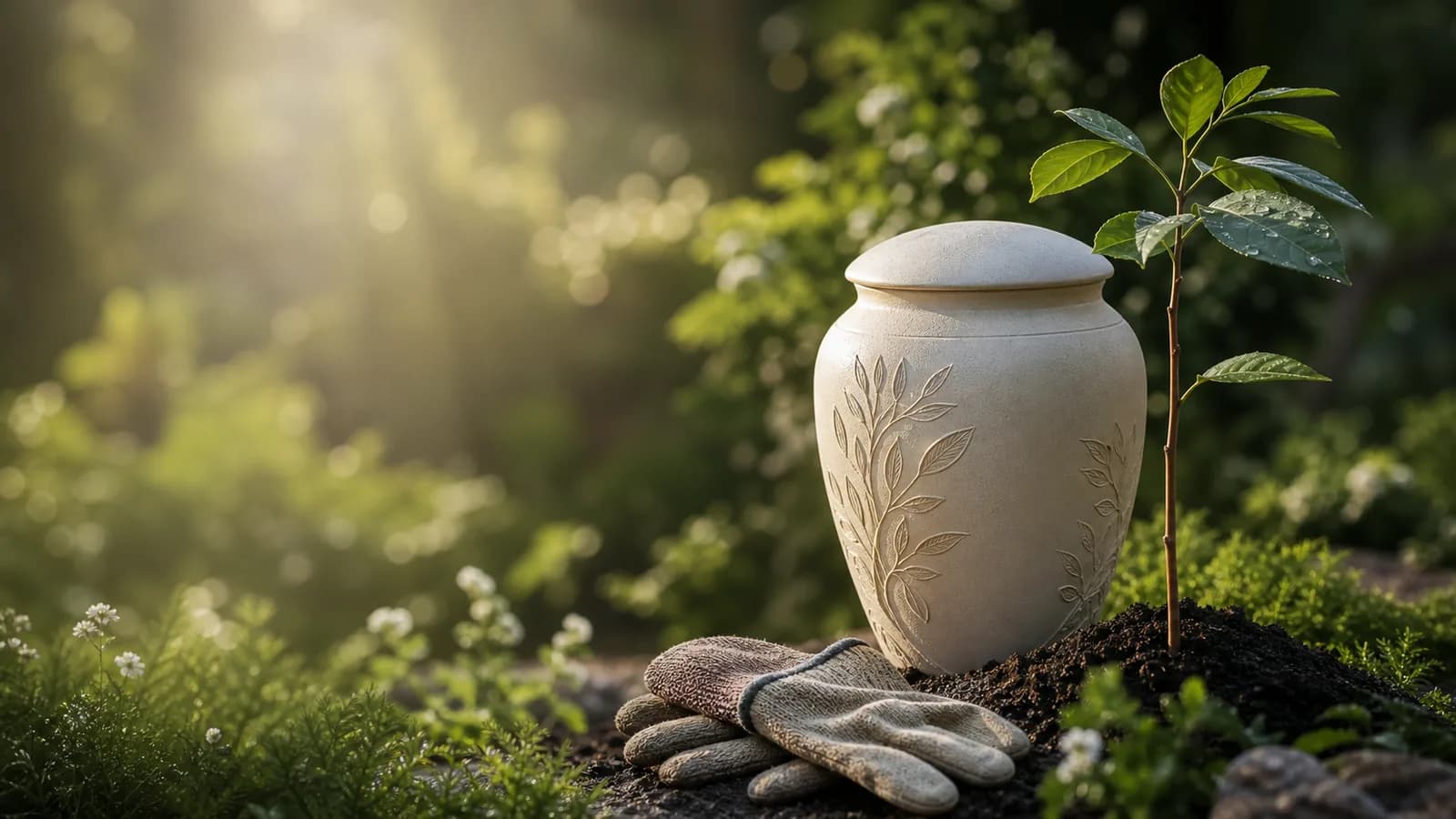
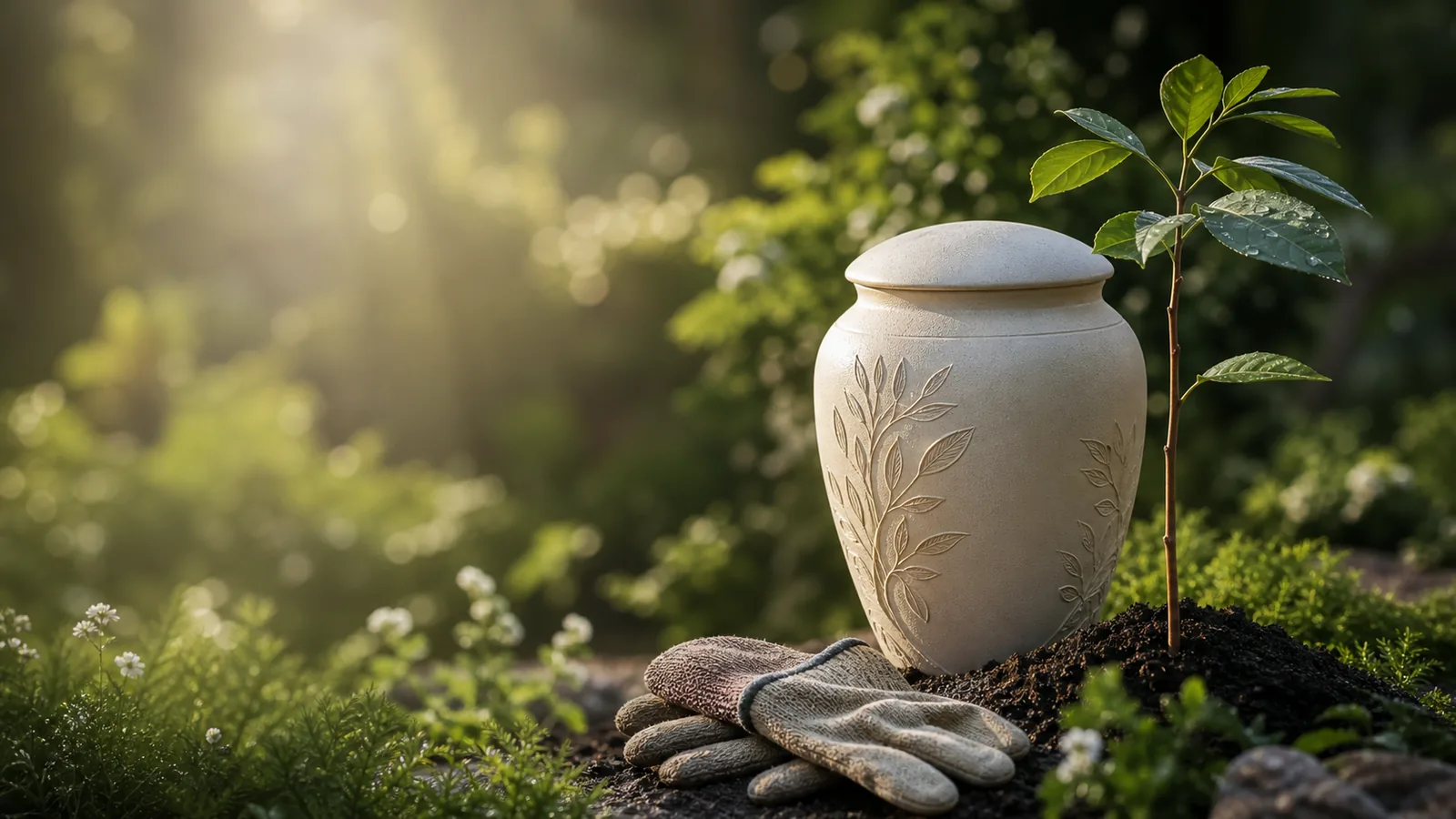
Bio urns grow a tree from cremated remains mixed with soil and seed.
Fill out the form below to request personalized guidance. Someone may follow up within 1-2 business days.
4 standout essays for families who want ashes to become a plant, tree, or earth-return ceremony. Every topic slug on this site is brand-exclusive — we drop weak overlaps instead of shipping thin clones.
This library stays inside Bio Urns & Eco Memorials's lane: Living / biodegradable memorials — tree urns, garden plantings, water burial vessels. Each guide is a long-form, brand-owned resource — decision trees, written question lists, and lane-specific failure modes — not a pet-type word swap published on every sibling brand.
Content pillars here include tree bio urn systems, garden & wildflower plantings, water burial biodegradable urns. If you need a specialty owned elsewhere in the network, use that brand instead of forcing every question onto this site.
Every guide in this library was written with one question in mind: what would a families who want ashes to become a plant, tree, or earth-return ceremony actually need to know before making a decision? The answer is rarely found in a 600-word blog post or a comparison table. It lives in the practical tensions — private versus communal cremation when the price difference is significant, the tradeoffs between wood and ceramic urns for outdoor display, the documentation standards that separate reputable providers from casual operators, and the timeline expectations that prevent families from calling daily when no delay has occurred.
We build each guide starting from a decision tree, not a keyword list. A guide about all petscremation costs does not open with “Are you looking for affordable pet cremation?” It opens with the weight brackets that providers actually use, explains why a 15-pound animal and a 120-pound animal operate on different pricing tiers, and walks through the surcharges that appear unexpectedly — after-hours pickup, weekend scheduling, rural transport, large-animal surcharges, and specialty urn requests.
Similarly, guides about memorial selection do not start with product photos. They start with sizing: how to convert your animal's weight into cubic inches of urn capacity, why buying an urn that is too large is the most common mistake, and how jewelry portions differ from full-size urn portions. The goal is to equip you to ask the right questions before you place an order, not after you receive a product that does not fit your needs.
Topic ownership matters. Bio Urns & Eco Memorials covers Living / biodegradable memorials — tree urns, garden plantings, water burial vessels. Guides about tree bio urn systems, garden & wildflower plantings, water burial biodegradable urns appear here. If you need guidance on a different memorial product type — cremation jewelry, for example, or pet funeral planning — those topics are owned by sibling brands elsewhere in the network. We do not publish weak clones of other brands' core topics, because a thin article dilutes the resource for everyone. Use the brand that actually specializes in what you need.
Each guide lists its estimated read time honestly. A 12-minute guide is 12 minutes of substantive reading — not 6 minutes of bullet points and 6 minutes of filler. We write to the length the topic demands, not to an arbitrary word count target. Some decisions require 2,000 words to explain properly; others can be covered well in 800. What you will not find here are guides padded to hit an SEO minimum, or guides that repeat the same paragraph three times with different adjectives.
Start with the featured guides below if you are new to aftercare planning. If you already know the specific decision you are weighing — urn size, memorial material, cremation type, cost factors — jump to the category sections further down the page. Each guide stands alone, so you do not need to read the entire library to benefit from a single article.
Aftercare Decision Framework
Original editorial context for aftercare decision framework; not a provider, facility, customer, or service result.
AI-created editorial image for education; not a photographed provider, facility, customer, or service result.
Provider Interview Checklist
Original editorial context for provider interview checklist; not a provider, facility, customer, or service result.
AI-created editorial image for education; not a photographed provider, facility, customer, or service result.
Memorial Product Selection
Original editorial context for memorial product selection; not a provider, facility, customer, or service result.
AI-created editorial image for education; not a photographed provider, facility, customer, or service result.
Planning Timeline Overview
Original editorial context for planning timeline overview; not a provider, facility, customer, or service result.
AI-created editorial image for education; not a photographed provider, facility, customer, or service result.
Decision brief
A concise decision framework for all pets aftercare planning and provider verification.
AI-created editorial image for education; not a photographed provider, facility, customer, or service result.
Original AI-created editorial imagery. Illustrative only — not a provider, facility, customer, inventory item, or service result.
Eco-friendly aftercare options without greenwash — a Bio Urns long-read for families who want ashes to become a plant, tree, or earth-return ceremony, written inside this brand’s lane (Living / biodegradable memorials) rather than a shared network template.
Planting a living memorial garden — a Bio Urns long-read for families who want ashes to become a plant, tree, or earth-return ceremony, written inside this brand’s lane (Living / biodegradable memorials) rather than a shared network template.
Planning a living memorial timeline — a Bio Urns long-read for families who want ashes to become a plant, tree, or earth-return ceremony, written inside this brand’s lane (Living / biodegradable memorials) rather than a shared network template.
Soil-mix ratios when planting with ashes — a Bio Urns long-read for families who want ashes to become a plant, tree, or earth-return ceremony, written inside this brand’s lane (Living / biodegradable memorials) rather than a shared network template.
Brand-owned guides in the eco cluster for Bio Urns & Eco Memorials.
Brand-owned guides in the gardens cluster for Bio Urns & Eco Memorials.
Brand-owned guides in the timing cluster for Bio Urns & Eco Memorials.
Brand-owned guides in the planting cluster for Bio Urns & Eco Memorials.
Bio urns and living memorials turn cremated remains into something that grows. A tree in the backyard, a wildflower patch at the edge of a favorite trail, an indoor bonsai on a sunny windowsill — these are not traditional mantel urns. Plantable memorial systems come in several forms: tree-planting urns with seed and growing medium, water-soluble vessels designed to float briefly before sinking for water burial, indoor plant systems for apartments and homes without yard space, and garden kits with wildflower mixtures. Each works differently, and families need to understand the differences before choosing a system.
What families learn here: how bio urns actually work — the biodegradable shell, the pH-balanced growing medium that neutralizes ash alkalinity, and the species-specific guidance that varies by climate zone. Ash is not soil; it needs a buffer. Germination is not guaranteed — seeds are living things with their own failure rate, and honest makers explain that rather than promising a perfect oak. Water-burial vessels are designed differently from earth-planting vessels; using the wrong type in the wrong environment wastes the memorial. Indoor bio urns for bonsai and houseplants require different care instructions than outdoor tree urns, and LED grow lights are often necessary when natural light is insufficient.
Bio urns are not permanent display vessels — that lane belongs to the Pet Urns brand. Once planted, these containers are designed to degrade. Families who want both a keepsake urn and a living memorial should split the ashes: reserve a portion for display and use the remainder for the bio urn. The guides on this brand cover ash splitting, species selection by USDA zone, indoor vs outdoor requirements, water burial versus earth return, and the practical timeline from sowing to seedling.

Complete systems with seed, growing medium, and biodegradable shell. Confirm which tree species ship to your climate zone — oak, maple, cherry, and native options vary by supplier.

Floating ceremony urns designed to sink and biodegrade safely. Ocean-safe materials matter — ask about saltwater vs freshwater compatibility before ordering.

What to expect during the 2–4 week germination window. Seedlings emerge within 2–3 months, with a substantial young plant developing over 2–5 years. Germination is not guaranteed.

Bonsai and houseplant bio urns designed for apartments and homes without garden space. LED grow lights and indoor growing guides are a separate purchase from most makers.
Browse our bio urn collection to compare tree, garden, water burial, and indoor systems. Find the right species for your climate zone.
Optional deeper reading
Open the optional trivia, polling, planning data, and estimator after browsing the guide library.
Five things most all petsguardians don't expect when arranging aftercare.
Bio urns grow a tree from cremated remains mixed with soil and seed.
True bio urns decompose fully within 6-24 months in soil.
Oak, maple, pine, and wildflower mixes are the most popular bio urn options.
Most bio urns are planted in home gardens or dedicated memorial spaces.
Many bio urns can begin indoors and transplant outdoors once established.
Anonymous poll — results shown only to you. Nothing is collected or stored.
Scroll to animate. Numbers represent publicly reported planning ranges, not quotes from any facility.
Most bio urn seeds germinate within 2-4 weeks with proper care.
Price varies by tree species, urn design, and included planting materials.
Bio urn shell fully decomposes in soil within 6-24 months.
Overwhelming majority plant bio urns at home rather than dedicated sites.
Leave your details to request guidance. Someone may follow up within 1-2 business days. We do not publish a verified local provider list, and follow-up is not guaranteed.
Durable urns and jewelry remain on sibling brands so eco content stays specific.
We wanted a dogwood, not a walnut box with a leaf sticker on the listing.