An independent guide to living memorials for pets
We write plain-English advice on tree urns, water urns and greener aftercare, and we match your request with providers and products that fit. We don't make urns or run a crematory.
- Independent guide, not a manufacturer
- Sources named for every figure we use
- One email reply, no sales calls
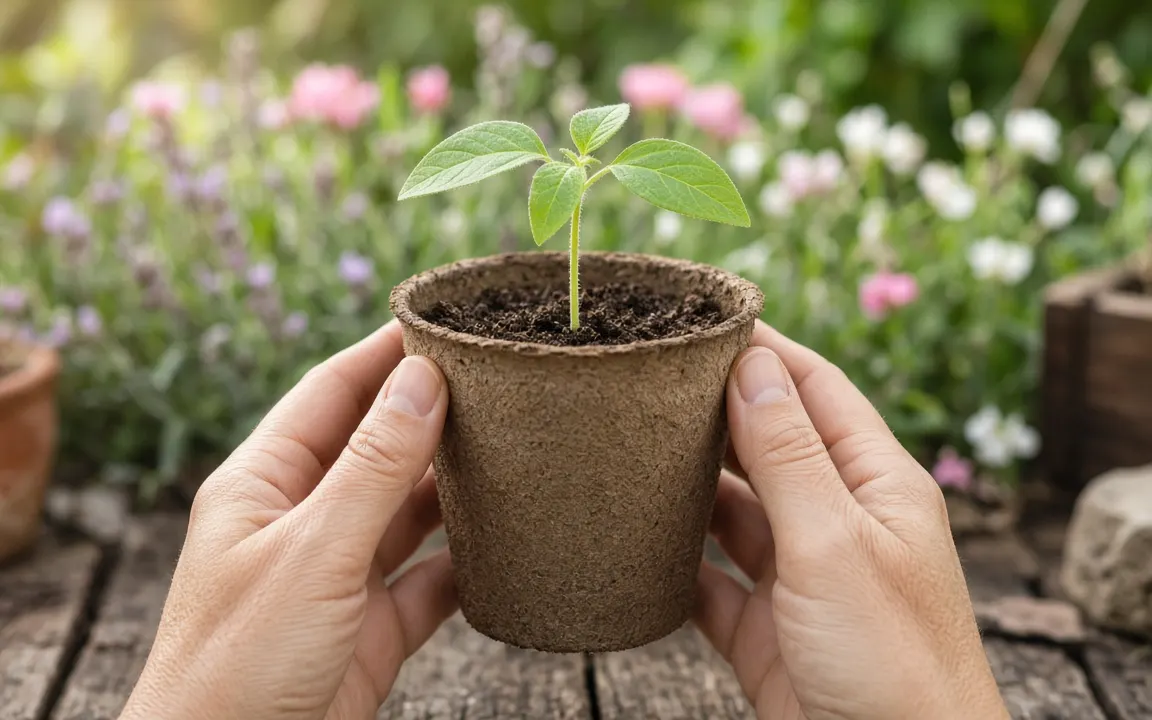
Who we are
A guide and request service, not an urn company
Bio Urns & Eco Memorials is part of a small network of independent pet aftercare guides, each focused on one specialty. This one covers living memorials: planting urns, water-soluble urns, garden burial and the greener cremation methods that come before them.
We don't manufacture urns, grow trees or operate a crematory. When you send us a request, we reply by email with options from makers and providers that serve your area, along with the questions worth asking them. You decide who, if anyone, to contact.
Our starting point is simple. Many bio urn listings promise a tree will "grow from your pet's ashes" without mentioning that ash on its own is too alkaline and salty for young roots. We'd rather tell you that before you buy, and explain how to prepare the soil, than leave you with a memorial that fails.
How it works
What happens when you send us a request
- You fill in the short form. Your pet's species and approximate weight, your town or postcode, and the kind of memorial you're picturing. That's all we need.
- We look at what fits. Urn capacity for your pet's size, planting or water options near you, and whether any local provider offers water cremation.
- We reply by email. Usually a short list of options with price ranges and notes on local rules. No phone calls unless you ask for one.
- You choose. There's no obligation, and we never pass your details to a provider without telling you first.
If you'd like to see the kinds of options we cover first, the services overview explains each one. Climate and scattering notes for your region live on our location pages, and the planning tools let you size an urn or cost a memorial before you write.
Where the numbers come from
How we research soil, carbon and cost figures
Every figure on this site links to its source in a footnote. We prefer primary research: national surveys, peer-reviewed studies, government guidance and published price lists. Where only a trade or company source exists, we say so. You can browse the full list on our research page. For carbon, our main source is a Dutch life-cycle assessment of funeral methods by TNO; for how people grieve, we lean on work such as the RSPCA's survey of more than 4,000 bereaved owners.
Some numbers carry more weight than others, and we try to show that. The pH of cremated remains, reported at ~11.7[1], comes from horticultural testing and matches what gardeners see in practice. The carbon figures for water cremation come from a Dutch life-cycle assessment of human funerals: 79.9 kg CO2e[2] per body for flame and -31.8 kg CO2e[3] for water cremation. We use them because they're the most thorough published numbers, but we're careful to say that pet-specific studies are still scarce.
~11.7[1]
Cremated remains have a very high pH of approximately 11.7, which is toxic to plants without amendment.
79.9 kg CO2e[2]
A TNO life-cycle assessment estimated the global-warming impact of an average cremation at 79.9 kg CO2-equivalent per body.
-31.8 kg CO2e[3]
The same TNO assessment put resomation (alkaline hydrolysis) at -31.8 kg CO2e per body, a net negative figure driven by credits for recycled metals and avoided products.
Our own calculations
How our estimates are labelled and worked out
Sometimes the question you actually have hasn't been studied directly, such as the carbon cost of cremating a single cat. In those cases we work it out from published data and label the result "our estimate". For example, from US shelter-animal figures by our estimate each flame cremation of an animal emits ~31 kg CO2e per animal[4].
An estimate always shows its reasoning and its confidence. Treat it as a sensible ballpark, not a measurement. If you spot one that looks wrong, tell us and we'll check it.
Reading the label
Which green claims we accept, and which we question
Eco memorial products carry a lot of soft language. We read the materials list and the maker's own instructions before repeating any claim, and we ask the same questions you'd want answered.
- "100% biodegradable." Fine if every part is plant fiber, paper, clay, salt or starch. We check for plastic liners, glued labels and resin plaques, which don't break down.
- "Grows from your pet's ashes." We treat this with caution. The tree grows in spite of the ash as much as because of it, and only if the soil has been prepared.
- "Carbon neutral." We look for what was measured and what was offset. Without that, we don't repeat it.
- "Ocean safe." We check the urn dissolves fully and that nothing floats away afterwards.
Where a claim holds up, we say so. Where it's marketing, we explain what's actually true in simpler words. Our article on reading biodegradable urn claims goes through real label wording.
What we won't do
Editorial standards we hold ourselves to
- No invented reviews, ratings, testimonials or customer stories.
- No claims that a tree is certain to grow, or that ash is fertilizer on its own.
- No greenwashing: if an option's environmental benefit is unproven, we say so.
- No pretending to own facilities, vans or staff we don't have.
- Prices shown as ranges with a source, never as a quote.
A living memorial should be judged by whether it's still alive in five years, not by how it looks on the day.
Environmental concern is a real reason people choose bio urns: 40%[5] of consumers raise it about pet aftercare, according to one market report. That's exactly why we try hard not to overstate the benefits. Our guide to eco-friendly aftercare without greenwash shows how we weigh the claims.
Reader input
Why we ask readers questions
Our polls ask what readers are planning, from the tree they'd choose to how they'd handle a planting in a rented home. The answers help us decide what to write next. They're live, anonymous and not a scientific survey, and you can see them on the poll results page.
What matters most to you in a greener goodbye?
Tap an answer to vote and see how others answered. Anonymous.

Reader polls
What would you choose?
Vote anonymously and see how other readers answered. The results are live counts from people who visit this site, so they show real opinions, not a scientific sample.
What matters most to you in a greener goodbye?
Tap an answer to vote and see how others answered. Anonymous.
If water cremation (aquamation) were offered near you, would you choose it?
Tap an answer to vote and see how others answered. Anonymous.
Who made (or will make) the aftercare decision in your household?
Tap an answer to vote and see how others answered. Anonymous.



Questions people ask
Do you sell bio urns?
No. We're an independent guide and request service. When you contact us, we reply with urns, planting kits and providers that suit your pet and location. You buy directly from whichever maker or provider you choose, if any.
Do providers pay to be suggested?
Nobody can buy a place in our replies. We suggest options by how well they fit your pet's size, your space, your plans and local rules. If a suggestion ever involves a referral arrangement, we'll say so plainly in the email so you can weigh it for yourself.
Who writes the content on this site?
Our pages are written and reviewed by the team behind this network of pet aftercare guides, using the sources listed on our research page. We don't publish author bios with credentials we can't show, and we update pages when the underlying research changes.
How often is the information updated?
Each page shows the date it was last reviewed. We revisit figures when new surveys or studies are published, and we check local rules when readers tell us something has changed in their area.
Can you help if I'm outside the US?
Yes, within limits. Many of our sources are from the US, UK, Canada and Australia, and we'll say when a rule or price applies only to one country. Tell us where you are and we'll point you to what we know for that area.


Sources and our estimates
- [1] Cremated remains have a very high pH of approximately 11.7, which is toxic to plants without amendment. Larkspur Conservation — Giving Cremated Remains a New Life Through Science, 2024.
- [2] A TNO life-cycle assessment estimated the global-warming impact of an average cremation at 79.9 kg CO2-equivalent per body. TNO report TNO-060-UT-2011-01432, 'Environmental impact of different funeral technologies' (Keijzer & Kok, 2011), 2011.
- [3] The same TNO assessment put resomation (alkaline hydrolysis) at -31.8 kg CO2e per body, a net negative figure driven by credits for recycled metals and avoided products. TNO report TNO-060-UT-2011-01432, 'Environmental impact of different funeral technologies' (Keijzer & Kok, 2011), 2011.
- [4] Each shelter-animal flame cremation emits about 31 kg CO2e on average. Our estimate: 19,000 t CO2e / 607,000 animals. How we calculate.
- [5] Astute Analytica reports that 40% of consumers raise environmental concerns about pet aftercare choices. Astute Analytica via GlobeNewswire — Global Pet Preservation Services Market to Hit USD 112.7 Million by 2032 (Apr 2, 2024), 2024.
Tell us about the memorial you're planning
Tell us what you need and where you are. We'll reply by email with clear options and prices so you can decide in your own time.