Greener pet aftercare in Launceston, Tasmania
By our estimate, around 30,000 households in Launceston share their home with a dog or cat, and roughly 2,500 of those pets die each year. More of those families now ask about planting or water memorials. Here's how to do it well.
- Planting, garden and water urns compared
- Honest notes on local rules
- Help choosing a native species

Launceston, Tasmania
Your living memorial options around Launceston
Many Launceston families have relatives in Hobart, on the north-west coast or across Bass Strait, so a memorial sometimes has to be shared. Portions of ash can go into small sealed vessels or keepsake jewellery, while the main urn stays at home. If one is flying to the mainland, carry it in hand luggage with a note of its contents.
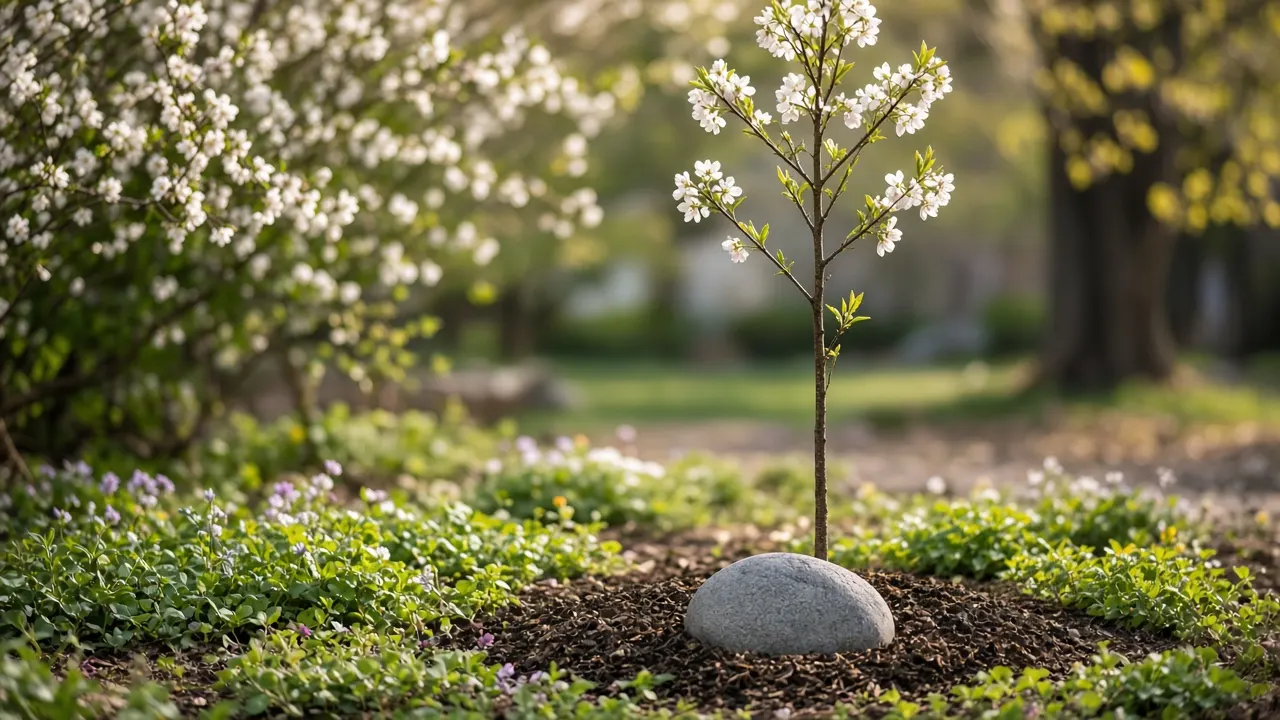
Seven in ten Australians choose cremation, and in Launceston an urn on the mantel or a plant in the garden is a familiar way to remember a pet. The cool, moist northern climate suits many trees and shrubs, so a rhododendron, a camellia or a small ornamental tree above a stone makes a living memorial. There is no hurry to decide.
Small towns tend to have long memories, and a memorial tree in Launceston is often planted with a lot of history around it: the same yard for decades, a family farm, a favorite fishing spot. If the land is likely to stay in the family, a long-lived native tree is a lovely choice. If it might be sold, consider a shrub bed, a portion of ashes kept back, or a water release that doesn't depend on who owns the ground in twenty years.
With roughly 90,000 residents, Launceston is the 2nd-largest of the 2 Tasmania communities we cover.
If you want to compare providers, look at Hobart (101 miles, a larger centre). Distance matters because pickup fees and the time until the ashes come back both grow with the drive.
Our estimate
30,000
Launceston: dog- or cat-owning households, our estimate
How we calculated this
90,000 ÷ 2.5 = 36,000 households; × 49% (dog) + 34% (cat) = 30,000. A household with several pets counts once.
Our estimate
2,500
Estimated dog and cat losses in Launceston each year
How we calculated this
30,000 dog/cat-owning homes ÷ average lifespan (dog: 12.69 yrs + cat: 11.18 yrs) ≈ 2,500 a year. The real figure is unlikely to be lower.
49%[1]
49% of Australian households have at least one dog, up from 40% in 2019.
12.69 years[2]
US dogs have an average life expectancy at birth of 12.69 years.
34%[3]
34% of Australian households have at least one cat, up from 27% in 2019.
11.18 years[4]
US cats seen at Banfield hospitals have an average life expectancy at birth of 11.18 years.
None of the figures on this this page are ours alone: they rest on Montoya et al. 2023, Frontiers in Veterinary Science and Animal Medicines Australia, Pets in Australia 2025 (media release).

How Australia feels about cremation
Because cremation is the norm in Australia, at roughly 71%[5] of deaths, green ideas about ashes are easy to raise without raised eyebrows. In the US, 68%[6] of people in NFDA's 2024 consumer survey expressed interest in green funeral or natural burial options. If you'd like the lower-impact route for a pet, start with the cremation method, then choose an urn that breaks down and a native plant.
That Australia rate is a human one, published by FuneralSmart (2023). We quote it for Launceston only as a pointer to how families here already think about cremation.
Weather, soil and planting windows in Launceston
The right tree for Launceston is one that already grows well in local gardens and parks. Walk around your neighborhood and note what looks healthy in older yards, then ask a nursery about those species. A native or well-established local tree will handle the weather far better than a seed from a kit made for another climate.
Budgeting for a living memorial in Launceston
Australian prices vary widely by state. Listed individual cremation runs from AUD 150 to 1,824 in NSW and AUD 199 to 749 in Victoria[7], so a second quote in Launceston can save real money. RSPCA Queensland's memorial packages start from AUD 250, with the ashes returned within 14 days[8]. Budget the biodegradable urn and a native seedling on top.
Prices for Launceston track the wider Tasmania market, so use the Tasmania price table as your baseline and the services page to see what is included.

Free tool
Memorial budget planner
Add up cremation, urn, keepsakes and a farewell so the total holds no surprises.
Who to ask before you plant or scatter in Tasmania
Natural burial grounds and some pet cemeteries in Tasmania accept ashes in biodegradable urns, and a few ask for nothing else: no plastic, no metal, no varnish. If you're considering one, ask what the urn may be made of, whether a tree or marker is allowed above it, and whether the fee includes looking after the plot.
In Australia, water cremation for people is legal only in New South Wales and the ACT[10], and pet aquamation is uncommon, so most bio urns hold ashes from flame cremation. Many inland soils are already alkaline, so extra compost matters. Choose a local native, and check the import rules before ordering a tree urn that ships with seeds from overseas.
The Tasmania page sets out who oversees pet cremation and what the state says about burial and scattering. Launceston's own bylaws can sit on top of that, so ask before you dig.
A simple plan for your pet's eco memorial
- If you're remembering more than one animal, decide early whether the ashes will be planted together or apart. Both are fine, but mixed ashes can't be separated later.
- Label each container clearly with the name and date as it comes back, especially if the ashes return months or years apart.
- Choose a bigger planting area when there are several sets of ashes; a long hedge, a cluster of shrubs or a few fruit trees gives the minerals more ground to disperse into.
- Keep a spoonful of each in separate keepsakes if anyone in the family wants to remember one animal on its own.
- Plan for the pets still living with you. Fresh soil with the scent of bone in it invites digging, so fence or cover the spot until it has settled.
- Add a marker for each name, or one stone that lists them all, so visitors know who the planting is for.
Ways to mark the spot and the date
Launceston's heritage streets and parks give the city a settled, lasting feel, and some families want a memorial to match: a slate or granite marker, a bronze plaque, a turned Tasmanian timber box. Others prefer something to keep close, such as a pendant or a clay paw print. Outdoors, damp and frost encourage moss, so hard stone with a sealed face lasts longest.
The services page is the place to compare what is included, there are guides for the big decisions and articles for the details, the planning tools turn your pet's details into figures, or see what other families chose in the poll results. If you live between Launceston and Hobart, either page applies. Every other community in Tasmania, and all of Australia, is listed too.

Reader polls
What would you choose?
Vote anonymously and see how other readers answered. The results are live counts from people who visit this site, so they show real opinions, not a scientific sample.
Would you consider releasing your pet's ashes in water?
Tap an answer to vote and see how others answered. Anonymous.
What kind of tree or plant would you choose?
Tap an answer to vote and see how others answered. Anonymous.
If you had to decide today, which aftercare would you choose for your pet?
Tap an answer to vote and see how others answered. Anonymous.

Free tools to help you plan
Memorial budget planner
Add up cremation, urn, keepsakes and a farewell so the total holds no surprises.

Memorial tree finder
Pick a tree for a planting urn that suits your climate, space and pet.

Aftercare options compared
Compare private, communal and water cremation with burial on cost, timing and what comes home.
Questions people ask
Is cremation common in Australia?
For people, yes: about 71%[5] of Australia deaths end in cremation, according to FuneralSmart (2023). Nobody publishes the same figure for pets, but in our experience pet choices in Launceston follow the human pattern closely, so cremation is the default most families here start from.
How many pet owners live in Launceston?
By our estimate, about 30,000 households in Launceston have at least one dog or cat, and around 2,500 are lost each year. We calculate this from the city's population of about 90,000, the average household size and national ownership and lifespan figures, so treat it as a floor rather than an exact count.
Can I bury pet ashes on a farm or rural land near Launceston?
On land you own, burying ashes is generally allowed. Keep the planting well away from wells, springs and streams, and away from ground where livestock graze or crops are grown. On someone else's land, including family land, ask the owner first and agree that the memorial can stay if the land changes hands.
How do I prepare pet ashes for planting?
Spread the ashes through a large volume of compost and soil rather than pouring them into the hole in one layer. Many gardeners add acidic material such as composted pine bark or leaf mould. One gardening guide suggests letting the mix rest for 90–120 days[11] before planting. A garden-center pH kit tells you when the mix is ready.
Is water cremation better for the environment?
It uses much less energy: pet aquamation is claimed to use about 90%[12] less energy than flame cremation, and it uses about as much water as 1–3 pet baths[13] per pet. The strongest carbon figures come from studies of human funerals, not pets, so treat them as a direction rather than a promise. You still get ashes back for a bio urn.
How long does a water-soluble urn take to dissolve?
Most are made from salt, sand, paper or gelatin and dissolve within minutes to hours once they sink. Some float briefly first, long enough for a few words: one maker's water urn floats for several minutes before dissolving[14]. Calm water gives the best result, so check the forecast for wind before you go.


Sources and our estimates
- [1] 49% of Australian households have at least one dog, up from 40% in 2019. Animal Medicines Australia, Pets in Australia 2025 (media release), 2025.
- [2] US dogs have an average life expectancy at birth of 12.69 years. Montoya et al. 2023, Frontiers in Veterinary Science - Banfield Pet Hospital life expectancy tables (13.3 million dogs, 2.4 million cats, 2013-2019), 2023.
- [3] 34% of Australian households have at least one cat, up from 27% in 2019. Animal Medicines Australia, Pets in Australia 2025 (media release), 2025.
- [4] US cats seen at Banfield hospitals have an average life expectancy at birth of 11.18 years. Montoya et al. 2023, Frontiers in Veterinary Science - Banfield Pet Hospital life expectancy tables (13.3 million dogs, 2.4 million cats, 2013-2019), 2023.
- [5] Australian cremation rates hovered around 70-72% between 2020 and 2023, with Sydney and Melbourne often above 80%. FuneralSmart, 2023.
- [6] 68% of respondents to NFDA's 2024 Consumer Awareness and Preferences Survey expressed interest in green funeral or natural burial options. NFDA — Green Burial Resources for Funeral Professionals, 2024.
- [7] Australian listed cremation price ranges vary by state: NSW AUD 150-1,824, VIC AUD 199-749, QLD AUD 165-3,670, WA AUD 175-750, SA AUD 400-1,980. Pet Farewell (Australia) - Pet Cremation Cost Australia (2026), 2026.
- [8] RSPCA Queensland's Pets at Rest memorial packages (individual cremation) start from AUD 250, with the memorial returned within 14 days. RSPCA Queensland - Pet cremation (RSPCA Pets at Rest), 2025.
- [9] If just 10% of U.S. pet cremations moved to aquamation, about 4,200 t CO2e a year would be avoided. Our estimate: 1.5M x 10% x 31.3 kg x 90% reduction. How we calculate.
- [10] In Australia, human Resomation (water cremation) is legal only in New South Wales and the ACT. Resomation Ltd: Where is Resomation permitted, 2024.
- [11] Gardening Know How advises letting an ash/soil-amendment mixture sit for at least 90 to 120 days before planting. Gardening Know How — Planting With Cremains: Is There a Safe Way to Bury Ashes, 2024.
- [12] Pet aquamation is described as available across all 50 US states, and is claimed to use about 90% less energy than flame cremation. Be a Tree Cremation pet aquamation guide, 2025.
- [13] Aquamation uses about the same water per pet as 1–3 pet baths. Veterinary Sustainability Alliance — Aquamation, 2024.
- [14] The Living Urn's Eco Water Urn for water burial costs $149 and holds up to 225 cubic inches; it floats for several minutes before dissolving. The Living Urn – Eco Water Urn, 2026.
Get bio urn options for Launceston
Tell us what you need and where you are. We'll reply by email with clear options and prices so you can decide in your own time.