Which tree will actually thrive over your pet's ashes?
Tree urn makers offer 30+ species[1], but the tree that lasts is the one suited to your climate, your space and soil made alkaline by ash. Answer three questions for a shortlist that fits.
- Suggestions for cold, mild, warm and dry climates
- Sized for pots, small yards and open land
- A reminder on planting safely with ash
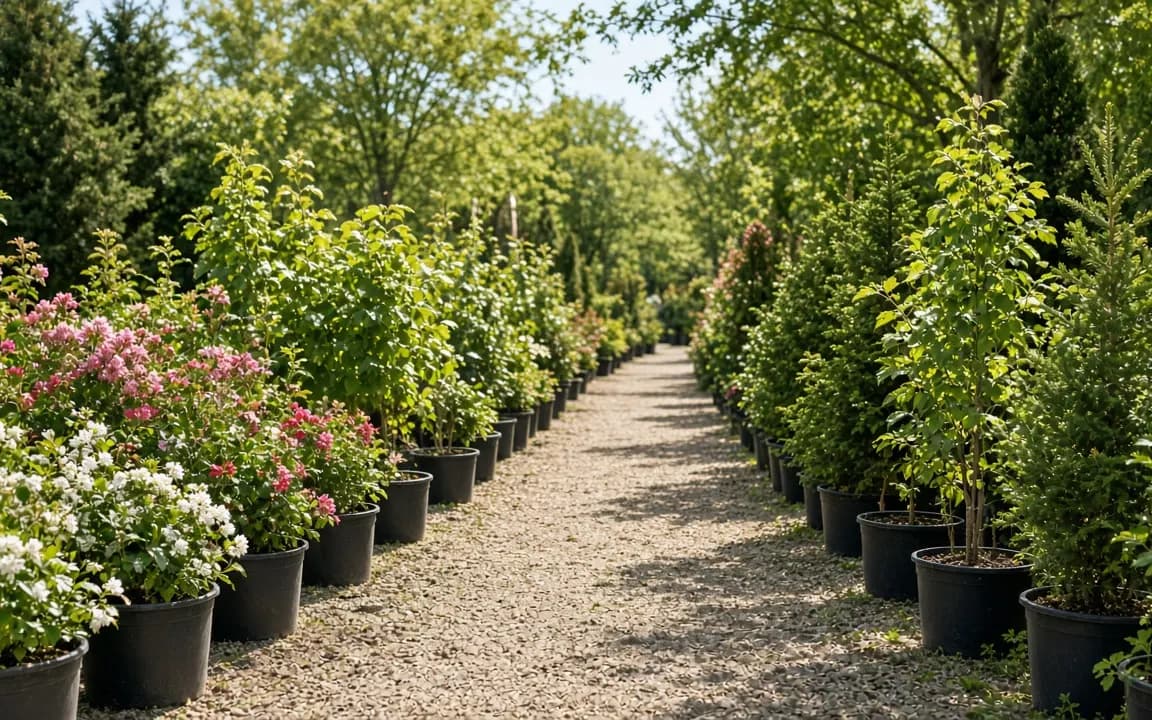
Memorial tree finder
Choose your climate, space and what you'd love the tree to do. We'll suggest a few that should thrive.
Flowering dogwood
Spring blossom and red autumn leaves; likes dappled light.
flowering, shade · strong match
Crabapple
Very hardy, with spring blossom and small fruit that birds love.
flowering, fruit · strong match
Serviceberry (Amelanchier)
White spring flowers, edible berries and fiery autumn colour. Tough and forgiving.
flowering, fruit · strong match
Eastern redbud
Pink-purple flowers on bare branches in early spring; heart-shaped leaves.
flowering · strong match
Mountain ash (rowan)
White flowers and bright red berries; traditionally a protective tree.
flowering, fruit · strong match
Planting with ashes? Cremated remains are very alkaline, so most bio urns mix them with a soil blend to protect young roots. If other pets use the garden, check that the tree's leaves and fruit are safe for them. A local nursery can confirm what grows best where you live.
Suggestions are a general guide, not a local planting plan.
Using the finder
Three questions that narrow a long list of trees
- Your climate. Cold (long freezing winters), temperate (four clear seasons), warm (mild winters, long summers) or hot and dry (low rainfall, intense sun). In the US these roughly match hardiness zones 3 to 5, 6 to 7, 8 to 9, and the arid Southwest.
- Your space. A pot on a patio or balcony, a small yard, or a large yard or field. This decides how big a tree can grow without crowding the house.
- What you'd like. Flowers in spring, fruit to pick, evergreen foliage, or shade to sit under.
You'll get five suggestions, top match first, each with a one-line note on its looks and toughness and tags for what it offers. A tree that would suit a different space better is flagged, and a short reminder on planting with alkaline ash sits under the list. Screenshot the list and take it to a local nursery; they'll know which of the suggestions they stock and what grows well on your street.
How it works
How the finder chooses its suggestions
The finder works from a fixed list of 22 widely sold trees, not from live data. A tree only appears if it suits the climate you pick. It then scores points for fitting your space and for offering what you asked for, with a little extra when that's its main feature, and the top five are shown. It doesn't screen for soil pH or check your county's invasive list.
The soil test matters more for a memorial than for ordinary planting. Cremated remains measure a pH of about 11.7[2], and even well-mixed soil around a memorial tends to sit higher than the garden around it for some years. The list does include a couple of trees that prefer slightly acidic soil, notably Japanese maple and flowering dogwood. If one comes up, keep the ash-mixed zone well away from its roots, or pick a lime-tolerant option such as serviceberry, redbud or crabapple. Our article on planning a planting with ash explains why.
Worked example
A small yard in a hot, dry climate, with flowers
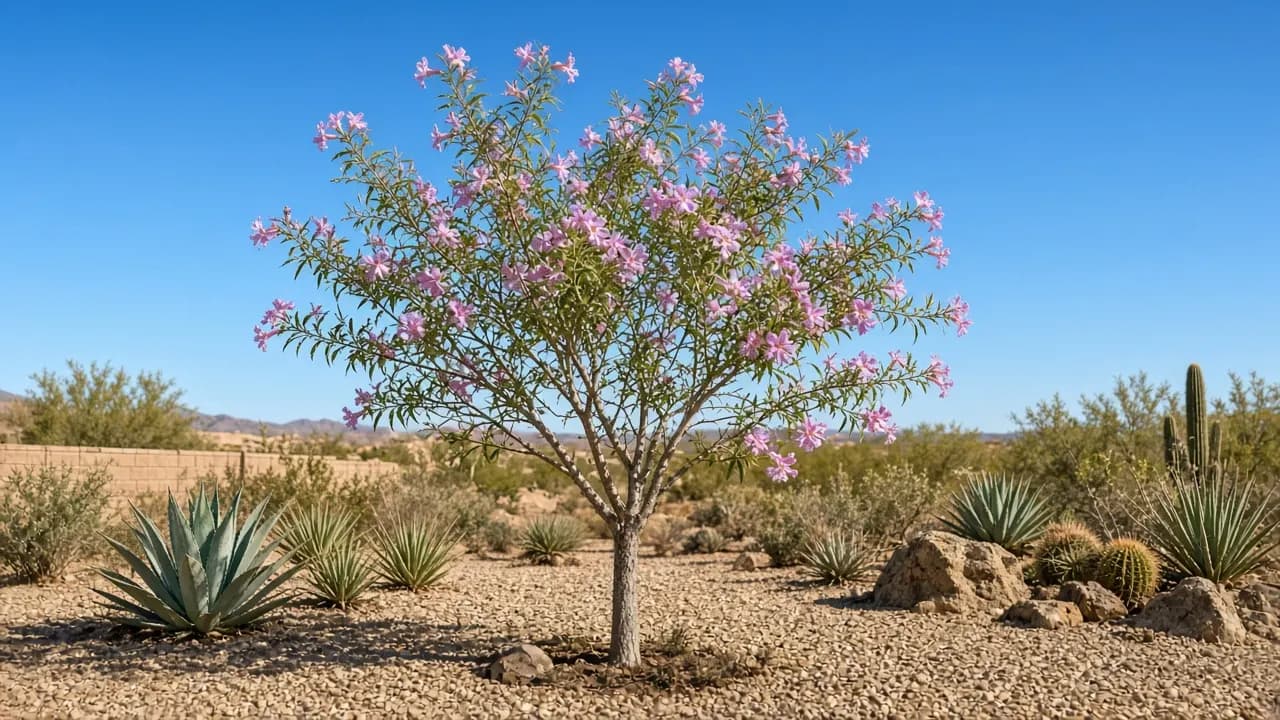
Say you live in Arizona or inland Southern California, have a modest backyard, and want something that flowers. The finder ranks crape myrtle and desert willow first, then Meyer lemon, pomegranate and olive. Desert willow is the natural pick for a dry garden: it handles heat, needs little water once established and grows happily in alkaline desert soils, which already tend to sit above neutral before any ash goes in.
Now compare a small yard in Minnesota. Choose cold, small yard and flowering, and crabapple, serviceberry and mountain ash come up instead, with a dwarf apple close behind: trees that shrug off hard winters and still flower in spring. Same pet, same urn, completely different tree.
What kind of tree or plant would you choose?
Tap an answer to vote and see how others answered. Anonymous.
Planting well
Getting the tree off to a strong start
A young nursery tree, one to three years old, is far more dependable than a seed from a tree urn kit. Plant in early spring or autumn when the soil is workable and the weather is mild. Dig a hole two to three times as wide as the root ball but no deeper, and set the tree so the flare where the trunk meets the roots sits at ground level. University of Maryland Extension's guide to planting a tree or shrub walks through the root-flare check step by step.
- Mix the ashes through a wide band of compost-rich soil around the hole, not in a layer directly under the roots.
- Some gardeners let the ash and amendment mix rest for 90–120 days[3] before the tree goes in.
- Water deeply once a week through the first two summers, more in heat waves.
- Keep mulch a hand's width away from the trunk.
- Plant medium and large trees at least 15 to 20 feet from the house and away from pipes.
For a large dog, remember how much ash there is: roughly 3-5% of body weight[4], which can be several pounds. Our soil-mix guide explains how to spread it through enough soil, and the urn size calculator gives you the volume to plan for. By our estimate, a 30 kg (66 lb) dog leaves 0.9-1.5 kg[5] of ash and a median giant breed about 3.8 lb[6], far more than a sapling's first roots should meet in one lump.
Renting or moving?
Choosing a tree for a pot you can take with you
If you pick "pot" as your space, the finder favors trees that tolerate root restriction, such as dwarf apple, olive, bay laurel, fig, Meyer lemon and dwarf Alberta spruce, depending on your climate. Use a container of at least 15 to 20 gallons with good drainage, and only part of the ashes, since a pot can't dilute salts the way open ground can.
Container trees need more watering and occasional repotting, but they move house with you. Our memorial garden guide has more on planting in containers and small spaces.
The fine print
What the tree finder can't know about your garden
The finder doesn't know your microclimate, your soil type, how much sun the spot gets, or which species your county lists as invasive. It also can't tell you whether a tree will survive an unusually hard winter or a drought in its second year. A local nursery, an extension office or a native plant society can fill those gaps in a single conversation. Our article on choosing trees for a pet memorial covers the questions to take with you.
Once you have a shortlist, add up the whole plan with the memorial budget planner, and if you'd like help choosing a planting urn, send us your area and your favorite. Our location pages add regional notes, and the poll results show which tree types other readers are choosing.

Free tool
Memorial budget planner
Add up cremation, urn, keepsakes and a farewell so the total holds no surprises.

Reader polls
What would you choose?
Vote anonymously and see how other readers answered. The results are live counts from people who visit this site, so they show real opinions, not a scientific sample.
What kind of tree or plant would you choose?
Tap an answer to vote and see how others answered. Anonymous.
Which living memorial feels most like your pet?
Tap an answer to vote and see how others answered. Anonymous.
Which memorial feels most like your pet?
Tap an answer to vote and see how others answered. Anonymous.

Free tools to help you plan

Memorial tree finder
Pick a tree for a planting urn that suits your climate, space and pet.
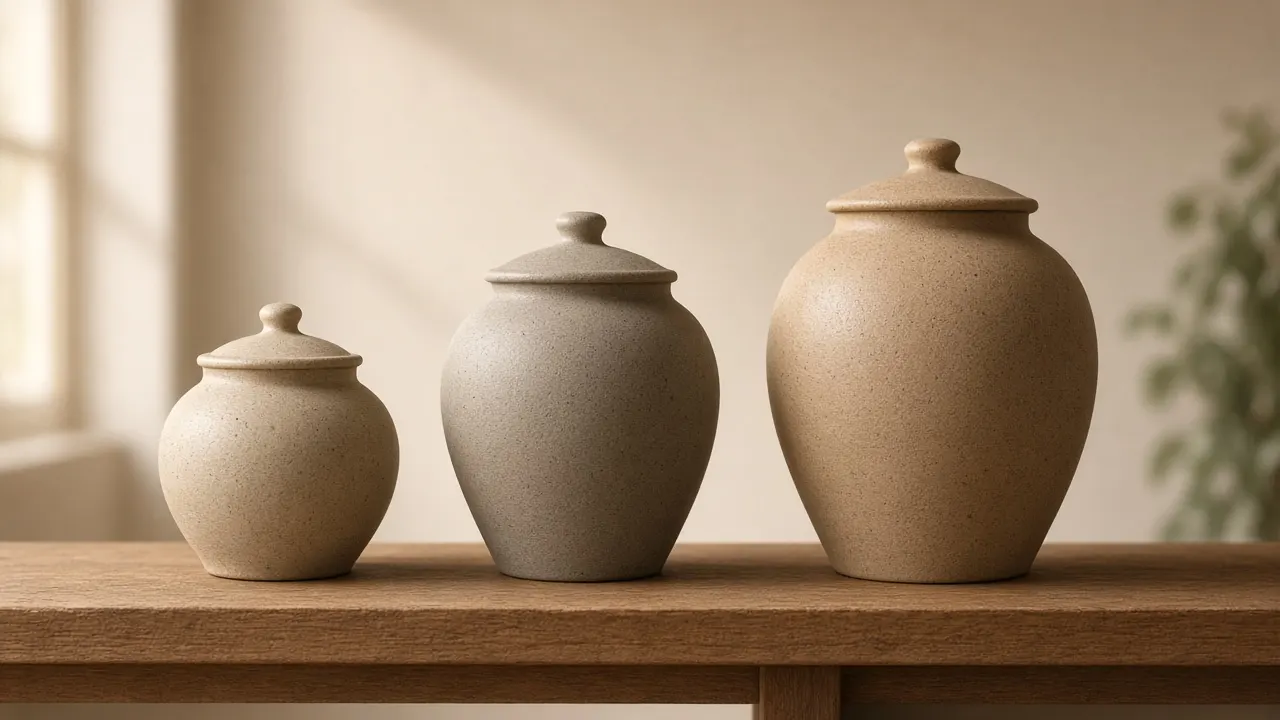
Urn size calculator
Find the urn volume you need from your pet's weight, plus keepsake and sharing options.
Memorial budget planner
Add up cremation, urn, keepsakes and a farewell so the total holds no surprises.
Questions people ask
What's a good memorial tree for a small garden?
Look for trees that stay under about 20 feet, such as serviceberry, redbud, a dwarf crabapple or a Japanese tree lilac, depending on your climate. They flower, fit near a house and tolerate slightly alkaline soil. Check the mature spread as well as height before you plant.
Can I plant a fruit tree with my pet's ashes?
Yes, and many families like the idea of picking fruit from a memorial tree. Mix the ashes well through the planting area, as you would for any tree. Ashes don't make fruit unsafe to eat, but some people prefer an ornamental tree for personal reasons, which is entirely up to you.
Should I use the seed that came with a tree urn kit?
You can, but seeds are slow and unreliable, and some need cold treatment before they'll sprout. A young tree from a nursery gives you a memorial you can see straight away and survives dry spells much better. Many kits work with a sapling planted in the top chamber.
When is the right time of year to plant a memorial tree?
Early spring or autumn in most climates, when the soil isn't frozen and the heat isn't extreme. In hot, dry regions, autumn or winter planting gives roots time to grow before summer. Ashes keep indefinitely, so waiting for the right season is fine.
Do I need to avoid trees that like acid soil?
It's safer to. Ash raises soil pH, so blueberries, azaleas, rhododendrons and some maples may yellow and struggle. If your heart is set on one, plant it well away from the ash-mixed zone, or keep the ashes for a different part of the garden.


Sources and our estimates
- [1] The Living Urn offers more than 30 tree species for its bio-urn planting system. The Living Urn — FAQ, 2026.
- [2] Cremated remains have a very high pH of approximately 11.7, which is toxic to plants without amendment. Larkspur Conservation — Giving Cremated Remains a New Life Through Science, 2024.
- [3] Gardening Know How advises letting an ash/soil-amendment mixture sit for at least 90 to 120 days before planting. Gardening Know How — Planting With Cremains: Is There a Safe Way to Bury Ashes, 2024.
- [4] Embrace notes cremated remains typically weigh about 3-5% of the pet's original body weight. Embrace Pet Insurance - Bury or Cremate Your Dog? Costs, Pros & Cons, 2025.
- [5] A 30 kg (66 lb) dog typically leaves about 0.9-1.5 kg of cremated remains, which helps size urns on location pages. Our estimate: 30 kg x 3% = 0.9 kg; 30 kg x 5% = 1.5 kg. How we calculate.
- [6] A median-weight giant-breed dog (48.8 kg / 108 lb) would be expected to return about 1.71 kg (3.8 lb) of cremated remains, needing an urn of about 108 cubic inches. Our estimate: 48.8 kg x 3.5% x 2.2046 lb/kg; urn = 108 lb x 1 cu in/lb. How we calculate.
Get tree urn options for your area
Tell us what you need and where you are. We'll reply by email with clear options and prices so you can decide in your own time.