Tree, garden and water memorials in Kenai
Roughly 240 Kenai families say goodbye to a dog or cat each year, by our count. A living memorial is one way to mark it. This guide explains how to make one that actually grows.
- A memorial that moves with you
- Why pure ashes harm young roots
- Written prices you can compare
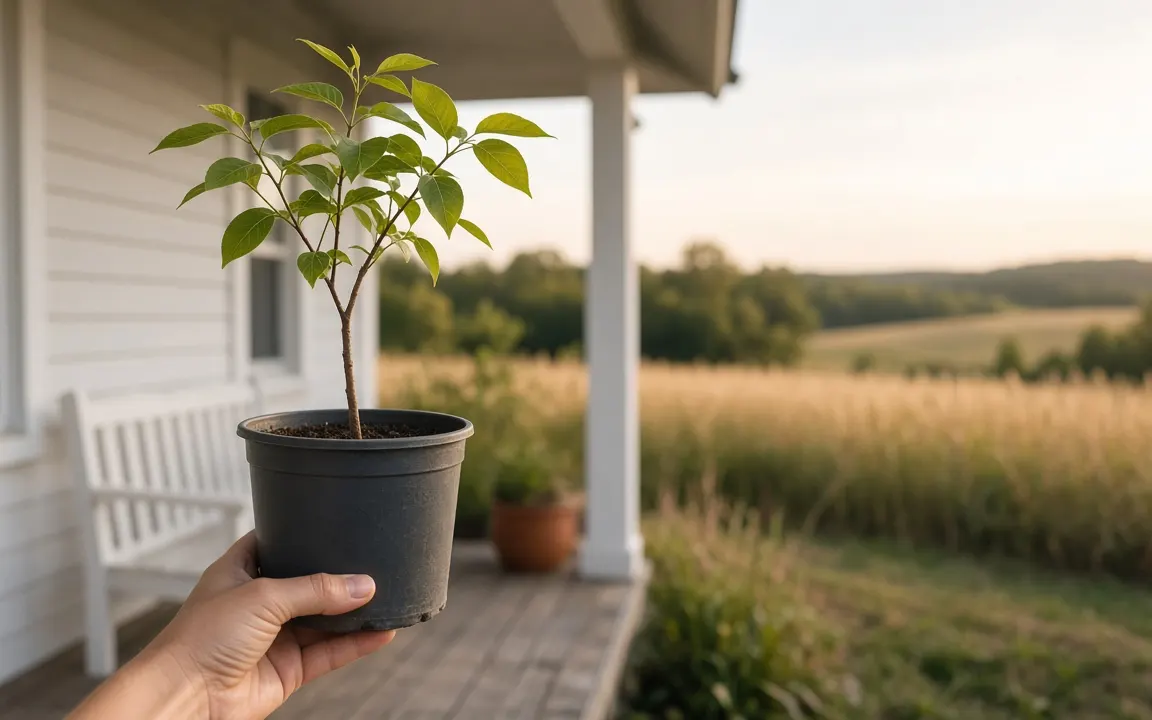
Kenai, Alaska
Planning a greener goodbye in Kenai
Many Kenai families hold on to ashes through winter and set a stone, plant a tree or bury an urn once the ground thaws in May. A simple urn indoors works fine in the meantime. If you are thinking of a memorial somewhere on public land along the river or the beach, look for somewhere you can visit without leaving anything permanent, and keep the marker at home.
Life in Kenai revolves around the river, fishing and the outdoors, and memorials often reflect that: an engraved stone from the beach, a small urn with a river scene, or a keepsake worn on a chain. Families who move off the peninsula later often wish they had set aside a small portion of ashes, so consider that when deciding what to do.
Horses, cattle, goats and sheep often share the land in the country around Kenai, and some trees are dangerous to them. Wilted red maple leaves are toxic to horses, and yew is poisonous to most livestock. If the memorial will stand near a pasture or fence line, ask a vet or the local extension office which species are safe for the animals that graze nearby.
Kenai is home to about 7,924 people, the 7th-largest of the 10 Alaska communities we cover. Anchorage, roughly 63 miles off, is the closest larger centre, and a share of the providers who cover Kenai run from there.
Families in Kenai often end up using a provider from Anchorage (63 miles, a larger centre), Homer (65 miles) and Wasilla (91 miles). That is normal: crematories serve a radius, not a single town, and the drive is priced into collection.
Our estimate
2,900
Kenai: dog- or cat-owning households, our estimate
How we calculated this
7,924 ÷ 2.5 = 3,170 households; × 53% (dog) + 39% (cat) = 2,900. Homes are counted once however many pets they keep.
Our estimate
240
Kenai families who lose a dog or cat each year (estimate)
How we calculated this
2,900 dog/cat-owning homes ÷ average lifespan (dog: 12.69 yrs + cat: 11.18 yrs) ≈ 240 a year. A floor, not a ceiling.
53%[1]
53% of US households own a dog, which is about 71 million households.
12.69 years[2]
US dogs have an average life expectancy at birth of 12.69 years.
39%[3]
39% of US households own a cat, which is about 53 million households.
11.18 years[4]
US cats seen at Banfield hospitals have an average life expectancy at birth of 11.18 years.
Sources for the statistics above: Montoya et al. 2023, Frontiers in Veterinary Science and American Pet Products Association (APPA) 2025 State of the Industry.
Cremation habits in Alaska, and what they mean for a bio urn
Cremation accounts for roughly 74.1%[5] of human deaths in Alaska, and a lot of those ashes end up waiting on a shelf. That's true of pets as well. If you already have an urn at home from an earlier pet, a bio urn can be a way to finish that story: the older ashes and the new can go into one planting, or two trees side by side, whenever you feel ready.
The Alaska figure comes from NFDA 2024 Cremation & Burial Report state projections (via Occasional Sage) (2024). It describes people, not pets, so read it as a sign of local attitudes rather than a pet statistic.
What Kenai's climate means for a living memorial
Freezing and thawing through January, February, March, April, October, November and December can heave a newly planted tree out of the ground in Kenai. If you plant in autumn, mulch well after the first frost to keep the soil temperature steady, and check the base of the tree in spring. A spring planting avoids the problem entirely and gives roots a full growing season before the next winter.
In places like Kenai, driveways and sidewalks are often salted in January, February, March, April, October, November and December. Ashes already add sodium to the soil, and road salt splashed onto the same bed doubles the load. Keep a memorial planting well back from salted paths and the edge of the road, and away from where snow gets piled. A spot uphill from the drive is better than one downhill of it.
What a greener goodbye costs in Kenai
Water cremation prices overlap with flame cremation. One Delaware provider charges $150–$450[6] for private aquamation by weight, including a standard urn, and $50–$225[7] for communal. That makes private about 2.5 times the shared price[8]. Prices in Kenai depend on who offers it locally, so ask for a written quote that says whether the ashes come back and in what container.
The full price table by product is on our Alaska page, and the services page explains what each option includes.

Free tool
Memorial budget planner
Add up cremation, urn, keepsakes and a farewell so the total holds no surprises.
Where you can plant or release ashes in Alaska
Rules about ashes were mostly written for people, and pet ashes often sit in a grey area. That's a reason to ask, not a reason to assume. On land you own, planting or burying ashes is generally fine. Anywhere else in Alaska, from parks to beaches to a friend's field, the land manager or owner decides, so ask first.
Not sure which office covers Kenai? The Alaska local government directory is the official list.
Start with the Alaska rules, which cover burial, scattering and oversight for the whole state, and treat Kenai's local ordinances as a possible extra layer.
What to do first, and what can wait for the right season
- If you're remembering more than one animal, decide early whether the ashes will be planted together or apart. Both are fine, but mixed ashes can't be separated later.
- Label each container clearly the moment it arrives, name and date on the lid, which matters most when the sets come home a long way apart.
- Choose a bigger planting area when there are several sets of ashes; a long hedge, a cluster of shrubs or a few fruit trees gives the minerals more ground to disperse into.
- Keep a spoonful of each in separate keepsakes if anyone in the family wants to remember one animal on its own.
- Plan for the pets still living with you. Fresh soil with the scent of bone in it invites digging, so fence or cover the spot until it has settled.
- Add a marker for each name, or one stone that lists them all, so visitors know who the planting is for.
Remembering your pet, in Kenai and wherever you go next
Winter frost heave and the salt wind off Cook Inlet are hard on outdoor memorials in Kenai. Natural stone and bronze last well, while painted concrete and resin crack and fade. If your yard slopes toward the inlet, set a marker in a sheltered spot. Planted memorials fare better with native birch or spruce that can handle the short growing season.
For a plain comparison of the choices, open services, or compare your instinct with the poll results, go deeper with the guides or catch up on recent articles, use the free tools before you ring anyone. Close to Kenai we also cover Juneau, Wasilla, Fairbanks and Sitka; the full list for Alaska and for the United States is a click away.

Reader polls
What would you choose?
Vote anonymously and see how other readers answered. The results are live counts from people who visit this site, so they show real opinions, not a scientific sample.
If water cremation (aquamation) were offered near you, would you choose it?
Tap an answer to vote and see how others answered. Anonymous.
What kind of tree or plant would you choose?
Tap an answer to vote and see how others answered. Anonymous.
If you had to decide today, which aftercare would you choose for your pet?
Tap an answer to vote and see how others answered. Anonymous.

Free tools to help you plan
Memorial budget planner
Add up cremation, urn, keepsakes and a farewell so the total holds no surprises.

Memorial tree finder
Pick a tree for a planting urn that suits your climate, space and pet.

Aftercare options compared
Compare private, communal and water cremation with burial on cost, timing and what comes home.
Questions people ask
Does the Kenai climate change what I should do first?
Only the timing. In July, with highs near 63°F, cool the body and book collection the same day. In January, February, March, April, October, November and December, when lows sit below freezing, a home burial may have to wait for a thaw, so cremation with ashes returned keeps your options open.
How many pet owners live in Kenai?
By our estimate, about 2,900 households in Kenai have at least one dog or cat, and around 240 are lost each year. We calculate this from the city's population of about 7,924, the average household size and national ownership and lifespan figures, so treat it as a floor rather than an exact count.
Which nearby towns can I compare with Kenai?
The closest communities we cover are Anchorage (about 63 miles), Homer (about 65 miles) and Wasilla (about 91 miles). Providers based in those places often serve Kenai too. Ask each one for a written total that includes collection, so the distance is priced in.
Is cremation common in Alaska?
For people, yes: about 74.1%[5] of Alaska deaths end in cremation, according to NFDA 2024 Cremation & Burial Report state projections (via Occasional Sage) (2024). Nobody publishes the same figure for pets, but in our experience pet choices in Kenai follow the human pattern closely, so cremation is the default most families here start from.
Can I plant a tree directly on my pet's ashes in Kenai?
It's better not to. Cremated remains have a very high pH, around 11.7[10], and they're high in sodium, so a solid layer of ash under the roots can yellow or kill a young tree. Mix the ashes through plenty of compost and soil across a wider area, test the pH, and plant once it has come down. There's no single mixing ratio that suits every pet and every soil.
Will the seed in a tree urn grow?
Not always. Seeds from kits can fail to sprout if they weren't stored or chilled correctly, and alkaline soil around them makes it harder. A young tree from a nursery near Kenai is far more reliable, and most planting urns work just as well with a sapling in the top chamber.


Sources and our estimates
- [1] 53% of US households own a dog, which is about 71 million households. American Pet Products Association (APPA) 2025 State of the Industry, 2025.
- [2] US dogs have an average life expectancy at birth of 12.69 years. Montoya et al. 2023, Frontiers in Veterinary Science - Banfield Pet Hospital life expectancy tables (13.3 million dogs, 2.4 million cats, 2013-2019), 2023.
- [3] 39% of US households own a cat, which is about 53 million households. American Pet Products Association (APPA) 2025 State of the Industry, 2025.
- [4] US cats seen at Banfield hospitals have an average life expectancy at birth of 11.18 years. Montoya et al. 2023, Frontiers in Veterinary Science - Banfield Pet Hospital life expectancy tables (13.3 million dogs, 2.4 million cats, 2013-2019), 2023.
- [5] The NFDA projected Alaska's cremation rate at 74.1% for 2024. NFDA 2024 Cremation & Burial Report state projections (via Occasional Sage), 2024.
- [6] Delaware Pet Aquamation charges $150–$450 for private aquamation by weight, from under 10 lb to 150 lb and over, including a standard urn. Delaware Pet Aquamation – Pricing, 2026.
- [7] Communal aquamation at the same Delaware provider costs $50–$225 by weight. Delaware Pet Aquamation – Pricing, 2026.
- [8] Private pet aquamation costs about 2.5 times communal aquamation at the same provider. Our estimate: mean of tier ratios 150/50, 200/75, 250/100, 350/150, 450/225. How we calculate.
- [9] If just 10% of U.S. pet cremations moved to aquamation, about 4,200 t CO2e a year would be avoided. Our estimate: 1.5M x 10% x 31.3 kg x 90% reduction. How we calculate.
- [10] Cremated remains have a very high pH of approximately 11.7, which is toxic to plants without amendment. Larkspur Conservation — Giving Cremated Remains a New Life Through Science, 2024.
Plan a living memorial in Kenai
Tell us what you need and where you are. We'll reply by email with clear options and prices so you can decide in your own time.