Planting your pet's ashes in Jacksonville
Roughly 900 Jacksonville families say goodbye to a dog or cat each year, by our count. A living memorial is one way to mark it. This guide explains how to make one that actually grows.
- When to plant in your season
- How much ash your urn must hold
- Aquamation providers in your area
Jacksonville, Arkansas
Living memorials in Jacksonville: the local picture
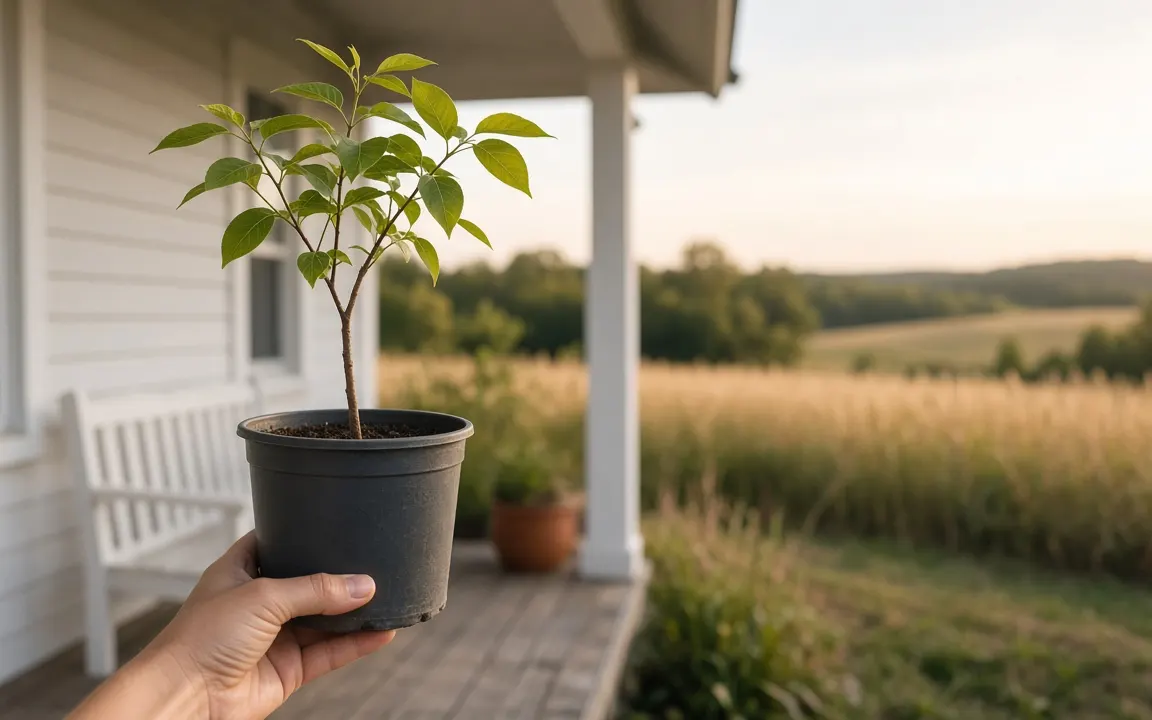
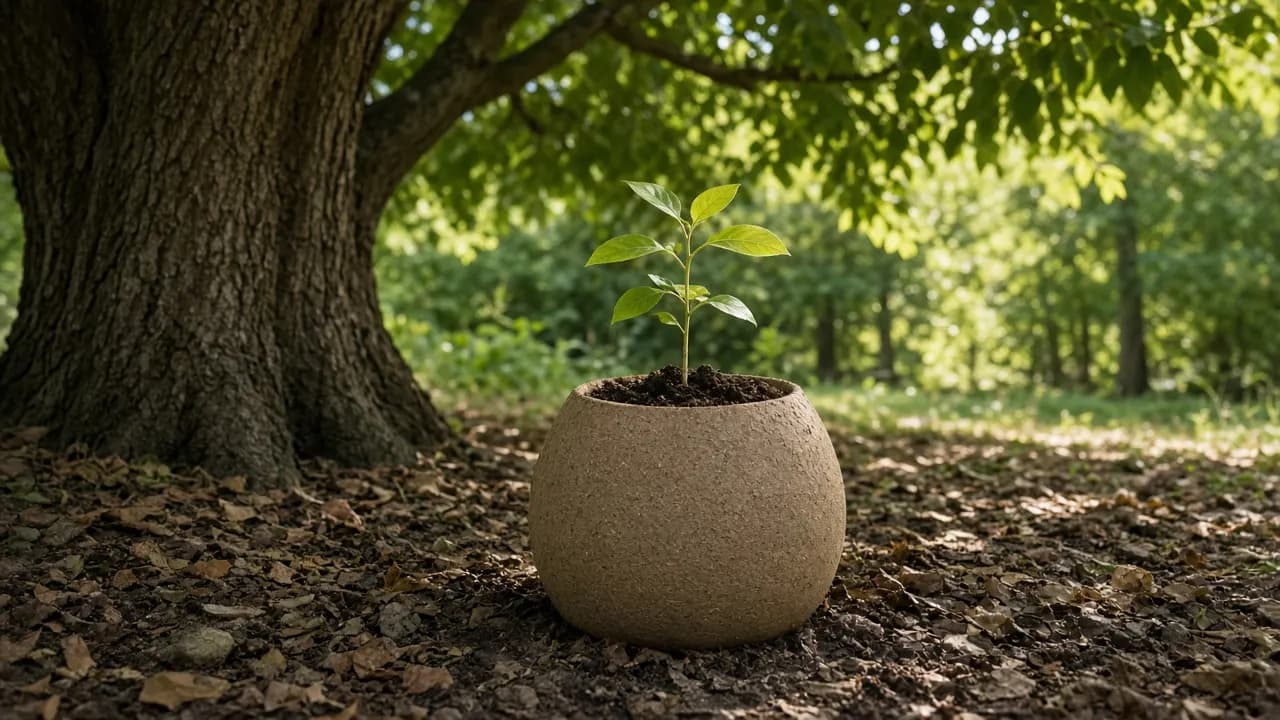
Longtime Jacksonville residents with yards may prefer a garden memorial: an engraved stone, a flowering shrub or a small tree planted with a biodegradable urn. Mild winters mean you can plant most of the year, though fall is easiest on new plants. Choose a spot that doesn't puddle after heavy rain, since low ground around the bayou country holds water.
For Jacksonville's military families, a memorial has to travel. Small sealed urns, paw print impressions, keepsake pendants and photo frames pack easily and survive a permanent change of station move. If you're unsure where your pet's ashes will finally rest, keep them in a sturdy container and carry them yourself when you move rather than packing them with household goods.
Country land around Jacksonville gives you options city families don't have, and a few extra things to think about. Keep ash plantings well away from wells, springs and streams, and away from ground where livestock graze or crops are grown. Choose a spot with some shelter from wind for a young tree, and remember that deer and rabbits find new plantings quickly; a simple tree guard or wire cage for the first few years can make all the difference.
Jacksonville is home to about 29,460 people, the 17th-largest of the 26 Arkansas communities we cover. The nearest larger centre is Little Rock, about 13 miles (21 km) away, which is where some providers serving Jacksonville are based.
The closest communities we cover are Sherwood (5 miles), North Little Rock (9 miles, a larger centre) and Cabot (9 miles). Providers serving those towns often travel to Jacksonville too, so it can be worth asking them for a quote.
Our estimate
11,000
How many dog- or cat-owning households Jacksonville has (estimate)
How we calculated this
29,460 ÷ 2.5 = 11,784 households; × 53% (dog) + 39% (cat) = 11,000. A household with several pets counts once.
Our estimate
900
Jacksonville families who lose a dog or cat each year (estimate)
How we calculated this
11,000 dog/cat-owning homes ÷ average lifespan (dog: 12.69 yrs + cat: 11.18 yrs) ≈ 900 a year. Treat it as a minimum.
53%[1]
53% of US households own a dog, which is about 71 million households.
12.69 years[2]
US dogs have an average life expectancy at birth of 12.69 years.
39%[3]
39% of US households own a cat, which is about 53 million households.
11.18 years[4]
US cats seen at Banfield hospitals have an average life expectancy at birth of 11.18 years.
Sources for the statistics above: American Pet Products Association (APPA) 2025 State of the Industry and Montoya et al. 2023, Frontiers in Veterinary Science.
Cremation, burial and green choices in Arkansas
The share of people cremated in Arkansas, now about 52.2%[5], keeps inching up. For pet owners, that shift has brought more questions about what to do once the ashes come home. There's no need to decide on the day. Many families keep the ashes for a season, talk about what their pet loved, and only then settle on a tree, a pot or a lake.
NFDA 2024 Cremation & Burial Report state projections (via Occasional Sage) (2024) is where the Arkansas figure comes from. It counts people; we use it because attitudes to cremating a pet in Jacksonville tend to follow attitudes to cremation generally.
Weather, soil and planting windows in Jacksonville
In Jacksonville's heat, containers dry out fast. If you're planting a memorial in a pot on a patio or balcony, choose a large, light-colored container, which heats up less than a small dark one, and place it where it gets afternoon shade in June, July and August. Use only a small share of the ashes in the pot, water until it drains freely so salts flush out, and check the soil every day in the hottest weeks.
In a hot climate like Jacksonville's, with highs of about 91°F in July, salt is a bigger problem than in wetter places. Rain is what washes sodium from ashes down past the roots, and dry heat lets it build up near the surface. Mix the ashes through a much larger volume of soil and compost than you'd think necessary, and water deeply and slowly after planting so salts move down, not up.
Price ranges for planting and water urns
Water cremation prices overlap with flame cremation. One Delaware provider charges $150–$450[6] for private aquamation by weight, including a standard urn, and $50–$225[7] for communal. That makes private about 2.5 times the shared price[8]. Prices in Jacksonville depend on who offers it locally, so ask for a written quote that says whether the ashes come back and in what container.
For a line-by-line price table, see the Arkansas overview; for what's included in each option, see our services.

Free tool
Memorial budget planner
Add up cremation, urn, keepsakes and a farewell so the total holds no surprises.
Where you can plant or release ashes in Arkansas
Rules change more often than most people realise, and many local policies about ashes were never written down at all. Treat any general guide for Arkansas, including ours, as a starting point. Whoever looks after that particular field, park or shoreline is the one whose answer counts, so it's worth getting it by email where you can.
Arkansas keeps an official directory of local governments; use it to reach the county or city office that covers Jacksonville.
The Arkansas page sets out who oversees pet cremation and what the state says about burial and scattering. Jacksonville's own bylaws can sit on top of that, so ask before you dig.
What to do first, and what can wait for the right season
- Take your time. There's no clock running on a bio urn. Sort out the cremation, bring the ashes home once they're released, and plant whenever you're ready, even months later.
- Ask for individual cremation, flame or water, so the ashes you plant are your pet's own. Ask for them in a plain container if you won't keep a display urn.
- Check how much ash you have. Most kits hold a fixed amount, so the remains of a big dog can overflow what the urn was designed for.
- Choose the place and the tree together. Think about sun, space, underground pipes and whether you'll still live there in ten years.
- Mix, don't layer. Work the ashes evenly into plenty of soil and compost, give it a few weeks to settle where possible, and check the pH.
- Plant in the right season, whatever that is in Jacksonville, soak the roots and mulch a wide circle.
- Mark the spot using a modest stone or a garden tag, and write the planting date down where it won't get lost.
Remembering your pet in Jacksonville
Some military households like a pet memorial with the same order and care as a service shadow box: a collar, tags and a photo behind glass, an engraved plate with dates, or a small flag-style display. Others prefer something softer, like a portrait, a garden stone or a pendant with a pinch of ashes. Choose whatever reflects your pet and your family.
Our services overview lays out every option side by side, look through our guides and the blog, try the free planning tools, or compare your instinct with the poll results. More local pages: Jonesboro, Rogers, Springdale and Fort Smith, the Arkansas overview and every city in the United States.

Reader polls
What would you choose?
Vote anonymously and see how other readers answered. The results are live counts from people who visit this site, so they show real opinions, not a scientific sample.
What kind of tree or plant would you choose?
Tap an answer to vote and see how others answered. Anonymous.
If you rent or might move, how would you handle a memorial planting?
Tap an answer to vote and see how others answered. Anonymous.
If you had to decide today, which aftercare would you choose for your pet?
Tap an answer to vote and see how others answered. Anonymous.

Free tools to help you plan
Memorial budget planner
Add up cremation, urn, keepsakes and a farewell so the total holds no surprises.

Memorial tree finder
Pick a tree for a planting urn that suits your climate, space and pet.

Aftercare options compared
Compare private, communal and water cremation with burial on cost, timing and what comes home.
Questions people ask
How do Arkansas attitudes to cremation compare?
NFDA 2024 Cremation & Burial Report state projections (via Occasional Sage) (2024) puts the Arkansas human cremation rate at about 52.2%[5]. We show it on the Jacksonville page because pet aftercare choices tend to track it: where cremation is normal for people, communal and private pet cremation are both easy to find.
Where are the providers that serve Jacksonville actually based?
Some are local, and some run from Little Rock, about 13 miles away. That is normal for a town this size. What matters is the collection time they quote for Jacksonville and whether the drive is priced into the total, so ask both up front.
Roughly how many pets die in Jacksonville each year?
Our estimate is around 900. It comes from Jacksonville's population (about 29,460), the average household size, the share of homes with a dog or cat (about 11,000 households here) and the average lifespan. It is arithmetic, not a count, so read it as a rough floor.
Can a provider from a neighbouring town collect from Jacksonville?
Usually yes. Sherwood is about 5 miles away, North Little Rock is about 9 miles away and Cabot is about 9 miles away, all inside a normal collection radius. Get the mileage written into the quote so there is no surprise on the day.
Can I put two pets' ashes in the same bio urn?
Yes, if the urn is big enough and everyone agrees, because once the ashes are mixed they can't be separated. Check the combined amount first: cremated remains weigh about 3-5% of body weight[10], so two large dogs may be too much for a single planting urn. Many families plant two urns close together instead, or set aside a pinch of each animal's ashes in a locket or small jar.
Is it safe to plant a fruit tree with my pet's ashes?
Cremated remains are mostly bone minerals, and once they're thoroughly blended into plenty of compost and garden soil, many gardeners grow fruit trees over them. The high pH and salt are the real concern for the tree, so dilute generously and test the pH. If eating fruit from the memorial feels wrong to anyone in your family, choose an ornamental tree instead.


Sources and our estimates
- [1] 53% of US households own a dog, which is about 71 million households. American Pet Products Association (APPA) 2025 State of the Industry, 2025.
- [2] US dogs have an average life expectancy at birth of 12.69 years. Montoya et al. 2023, Frontiers in Veterinary Science - Banfield Pet Hospital life expectancy tables (13.3 million dogs, 2.4 million cats, 2013-2019), 2023.
- [3] 39% of US households own a cat, which is about 53 million households. American Pet Products Association (APPA) 2025 State of the Industry, 2025.
- [4] US cats seen at Banfield hospitals have an average life expectancy at birth of 11.18 years. Montoya et al. 2023, Frontiers in Veterinary Science - Banfield Pet Hospital life expectancy tables (13.3 million dogs, 2.4 million cats, 2013-2019), 2023.
- [5] The NFDA projected Arkansas's cremation rate at 52.2% for 2024. NFDA 2024 Cremation & Burial Report state projections (via Occasional Sage), 2024.
- [6] Delaware Pet Aquamation charges $150–$450 for private aquamation by weight, from under 10 lb to 150 lb and over, including a standard urn. Delaware Pet Aquamation – Pricing, 2026.
- [7] Communal aquamation at the same Delaware provider costs $50–$225 by weight. Delaware Pet Aquamation – Pricing, 2026.
- [8] Private pet aquamation costs about 2.5 times communal aquamation at the same provider. Our estimate: mean of tier ratios 150/50, 200/75, 250/100, 350/150, 450/225. How we calculate.
- [9] Each shelter-animal flame cremation emits about 31 kg CO2e on average. Our estimate: 19,000 t CO2e / 607,000 animals. How we calculate.
- [10] Embrace notes cremated remains typically weigh about 3-5% of the pet's original body weight. Embrace Pet Insurance - Bury or Cremate Your Dog? Costs, Pros & Cons, 2025.
Get eco memorial ideas by email
Tell us what you need and where you are. We'll reply by email with clear options and prices so you can decide in your own time.