Greener pet aftercare in San Marcos, California
Roughly 2,900 San Marcos families say goodbye to a dog or cat each year, by our count. A living memorial is one way to mark it. This guide explains how to make one that actually grows.
- When to plant in your season
- How much ash your urn must hold
- Aquamation providers in your area

San Marcos, California
Where a living memorial fits in San Marcos
Scattering is a common wish in North County, whether on a family property, a favorite hillside view or at the coast. Before scattering anywhere public, check the rules with whoever manages the land, since parks and preserves have their own policies. Many people keep part of the ashes when they scatter, placing a portion in a small keepsake urn, a pendant or a memorial stone, so there's something to hold on to after the rest is released.
San Marcos has a young population, with a university and a community college in town, and memorial choices here often reflect that: a paw print keepsake, a framed photo with a small urn, or jewelry that goes wherever you do. If you're choosing for a whole family, it's fine to split the ashes so each person gets something that suits them. Ask for the keepsake impressions to be taken before cremation, as that can't be done afterward.
Many people near San Marcos have a lake, pond or river they walked with their dog every day. A water-soluble urn released there can feel exactly right. Before you do it, check who owns or manages the water: a private pond needs the owner's say-so, a public lake is usually managed by a state or county agency, and some reservoirs supply drinking water and don't allow anything to be released. Choose a quiet time and let nothing float away.
About 94,908 people live in San Marcos, which makes it the 77th-largest of the 307 California communities we cover. Some of the providers who serve San Marcos are based about 29 miles away in San Diego, the nearest larger centre, so collection times reflect that drive.
Families in San Marcos often end up using a provider from Escondido (5 miles), Vista (6 miles) and Encinitas (8 miles). That is normal: crematories serve a radius, not a single town, and the drive is priced into collection.
Our estimate
35,000
Estimated dog- or cat-owning households in San Marcos
How we calculated this
94,908 ÷ 2.5 = 37,963 households; × 53% (dog) + 39% (cat) = 35,000. Multi-pet homes count once.
Our estimate
2,900
dog and cat deaths per year in San Marcos, our estimate
How we calculated this
35,000 dog/cat-owning homes ÷ average lifespan (dog: 12.69 yrs + cat: 11.18 yrs) ≈ 2,900 a year. The real figure is unlikely to be lower.
53%[1]
53% of US households own a dog, which is about 71 million households.
12.69 years[2]
US dogs have an average life expectancy at birth of 12.69 years.
39%[3]
39% of US households own a cat, which is about 53 million households.
11.18 years[4]
US cats seen at Banfield hospitals have an average life expectancy at birth of 11.18 years.
To check the figures yourself, see Montoya et al. 2023, Frontiers in Veterinary Science and American Pet Products Association (APPA) 2025 State of the Industry.

The local attitude to ashes and memorials
In California, about 70.5%[5] of people are cremated, one of the higher rates around. When most human funerals end with ashes, the question "what shall we do with them?" comes up in nearly every family, and a tree, a garden bed or a lake release is a common answer. That familiarity carries over to pets. It also means more crematories to choose from, and more chance that one of them offers water cremation.
That California rate is a human one, published by NFDA 2024 Cremation & Burial Report state projections (via Occasional Sage) (2024). We quote it for San Marcos only as a pointer to how families here already think about cremation.
Choosing the right month to plant in San Marcos
Damp, mild air suits fungus as well as trees. In San Marcos, choose a species or variety known to resist the leaf spots, mildews and cankers that local gardeners complain about, and plant it where air moves freely rather than in a sheltered, stagnant corner. A nursery that has sold trees locally for years will know which ones stay clean.
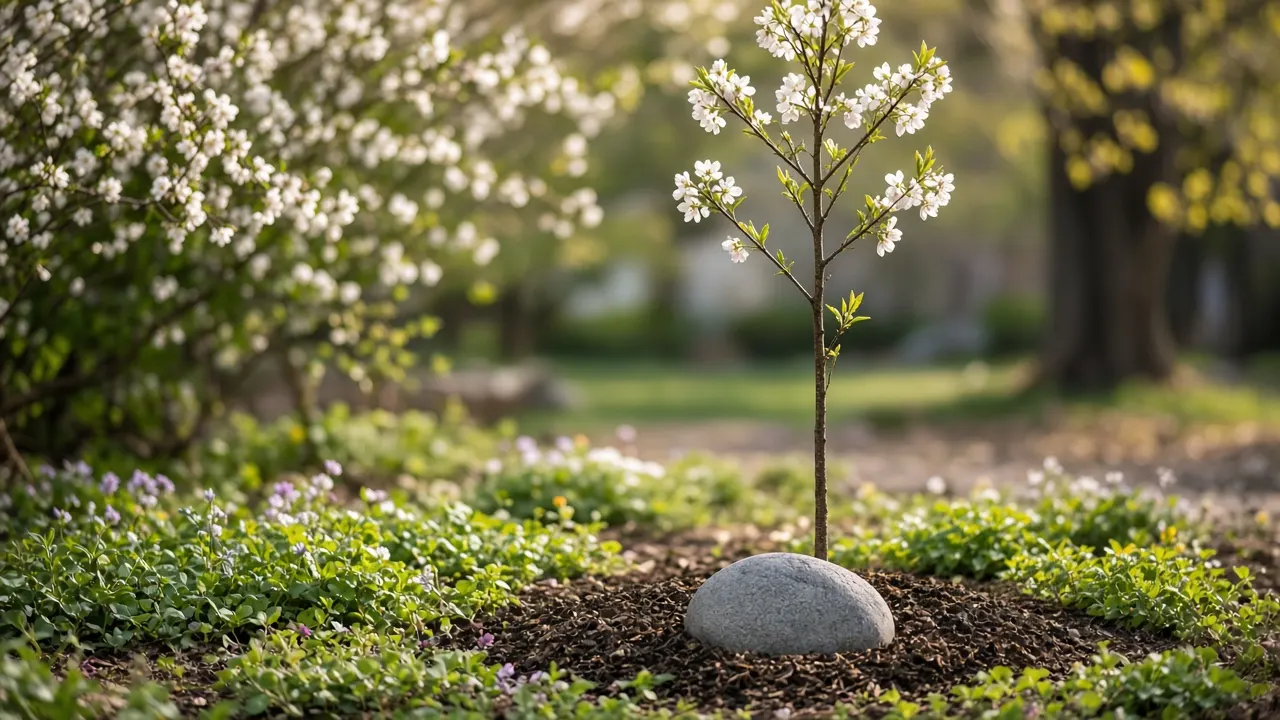
In a gentle climate like San Marcos's, grass and weeds grow nearly all year, and they compete hard with a young tree for water. Keep a clear circle of bare, mulched soil around the base, at least an arm's length across, for the first three years. It also stops mowers and strimmers from nicking the bark, which is how many young trees are lost.
Price ranges for planting and water urns
Water cremation prices overlap with flame cremation. One Delaware provider charges $150–$450[6] for private aquamation by weight, including a standard urn, and $50–$225[7] for communal. That makes private about 2.5 times the shared price[8]. Prices in San Marcos depend on who offers it locally, so ask for a written quote that says whether the ashes come back and in what container.
The California price table breaks costs down by product; our services page explains what sits behind each line.

Free tool
Memorial budget planner
Add up cremation, urn, keepsakes and a farewell so the total holds no surprises.
What California allows for ashes, in general terms
Carrying ashes from one place to another is usually simple, but keep the paperwork. The certificate or letter from the crematory shows what's in the container, which helps if you're crossing borders, flying out of California or handing the ashes to a cemetery. Keep a copy with the ashes and another somewhere safe at home.
To find your county or city office in California, start with the official California local government directory.
The California page sets out who oversees pet cremation and what the state says about burial and scattering. San Marcos's own bylaws can sit on top of that, so ask before you dig.
What to do first, and what can wait for the right season
- If you're remembering more than one animal, settle at the start on one shared planting or separate ones. Either works, but once the ashes are combined there's no undoing it.
- Label each container clearly with the name and date as it comes back, especially if the ashes return months or years apart.
- Choose a bigger planting area for several sets of ashes: a hedge, a group of shrubs or a small orchard spreads the mineral load across more soil.
- Keep a spoonful of each in separate keepsakes if anyone in the family wants to remember one animal on its own.
- Plan for the pets still living with you. Fresh soil with the scent of bone in it invites digging, so fence or cover the spot until it has settled.
- Add a marker for each name, or a single stone carrying all of them, so anyone visiting understands who is remembered there.
Living memorials beyond the backyard
Many San Marcos households have a patio or small yard rather than big garden space, so outdoor memorials tend to be compact: a flat engraved stone among succulents, a planter with a memorial plaque, or a small tree in a container. Hot sun and dry winds are hard on some materials, so choose stone, sealed ceramic or powder-coated metal for anything that stays outdoors. Indoors, a small urn on a shelf or a keepsake that holds a pinch of ashes works in any size of home.
the planning tools turn your pet's details into figures, go deeper with the guides or catch up on recent articles, or see how other readers answered in our polls, For a plain comparison of the choices, open services. If you live between San Marcos and San Diego, Fresno, Sacramento and San Francisco, either page applies. Every other community in California, and all of the United States, is listed too.

Reader polls
What would you choose?
Vote anonymously and see how other readers answered. The results are live counts from people who visit this site, so they show real opinions, not a scientific sample.
Would you consider releasing your pet's ashes in water?
Tap an answer to vote and see how others answered. Anonymous.
What kind of tree or plant would you choose?
Tap an answer to vote and see how others answered. Anonymous.
If you had to decide today, which aftercare would you choose for your pet?
Tap an answer to vote and see how others answered. Anonymous.

Free tools to help you plan
Memorial budget planner
Add up cremation, urn, keepsakes and a farewell so the total holds no surprises.

Memorial tree finder
Pick a tree for a planting urn that suits your climate, space and pet.

Aftercare options compared
Compare private, communal and water cremation with burial on cost, timing and what comes home.
Questions people ask
Will I have to travel to San Diego to arrange things?
Not usually. Providers based in San Diego (roughly 29 miles from San Marcos) collect from here as a matter of routine, and the paperwork is done by email or phone. If you want to be present for a witnessed cremation, that is when the drive matters.
Why does the San Marcos page quote a human cremation rate?
Because it is the best local signal we have. NFDA 2024 Cremation & Burial Report state projections (via Occasional Sage) (2024) reports about 70.5%[5] of California residents are cremated. There is no official pet equivalent, and inventing one would be worse than quoting a real, clearly labelled number.
Which nearby towns can I compare with San Marcos?
The closest communities we cover are Escondido (about 5 miles), Vista (about 6 miles) and Encinitas (about 8 miles). Providers based in those places often serve San Marcos too. Ask each one for a written total that includes collection, so the distance is priced in.
Is San Marcos big enough to have several pet aftercare providers?
Probably, on the numbers. By our estimate about 35,000 San Marcos households keep a dog or cat and around 2,900 lose one each year, which is enough steady demand to support more than one provider. We derive that from population (about 94,908), household size and national ownership and lifespan figures.
Where can I buy a native tree for a pet memorial in San Marcos?
A local nursery or garden center is the best place, because staff know what survives local heat, cold and soil. Some county extension offices and native plant societies run plant sales too. Ask for a two-year-old sapling of a species that tolerates slightly alkaline soil, and ask how much water it needs in its first summer.
How long does it take to get ashes back for planting?
Most private cremations return ashes within one to two weeks, and water cremation cycles themselves take 12–20 hours[10], so allow a similar time. In a smaller place, if the cremation happens in a larger centre such as San Diego, it may take a little longer. Planting can wait, so there's no need to rush.


Sources and our estimates
- [1] 53% of US households own a dog, which is about 71 million households. American Pet Products Association (APPA) 2025 State of the Industry, 2025.
- [2] US dogs have an average life expectancy at birth of 12.69 years. Montoya et al. 2023, Frontiers in Veterinary Science - Banfield Pet Hospital life expectancy tables (13.3 million dogs, 2.4 million cats, 2013-2019), 2023.
- [3] 39% of US households own a cat, which is about 53 million households. American Pet Products Association (APPA) 2025 State of the Industry, 2025.
- [4] US cats seen at Banfield hospitals have an average life expectancy at birth of 11.18 years. Montoya et al. 2023, Frontiers in Veterinary Science - Banfield Pet Hospital life expectancy tables (13.3 million dogs, 2.4 million cats, 2013-2019), 2023.
- [5] The NFDA projected California's cremation rate at 70.5% for 2024. NFDA 2024 Cremation & Burial Report state projections (via Occasional Sage), 2024.
- [6] Delaware Pet Aquamation charges $150–$450 for private aquamation by weight, from under 10 lb to 150 lb and over, including a standard urn. Delaware Pet Aquamation – Pricing, 2026.
- [7] Communal aquamation at the same Delaware provider costs $50–$225 by weight. Delaware Pet Aquamation – Pricing, 2026.
- [8] Private pet aquamation costs about 2.5 times communal aquamation at the same provider. Our estimate: mean of tier ratios 150/50, 200/75, 250/100, 350/150, 450/225. How we calculate.
- [9] Each shelter-animal flame cremation emits about 31 kg CO2e on average. Our estimate: 19,000 t CO2e / 607,000 animals. How we calculate.
- [10] A PET-550 aquamation cycle takes 12–20 hours for a single pet and 14–20 hours for segregated or communal cycles, with up to 14 compartments. Bio-Response Solutions — PET-550 Aquamation System product page, 2026.
Get bio urn options for San Marcos
Tell us what you need and where you are. We'll reply by email with clear options and prices so you can decide in your own time.