Planting your pet's ashes in Cartersville
About 780 dogs and cats are lost in Cartersville each year, by our estimate. If you'd like your pet's ashes to grow into a tree or return to the water, this page covers the soil, the season and the cost.
- When to plant in your season
- How much ash your urn must hold
- Aquamation providers in your area

Cartersville, Georgia
Bio urns, trees and water in Cartersville
Cartersville's older homes often have mature gardens, and newer subdivisions come with HOA rules, so memorial choices vary. A low stone set among perennials suits both. Inside, a bookshelf urn, a pendant or a clay impression of a paw is always an option. Many people bring the ashes home and take a few weeks, or months, before choosing anything permanent.
Some Cartersville families want a memorial tied to the hills and rivers: a native tree set over part of the ashes, an Etowah river rock lettered by an engraver, or a pendant for the child who shared a bed with the pet. Before splitting the ashes, get an approximate amount from the crematory so each piece can be filled as intended.
Horses, cattle, goats and sheep often share the land in the country around Cartersville, and some trees are dangerous to them. Wilted red maple leaves are toxic to horses, and yew is poisonous to most livestock. If the memorial will stand near a pasture or fence line, ask a vet or the local extension office which species are safe for the animals that graze nearby.
With roughly 25,349 residents, Cartersville is the 46th-largest of the 68 Georgia communities we cover. Some of the providers who serve Cartersville are based about 37 miles away in Atlanta, the nearest larger centre, so collection times reflect that drive.
Cartersville sits within easy reach of Acworth (10 miles), Kennesaw (14 miles) and Woodstock (17 miles). A provider based in any of them will usually collect from Cartersville; ask what the mileage adds to the bill.
Our estimate
9,350
Cartersville: dog- or cat-owning households, our estimate
How we calculated this
25,349 ÷ 2.5 = 10,140 households; × 53% (dog) + 39% (cat) = 9,350. Homes are counted once however many pets they keep.
Our estimate
780
Estimated dog and cat losses in Cartersville each year
How we calculated this
9,350 dog/cat-owning homes ÷ average lifespan (dog: 12.69 yrs + cat: 11.18 yrs) ≈ 780 a year. The real figure is unlikely to be lower.
53%[1]
53% of US households own a dog, which is about 71 million households.
12.69 years[2]
US dogs have an average life expectancy at birth of 12.69 years.
39%[3]
39% of US households own a cat, which is about 53 million households.
11.18 years[4]
US cats seen at Banfield hospitals have an average life expectancy at birth of 11.18 years.
Sources for the statistics above: Montoya et al. 2023, Frontiers in Veterinary Science and American Pet Products Association (APPA) 2025 State of the Industry.

Cremation habits in Georgia, and what they mean for a bio urn
About 54.2%[5] of people in Georgia are cremated, which puts it in the middle: cremation is common, but so is burial. For pets, that often means families weigh a planting urn against a whole-body burial in the yard. Both can grow a tree. The planting urn takes less space and can go almost anywhere; a whole-body grave needs more depth and distance from water, and the tree should go beside it rather than directly on top.
For the Georgia figure we rely on NFDA 2024 Cremation & Burial Report state projections (via Occasional Sage) (2024). Read it as a picture of local custom around death and remembrance in Cartersville rather than as pet data.
When to plant in Cartersville's climate
In Cartersville's heat, containers dry out fast. If you're planting a memorial in a pot on a patio or balcony, choose a large, light-colored container, which heats up less than a small dark one, and place it where it gets afternoon shade in June, July and August. Use only a small share of the ashes in the pot, water until it drains freely so salts flush out, and check the soil every day in the hottest weeks.
Watering is where most memorial trees in hot places succeed or fail. In Cartersville, give a new planting a slow, deep soak once or twice a week through June, July and August rather than a daily sprinkle. A drip line or a slow-release watering bag works well if you'll be away. A deep soak flushes salts from the ash blend below the root zone and coaxes roots to grow downward too.
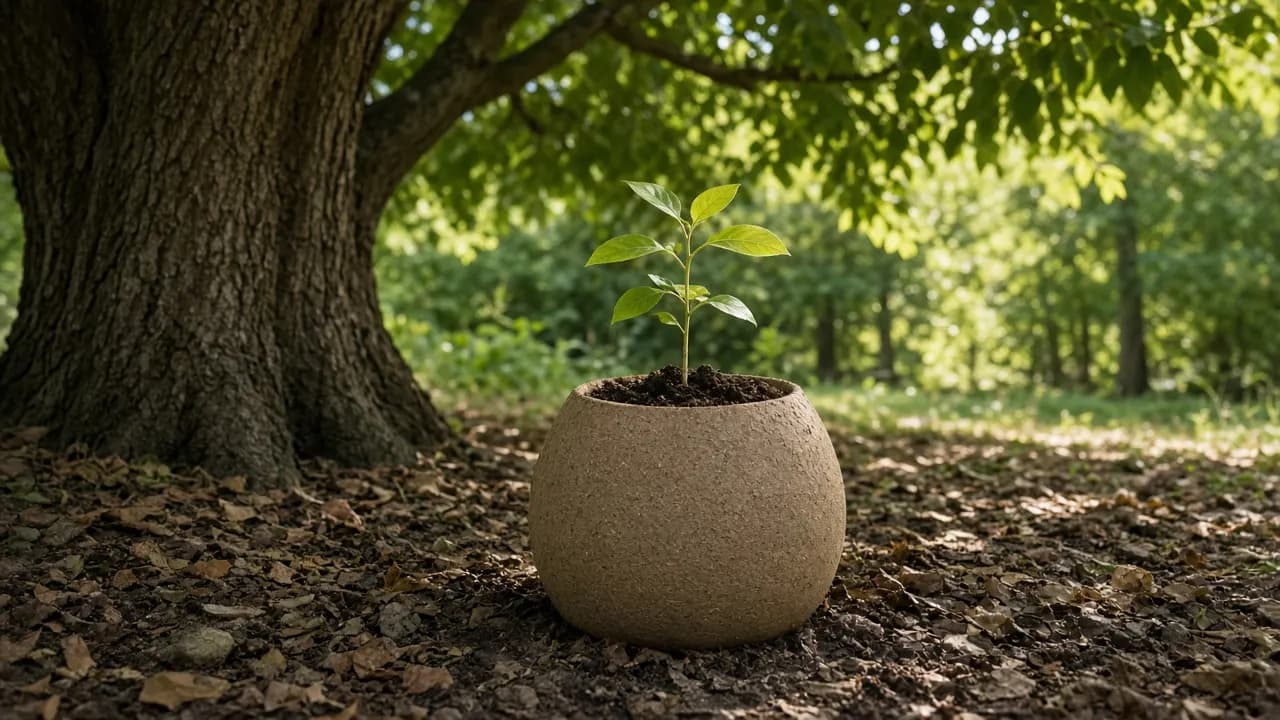
Adding up the cost of a bio urn memorial in Cartersville
A living memorial in Cartersville has two costs: the cremation and the urn. Biodegradable pet urns are among the cheaper urns you can buy, listed at about $15–$80[6] in one national price guide, and a sapling from a local nursery often costs less than a decorative display urn. If you'd like water cremation, one pet insurer's guide lists aquamation at $80 to $450 depending on size[7]. The table shows published examples.
Prices for Cartersville track the wider Georgia market, so use the Georgia price table as your baseline and the services page to see what is included.

Free tool
Memorial budget planner
Add up cremation, urn, keepsakes and a farewell so the total holds no surprises.
What Georgia allows for ashes, in general terms
Natural burial grounds and some pet cemeteries in Georgia accept ashes in biodegradable urns, and a few ask for nothing else: no plastic, no metal, no varnish. If you're considering one, ask what the urn may be made of, whether a tree or marker is allowed above it, and whether the fee includes looking after the plot.
The official Georgia local government directory lists every county and city office, which is the quickest way to find who to ask in Cartersville.
We keep Georgia's burial and scattering rules in one place: the Georgia rules summary. Before a home burial in Cartersville, also ask the city whether local ordinances add anything.
What to do first, and what can wait for the right season
- Talk it through with your household before deciding anything, since someone may quietly prefer the ashes to stay indoors.
- Measure your space. A tree needs room to grow; a shrub, a pot or a flower bed may suit your garden better.
- Test the soil at the planting site. Ground that already reads alkaline calls for a species that tolerates lime, plus more compost or composted bark than usual.
- Spread the ashes through a wide planting area, never as a single layer under the roots.
- Water well for two summers. Most memorial trees that fail do so in their first dry season, not their first winter.
- Keep a record of the species, the date and what went into the soil, so you can care for it or move a cutting later.
Ways to mark the spot and the date
Bartow County's hot, humid summers, heavy spring rain and January freezes are hard on cheap outdoor pieces. Granite, fieldstone and cast bronze endure for generations; painted resin fades within a season or two. Set a marker slightly above the soil on a bed of crushed stone so water drains away, and keep collars and photos inside, where the damp cannot reach them.
The services page is the place to compare what is included, try the free planning tools, look through our guides and the blog, or see what other families chose in the poll results. More local pages: Atlanta, Savannah, Augusta and Columbus, the Georgia overview and every city in the United States.

Reader polls
What would you choose?
Vote anonymously and see how other readers answered. The results are live counts from people who visit this site, so they show real opinions, not a scientific sample.
What kind of tree or plant would you choose?
Tap an answer to vote and see how others answered. Anonymous.
If you rent or might move, how would you handle a memorial planting?
Tap an answer to vote and see how others answered. Anonymous.
If you had to decide today, which aftercare would you choose for your pet?
Tap an answer to vote and see how others answered. Anonymous.

Free tools to help you plan
Memorial budget planner
Add up cremation, urn, keepsakes and a farewell so the total holds no surprises.

Memorial tree finder
Pick a tree for a planting urn that suits your climate, space and pet.

Aftercare options compared
Compare private, communal and water cremation with burial on cost, timing and what comes home.
Questions people ask
Where are the providers that serve Cartersville actually based?
Some are local, and some run from Atlanta, about 37 miles away. That is normal for a town this size. What matters is the collection time they quote for Cartersville and whether the drive is priced into the total, so ask both up front.
When is the hardest time of year to arrange a burial in Cartersville?
January: average lows are below freezing then, and frozen ground makes a home grave slow or impossible until it thaws. The other pressure point is July, when highs around 90°F mean a body needs cooling and collecting quickly.
Is Cartersville big enough to have several pet aftercare providers?
Probably, on the numbers. By our estimate about 9,350 Cartersville households keep a dog or cat and around 780 lose one each year, which is enough steady demand to support more than one provider. We derive that from population (about 25,349), household size and national ownership and lifespan figures.
Is cremation common in Georgia?
For people, yes: about 54.2%[5] of Georgia deaths end in cremation, according to NFDA 2024 Cremation & Burial Report state projections (via Occasional Sage) (2024). Nobody publishes the same figure for pets, but in our experience pet choices in Cartersville follow the human pattern closely, so cremation is the default most families here start from.
What if my pet dies when it's too hot or cold to plant?
Wait. Ashes don't need to go into the ground quickly, and a tree planted in the wrong season is more likely to fail. Keep them in the container from the crematory, use the time to choose a species and prepare the soil mix, and plant when the weather in Cartersville is kind to young roots.
Which memorial plants are dangerous to cats and dogs?
Lilies are highly toxic to cats, even the pollen. Sago palm, oleander, yew, azalea and foxglove can poison dogs, and several of them harm cats and horses too. If you have pets at home in Cartersville, ask a vet or nursery to confirm a plant is safe before you buy it. Grasses, many herbs and most fruit trees are safer choices, though large amounts of fallen fruit can still upset a dog's stomach.


Sources and our estimates
- [1] 53% of US households own a dog, which is about 71 million households. American Pet Products Association (APPA) 2025 State of the Industry, 2025.
- [2] US dogs have an average life expectancy at birth of 12.69 years. Montoya et al. 2023, Frontiers in Veterinary Science - Banfield Pet Hospital life expectancy tables (13.3 million dogs, 2.4 million cats, 2013-2019), 2023.
- [3] 39% of US households own a cat, which is about 53 million households. American Pet Products Association (APPA) 2025 State of the Industry, 2025.
- [4] US cats seen at Banfield hospitals have an average life expectancy at birth of 11.18 years. Montoya et al. 2023, Frontiers in Veterinary Science - Banfield Pet Hospital life expectancy tables (13.3 million dogs, 2.4 million cats, 2013-2019), 2023.
- [5] The NFDA projected Georgia's cremation rate at 54.2% for 2024. NFDA 2024 Cremation & Burial Report state projections (via Occasional Sage), 2024.
- [6] Memorials.com's pet urn cost guide puts biodegradable pet urns at $15–$80. Memorials.com – Pet Urn Cost Guide, 2025.
- [7] Embrace Pet Insurance lists US communal cremation at $30-$200, partitioned at $50-$250, private at $100-$500+ and aquamation at $80-$450. Embrace Pet Insurance - Bury or Cremate Your Dog? Costs, Pros & Cons, 2025.
- [8] About 59 million U.S. pet-owning households may be open to eco-friendly aftercare options. Our estimate: 86.9M pet households x 68% interested in green funeral options. How we calculate.
Get eco memorial ideas by email
Tell us what you need and where you are. We'll reply by email with clear options and prices so you can decide in your own time.