Greener pet aftercare in Macon, Georgia
Roughly 4,800 Macon families say goodbye to a dog or cat each year, by our count. A living memorial is one way to mark it. This guide explains how to make one that actually grows.
- Trees matched to Macon's climate
- Soil-safe planting method for ashes
- Real prices for bio urns and aquamation
Macon, Georgia
Planning a greener goodbye in Macon
Macon has deep roots in Southern memorial traditions, from historic cemeteries on the bluffs above the Ocmulgee to family plots in the countryside, and many families want something lasting for a pet too. A granite or bronze garden marker handles the heat and humidity well. If you'd rather keep ashes indoors, an urn, a paw print or a keepsake pendant are just as meaningful.
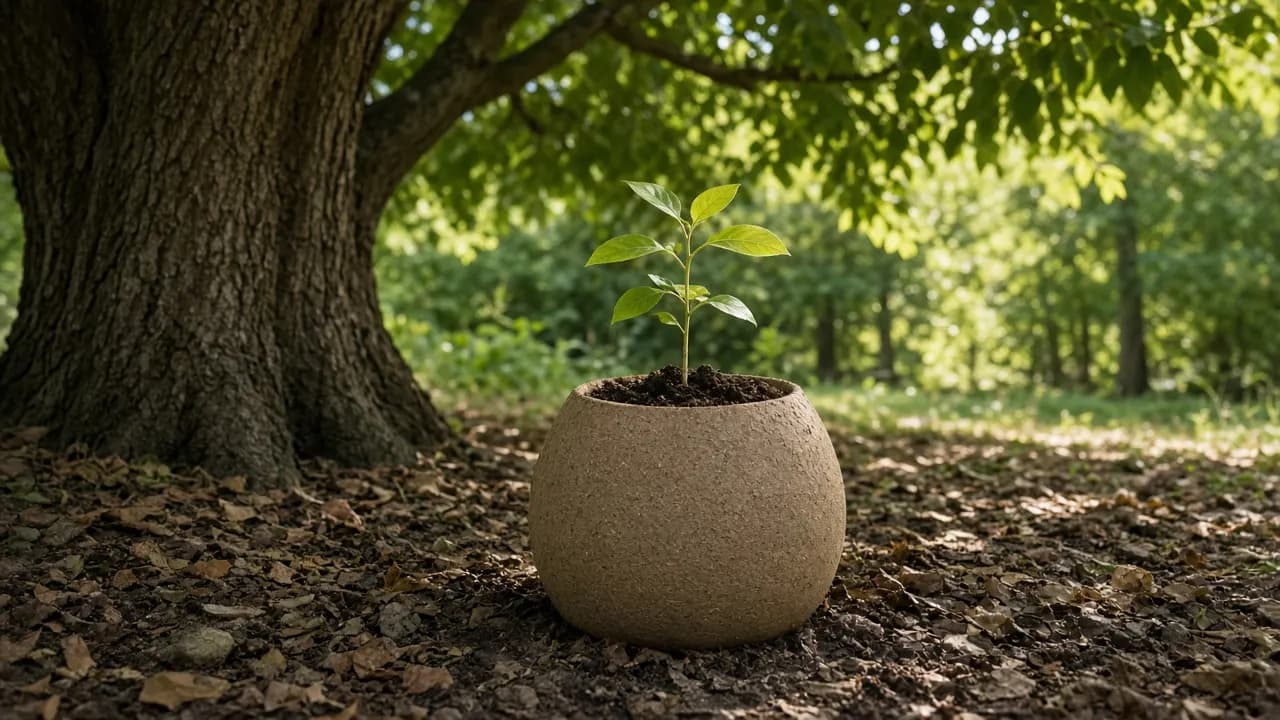
Macon is known for its springtime cherry blossoms, and some families like to plant a flowering tree as a living memorial, perhaps over a biodegradable urn in the garden. The Ocmulgee riverside trails and Lake Tobesofkee are also places many families link with happy times. If you'd like to scatter some ashes, choose a quiet spot and keep a small portion for a keepsake.
Parks and lakes around Macon are often less crowded than big-city waterfronts, which makes a quiet water release or a scattering walk easier to plan. They're still managed by someone, whether that's the city, a county, a state agency or a private owner, and permission rules differ. A short call or email to the land manager before you go avoids an awkward moment and sometimes gets you pointed to a better, quieter spot.
With roughly 156,000 residents, Macon is the 4th-largest of the 68 Georgia communities we cover.
Families in Macon often end up using a provider from Warner Robins (17 miles), Perry (26 miles) and Griffin (46 miles). That is normal: crematories serve a radius, not a single town, and the drive is priced into collection.
Our estimate
57,500
Macon: dog- or cat-owning households, our estimate
How we calculated this
156,000 ÷ 2.5 = 62,400 households; × 53% (dog) + 39% (cat) = 57,500. Multi-pet homes count once.
Our estimate
4,800
Estimated dog and cat losses in Macon each year
How we calculated this
57,500 dog/cat-owning homes ÷ average lifespan (dog: 12.69 yrs + cat: 11.18 yrs) ≈ 4,800 a year. The real figure is unlikely to be lower.
53%[1]
53% of US households own a dog, which is about 71 million households.
12.69 years[2]
US dogs have an average life expectancy at birth of 12.69 years.
39%[3]
39% of US households own a cat, which is about 53 million households.
11.18 years[4]
US cats seen at Banfield hospitals have an average life expectancy at birth of 11.18 years.
Sources for the statistics above: American Pet Products Association (APPA) 2025 State of the Industry and Montoya et al. 2023, Frontiers in Veterinary Science.
Cremation, burial and green choices in Georgia
Faith shapes these choices in Georgia, where cremation covers about 54.2%[5] of deaths and burial much of the rest. Some traditions that prefer burial for people have no view on pets; others do. If this matters to anyone in your household, ask a faith leader you trust. A planting urn puts the ashes back into the ground, which many people find sits comfortably with a burial tradition.
We take the Georgia rate from NFDA 2024 Cremation & Burial Report state projections (via Occasional Sage) (2024). It is a human statistic; there is no equivalent pet figure for Macon, and we would rather show a real number than invent one.
Weather, soil and planting windows in Macon
Biodegradable urns are made to break down, and heat and humidity can start that early. In Macon, where July highs average about 94°F, keep a paper, cornstarch or coconut-fiber urn indoors, somewhere cool and dry, until the planting day. Don't leave it in a car, a hot shed or a garage through May, June, July, August and September, or it may soften or split before it reaches the ground.
Watering is where most memorial trees in hot places succeed or fail. In Macon, give a new planting a slow, deep soak once or twice a week through May, June, July, August and September rather than a daily sprinkle. A drip line or a slow-release watering bag works well if you'll be away. A deep soak flushes salts from the ash blend below the root zone and coaxes roots to grow downward too.
Price ranges for planting and water urns
It helps to compare a planted memorial with the alternatives. A pet cemetery burial for a dog averages about $831[6] in the US, which by our estimate is around 3.2 times the national average for private cremation[7]. Private cremation plus a bio urn and a sapling in your own Macon garden usually comes in far below a cemetery plot, and there are no yearly maintenance fees.
The Georgia price table breaks costs down by product; our services page explains what sits behind each line.

Free tool
Memorial budget planner
Add up cremation, urn, keepsakes and a farewell so the total holds no surprises.
Where you can plant or release ashes in Georgia
If you live under a homeowners' association, a co-op board or a tenancy agreement in Georgia, its rules can matter more than any public law. Many restrict new trees, digging near shared pipes or heavy pots on balconies. A quick read of the rules, or one email to the manager, tells you whether a tree, a shrub bed or a container memorial is the right fit.
The official Georgia local government directory lists every county and city office, which is the quickest way to find who to ask in Macon.
For Georgia's rules on burying a pet at home or scattering ashes, see the Georgia guide. Local rules in Macon can be stricter than the state's, especially in homeowners' associations and rentals.
A simple plan for your pet's eco memorial
- If your pet dies while you're away from Macon, have a vet close to where you are set up individual cremation locally. Transporting a body a long way home almost never works out.
- Ask how the ashes can reach you: collected in person, posted by a tracked courier service, or sent to your own vet.
- Flying home with the ashes? Carry them in your hand luggage in a container that can be X-rayed, with the crematory's certificate in the same bag.
- Don't buy the bio urn on the road. Hold off until you're back and have settled on a location, then choose an urn that suits it.
- Plant somewhere that links both places if the idea appeals: perhaps a species native to the area your pet died in, or one already growing at home, provided it can cope with the climate in Macon.
- Write down the date and place where your pet died and where it was cremated. Those details fade faster than you'd expect.
Ways to mark the spot and the date
Outdoor memorials in Middle Georgia face heat, humidity, heavy rain and the occasional hard freeze. Granite and bronze last well, while painted resin and softer stone can crack or fade. If you'd like to plant a tree or shrub, autumn planting gives roots time to settle before the next hot summer. Indoors, a wooden or ceramic urn can sit beside a favourite photo.
or see what other families chose in the poll results, there are guides for the big decisions and articles for the details, use the free tools before you ring anyone, Compare every option on our services page. If you live between Macon and South Fulton, Savannah, Athens and Atlanta, either page applies. Every other community in Georgia, and all of the United States, is listed too.

Reader polls
What would you choose?
Vote anonymously and see how other readers answered. The results are live counts from people who visit this site, so they show real opinions, not a scientific sample.
If water cremation (aquamation) were offered near you, would you choose it?
Tap an answer to vote and see how others answered. Anonymous.
Would you consider releasing your pet's ashes in water?
Tap an answer to vote and see how others answered. Anonymous.
If you had to decide today, which aftercare would you choose for your pet?
Tap an answer to vote and see how others answered. Anonymous.

Free tools to help you plan
Memorial budget planner
Add up cremation, urn, keepsakes and a farewell so the total holds no surprises.

Memorial tree finder
Pick a tree for a planting urn that suits your climate, space and pet.

Aftercare options compared
Compare private, communal and water cremation with burial on cost, timing and what comes home.
Questions people ask
How does Macon's weather affect pet aftercare?
July is the hottest month in Macon, with average highs around 94°F, so prompt collection matters most then. Winters are mild, with average lows staying above freezing, so outdoor burial or scattering is usually possible year round.
Is cremation common in Georgia?
For people, yes: about 54.2%[5] of Georgia deaths end in cremation, according to NFDA 2024 Cremation & Burial Report state projections (via Occasional Sage) (2024). Nobody publishes the same figure for pets, but in our experience pet choices in Macon follow the human pattern closely, so cremation is the default most families here start from.
Roughly how many pets die in Macon each year?
Our estimate is around 4,800. It comes from Macon's population (about 156,000), the average household size, the share of homes with a dog or cat (about 57,500 households here) and the average lifespan. It is arithmetic, not a count, so read it as a rough floor.
Can a provider from a neighbouring town collect from Macon?
Usually yes. Warner Robins is about 17 miles away, Perry is about 26 miles away and Griffin is about 46 miles away, all inside a normal collection radius. Get the mileage written into the quote so there is no surprise on the day.
Which memorial plants are dangerous to cats and dogs?
Lilies are highly toxic to cats, even the pollen. Sago palm, oleander, yew, azalea and foxglove can poison dogs, and several of them harm cats and horses too. If you have pets at home in Macon, ask a vet or nursery to confirm a plant is safe before you buy it. Grasses, many herbs and most fruit trees are safer choices, though large amounts of fallen fruit can still upset a dog's stomach.
I rent in Macon. Can I still have a living memorial?
Yes. Plant in a large container, such as a half-barrel or a big pot with a dwarf tree or flowering shrub, and it moves with you. Use only a small share of the ashes in the pot, well mixed with compost. If you'd like to plant in a rented yard, get the landlord's permission in writing, and remember the tree stays when you leave.


Sources and our estimates
- [1] 53% of US households own a dog, which is about 71 million households. American Pet Products Association (APPA) 2025 State of the Industry, 2025.
- [2] US dogs have an average life expectancy at birth of 12.69 years. Montoya et al. 2023, Frontiers in Veterinary Science - Banfield Pet Hospital life expectancy tables (13.3 million dogs, 2.4 million cats, 2013-2019), 2023.
- [3] 39% of US households own a cat, which is about 53 million households. American Pet Products Association (APPA) 2025 State of the Industry, 2025.
- [4] US cats seen at Banfield hospitals have an average life expectancy at birth of 11.18 years. Montoya et al. 2023, Frontiers in Veterinary Science - Banfield Pet Hospital life expectancy tables (13.3 million dogs, 2.4 million cats, 2013-2019), 2023.
- [5] The NFDA projected Georgia's cremation rate at 54.2% for 2024. NFDA 2024 Cremation & Burial Report state projections (via Occasional Sage), 2024.
- [6] CareCredit's 2025 cost study put the US national average for pet cemetery burial of a dog at $831 (range $659-$1,513). CareCredit (Synchrony) - How Much Does It Cost To Euthanize a Dog? (2025 ASQ360 procedural cost study), 2025.
- [7] US pet cemetery burial for a dog costs about 3.2x a private cremation ($831 vs $260 national averages). Our estimate: 831 / 260 = 3.20. How we calculate.
- [8] U.S. pet flame cremations emit on the order of 47,000 t CO2e a year. Our estimate: 1.5M pet cremations x 31.3 kg CO2e. How we calculate.
Plan a living memorial in Macon
Tell us what you need and where you are. We'll reply by email with clear options and prices so you can decide in your own time.