A living memorial for your pet in Valdosta
Roughly 1,700 Valdosta families say goodbye to a dog or cat each year, by our count. A living memorial is one way to mark it. This guide explains how to make one that actually grows.
- Planting, garden and water urns compared
- Honest notes on local rules
- Help choosing a native species
Valdosta, Georgia
Bio urns, trees and water in Valdosta
Military families at Moody and students at Valdosta State often want memorials that travel easily: a small urn, a pendant, a framed print. Longtime residents may prefer burying ashes in the garden or a family plot. Roughly half of Georgians are now cremated, so both paths are familiar here. You can take all the time you need before choosing, and changing your mind later is allowed.
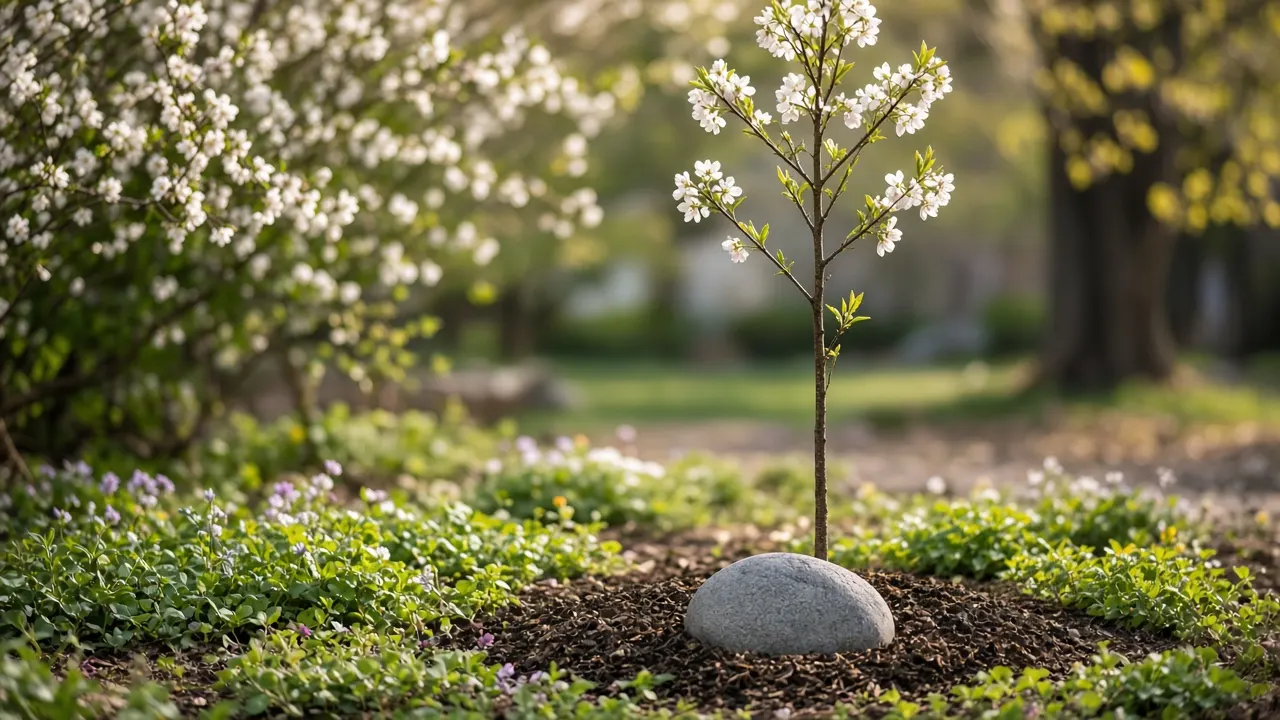
Valdosta is known as the Azalea City, and azaleas bloom across town every spring. Planting one in your yard beside an engraved garden stone creates a memorial that flowers around the same weeks each year. Others choose an urn on a shelf, a photo framed with a paw print, or a locket holding a little ash. There is no wrong choice, only what fits your home.
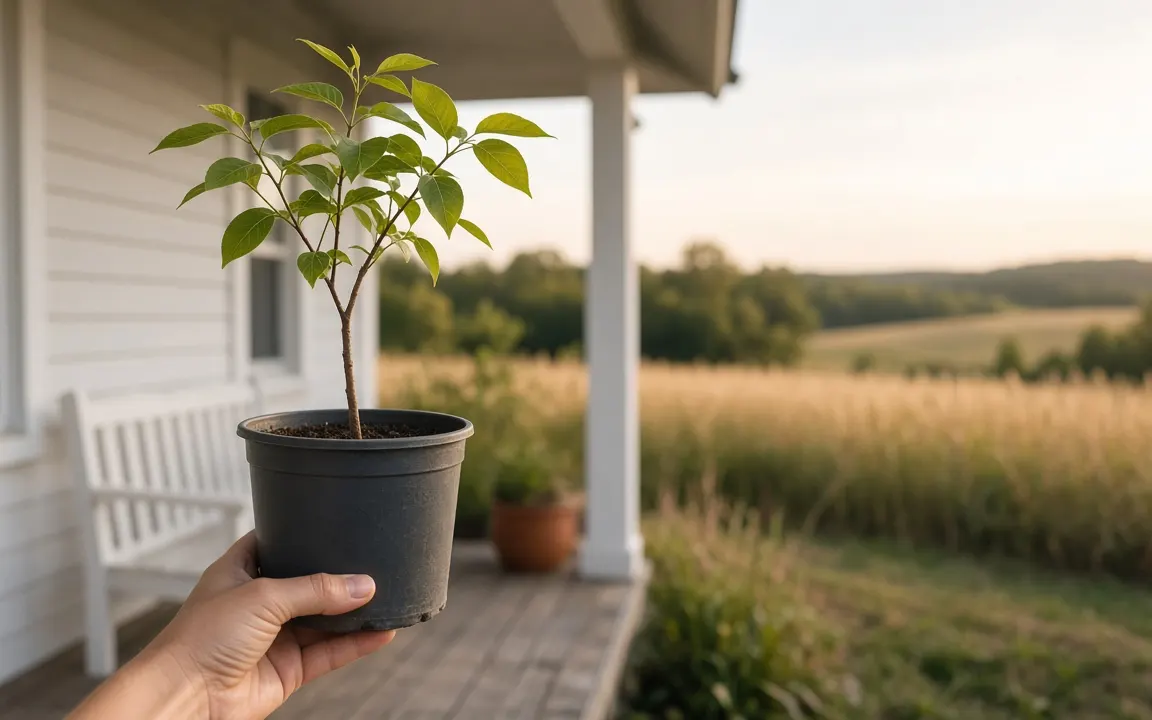
Country land around Valdosta gives you options city families don't have, and a few extra things to think about. Keep ash plantings well away from wells, springs and streams, and away from ground where livestock graze or crops are grown. Choose a spot with some shelter from wind for a young tree, and remember that deer and rabbits find new plantings quickly; a simple tree guard or wire cage for the first few years can make all the difference.
With roughly 56,186 residents, Valdosta is the 19th-largest of the 68 Georgia communities we cover. Tallahassee, roughly 66 miles off, is the closest larger centre, and a share of the providers who cover Valdosta run from there.
Valdosta sits within easy reach of Thomasville (42 miles), Tallahassee (66 miles, a larger centre) and Albany (73 miles). A provider based in any of them will usually collect from Valdosta; ask what the mileage adds to the bill.
Our estimate
20,500
How many dog- or cat-owning households Valdosta has (estimate)
How we calculated this
56,186 ÷ 2.5 = 22,474 households; × 53% (dog) + 39% (cat) = 20,500. A household with several pets counts once.
Our estimate
1,700
dog and cat deaths per year in Valdosta, our estimate
How we calculated this
20,500 dog/cat-owning homes ÷ average lifespan (dog: 12.69 yrs + cat: 11.18 yrs) ≈ 1,700 a year. Treat it as a minimum.
53%[1]
53% of US households own a dog, which is about 71 million households.
12.69 years[2]
US dogs have an average life expectancy at birth of 12.69 years.
39%[3]
39% of US households own a cat, which is about 53 million households.
11.18 years[4]
US cats seen at Banfield hospitals have an average life expectancy at birth of 11.18 years.
If a number here surprises you, the primary material is Montoya et al. 2023, Frontiers in Veterinary Science and American Pet Products Association (APPA) 2025 State of the Industry; we only apply it to this.
The local attitude to ashes and memorials
Cremation and burial are both familiar in Georgia, where about 54.2%[5] of people are cremated. For many families that means a pet's aftercare starts with a question of tradition: bury in the yard as earlier generations did, or cremate and keep the ashes. A bio urn sits happily between the two. It returns the ashes to the earth like a burial, but without a large grave, and it can be planted in a spot you choose later.
We take the Georgia rate from NFDA 2024 Cremation & Burial Report state projections (via Occasional Sage) (2024). It is a human statistic; there is no equivalent pet figure for Valdosta, and we would rather show a real number than invent one.
Choosing the right month to plant in Valdosta
One cautious approach in Valdosta: plant the memorial in a large pot for its first year and watch how it copes through your hottest and coldest weeks. If it thrives, move it into the ground the following autumn or spring, pot and all removed, with the ash blend around it. If it struggles, you've learned that before committing to a spot.
Budgeting for a living memorial in Valdosta
A living memorial in Valdosta has two costs: the cremation and the urn. Biodegradable pet urns are among the cheaper urns you can buy, listed at about $15–$80[6] in one national price guide, and a sapling from a local nursery often costs less than a decorative display urn. If you'd like water cremation, one pet insurer's guide lists aquamation at $80 to $450 depending on size[7]. The table shows published examples.
We keep the detailed Georgia price table on one page so it stays current: see Georgia prices.

Free tool
Memorial budget planner
Add up cremation, urn, keepsakes and a farewell so the total holds no surprises.
Who to ask before you plant or scatter in Georgia
Cremated remains aren't a health hazard in the way a body is, which is why planting ashes in your own garden is rarely restricted. Public places are different. Parks, nature reserves, beaches and waterways in Georgia each have a manager with their own policy, and some don't allow scattering or planting at all. A short email before the day saves an awkward conversation.
The official Georgia local government directory lists every county and city office, which is the quickest way to find who to ask in Valdosta.
For Georgia's rules on burying a pet at home or scattering ashes, see the Georgia guide. Local rules in Valdosta can be stricter than the state's, especially in homeowners' associations and rentals.
What to do first, and what can wait for the right season
- Confirm the ashes will come back. Communal cremation usually means no ashes are returned, and you can't plant what you don't receive.
- Pick the type of bio urn: a planting urn for a tree, a plain burial urn for a garden corner, a water urn for a lake or the sea.
- Ask permission before using ground you don't own, whether that's a landlord, a farmer or whoever runs the park.
- Plan for the weather. Around Valdosta, skip days when the soil is rock-hard, frozen or sodden, and wait for still, gentle conditions to plant or release.
- Release gently on water. Set the urn on the surface, let it float and sink on its own, and add only loose petals.
- Come back in a year. Top up the mulch, see how much the tree has put on, and photograph it to record the first anniversary.
Remembering your pet in Valdosta
The Withlacoochee River and the Grand Bay wetlands near Valdosta belong to south Georgia's wild landscape of blackwater, cypress and pine. Public lands set their own rules on scattering, so check with the managers first. At home, the long growing season suits a camellia, a young magnolia or a bed of flowers, kept well watered through its first summer in sandy soil.
run the numbers with the free planning tools, go deeper with the guides or catch up on recent articles, or see what other families chose in the poll results, The services page is the place to compare what is included. More local pages: Atlanta, Augusta, Athens and Savannah, the Georgia overview and every city in the United States.

Reader polls
What would you choose?
Vote anonymously and see how other readers answered. The results are live counts from people who visit this site, so they show real opinions, not a scientific sample.
Would you consider releasing your pet's ashes in water?
Tap an answer to vote and see how others answered. Anonymous.
If water cremation (aquamation) were offered near you, would you choose it?
Tap an answer to vote and see how others answered. Anonymous.
If you had to decide today, which aftercare would you choose for your pet?
Tap an answer to vote and see how others answered. Anonymous.

Free tools to help you plan
Memorial budget planner
Add up cremation, urn, keepsakes and a farewell so the total holds no surprises.

Memorial tree finder
Pick a tree for a planting urn that suits your climate, space and pet.

Aftercare options compared
Compare private, communal and water cremation with burial on cost, timing and what comes home.
Questions people ask
Which nearby towns can I compare with Valdosta?
The closest communities we cover are Thomasville (about 42 miles), Tallahassee (about 66 miles) and Albany (about 73 miles). Providers based in those places often serve Valdosta too. Ask each one for a written total that includes collection, so the distance is priced in.
Where are the providers that serve Valdosta actually based?
Some are local, and some run from Tallahassee, about 66 miles away. That is normal for a town this size. What matters is the collection time they quote for Valdosta and whether the drive is priced into the total, so ask both up front.
Is Valdosta big enough to have several pet aftercare providers?
Probably, on the numbers. By our estimate about 20,500 Valdosta households keep a dog or cat and around 1,700 lose one each year, which is enough steady demand to support more than one provider. We derive that from population (about 56,186), household size and national ownership and lifespan figures.
How do Georgia attitudes to cremation compare?
NFDA 2024 Cremation & Burial Report state projections (via Occasional Sage) (2024) puts the Georgia human cremation rate at about 54.2%[5]. We show it on the Valdosta page because pet aftercare choices tend to track it: where cremation is normal for people, communal and private pet cremation are both easy to find.
Can I scatter my pet's ashes in a park in Valdosta?
Usually only with permission, and some parks don't allow it at all. Parks are managed by a city, county, state or national agency, each with its own policy, and many were written for human ashes. Contact the park office, explain it's a small amount of pet ash, and ask whether there's a preferred spot.
How many dogs and cats are there in Valdosta?
By our estimate, about 20,500 households in Valdosta have a dog or a cat, and around 1,700 of those pets die each year. We calculate this from the city's population, average household size and national pet ownership and lifespan figures. The method is shown on this page, and the real number of animals is higher.


Sources and our estimates
- [1] 53% of US households own a dog, which is about 71 million households. American Pet Products Association (APPA) 2025 State of the Industry, 2025.
- [2] US dogs have an average life expectancy at birth of 12.69 years. Montoya et al. 2023, Frontiers in Veterinary Science - Banfield Pet Hospital life expectancy tables (13.3 million dogs, 2.4 million cats, 2013-2019), 2023.
- [3] 39% of US households own a cat, which is about 53 million households. American Pet Products Association (APPA) 2025 State of the Industry, 2025.
- [4] US cats seen at Banfield hospitals have an average life expectancy at birth of 11.18 years. Montoya et al. 2023, Frontiers in Veterinary Science - Banfield Pet Hospital life expectancy tables (13.3 million dogs, 2.4 million cats, 2013-2019), 2023.
- [5] The NFDA projected Georgia's cremation rate at 54.2% for 2024. NFDA 2024 Cremation & Burial Report state projections (via Occasional Sage), 2024.
- [6] Memorials.com's pet urn cost guide puts biodegradable pet urns at $15–$80. Memorials.com – Pet Urn Cost Guide, 2025.
- [7] Embrace Pet Insurance lists US communal cremation at $30-$200, partitioned at $50-$250, private at $100-$500+ and aquamation at $80-$450. Embrace Pet Insurance - Bury or Cremate Your Dog? Costs, Pros & Cons, 2025.
- [8] U.S. pet flame cremations emit on the order of 47,000 t CO2e a year. Our estimate: 1.5M pet cremations x 31.3 kg CO2e. How we calculate.
Get eco memorial ideas by email
Tell us what you need and where you are. We'll reply by email with clear options and prices so you can decide in your own time.