A living memorial for your pet in Cary
Roughly 550 Cary families say goodbye to a dog or cat each year, by our count. A living memorial is one way to mark it. This guide explains how to make one that actually grows.
- A memorial that moves with you
- Why pure ashes harm young roots
- Written prices you can compare
Cary, Illinois
Bio urns, trees and water in Cary
McHenry County nights rank among the coldest in northern Illinois, and freeze-thaw swings split cheap outdoor ornaments within a few seasons. Granite and bronze survive it. Cary's hillsides add a second problem: a stone set on a slope tends to creep and tilt. Dig a small level terrace, fill it with compacted gravel, and set the marker flat on top.
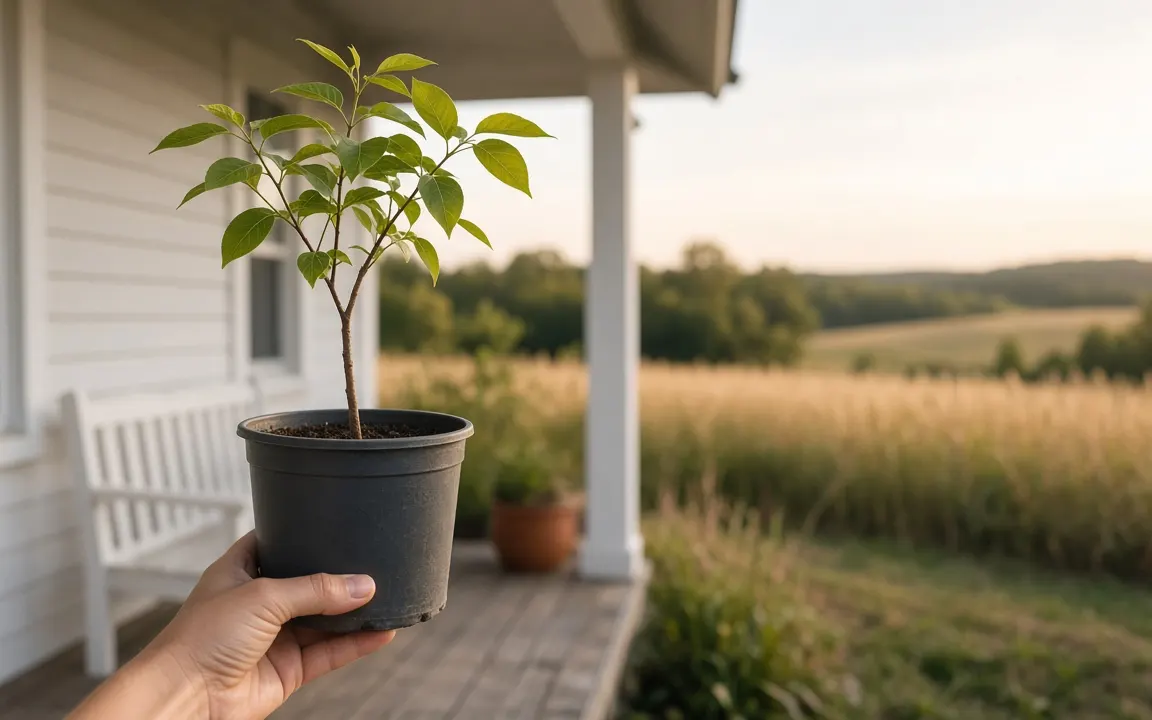
Wooded lots and hillside gardens in Cary lend themselves to natural memorials: a boulder engraved with a name, a bur oak or serviceberry sapling, or a quiet spot under older trees at the back of the lot. Indoors, a simple urn or a framed paw impression suits any room. Ashes come back sealed, so you can take your time before settling on something permanent.
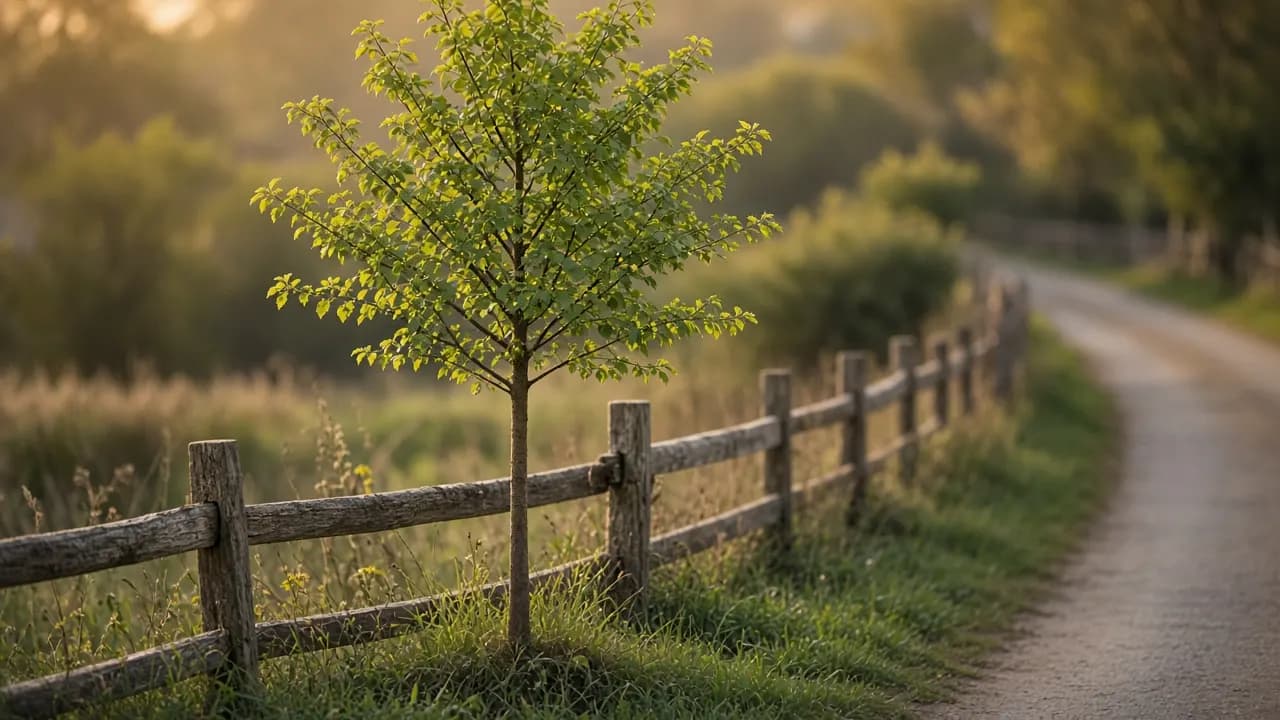
Small towns tend to have long memories, and a memorial tree in Cary is often planted with a lot of history around it: the same yard for decades, a family farm, a favorite fishing spot. If the land is likely to stay in the family, a long-lived native tree is a lovely choice. If it might be sold, consider a shrub bed, a portion of ashes kept back, or a water release that doesn't depend on who owns the ground in twenty years.
With roughly 17,932 residents, Cary is the 142nd-largest of the 151 Illinois communities we cover. Chicago, roughly 39 miles off, is the closest larger centre, and a share of the providers who cover Cary run from there.
For a second opinion on price, Lake in the Hills (4 miles), Crystal Lake (5 miles, a larger centre) and Algonquin (5 miles) are close enough that their providers cover Cary routinely. Two written quotes tell you more than any price list.
Our estimate
6,600
Estimated dog- or cat-owning households in Cary
How we calculated this
17,932 ÷ 2.5 = 7,173 households; × 53% (dog) + 39% (cat) = 6,600. Multi-pet homes count once.
Our estimate
550
dog and cat deaths per year in Cary, our estimate
How we calculated this
6,600 dog/cat-owning homes ÷ average lifespan (dog: 12.69 yrs + cat: 11.18 yrs) ≈ 550 a year. A floor, not a ceiling.
53%[1]
53% of US households own a dog, which is about 71 million households.
12.69 years[2]
US dogs have an average life expectancy at birth of 12.69 years.
39%[3]
39% of US households own a cat, which is about 53 million households.
11.18 years[4]
US cats seen at Banfield hospitals have an average life expectancy at birth of 11.18 years.
The published sources behind those figures are Montoya et al. 2023, Frontiers in Veterinary Science and American Pet Products Association (APPA) 2025 State of the Industry.
The local attitude to ashes and memorials
Faith shapes these choices in Illinois, where cremation covers about 60.2%[5] of deaths and burial much of the rest. Some traditions that prefer burial for people have no view on pets; others do. If this matters to anyone in your household, ask a faith leader you trust. A planting urn puts the ashes back into the ground, which many people find sits comfortably with a burial tradition.
The Illinois percentage above is from NFDA 2024 Cremation & Burial Report state projections (via Occasional Sage) (2024) and refers to human funerals. Treat it as context for Cary, not as a count of pets.
Choosing the right month to plant in Cary
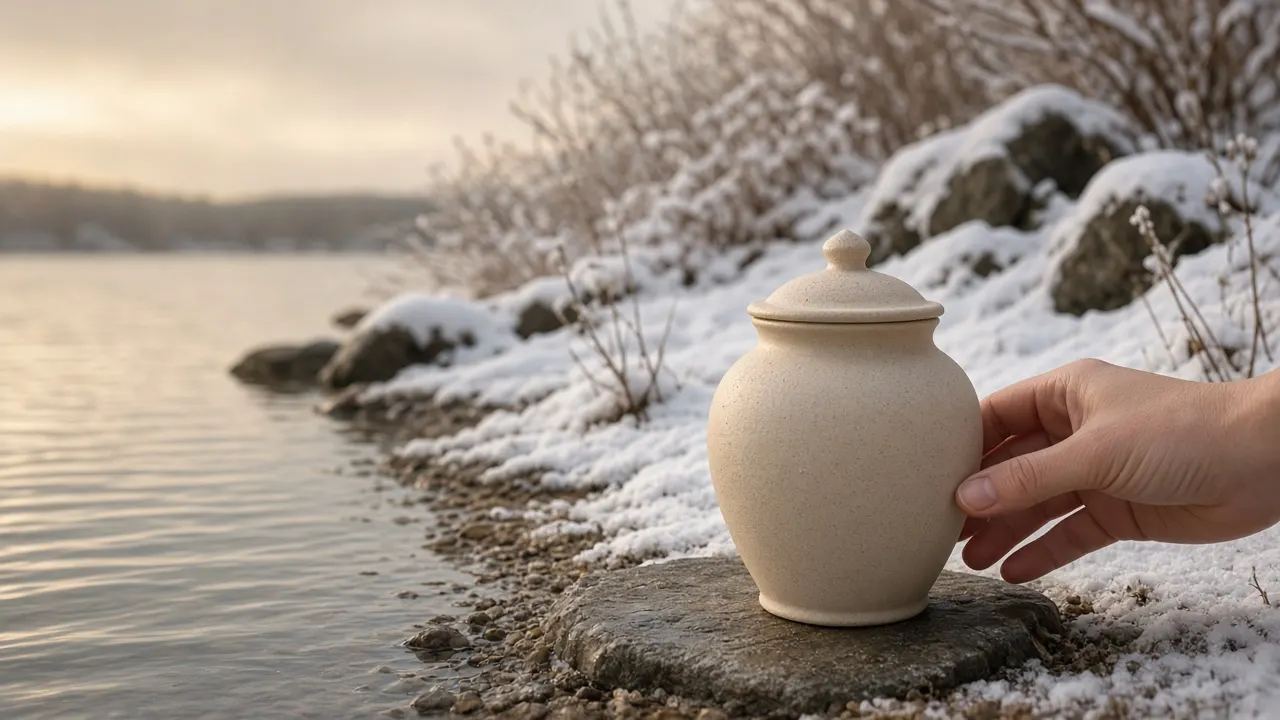
Water releases need open water, and in Cary lakes and ponds may ice over around January. Never walk out onto ice to release an urn. If a lake or river was your pet's place, plan the release for spring or summer, when the shoreline is safe and a water-soluble urn can float and dissolve as it's meant to. Keep the ashes at home until then.
Freezing and thawing through January, February, March and December can heave a newly planted tree out of the ground in Cary. If you plant in autumn, mulch well after the first frost to keep the soil temperature steady, and check the base of the tree in spring. A spring planting avoids the problem entirely and gives roots a full growing season before the next winter.
Adding up the cost of a bio urn memorial in Cary
Bio urns vary more in price than you might expect. A national guide puts biodegradable urns at $70–$260[6], depending on material, size and whether a seed or tree system is included. For a lake or sea release, one water urn designed to float briefly and dissolve sells for $149[7]. In Cary, the tree and the soil amendments are usually the cheapest part of the whole memorial.
The Illinois price table breaks costs down by product; our services page explains what sits behind each line.

Free tool
Memorial budget planner
Add up cremation, urn, keepsakes and a farewell so the total holds no surprises.
Where you can plant or release ashes in Illinois
If you live under a homeowners' association, a co-op board or a tenancy agreement in Illinois, its rules can matter more than any public law. Many restrict new trees, digging near shared pipes or heavy pots on balconies. A quick read of the rules, or one email to the manager, tells you whether a tree, a shrub bed or a container memorial is the right fit.
The official Illinois local government directory lists every county and city office, which is the quickest way to find who to ask in Cary.
The rules that apply across Illinois (home burial, scattering and who oversees pet cremation) are summarized on our Illinois page. Cary may add its own conditions, so check with the city or county before digging.
What to do first, and what can wait for the right season
- Confirm the ashes will come back. With a communal cremation there's normally nothing to collect afterwards, which leaves you with nothing to put in an urn.
- Pick the type of bio urn: one that grows a tree, a simple biodegradable urn to bury in a quiet bed, or a floating urn meant for a lake, river or the coast.
- Ask permission from the landowner, landlord or park manager for anywhere that isn't yours.
- Plan for the weather. In Cary, avoid frozen, baked or waterlogged ground; a calm, mild day is best for planting or a release.
- Release gently on water. Rest the urn on the surface, leave it to drift and go under in its own time, and scatter only a few loose petals.
- Come back in a year. Replace mulch, check the tree's growth and take a photo to mark the anniversary.
Living memorials beyond the backyard
Families along the Fox River sometimes keep part of a pet's ashes in a biodegradable urn meant to hold a young tree, planting it in spring when the soil in Cary has warmed. The rest may go into a pendant, a keepsake box or a small urn on a shelf. Saving fur or a paw impression has to be requested on your first call; it can't be done later.
run the numbers with the free planning tools, go deeper with the guides or catch up on recent articles, Compare every option on our services page, or see how other readers answered in our polls. You can also browse every city in the United States. Nearby, we also cover Rockford, Aurora, Chicago and Elgin, and every city in Illinois.

Reader polls
What would you choose?
Vote anonymously and see how other readers answered. The results are live counts from people who visit this site, so they show real opinions, not a scientific sample.
What kind of tree or plant would you choose?
Tap an answer to vote and see how others answered. Anonymous.
Would you consider releasing your pet's ashes in water?
Tap an answer to vote and see how others answered. Anonymous.
If you had to decide today, which aftercare would you choose for your pet?
Tap an answer to vote and see how others answered. Anonymous.

Free tools to help you plan
Memorial budget planner
Add up cremation, urn, keepsakes and a farewell so the total holds no surprises.

Memorial tree finder
Pick a tree for a planting urn that suits your climate, space and pet.

Aftercare options compared
Compare private, communal and water cremation with burial on cost, timing and what comes home.
Questions people ask
When is the hardest time of year to arrange a burial in Cary?
January, February, March and December: average lows are below freezing then, and frozen ground makes a home grave slow or impossible until it thaws. The other pressure point is July, when highs around 85°F mean a body needs cooling and collecting quickly.
Can a provider from a neighbouring town collect from Cary?
Usually yes. Lake in the Hills is about 4 miles away, Crystal Lake is about 5 miles away and Algonquin is about 5 miles away, all inside a normal collection radius. Get the mileage written into the quote so there is no surprise on the day.
Will I have to travel to Chicago to arrange things?
Not usually. Providers based in Chicago (roughly 39 miles from Cary) collect from here as a matter of routine, and the paperwork is done by email or phone. If you want to be present for a witnessed cremation, that is when the drive matters.
Why does the Cary page quote a human cremation rate?
Because it is the best local signal we have. NFDA 2024 Cremation & Burial Report state projections (via Occasional Sage) (2024) reports about 60.2%[5] of Illinois residents are cremated. There is no official pet equivalent, and inventing one would be worse than quoting a real, clearly labelled number.
What happens to the memorial tree if I move away from Cary?
It stays with the land, and ashes mixed into soil can't be recovered. If a move is possible, plant in a large container, plant at a relative's home, or keep a small portion of the ashes back for a future garden. Cuttings from many shrubs root easily, so you can take a piece of the plant with you.
Do bio urns work with ashes from flame cremation?
Yes. A bio urn works with ashes from flame cremation or water cremation. Both leave mineral-rich, alkaline ash, so the soil advice is the same either way: dilute the ashes well through compost and soil, let the mix rest if you can, and test the pH before a young tree goes in.


Sources and our estimates
- [1] 53% of US households own a dog, which is about 71 million households. American Pet Products Association (APPA) 2025 State of the Industry, 2025.
- [2] US dogs have an average life expectancy at birth of 12.69 years. Montoya et al. 2023, Frontiers in Veterinary Science - Banfield Pet Hospital life expectancy tables (13.3 million dogs, 2.4 million cats, 2013-2019), 2023.
- [3] 39% of US households own a cat, which is about 53 million households. American Pet Products Association (APPA) 2025 State of the Industry, 2025.
- [4] US cats seen at Banfield hospitals have an average life expectancy at birth of 11.18 years. Montoya et al. 2023, Frontiers in Veterinary Science - Banfield Pet Hospital life expectancy tables (13.3 million dogs, 2.4 million cats, 2013-2019), 2023.
- [5] The NFDA projected Illinois's cremation rate at 60.2% for 2024. NFDA 2024 Cremation & Burial Report state projections (via Occasional Sage), 2024.
- [6] Funeral.com cites U.S. Funerals Online that biodegradable urns typically cost about $70–$260. Funeral.com – How Much Do Cremation Urns Cost in 2025, 2025.
- [7] The Living Urn's Eco Water Urn for water burial costs $149 and holds up to 225 cubic inches; it floats for several minutes before dissolving. The Living Urn – Eco Water Urn, 2026.
- [8] If just 10% of U.S. pet cremations moved to aquamation, about 4,200 t CO2e a year would be avoided. Our estimate: 1.5M x 10% x 31.3 kg x 90% reduction. How we calculate.
Ask about aquamation near Cary
Tell us what you need and where you are. We'll reply by email with clear options and prices so you can decide in your own time.