Greener pet aftercare in Moline, Illinois
Roughly 1,300 Moline families say goodbye to a dog or cat each year, by our count. A living memorial is one way to mark it. This guide explains how to make one that actually grows.
- When to plant in your season
- How much ash your urn must hold
- Aquamation providers in your area
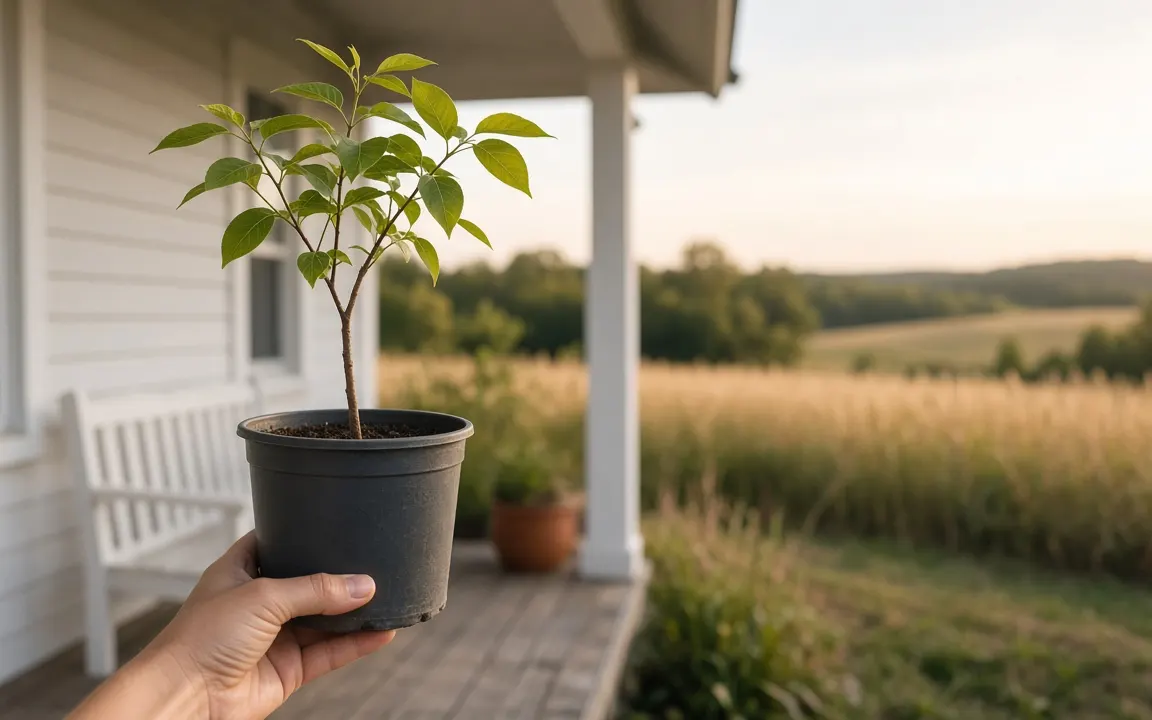
Moline, Illinois
Living memorials in Moline: the local picture
Moline's older neighborhoods were settled in large part by Swedish and Belgian immigrants, and many of their houses were built to last. Families here often want a memorial with that same sturdiness: a carved hardwood box, a granite garden stone, a heavy ceramic urn or a solid piece of jewelry. There is no need to choose in the first days; the ashes can stay in their temporary container for as long as you need.
Hillside yards in Moline shed water quickly after a storm, so a stone set on a slope may slide or tilt over time. Choose a level spot, or dig a shallow bed of gravel to rest it on. Granite and bronze handle the river valley's freeze-thaw winters well, while resin figures and painted concrete tend to crack or peel within a few seasons.
Horses, cattle, goats and sheep often share the land in the country around Moline, and some trees are dangerous to them. Wilted red maple leaves are toxic to horses, and yew is poisonous to most livestock. If the memorial will stand near a pasture or fence line, ask a vet or the local extension office which species are safe for the animals that graze nearby.
Moline is home to about 42,362 people, the 36th-largest of the 151 Illinois communities we cover.
Our pages for Rock Island (5 miles), Davenport (5 miles, a larger centre) and Bettendorf (6 miles) describe the same choices from those towns' point of view, and the providers overlap, so a quote from one often covers Moline as well.
Our estimate
15,500
Moline: dog- or cat-owning households, our estimate
How we calculated this
42,362 ÷ 2.5 = 16,945 households; × 53% (dog) + 39% (cat) = 15,500. Homes are counted once however many pets they keep.
Our estimate
1,300
dog and cat deaths per year in Moline, our estimate
How we calculated this
15,500 dog/cat-owning homes ÷ average lifespan (dog: 12.69 yrs + cat: 11.18 yrs) ≈ 1,300 a year. A floor, not a ceiling.
53%[1]
53% of US households own a dog, which is about 71 million households.
12.69 years[2]
US dogs have an average life expectancy at birth of 12.69 years.
39%[3]
39% of US households own a cat, which is about 53 million households.
11.18 years[4]
US cats seen at Banfield hospitals have an average life expectancy at birth of 11.18 years.
The published sources behind those figures are American Pet Products Association (APPA) 2025 State of the Industry and Montoya et al. 2023, Frontiers in Veterinary Science.

Why cremation culture in Illinois shapes your options
About 60.2%[5] of people who die in Illinois are cremated. That's a human statistic, but it shapes local services: in places where cremation is common but not dominant, there are usually enough crematories to compare, while greener options like water cremation may be less widespread. It's worth asking any provider directly whether they offer aquamation, and whether the ashes come back in a simple container you can plant from.
For the Illinois figure we rely on NFDA 2024 Cremation & Burial Report state projections (via Occasional Sage) (2024). Read it as a picture of local custom around death and remembrance in Moline rather than as pet data.
Seasons, soil and weather for a memorial in Moline
Early spring in Moline is when nurseries sell bare-root trees, often at a lower price than trees in pots. They need planting quickly, as soon as the ground can be dug after January, February, March, November and December, which fits well with ashes that have waited through the winter. Have the soil blend ready beforehand, soak the roots for an hour, and plant on a calm, overcast day.
In places like Moline, driveways and sidewalks are often salted in January, February, March, November and December. Ashes already add sodium to the soil, and road salt splashed onto the same bed doubles the load. Keep a memorial planting well back from salted paths and the edge of the road, and away from where snow gets piled. A spot uphill from the drive is better than one downhill of it.

Eco memorial prices, from urn to tree
For a medium-size dog, published private aquamation prices at two US providers sit around $200–$259[6], and one Arizona provider's individual aquamation price of $75–$349[7] includes an urn, nameplate and ink paw print. Whether a Moline provider bundles extras like that makes a real difference when you compare. Add the bio urn or tree separately, and use the planner below to see the total.
Rather than repeat the price table on every city page, we keep one for Illinois: Illinois costs. What each service includes is on the services page.

Free tool
Memorial budget planner
Add up cremation, urn, keepsakes and a farewell so the total holds no surprises.
Rules worth knowing in Illinois before you scatter
Burying ashes, scattering them loose and releasing them on water are often treated as three different things. In Illinois, a place that welcomes a scattering may forbid digging, and a lake that allows a release may not allow a gathering on the shore. When you ask permission, say exactly which one you have in mind.
Not sure which office covers Moline? The Illinois local government directory is the official list.
For Illinois's rules on burying a pet at home or scattering ashes, see the Illinois guide. Local rules in Moline can be stricter than the state's, especially in homeowners' associations and rentals.
Planting a memorial in Moline, step by step
- Confirm the ashes will come back. Communal cremation usually means no ashes are returned, and you can't plant what you don't receive.
- Pick the type of bio urn: one that grows a tree, a simple biodegradable urn to bury in a quiet bed, or a floating urn meant for a lake, river or the coast.
- Ask permission from the landowner, landlord or park manager for anywhere that isn't yours.
- Plan for the weather. Around Moline, skip days when the soil is rock-hard, frozen or sodden, and wait for still, gentle conditions to plant or release.
- Release gently on water. Rest the urn on the surface, leave it to drift and go under in its own time, and scatter only a few loose petals.
- Come back in a year. Top up the mulch, see how much the tree has put on, and photograph it to record the first anniversary.
Living memorials beyond the backyard
Some Moline families want a memorial with a view: a bench or garden stone looking toward the river, or an urn kept on a sill where the pet liked to watch the street. Others split the ashes among relatives on both sides of the Mississippi, each with a small keepsake. If you would like paw prints or a clipping of fur, ask for them before cremation.
the planning tools turn your pet's details into figures, read our guides and latest articles, or see what other families chose in the poll results, Our services overview lays out every option side by side. If you live between Moline and Chicago, Naperville, Rockford and Elgin, either page applies. Every other community in Illinois, and all of the United States, is listed too.

Reader polls
What would you choose?
Vote anonymously and see how other readers answered. The results are live counts from people who visit this site, so they show real opinions, not a scientific sample.
What kind of tree or plant would you choose?
Tap an answer to vote and see how others answered. Anonymous.
If water cremation (aquamation) were offered near you, would you choose it?
Tap an answer to vote and see how others answered. Anonymous.
If you had to decide today, which aftercare would you choose for your pet?
Tap an answer to vote and see how others answered. Anonymous.

Free tools to help you plan
Memorial budget planner
Add up cremation, urn, keepsakes and a farewell so the total holds no surprises.

Memorial tree finder
Pick a tree for a planting urn that suits your climate, space and pet.

Aftercare options compared
Compare private, communal and water cremation with burial on cost, timing and what comes home.
Questions people ask
Which nearby towns can I compare with Moline?
The closest communities we cover are Rock Island (about 5 miles), Davenport (about 5 miles) and Bettendorf (about 6 miles). Providers based in those places often serve Moline too. Ask each one for a written total that includes collection, so the distance is priced in.
Roughly how many pets die in Moline each year?
Our estimate is around 1,300. It comes from Moline's population (about 42,362), the average household size, the share of homes with a dog or cat (about 15,500 households here) and the average lifespan. It is arithmetic, not a count, so read it as a rough floor.
Why does the Moline page quote a human cremation rate?
Because it is the best local signal we have. NFDA 2024 Cremation & Burial Report state projections (via Occasional Sage) (2024) reports about 60.2%[5] of Illinois residents are cremated. There is no official pet equivalent, and inventing one would be worse than quoting a real, clearly labelled number.
Does the Moline climate change what I should do first?
Only the timing. In July, with highs near 86°F, cool the body and book collection the same day. In January, February, March, November and December, when lows sit below freezing, a home burial may have to wait for a thaw, so cremation with ashes returned keeps your options open.
Can I take my pet's ashes on a plane to plant them somewhere else?
Usually, yes. Most airlines let you carry cremated remains in hand luggage, but security staff need to be able to X-ray the container, so a wooden, plastic or cardboard container is easier than a metal urn. Keep the certificate from the crematory with you. Leave any seed pod at home if you're crossing a border that restricts plant material.
How many dogs and cats are there in Moline?
By our estimate, about 15,500 households in Moline have a dog or a cat, and around 1,300 of those pets die each year. We calculate this from the city's population, average household size and national pet ownership and lifespan figures. The method is shown on this page, and the real number of animals is higher.


Sources and our estimates
- [1] 53% of US households own a dog, which is about 71 million households. American Pet Products Association (APPA) 2025 State of the Industry, 2025.
- [2] US dogs have an average life expectancy at birth of 12.69 years. Montoya et al. 2023, Frontiers in Veterinary Science - Banfield Pet Hospital life expectancy tables (13.3 million dogs, 2.4 million cats, 2013-2019), 2023.
- [3] 39% of US households own a cat, which is about 53 million households. American Pet Products Association (APPA) 2025 State of the Industry, 2025.
- [4] US cats seen at Banfield hospitals have an average life expectancy at birth of 11.18 years. Montoya et al. 2023, Frontiers in Veterinary Science - Banfield Pet Hospital life expectancy tables (13.3 million dogs, 2.4 million cats, 2013-2019), 2023.
- [5] The NFDA projected Illinois's cremation rate at 60.2% for 2024. NFDA 2024 Cremation & Burial Report state projections (via Occasional Sage), 2024.
- [6] Private aquamation for a 21–50 lb dog costs about $200–$259 at two posted US price lists. Our estimate: Delaware 10–49 lb $200; A Greener Place 21–50 lb $259. How we calculate.
- [7] A Greener Place in Mesa, Arizona, charges $75–$349 for individual pet aquamation by weight, including an urn, nameplate and ink paw print. A Greener Place Pet Aquamation – Pricing, 2026.
- [8] If just 10% of U.S. pet cremations moved to aquamation, about 4,200 t CO2e a year would be avoided. Our estimate: 1.5M x 10% x 31.3 kg x 90% reduction. How we calculate.
Get eco memorial ideas by email
Tell us what you need and where you are. We'll reply by email with clear options and prices so you can decide in your own time.