Growing something from the goodbye in Garden City
Roughly 840 Garden City families say goodbye to a dog or cat each year, by our count. A living memorial is one way to mark it. This guide explains how to make one that actually grows.
- Trees matched to Garden City's climate
- Soil-safe planting method for ashes
- Real prices for bio urns and aquamation
Garden City, Kansas
Planning a greener goodbye in Garden City
Garden City homes range from older houses with porches to newer builds with open plans. Some families set up a small table with an urn, a candle and photos; others choose a garden stone or a hanging frame with a paw print. There's no deadline, and many people wait until the first weeks have passed before choosing anything. Grief can change what feels right.
Sun, grit-laden wind, hail and ice test every outdoor memorial on the southwest Kansas plains. Granite and bronze survive; lightweight pieces blow over or fade. If you want a living memorial, a drought-hardy shrub like sumac or a native wildflower patch planted in spring will cope better with the dry summers than a thirsty tree. Heavy stone bases keep markers upright in the wind.
In a town the size of Garden City, the nearest aquamation provider may be an hour or more away, and pet crematories often serve a wide rural area. That doesn't change what you can do with the ashes. A flame-cremated pet's ashes work just as well in a planting urn or water urn. If a lower-impact goodbye is the main reason you're here, the choice of cremation matters more than the urn, so ask about water cremation before you commit.
With roughly 27,402 residents, Garden City is the 14th-largest of the 23 Kansas communities we cover.
Families in Garden City often end up using a provider from Dodge City (48 miles), Liberal (64 miles) and Hays (104 miles). That is normal: crematories serve a radius, not a single town, and the drive is priced into collection.
Our estimate
10,000
Estimated dog- or cat-owning households in Garden City
How we calculated this
27,402 ÷ 2.5 = 10,961 households; × 53% (dog) + 39% (cat) = 10,000. A household with several pets counts once.
Our estimate
840
Garden City families who lose a dog or cat each year (estimate)
How we calculated this
10,000 dog/cat-owning homes ÷ average lifespan (dog: 12.69 yrs + cat: 11.18 yrs) ≈ 840 a year. A floor, not a ceiling.
53%[1]
53% of US households own a dog, which is about 71 million households.
12.69 years[2]
US dogs have an average life expectancy at birth of 12.69 years.
39%[3]
39% of US households own a cat, which is about 53 million households.
11.18 years[4]
US cats seen at Banfield hospitals have an average life expectancy at birth of 11.18 years.
Sources for the statistics above: Montoya et al. 2023, Frontiers in Veterinary Science and American Pet Products Association (APPA) 2025 State of the Industry.
Cremation, burial and green choices in Kansas
Faith shapes these choices in Kansas, where cremation covers about 64.6%[5] of deaths and burial much of the rest. Some traditions that prefer burial for people have no view on pets; others do. If this matters to anyone in your household, ask a faith leader you trust. A planting urn puts the ashes back into the ground, which many people find sits comfortably with a burial tradition.
We take the Kansas rate from NFDA 2024 Cremation & Burial Report state projections (via Occasional Sage) (2024). It is a human statistic; there is no equivalent pet figure for Garden City, and we would rather show a real number than invent one.
Seasons, soil and weather for a memorial in Garden City
Garden City gets both extremes: highs near 93°F in July and freezing lows in January, February, March, November and December. That leaves two planting windows, spring after the ground thaws and early autumn once the heat breaks. Either works. Autumn planting gives roots time to settle before summer, as long as the tree has several weeks of open ground before the first hard frost.
Soil in Garden City cracks in the summer heat and heaves in the winter freeze, and a young planting feels both. A thick ring of wood-chip mulch evens things out, shading the soil through June, July and August and insulating it through January, February, March, November and December. Top it up each spring, keep it a hand's width away from the trunk, and check the tree has not lifted after the thaw.
Adding up the cost of a bio urn memorial in Garden City
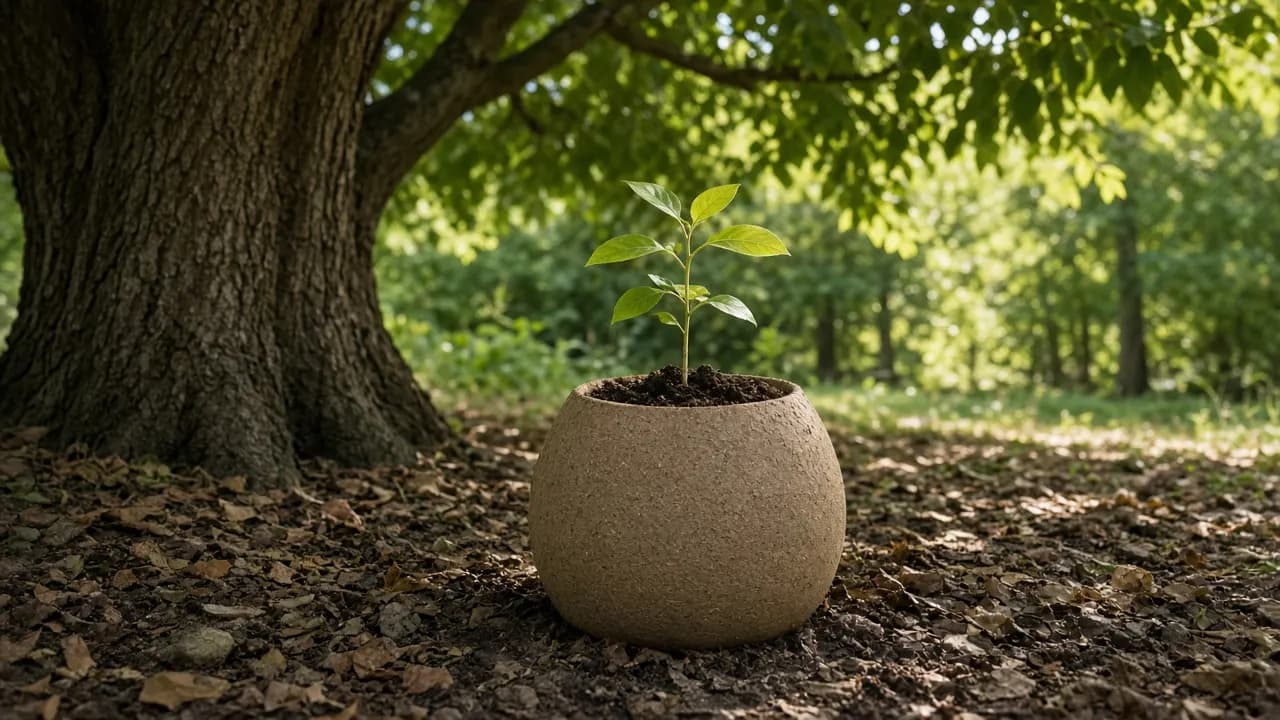
Bio urns vary more in price than you might expect. A national guide puts biodegradable urns at $70–$260[6], depending on material, size and whether a seed or tree system is included. For a lake or sea release, one water urn designed to float briefly and dissolve sells for $149[7]. In Garden City, the tree and the soil amendments are usually the cheapest part of the whole memorial.
The Kansas price table breaks costs down by product; our services page explains what sits behind each line.

Free tool
Memorial budget planner
Add up cremation, urn, keepsakes and a farewell so the total holds no surprises.
Scattering and planting rules in Kansas
If you live under a homeowners' association, a co-op board or a tenancy agreement in Kansas, its rules can matter more than any public law. Many restrict new trees, digging near shared pipes or heavy pots on balconies. A quick read of the rules, or one email to the manager, tells you whether a tree, a shrub bed or a container memorial is the right fit.
Not sure which office covers Garden City? The Kansas local government directory is the official list.
The rules that apply across Kansas (home burial, scattering and who oversees pet cremation) are summarized on our Kansas page. Garden City may add its own conditions, so check with the city or county before digging.
Your next steps, whatever your situation
- If your pet dies while you're away from Garden City, have a vet close to where you are set up individual cremation locally. Transporting a body a long way home almost never works out.
- Ask how the ashes can reach you: collected in person, posted by a tracked courier service, or sent to your own vet.
- Flying home with the ashes? Carry them in your hand luggage in a container that can be X-rayed, with the crematory's certificate in the same bag.
- Don't buy the bio urn on the road. Wait until you're home and know the spot, so the urn matches the place.
- Plant somewhere that links both places if you like: a tree from the region where your pet died, or one from your own garden, if it suits the climate in Garden City.
- Write down the date and place of your pet's death and the name of the crematory. Memories of those particulars slip away sooner than most people think.
Keeping your pet's memory growing in Garden City
With so many cultures in Garden City, memorials here take many forms: a home altar with candles and photos, a keepsake urn, or jewelry that holds a little ash. Some families send a portion to relatives in another state or country. Shipping ashes has specific rules, and international shipments add paperwork, so ask the provider about approved methods and get prices in writing.
Every option Garden City families choose between is on the services page, run the numbers with the free planning tools, go deeper with the guides or catch up on recent articles, or see what other families chose in the poll results. If you live between Garden City and Overland Park, Olathe, Topeka and Wichita, either page applies. Every other community in Kansas, and all of the United States, is listed too.

Reader polls
What would you choose?
Vote anonymously and see how other readers answered. The results are live counts from people who visit this site, so they show real opinions, not a scientific sample.
Would you consider releasing your pet's ashes in water?
Tap an answer to vote and see how others answered. Anonymous.
If you rent or might move, how would you handle a memorial planting?
Tap an answer to vote and see how others answered. Anonymous.
If you had to decide today, which aftercare would you choose for your pet?
Tap an answer to vote and see how others answered. Anonymous.

Free tools to help you plan
Memorial budget planner
Add up cremation, urn, keepsakes and a farewell so the total holds no surprises.

Memorial tree finder
Pick a tree for a planting urn that suits your climate, space and pet.

Aftercare options compared
Compare private, communal and water cremation with burial on cost, timing and what comes home.
Questions people ask
Is cremation common in Kansas?
For people, yes: about 64.6%[5] of Kansas deaths end in cremation, according to NFDA 2024 Cremation & Burial Report state projections (via Occasional Sage) (2024). Nobody publishes the same figure for pets, but in our experience pet choices in Garden City follow the human pattern closely, so cremation is the default most families here start from.
Can a provider from a neighbouring town collect from Garden City?
Usually yes. Dodge City is about 48 miles away, Liberal is about 64 miles away and Hays is about 104 miles away, all inside a normal collection radius. Get the mileage written into the quote so there is no surprise on the day.
Does the Garden City climate change what I should do first?
Only the timing. In July, with highs near 93°F, cool the body and book collection the same day. In January, February, March, November and December, when lows sit below freezing, a home burial may have to wait for a thaw, so cremation with ashes returned keeps your options open.
Is Garden City big enough to have several pet aftercare providers?
Probably, on the numbers. By our estimate about 10,000 Garden City households keep a dog or cat and around 840 lose one each year, which is enough steady demand to support more than one provider. We derive that from population (about 27,402), household size and national ownership and lifespan figures.
How long does it take to get ashes back for planting?
Most private cremations return ashes within one to two weeks, and water cremation cycles themselves take 12–20 hours[9], so allow a similar time. In a smaller place, if the cremation happens in a larger centre such as Garden City, it may take a little longer. Planting can wait, so there's no need to rush.
Can I plant a tree directly on my pet's ashes in Garden City?
It's better not to. Cremated remains have a very high pH, around 11.7[10], and they're high in sodium, so a solid layer of ash under the roots can yellow or kill a young tree. Mix the ashes through plenty of compost and soil across a wider area, test the pH, and plant once it has come down. There's no single mixing ratio that suits every pet and every soil.


Sources and our estimates
- [1] 53% of US households own a dog, which is about 71 million households. American Pet Products Association (APPA) 2025 State of the Industry, 2025.
- [2] US dogs have an average life expectancy at birth of 12.69 years. Montoya et al. 2023, Frontiers in Veterinary Science - Banfield Pet Hospital life expectancy tables (13.3 million dogs, 2.4 million cats, 2013-2019), 2023.
- [3] 39% of US households own a cat, which is about 53 million households. American Pet Products Association (APPA) 2025 State of the Industry, 2025.
- [4] US cats seen at Banfield hospitals have an average life expectancy at birth of 11.18 years. Montoya et al. 2023, Frontiers in Veterinary Science - Banfield Pet Hospital life expectancy tables (13.3 million dogs, 2.4 million cats, 2013-2019), 2023.
- [5] The NFDA projected Kansas's cremation rate at 64.6% for 2024. NFDA 2024 Cremation & Burial Report state projections (via Occasional Sage), 2024.
- [6] Funeral.com cites U.S. Funerals Online that biodegradable urns typically cost about $70–$260. Funeral.com – How Much Do Cremation Urns Cost in 2025, 2025.
- [7] The Living Urn's Eco Water Urn for water burial costs $149 and holds up to 225 cubic inches; it floats for several minutes before dissolving. The Living Urn – Eco Water Urn, 2026.
- [8] Each shelter-animal flame cremation emits about 31 kg CO2e on average. Our estimate: 19,000 t CO2e / 607,000 animals. How we calculate.
- [9] A PET-550 aquamation cycle takes 12–20 hours for a single pet and 14–20 hours for segregated or communal cycles, with up to 14 compartments. Bio-Response Solutions — PET-550 Aquamation System product page, 2026.
- [10] Cremated remains have a very high pH of approximately 11.7, which is toxic to plants without amendment. Larkspur Conservation — Giving Cremated Remains a New Life Through Science, 2024.
Tell us about your pet and your garden
Tell us what you need and where you are. We'll reply by email with clear options and prices so you can decide in your own time.