Tree, garden and water memorials in Minneapolis
Roughly 13,000 Minneapolis families say goodbye to a dog or cat each year, by our count. A living memorial is one way to mark it. This guide explains how to make one that actually grows.
- A memorial that moves with you
- Why pure ashes harm young roots
- Written prices you can compare
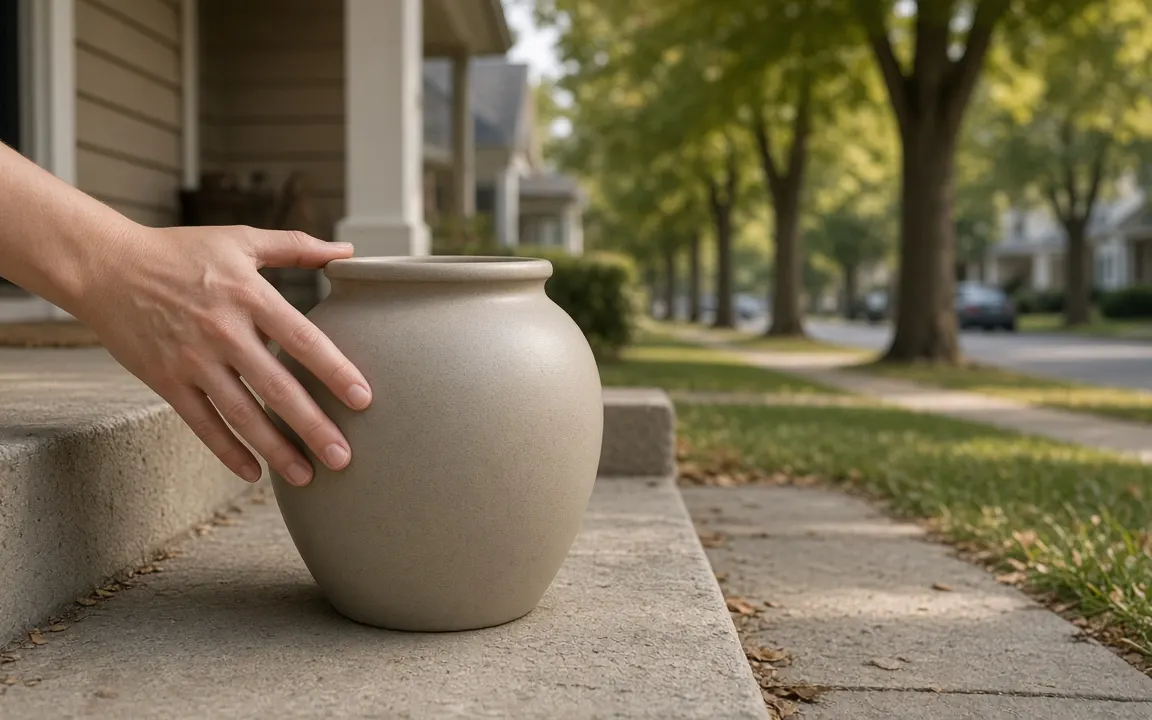
Minneapolis, Minnesota
Bio urns, trees and water in Minneapolis
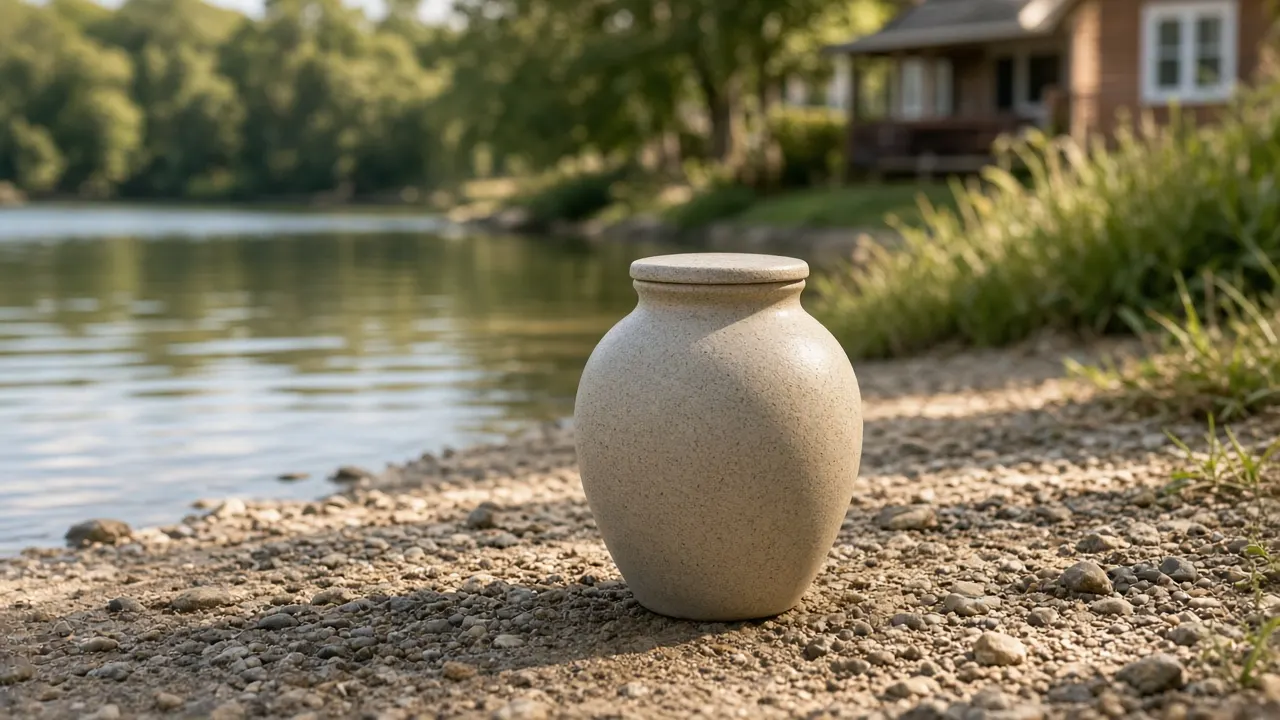
Minneapolis is a city of lakes, and many families picture their pet's memory along the shore of Bde Maka Ska, Lake Harriet or Lake Nokomis, or near Minnehaha Falls. Scattering on water or ice is unpredictable, so many people choose a quiet grassy spot instead and hold a little back for home. Check Park Board rules before scattering, and pick a calm day away from the busiest paths.
With cremation now the most common choice in Minnesota, keeping a loved one's ashes at home is familiar to many Minneapolis families. For a pet, that could be a hardwood box engraved with a name, a ceramic vessel, a paw print impression, or a ring holding a pinch of ashes. Families spread across the Twin Cities often ask for the ashes to be split between two or three small containers.
In a mid-sized place like Minneapolis, you'll usually find what a living memorial needs within a short drive: a nursery with native stock, a pet crematory or two, and quieter parks and waterways than a big metro. Water cremation may or may not be offered locally, so ask; if not, a provider in a larger centre such as Minneapolis may serve the area. Bio urns themselves are easy to order, so the choice that matters most is the tree and where it will grow.
Minneapolis is home to about 430,324 people, the largest of the 67 Minnesota communities we cover.
Our pages for Golden Valley (5 miles), Columbia Heights (5 miles) and St. Louis Park (5 miles) describe the same choices from those towns' point of view, and the providers overlap, so a quote from one often covers Minneapolis as well.
Our estimate
160,000
Estimated dog- or cat-owning households in Minneapolis
How we calculated this
430,324 ÷ 2.5 = 172,130 households; × 53% (dog) + 39% (cat) = 160,000. A household with several pets counts once.
Our estimate
13,000
Minneapolis families who lose a dog or cat each year (estimate)
How we calculated this
160,000 dog/cat-owning homes ÷ average lifespan (dog: 12.69 yrs + cat: 11.18 yrs) ≈ 13,000 a year. Treat it as a minimum.
53%[1]
53% of US households own a dog, which is about 71 million households.
12.69 years[2]
US dogs have an average life expectancy at birth of 12.69 years.
39%[3]
39% of US households own a cat, which is about 53 million households.
11.18 years[4]
US cats seen at Banfield hospitals have an average life expectancy at birth of 11.18 years.
We built the this numbers from American Pet Products Association (APPA) 2025 State of the Industry and Montoya et al. 2023, Frontiers in Veterinary Science, and both are worth a look if you want the detail.
The local attitude to ashes and memorials
The human cremation rate in Minnesota sits around 68.5%[5], so many families have a foot in both camps, and generations can disagree. Grandparents may expect a grave in the yard; younger relatives may want ashes they can take with them. Talking it through before the vet asks you to choose saves a hard conversation on a hard day. A tree over buried ashes often satisfies both sides.
For the Minnesota figure we rely on NFDA 2024 Cremation & Burial Report state projections (via Occasional Sage) (2024). Read it as a picture of local custom around death and remembrance in Minneapolis rather than as pet data.
Seasons, soil and weather for a memorial in Minneapolis
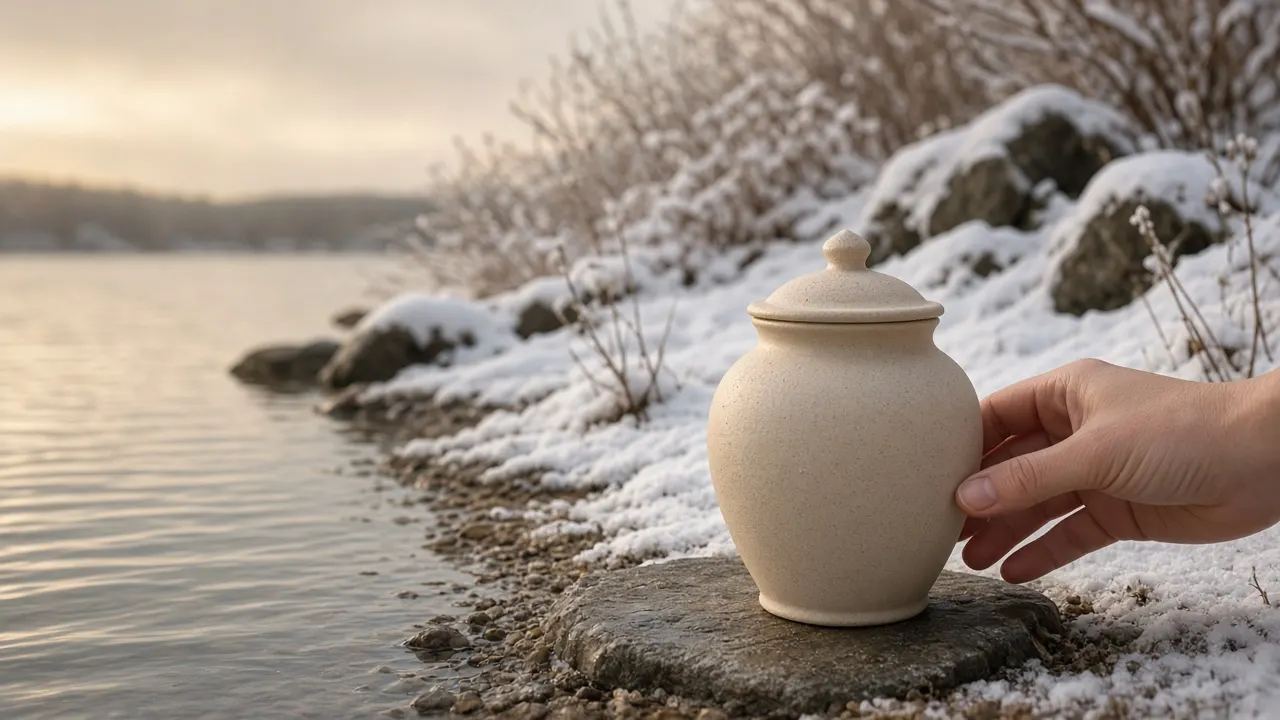
Water releases need open water, and in Minneapolis lakes and ponds may ice over around January. Never walk out onto ice to release an urn. If a lake or river was your pet's place, plan the release for spring or summer, when the shoreline is safe and a water-soluble urn can float and dissolve as it's meant to. Keep the ashes at home until then.
Snow can hide a young memorial tree and the damage done around it. In Minneapolis, where lows average about 6°F in January, voles and rabbits chew bark under the snow line, and snowplows or shovels can snap a sapling. Put a tall stake beside the planting so you can find it, and fit a loose guard around the trunk before the first snow.
What a greener goodbye costs in Minneapolis
Here's how the pieces add up for a Minneapolis family. Private cremation of a dog averages about $260[6] nationally. A pet bio urn with a seed capsule is sold for about $99[7], and a planting system without the tree for $119[8]. Compost, pine bark and a pH kit add a few dollars more. Ask local providers for a written total before you choose.
The full price table by product is on our Minnesota page, and the services page explains what each option includes.

Free tool
Memorial budget planner
Add up cremation, urn, keepsakes and a farewell so the total holds no surprises.
Who to ask before you plant or scatter in Minnesota
What you plant can matter as much as where. Parks and nature reserves in Minnesota often forbid planting anything at all, and even on private land some trees and shrubs are listed as invasive in parts of the region. A local nursery or native plant society can steer you toward a species that won't spread into wild land.
Minneapolis's own guidance is published by City of Minneapolis Animal Care & Control; it covers public collection, which is separate from arranging a private cremation. The official Minnesota local government directory lists every county and city office, which is the quickest way to find who to ask in Minneapolis.
Start with the Minnesota rules, which cover burial, scattering and oversight for the whole state, and treat Minneapolis's local ordinances as a possible extra layer.
Planting a memorial in Minneapolis, step by step
- If euthanasia is planned, find out from the practice beforehand which crematory handles their aftercare and whether aquamation is available through them.
- Book the aftercare before the appointment, so on the day itself you only have to be with your pet.
- Ask for a paw print or nose print before cremation if you'd like one. It can't be made afterwards.
- Choose the plant in advance when that feels easier. Knowing the exact spot their pet is headed for brings some families real comfort.
- Skip the display urn. The basic tube or box the crematory supplies does the job for planting, and whatever you don't spend can buy a better tree or shrub.
- Prepare the soil blend while you wait for the crematory to return the ashes, and the planting can happen within a few months instead of slipping year after year.
Ways to mark the spot and the date
Minnesota winters are tough on outdoor memorials. Frost heave can tip a stone set directly in soil, and painted wood cracks after a few seasons of freeze and thaw. Granite or slate set on a bed of gravel stays level far longer. A pet who dies in January can rest indoors until May, when a tree or perennial can be planted in thawed ground.
Every option Minneapolis families choose between is on the services page, use the free tools before you ring anyone, there are guides for the big decisions and articles for the details, or see what other families chose in the poll results. You can also browse every city in the United States. Nearby, we also cover Woodbury, Rochester, Brooklyn Park and Duluth, and every city in Minnesota.

Reader polls
What would you choose?
Vote anonymously and see how other readers answered. The results are live counts from people who visit this site, so they show real opinions, not a scientific sample.
If you rent or might move, how would you handle a memorial planting?
Tap an answer to vote and see how others answered. Anonymous.
What kind of tree or plant would you choose?
Tap an answer to vote and see how others answered. Anonymous.
If you had to decide today, which aftercare would you choose for your pet?
Tap an answer to vote and see how others answered. Anonymous.

Free tools to help you plan
Memorial budget planner
Add up cremation, urn, keepsakes and a farewell so the total holds no surprises.

Memorial tree finder
Pick a tree for a planting urn that suits your climate, space and pet.

Aftercare options compared
Compare private, communal and water cremation with burial on cost, timing and what comes home.
Questions people ask
How does Minneapolis's weather affect pet aftercare?
July is the hottest month in Minneapolis, with average highs around 81°F, so prompt collection matters most then. Average lows drop below freezing in January, February, March, November and December, which can make digging a grave hard until spring.
Is cremation common in Minnesota?
For people, yes: about 68.5%[5] of Minnesota deaths end in cremation, according to NFDA 2024 Cremation & Burial Report state projections (via Occasional Sage) (2024). Nobody publishes the same figure for pets, but in our experience pet choices in Minneapolis follow the human pattern closely, so cremation is the default most families here start from.
Can a provider from a neighbouring town collect from Minneapolis?
Usually yes. Golden Valley is about 5 miles away, Columbia Heights is about 5 miles away and St. Louis Park is about 5 miles away, all inside a normal collection radius. Get the mileage written into the quote so there is no surprise on the day.
Roughly how many pets die in Minneapolis each year?
Our estimate is around 13,000. It comes from Minneapolis's population (about 430,324), the average household size, the share of homes with a dog or cat (about 160,000 households here) and the average lifespan. It is arithmetic, not a count, so read it as a rough floor.
Is it safe to plant a fruit tree with my pet's ashes?
Cremated remains are mostly bone minerals, and once they're thoroughly blended into plenty of compost and garden soil, many gardeners grow fruit trees over them. The high pH and salt are the real concern for the tree, so dilute generously and test the pH. If eating fruit from the memorial feels wrong to anyone in your family, choose an ornamental tree instead.
Is water cremation better for the environment?
It uses much less energy: pet aquamation is claimed to use about 90%[10] less energy than flame cremation, and it uses about as much water as 1–3 pet baths[11] per pet. The strongest carbon figures come from studies of human funerals, not pets, so treat them as a direction rather than a promise. You still get ashes back for a bio urn.


Sources and our estimates
- [1] 53% of US households own a dog, which is about 71 million households. American Pet Products Association (APPA) 2025 State of the Industry, 2025.
- [2] US dogs have an average life expectancy at birth of 12.69 years. Montoya et al. 2023, Frontiers in Veterinary Science - Banfield Pet Hospital life expectancy tables (13.3 million dogs, 2.4 million cats, 2013-2019), 2023.
- [3] 39% of US households own a cat, which is about 53 million households. American Pet Products Association (APPA) 2025 State of the Industry, 2025.
- [4] US cats seen at Banfield hospitals have an average life expectancy at birth of 11.18 years. Montoya et al. 2023, Frontiers in Veterinary Science - Banfield Pet Hospital life expectancy tables (13.3 million dogs, 2.4 million cats, 2013-2019), 2023.
- [5] The NFDA projected Minnesota's cremation rate at 68.5% for 2024. NFDA 2024 Cremation & Burial Report state projections (via Occasional Sage), 2024.
- [6] CareCredit's 2025 cost study put the US national average for private dog cremation at $260 (range $206-$473). CareCredit (Synchrony) - How Much Does It Cost To Euthanize a Dog? (2025 ASQ360 procedural cost study), 2025.
- [7] The Bios Urn for pets, a biodegradable urn with a seed capsule, costs $99. Bios Urn – Pets, 2026.
- [8] The Living Urn's pet bio-urn planting system (without a tree) costs $119. The Living Urn – Pet tree urn, 2026.
- [9] U.S. pet flame cremations emit on the order of 47,000 t CO2e a year. Our estimate: 1.5M pet cremations x 31.3 kg CO2e. How we calculate.
- [10] Pet aquamation is described as available across all 50 US states, and is claimed to use about 90% less energy than flame cremation. Be a Tree Cremation pet aquamation guide, 2025.
- [11] Aquamation uses about the same water per pet as 1–3 pet baths. Veterinary Sustainability Alliance — Aquamation, 2024.
Get bio urn options for Minneapolis
Tell us what you need and where you are. We'll reply by email with clear options and prices so you can decide in your own time.