A living memorial for your pet in St. Louis
Roughly 8,550 St. Louis families say goodbye to a dog or cat each year, by our count. A living memorial is one way to mark it. This guide explains how to make one that actually grows.
- When to plant in your season
- How much ash your urn must hold
- Aquamation providers in your area
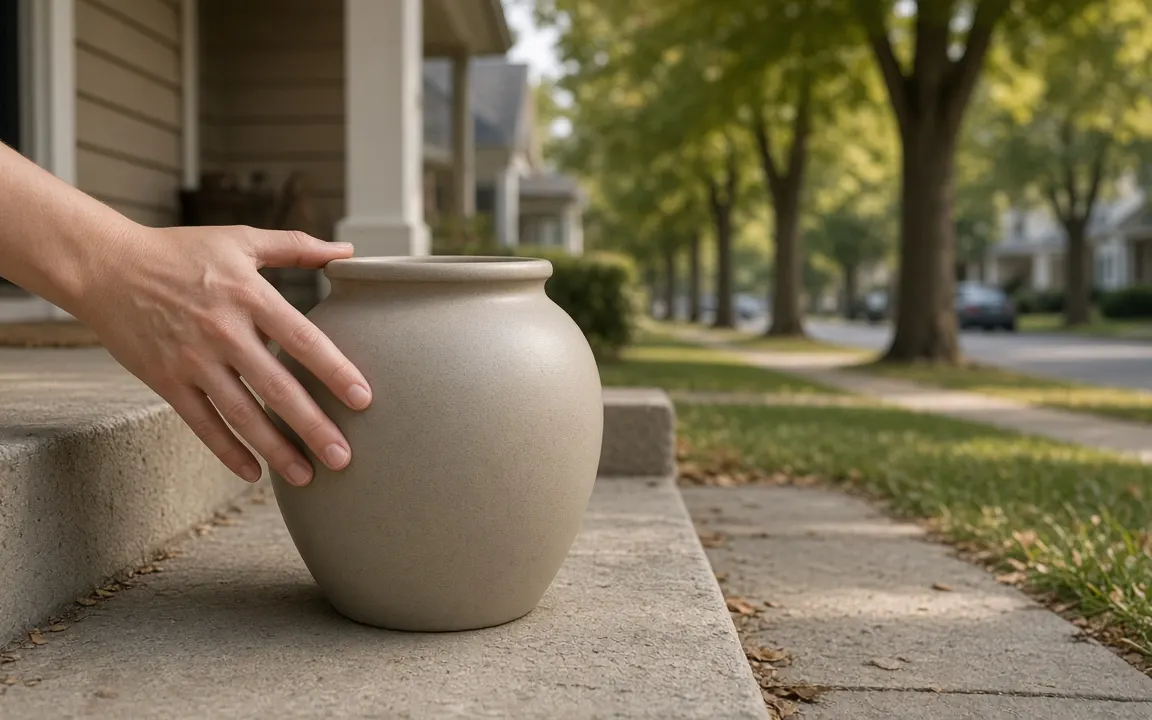
St. Louis, Missouri
Planning a greener goodbye in St. Louis
Outdoor memorials in St. Louis face humid summers, heavy rain and winter freeze-thaw. Granite and bronze last well, while porous stone can crack and printed plaques fade. Set a garden stone on gravel, choose deep engraving, and place it where roots and mowers won't disturb it. A hardy native tree or shrub is a good living memorial here. Plant it in spring or fall.
St. Louis has strong neighborhood and family traditions, and pet memorials here are often shared affairs. Relatives in different parts of the metro may each want a small keepsake, or the family may gather in a backyard to plant a tree with a bio urn. A private cremation with ashes returned keeps every option open. You can decide on the rest later, in your own time.
Native plant sales are one of the best-kept secrets in places like St. Louis. Conservation groups, garden clubs and parks departments often run them in spring and autumn, selling young native trees and shrubs at modest prices. A seedling bought there has been grown for local conditions and is small enough to settle in quickly. Check the local calendar, and time the planting to match.
About 278,144 people live in St. Louis, which makes it the 2nd-largest of the 43 Missouri communities we cover.
St. Louis sits within easy reach of East St. Louis (4 miles), Clayton (7 miles) and University City (8 miles). A provider based in any of them will usually collect from St. Louis; ask what the mileage adds to the bill.
Our estimate
100,000
How many dog- or cat-owning households St. Louis has (estimate)
How we calculated this
278,144 ÷ 2.5 = 111,258 households; × 53% (dog) + 39% (cat) = 100,000. A household with several pets counts once.
Our estimate
8,550
dog and cat deaths per year in St. Louis, our estimate
How we calculated this
100,000 dog/cat-owning homes ÷ average lifespan (dog: 12.69 yrs + cat: 11.18 yrs) ≈ 8,550 a year. The real figure is unlikely to be lower.
53%[1]
53% of US households own a dog, which is about 71 million households.
12.69 years[2]
US dogs have an average life expectancy at birth of 12.69 years.
39%[3]
39% of US households own a cat, which is about 53 million households.
11.18 years[4]
US cats seen at Banfield hospitals have an average life expectancy at birth of 11.18 years.
The published sources behind those figures are American Pet Products Association (APPA) 2025 State of the Industry and Montoya et al. 2023, Frontiers in Veterinary Science.

Cremation, burial and green choices in Missouri
In Missouri, roughly 59.8%[5] of people are cremated, a share that has been rising for years. That shift shows in pet aftercare too: more people now ask what to do with ashes, and bio urns are part of the answer. If some relatives prefer burial, a living memorial can be a good middle ground. The ashes go into the ground, just as a burial would, and the tree gives everyone a place to visit.
The Missouri figure comes from NFDA 2024 Cremation & Burial Report state projections (via Occasional Sage) (2024). It describes people, not pets, so read it as a sign of local attitudes rather than a pet statistic.
Weather, soil and planting windows in St. Louis
A potted memorial in St. Louis has a hard time: roots in a container feel both the 90°F heat of July and the freeze of January, February and December more sharply than roots in the ground. Choose a species rated for a colder zone than yours, move the pot into shade in summer, and into an unheated garage or against a sheltered wall in winter.
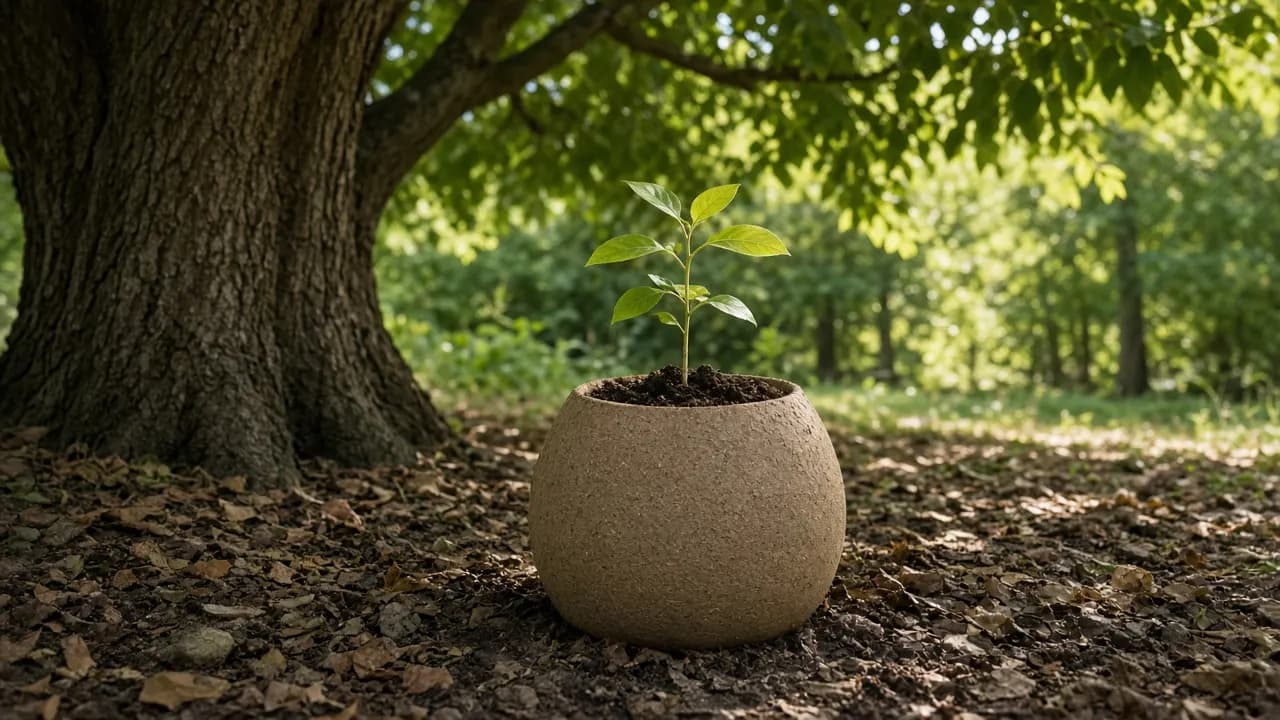
Trees in St. Louis have to survive hot summers and freezing winters, which rules out many species sold in planting kits. Ask a local nursery for trees proven in both conditions; natives are usually the safest choice. Plant a sapling rather than a seed, mulch a wide ring to keep the roots cooler in June, July and August and steadier through the freeze, and water deeply during dry spells for two summers.
Budgeting for a living memorial in St. Louis
Bio urns vary more in price than you might expect. A national guide puts biodegradable urns at $70–$260[6], depending on material, size and whether a seed or tree system is included. For a lake or sea release, one water urn designed to float briefly and dissolve sells for $149[7]. In St. Louis, the tree and the soil amendments are usually the cheapest part of the whole memorial.
The full price table by product is on our Missouri page, and the services page explains what each option includes.

Free tool
Memorial budget planner
Add up cremation, urn, keepsakes and a farewell so the total holds no surprises.
Land, water and permission in Missouri
Rules change more often than most people realise, and many local policies about ashes were never written down at all. Treat any general guide for Missouri, including ours, as a starting point. Whoever looks after that particular field, park or shoreline is the one whose answer counts, so it's worth getting it by email where you can.
Missouri keeps an official directory of local governments; use it to reach the county or city office that covers St. Louis.
The rules that apply across Missouri (home burial, scattering and who oversees pet cremation) are summarized on our Missouri page. St. Louis may add its own conditions, so check with the city or county before digging.
From ashes to a growing tree: the steps
- If euthanasia is planned, ask the vet a few days ahead which crematory they use and whether water cremation is one of the choices.
- Book the aftercare before the appointment, so on the day itself you only have to be with your pet.
- Ask for a paw print or nose print ahead of the cremation if you want one; once it's done there's no way to make one.
- Choose the plant in advance when that feels easier. Knowing the exact spot their pet is headed for brings some families real comfort.
- Skip the display urn. A simple box or tube from the crematory is all a planting needs, and the saving can go toward the tree or shrub.
- Prepare the soil blend while you wait for the crematory to return the ashes, and the planting can happen within a few months instead of slipping year after year.
Keeping the memorial alive in St. Louis
Many St. Louis homes are older brick houses and flats with small yards, so indoor memorials are popular: an urn on the mantel, a framed paw print, or a pendant or ring holding a little of the ashes. Brothers, sisters and grandparents can each take a portion if you ask the provider to separate it out first. Small pieces suit compact rooms and move easily with you.
use the free tools before you ring anyone, there are guides for the big decisions and articles for the details, See what each option includes on our services page, or see how other readers answered in our polls. If you live between St. Louis and Kansas City, O'Fallon, Columbia and Lee's Summit, either page applies. Every other community in Missouri, and all of the United States, is listed too.

Reader polls
What would you choose?
Vote anonymously and see how other readers answered. The results are live counts from people who visit this site, so they show real opinions, not a scientific sample.
What kind of tree or plant would you choose?
Tap an answer to vote and see how others answered. Anonymous.
Would you consider releasing your pet's ashes in water?
Tap an answer to vote and see how others answered. Anonymous.
If you had to decide today, which aftercare would you choose for your pet?
Tap an answer to vote and see how others answered. Anonymous.

Free tools to help you plan
Memorial budget planner
Add up cremation, urn, keepsakes and a farewell so the total holds no surprises.

Memorial tree finder
Pick a tree for a planting urn that suits your climate, space and pet.

Aftercare options compared
Compare private, communal and water cremation with burial on cost, timing and what comes home.
Questions people ask
How does St. Louis's weather affect pet aftercare?
July is the hottest month in St. Louis, with average highs around 90°F, so prompt collection matters most then. Average lows drop below freezing in January, February and December, which can make digging a grave hard until spring.
How many pet owners live in St. Louis?
By our estimate, about 100,000 households in St. Louis have at least one dog or cat, and around 8,550 are lost each year. We calculate this from the city's population of about 278,144, the average household size and national ownership and lifespan figures, so treat it as a floor rather than an exact count.
Can a provider from a neighbouring town collect from St. Louis?
Usually yes. East St. Louis is about 4 miles away, Clayton is about 7 miles away and University City is about 8 miles away, all inside a normal collection radius. Get the mileage written into the quote so there is no surprise on the day.
Why does the St. Louis page quote a human cremation rate?
Because it is the best local signal we have. NFDA 2024 Cremation & Burial Report state projections (via Occasional Sage) (2024) reports about 59.8%[5] of Missouri residents are cremated. There is no official pet equivalent, and inventing one would be worse than quoting a real, clearly labelled number.
Can I plant my pet's ashes in a community garden in St. Louis?
Only with the garden's permission, and many don't allow it because members grow food and share the soil. Ask the coordinator first. If burying isn't allowed, a potted plant beside your plot, a flowering perennial grown in your pet's name without ashes, or a small marker stone are gentler ways to make the space meaningful.
How long does a water-soluble urn take to dissolve?
Most are made from salt, sand, paper or gelatin and dissolve within minutes to hours once they sink. Some float briefly first, long enough for a few words: one maker's water urn floats for several minutes before dissolving[7]. Calm water gives the best result, so check the forecast for wind before you go.


Sources and our estimates
- [1] 53% of US households own a dog, which is about 71 million households. American Pet Products Association (APPA) 2025 State of the Industry, 2025.
- [2] US dogs have an average life expectancy at birth of 12.69 years. Montoya et al. 2023, Frontiers in Veterinary Science - Banfield Pet Hospital life expectancy tables (13.3 million dogs, 2.4 million cats, 2013-2019), 2023.
- [3] 39% of US households own a cat, which is about 53 million households. American Pet Products Association (APPA) 2025 State of the Industry, 2025.
- [4] US cats seen at Banfield hospitals have an average life expectancy at birth of 11.18 years. Montoya et al. 2023, Frontiers in Veterinary Science - Banfield Pet Hospital life expectancy tables (13.3 million dogs, 2.4 million cats, 2013-2019), 2023.
- [5] The NFDA projected Missouri's cremation rate at 59.8% for 2024. NFDA 2024 Cremation & Burial Report state projections (via Occasional Sage), 2024.
- [6] Funeral.com cites U.S. Funerals Online that biodegradable urns typically cost about $70–$260. Funeral.com – How Much Do Cremation Urns Cost in 2025, 2025.
- [7] The Living Urn's Eco Water Urn for water burial costs $149 and holds up to 225 cubic inches; it floats for several minutes before dissolving. The Living Urn – Eco Water Urn, 2026.
- [8] Each shelter-animal flame cremation emits about 31 kg CO2e on average. Our estimate: 19,000 t CO2e / 607,000 animals. How we calculate.
Ask about aquamation near St. Louis
Tell us what you need and where you are. We'll reply by email with clear options and prices so you can decide in your own time.