Growing something from the goodbye in St. Peters
Roughly 1,900 St. Peters families say goodbye to a dog or cat each year, by our count. A living memorial is one way to mark it. This guide explains how to make one that actually grows.
- Planting, garden and water urns compared
- Honest notes on local rules
- Help choosing a native species

St. Peters, Missouri
Bio urns, trees and water in St. Peters
Plenty of St. Peters households live in townhomes or condos where shelf space is limited, so compact memorials make sense: a small photo urn, a wall-mounted niche, or a keepsake box that fits on a nightstand. A pendant or ring holding a little ash takes up no room at all. Until you decide, the crematory's temporary vessel does the job perfectly well.
Some St. Peters families engrave a memorial with something only they would recognize: the street where the pet grew up, a nickname, or the map coordinates of a favorite spot. It works on an urn, a small stone or the back of a pendant. Dividing the ashes lets each person choose their own version, so nobody has to agree on a single piece.
Country land around St. Peters gives you options city families don't have, and a few extra things to think about. Keep ash plantings well away from wells, springs and streams, and away from ground where livestock graze or crops are grown. Choose a spot with some shelter from wind for a young tree, and remember that deer and rabbits find new plantings quickly; a simple tree guard or wire cage for the first few years can make all the difference.
St. Peters is home to about 61,479 people, the 11th-largest of the 43 Missouri communities we cover. St. Louis, roughly 24 miles off, is the closest larger centre, and a share of the providers who cover St. Peters run from there.
Nearby, we also have local pages for St. Charles (5 miles), O'Fallon (6 miles) and Maryland Heights (8 miles), which can help if your vet or the provider you prefer is based there.
Our estimate
22,500
How many dog- or cat-owning households St. Peters has (estimate)
How we calculated this
61,479 ÷ 2.5 = 24,592 households; × 53% (dog) + 39% (cat) = 22,500. Multi-pet homes count once.
Our estimate
1,900
St. Peters families who lose a dog or cat each year (estimate)
How we calculated this
22,500 dog/cat-owning homes ÷ average lifespan (dog: 12.69 yrs + cat: 11.18 yrs) ≈ 1,900 a year. The real figure is unlikely to be lower.
53%[1]
53% of US households own a dog, which is about 71 million households.
12.69 years[2]
US dogs have an average life expectancy at birth of 12.69 years.
39%[3]
39% of US households own a cat, which is about 53 million households.
11.18 years[4]
US cats seen at Banfield hospitals have an average life expectancy at birth of 11.18 years.
Sources for the statistics above: Montoya et al. 2023, Frontiers in Veterinary Science and American Pet Products Association (APPA) 2025 State of the Industry.

Why cremation culture in Missouri shapes your options
In Missouri, with a human cremation rate of roughly 59.8%[5], you'll often find pet cemeteries and pet crematories operating side by side. Some cemeteries now offer small plots for ashes, occasionally with a tree or shrub above them. That's worth comparing with a garden planting at home: a cemetery plot stays put if you move, while your own garden costs nothing and stays private.
The Missouri percentage above is from NFDA 2024 Cremation & Burial Report state projections (via Occasional Sage) (2024) and refers to human funerals. Treat it as context for St. Peters, not as a count of pets.
When to plant in St. Peters's climate
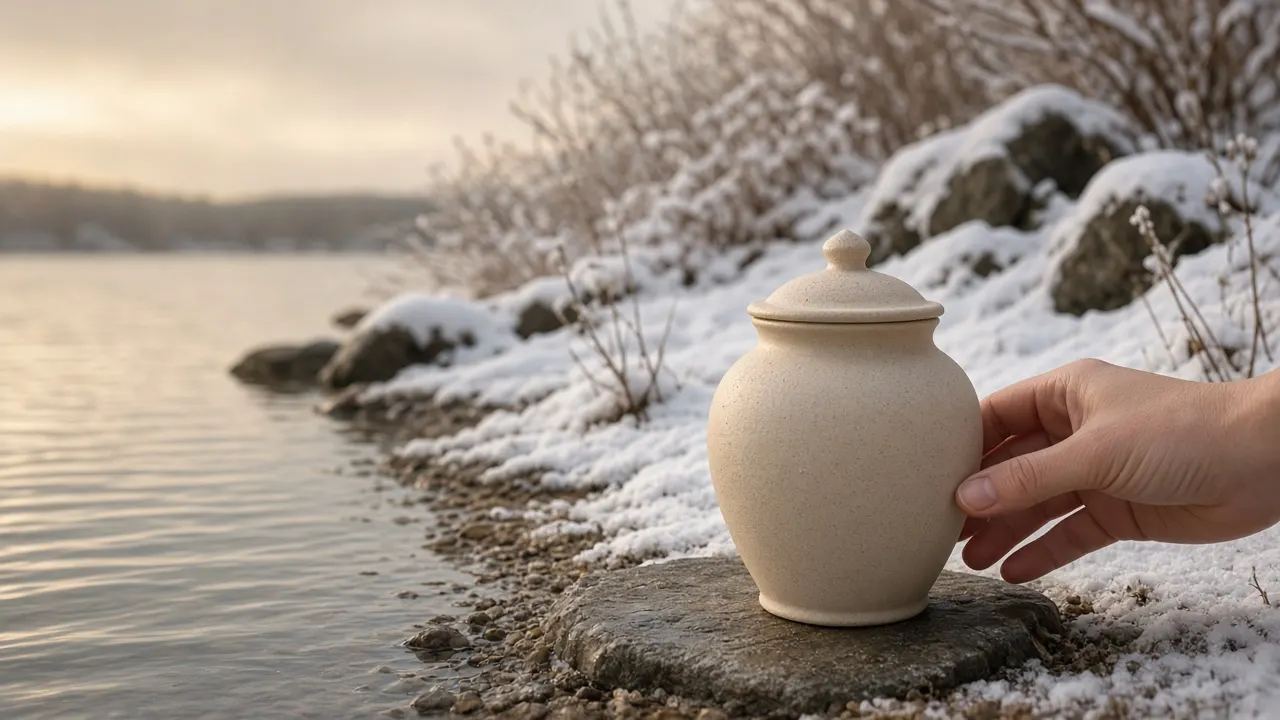
Snow can hide a young memorial tree and the damage done around it. In St. Peters, where lows average about 21°F in January, voles and rabbits chew bark under the snow line, and snowplows or shovels can snap a sapling. Put a tall stake beside the planting so you can find it, and fit a loose guard around the trunk before the first snow.
Freezing and thawing through January, February and December can heave a newly planted tree out of the ground in St. Peters. If you plant in autumn, mulch well after the first frost to keep the soil temperature steady, and check the base of the tree in spring. A spring planting avoids the problem entirely and gives roots a full growing season before the next winter.
What bio urns and aquamation cost in St. Peters
Bio urns vary more in price than you might expect. A national guide puts biodegradable urns at $70–$260[6], depending on material, size and whether a seed or tree system is included. For a lake or sea release, one water urn designed to float briefly and dissolve sells for $149[7]. In St. Peters, the tree and the soil amendments are usually the cheapest part of the whole memorial.
The Missouri price table breaks costs down by product; our services page explains what sits behind each line.

Free tool
Memorial budget planner
Add up cremation, urn, keepsakes and a farewell so the total holds no surprises.
Who to ask before you plant or scatter in Missouri
Natural burial grounds and some pet cemeteries in Missouri accept ashes in biodegradable urns, and a few ask for nothing else: no plastic, no metal, no varnish. If you're considering one, ask what the urn may be made of, whether a tree or marker is allowed above it, and whether the fee includes looking after the plot.
Missouri keeps an official directory of local governments; use it to reach the county or city office that covers St. Peters.
Start with the Missouri rules, which cover burial, scattering and oversight for the whole state, and treat St. Peters's local ordinances as a possible extra layer.
What to do first, and what can wait for the right season
- Talk it through with your household first, especially if anyone would rather keep the ashes at home.
- Measure your space. Trees spread more than people expect; in a smaller garden a shrub, a big pot or a border may be the kinder fit.
- Test the soil where you plan to plant. If it's already alkaline, choose a lime-tolerant species and add extra compost or composted bark.
- Spread the ashes through a wide planting area, not in one band directly beneath the root ball.
- Water well for two summers. It's drought in the early years, not cold, that kills the majority of memorial trees that don't make it.
- Keep a record of the species, the date and what went into the soil, so you can care for it or move a cutting later.
Keeping the memorial alive in St. Peters
Outdoor markers with a photo printed on ceramic can fade within a few summers under strong Missouri sun, and freeze-thaw cycles work into any crack. If you want a garden stone, plain engraved granite or a cast bronze plaque will age much better. Keep printed photos, wooden boxes and glass keepsakes indoors, out of direct window light, where colors stay true.
go deeper with the guides or catch up on recent articles, or see how other readers answered in our polls, use the free tools before you ring anyone, The services page is the place to compare what is included. Close to St. Peters we also cover Kansas City, Springfield, Independence and Columbia; the full list for Missouri and for the United States is a click away.

Reader polls
What would you choose?
Vote anonymously and see how other readers answered. The results are live counts from people who visit this site, so they show real opinions, not a scientific sample.
What kind of tree or plant would you choose?
Tap an answer to vote and see how others answered. Anonymous.
Would you consider releasing your pet's ashes in water?
Tap an answer to vote and see how others answered. Anonymous.
If you had to decide today, which aftercare would you choose for your pet?
Tap an answer to vote and see how others answered. Anonymous.

Free tools to help you plan
Memorial budget planner
Add up cremation, urn, keepsakes and a farewell so the total holds no surprises.

Memorial tree finder
Pick a tree for a planting urn that suits your climate, space and pet.

Aftercare options compared
Compare private, communal and water cremation with burial on cost, timing and what comes home.
Questions people ask
Which nearby towns can I compare with St. Peters?
The closest communities we cover are St. Charles (about 5 miles), O'Fallon (about 6 miles) and Maryland Heights (about 8 miles). Providers based in those places often serve St. Peters too. Ask each one for a written total that includes collection, so the distance is priced in.
How does St. Peters's weather affect pet aftercare?
July is the hottest month in St. Peters, with average highs around 88°F, so prompt collection matters most then. Average lows drop below freezing in January, February and December, which can make digging a grave hard until spring.
How many pet owners live in St. Peters?
By our estimate, about 22,500 households in St. Peters have at least one dog or cat, and around 1,900 are lost each year. We calculate this from the city's population of about 61,479, the average household size and national ownership and lifespan figures, so treat it as a floor rather than an exact count.
How do Missouri attitudes to cremation compare?
NFDA 2024 Cremation & Burial Report state projections (via Occasional Sage) (2024) puts the Missouri human cremation rate at about 59.8%[5]. We show it on the St. Peters page because pet aftercare choices tend to track it: where cremation is normal for people, communal and private pet cremation are both easy to find.
Is it safe to plant a fruit tree with my pet's ashes?
Cremated remains are mostly bone minerals, and once they're thoroughly blended into plenty of compost and garden soil, many gardeners grow fruit trees over them. The high pH and salt are the real concern for the tree, so dilute generously and test the pH. If eating fruit from the memorial feels wrong to anyone in your family, choose an ornamental tree instead.
Can I take my pet's ashes on a plane to plant them somewhere else?
Usually, yes. Most airlines let you carry cremated remains in hand luggage, but security staff need to be able to X-ray the container, so a wooden, plastic or cardboard container is easier than a metal urn. Keep the certificate from the crematory with you. Leave any seed pod at home if you're crossing a border that restricts plant material.


Sources and our estimates
- [1] 53% of US households own a dog, which is about 71 million households. American Pet Products Association (APPA) 2025 State of the Industry, 2025.
- [2] US dogs have an average life expectancy at birth of 12.69 years. Montoya et al. 2023, Frontiers in Veterinary Science - Banfield Pet Hospital life expectancy tables (13.3 million dogs, 2.4 million cats, 2013-2019), 2023.
- [3] 39% of US households own a cat, which is about 53 million households. American Pet Products Association (APPA) 2025 State of the Industry, 2025.
- [4] US cats seen at Banfield hospitals have an average life expectancy at birth of 11.18 years. Montoya et al. 2023, Frontiers in Veterinary Science - Banfield Pet Hospital life expectancy tables (13.3 million dogs, 2.4 million cats, 2013-2019), 2023.
- [5] The NFDA projected Missouri's cremation rate at 59.8% for 2024. NFDA 2024 Cremation & Burial Report state projections (via Occasional Sage), 2024.
- [6] Funeral.com cites U.S. Funerals Online that biodegradable urns typically cost about $70–$260. Funeral.com – How Much Do Cremation Urns Cost in 2025, 2025.
- [7] The Living Urn's Eco Water Urn for water burial costs $149 and holds up to 225 cubic inches; it floats for several minutes before dissolving. The Living Urn – Eco Water Urn, 2026.
- [8] Each shelter-animal flame cremation emits about 31 kg CO2e on average. Our estimate: 19,000 t CO2e / 607,000 animals. How we calculate.
Plan a living memorial in St. Peters
Tell us what you need and where you are. We'll reply by email with clear options and prices so you can decide in your own time.