Growing something from the goodbye in Reno
By our estimate, around 105,000 households in Reno share their home with a dog or cat, and roughly 8,700 of those pets die each year. More of those families now ask about planting or water memorials. Here's how to do it well.
- A memorial that moves with you
- Why pure ashes harm young roots
- Written prices you can compare
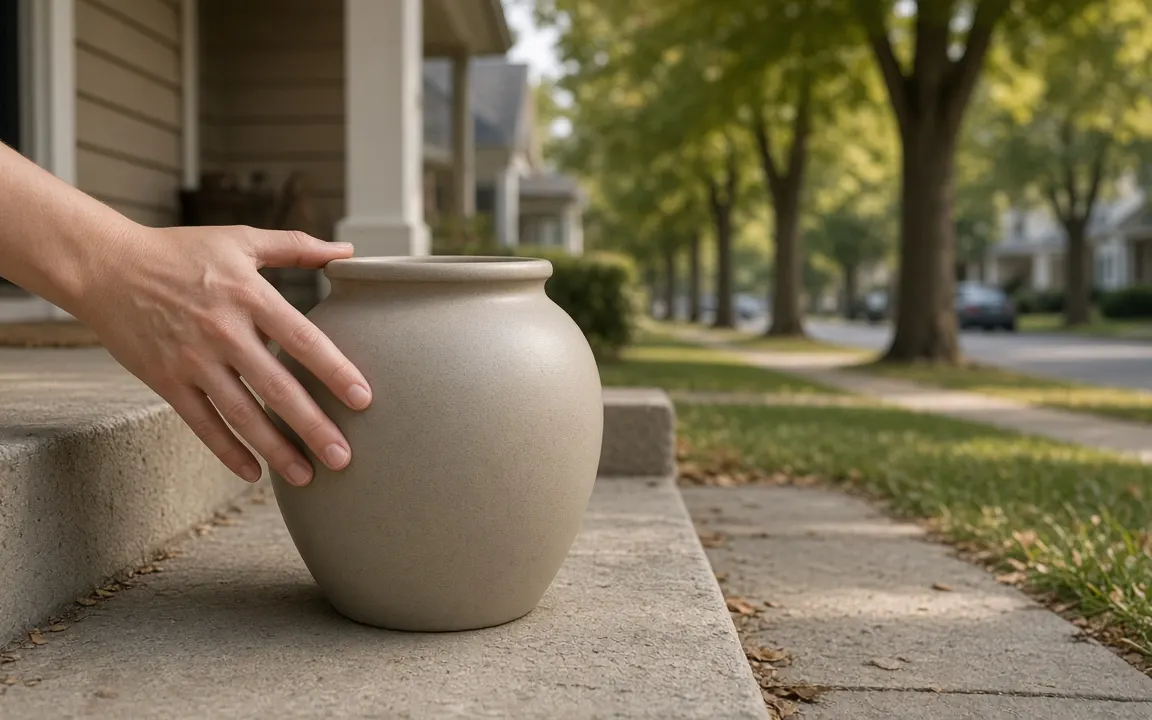
Reno, Nevada
Where a living memorial fits in Reno
Outdoor memorials in Reno face intense high-desert sun, big temperature swings and winter freezes. Granite, bronze and stainless steel last well, while painted wood and printed photos fade and cheap resin cracks. Set a garden stone on a gravel base so it drains, and consider a spot with some afternoon shade to slow weathering over the years. Indoor pieces avoid the problem entirely.
Many Reno families love the mountains and the lake, and some want part of a pet's ashes to stay close to home while the rest is scattered somewhere wild. Asking for the ashes to be divided into a main urn and smaller keepsakes, or a pendant or ring, lets you do both. A paw print taken before cremation is another lasting keepsake.
Local knowledge goes a long way in a place like Reno. A county extension office or a long-running garden center can tell you whether your soil is already alkaline, clay-heavy or sandy, which matters because ashes push soil further toward alkaline. If your soil is already high in lime, choose a lime-tolerant tree and use extra compost or composted bark when you mix. If it's acidic, the ash is easier to buffer. A cheap pH kit settles the question.
About 283,621 people live in Reno, which makes it the 4th-largest of the 11 Nevada communities we cover.
Reno sits within easy reach of Sparks (6 miles), Incline Village (21 miles) and Carson City (26 miles). A provider based in any of them will usually collect from Reno; ask what the mileage adds to the bill.
Our estimate
105,000
How many dog- or cat-owning households Reno has (estimate)
How we calculated this
283,621 ÷ 2.5 = 113,448 households; × 53% (dog) + 39% (cat) = 105,000. Homes are counted once however many pets they keep.
Our estimate
8,700
dog and cat deaths per year in Reno, our estimate
How we calculated this
105,000 dog/cat-owning homes ÷ average lifespan (dog: 12.69 yrs + cat: 11.18 yrs) ≈ 8,700 a year. The real figure is unlikely to be lower.
53%[1]
53% of US households own a dog, which is about 71 million households.
12.69 years[2]
US dogs have an average life expectancy at birth of 12.69 years.
39%[3]
39% of US households own a cat, which is about 53 million households.
11.18 years[4]
US cats seen at Banfield hospitals have an average life expectancy at birth of 11.18 years.
Where these figures come from: Montoya et al. 2023, Frontiers in Veterinary Science and American Pet Products Association (APPA) 2025 State of the Industry.
Cremation habits in Nevada, and what they mean for a bio urn
In Nevada, about 80.7%[5] of people are cremated, one of the higher rates around. When most human funerals end with ashes, the question "what shall we do with them?" comes up in nearly every family, and a tree, a garden bed or a lake release is a common answer. That familiarity carries over to pets. It also means more crematories to choose from, and more chance that one of them offers water cremation.
The Nevada percentage above is from Direct Cremate (citing CANA) (2024) and refers to human funerals. Treat it as context for Reno, not as a count of pets.
When to plant in Reno's climate
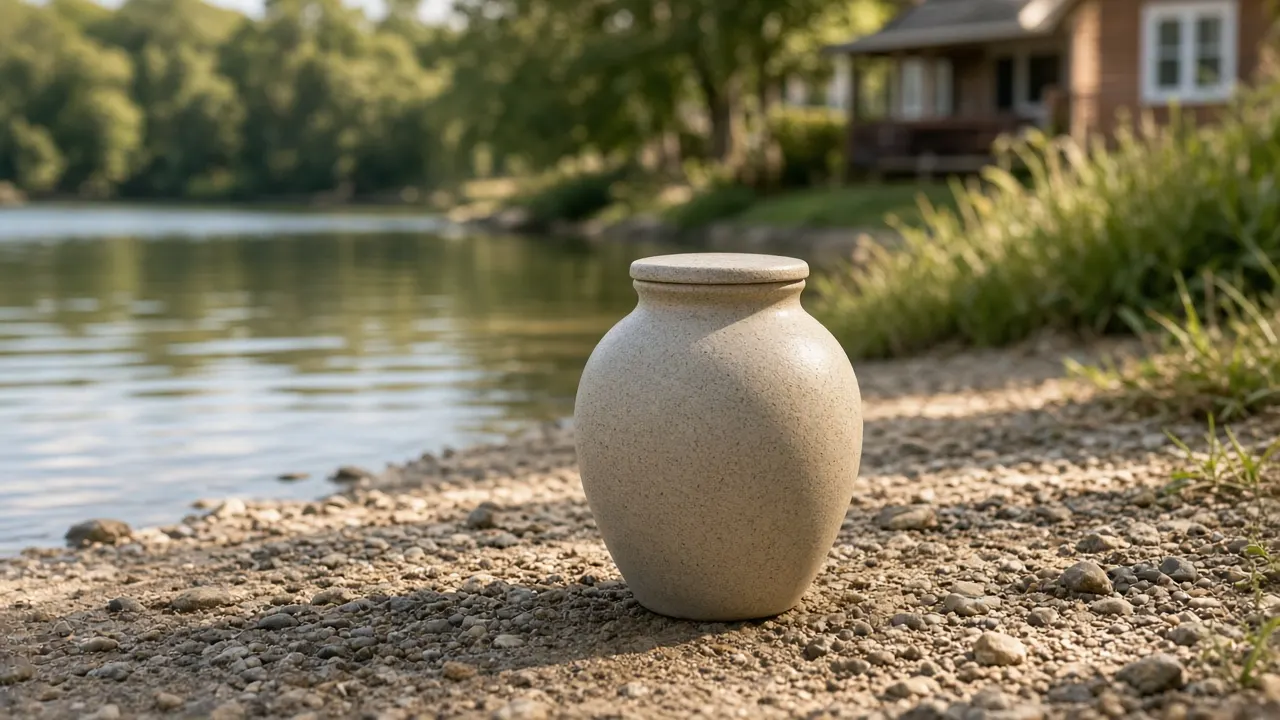
In Reno's climate, a water release has its own calendar. Lakes can ice over around December, while the height of summer brings crowded shorelines and heat around 94°F. Late spring and early autumn are usually easiest: open water, fewer people and comfortable weather for a small gathering. Whatever the season, choose a quiet spot and let nothing but the urn and loose petals go into the water.
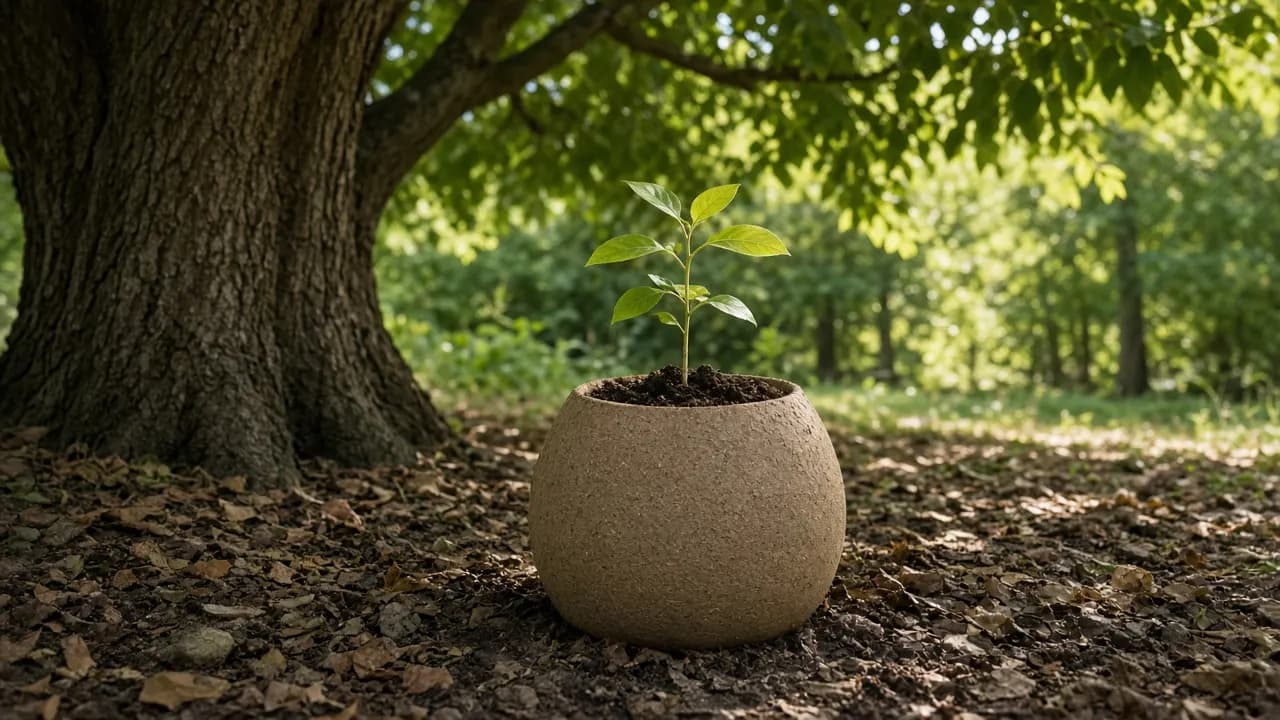
Trees in Reno have to survive hot summers and freezing winters, which rules out many species sold in planting kits. Ask a local nursery for trees proven in both conditions; natives are usually the safest choice. Plant a sapling rather than a seed, mulch a wide ring to keep the roots cooler in July and August and steadier through the freeze, and water deeply during dry spells for two summers.
Adding up the cost of a bio urn memorial in Reno
Here's how the pieces add up for a Reno family. Private cremation of a dog averages about $260[6] nationally. A pet bio urn with a seed capsule is sold for about $99[7], and a planting system without the tree for $119[8]. Compost, pine bark and a pH kit add a few dollars more. Ask local providers for a written total before you choose.
The Nevada price table breaks costs down by product; our services page explains what sits behind each line.

Free tool
Memorial budget planner
Add up cremation, urn, keepsakes and a farewell so the total holds no surprises.
Where you can plant or release ashes in Nevada
Rules change more often than most people realise, and many local policies about ashes were never written down at all. Treat any general guide for Nevada, including ours, as a starting point. Whoever looks after that particular field, park or shoreline is the one whose answer counts, so it's worth getting it by email where you can.
Reno's own guidance is published by Washoe County Regional Animal Services; it covers public collection, which is separate from arranging a private cremation. Nevada keeps an official directory of local governments; use it to reach the county or city office that covers Reno.
Home burial and scattering are governed at the Nevada level first; our Nevada rules summary has the detail. Then check whether Reno or your HOA adds anything.
From ashes to a growing tree: the steps
- Talk it through with your household first, especially if anyone would rather keep the ashes at home.
- Measure your space. A tree needs room to grow; a shrub, a pot or a flower bed may suit your garden better.
- Test the soil where you plan to plant. If it's already alkaline, choose a lime-tolerant species and add extra compost or composted bark.
- Spread the ashes through a wide planting area, not in one band directly beneath the root ball.
- Water well for two summers. Most memorial trees that fail do so in their first dry season, not their first winter.
- Keep a record noting which species you planted, when, and how the soil was mixed, so future care or taking a cutting is straightforward.
Remembering your pet in Reno
The dry climate around Reno makes planting a living memorial a little harder than in wetter places. If you'd like a tree or shrub, choose a drought-tolerant native, plant in spring or fall, and water deeply through its first summers. A bio urn can work well in a large pot or raised bed where you can control the soil and watering.
Every option Reno families choose between is on the services page, or look at how readers voted in our polls, try the free planning tools, browse in-depth guides or recent articles. Close to Reno we also cover Summerlin, Sparks, Carson City and Henderson; the full list for Nevada and for the United States is a click away.

Reader polls
What would you choose?
Vote anonymously and see how other readers answered. The results are live counts from people who visit this site, so they show real opinions, not a scientific sample.
What kind of tree or plant would you choose?
Tap an answer to vote and see how others answered. Anonymous.
Would you consider releasing your pet's ashes in water?
Tap an answer to vote and see how others answered. Anonymous.
If you had to decide today, which aftercare would you choose for your pet?
Tap an answer to vote and see how others answered. Anonymous.

Free tools to help you plan
Memorial budget planner
Add up cremation, urn, keepsakes and a farewell so the total holds no surprises.

Memorial tree finder
Pick a tree for a planting urn that suits your climate, space and pet.

Aftercare options compared
Compare private, communal and water cremation with burial on cost, timing and what comes home.
Questions people ask
When is the hardest time of year to arrange a burial in Reno?
January, February, November and December: average lows are below freezing then, and frozen ground makes a home grave slow or impossible until it thaws. The other pressure point is July, when highs around 94°F mean a body needs cooling and collecting quickly.
Why does the Reno page quote a human cremation rate?
Because it is the best local signal we have. Direct Cremate (citing CANA) (2024) reports about 80.7%[5] of Nevada residents are cremated. There is no official pet equivalent, and inventing one would be worse than quoting a real, clearly labelled number.
How many pet owners live in Reno?
By our estimate, about 105,000 households in Reno have at least one dog or cat, and around 8,700 are lost each year. We calculate this from the city's population of about 283,621, the average household size and national ownership and lifespan figures, so treat it as a floor rather than an exact count.
Can a provider from a neighbouring town collect from Reno?
Usually yes. Sparks is about 6 miles away, Incline Village is about 21 miles away and Carson City is about 26 miles away, all inside a normal collection radius. Get the mileage written into the quote so there is no surprise on the day.
How long does it take to get ashes back for planting?
Most private cremations return ashes within one to two weeks, and water cremation cycles themselves take 12–20 hours[10], so allow a similar time. In a smaller place, if the cremation happens in a larger centre such as Reno, it may take a little longer. Planting can wait, so there's no need to rush.
Can I take my pet's ashes on a plane to plant them somewhere else?
Usually, yes. Most airlines let you carry cremated remains in hand luggage, but security staff need to be able to X-ray the container, so a wooden, plastic or cardboard container is easier than a metal urn. Keep the certificate from the crematory with you. Leave any seed pod at home if you're crossing a border that restricts plant material.


Sources and our estimates
- [1] 53% of US households own a dog, which is about 71 million households. American Pet Products Association (APPA) 2025 State of the Industry, 2025.
- [2] US dogs have an average life expectancy at birth of 12.69 years. Montoya et al. 2023, Frontiers in Veterinary Science - Banfield Pet Hospital life expectancy tables (13.3 million dogs, 2.4 million cats, 2013-2019), 2023.
- [3] 39% of US households own a cat, which is about 53 million households. American Pet Products Association (APPA) 2025 State of the Industry, 2025.
- [4] US cats seen at Banfield hospitals have an average life expectancy at birth of 11.18 years. Montoya et al. 2023, Frontiers in Veterinary Science - Banfield Pet Hospital life expectancy tables (13.3 million dogs, 2.4 million cats, 2013-2019), 2023.
- [5] Nevada had a 80.7% cremation rate in 2024, among the highest in the US. Direct Cremate (citing CANA), 2024.
- [6] CareCredit's 2025 cost study put the US national average for private dog cremation at $260 (range $206-$473). CareCredit (Synchrony) - How Much Does It Cost To Euthanize a Dog? (2025 ASQ360 procedural cost study), 2025.
- [7] The Bios Urn for pets, a biodegradable urn with a seed capsule, costs $99. Bios Urn – Pets, 2026.
- [8] The Living Urn's pet bio-urn planting system (without a tree) costs $119. The Living Urn – Pet tree urn, 2026.
- [9] U.S. pet flame cremations emit on the order of 47,000 t CO2e a year. Our estimate: 1.5M pet cremations x 31.3 kg CO2e. How we calculate.
- [10] A PET-550 aquamation cycle takes 12–20 hours for a single pet and 14–20 hours for segregated or communal cycles, with up to 14 compartments. Bio-Response Solutions — PET-550 Aquamation System product page, 2026.
Ask about aquamation near Reno
Tell us what you need and where you are. We'll reply by email with clear options and prices so you can decide in your own time.