Planting your pet's ashes in Durham
Roughly 9,350 Durham families say goodbye to a dog or cat each year, by our count. A living memorial is one way to mark it. This guide explains how to make one that actually grows.
- Planting, garden and water urns compared
- Honest notes on local rules
- Help choosing a native species
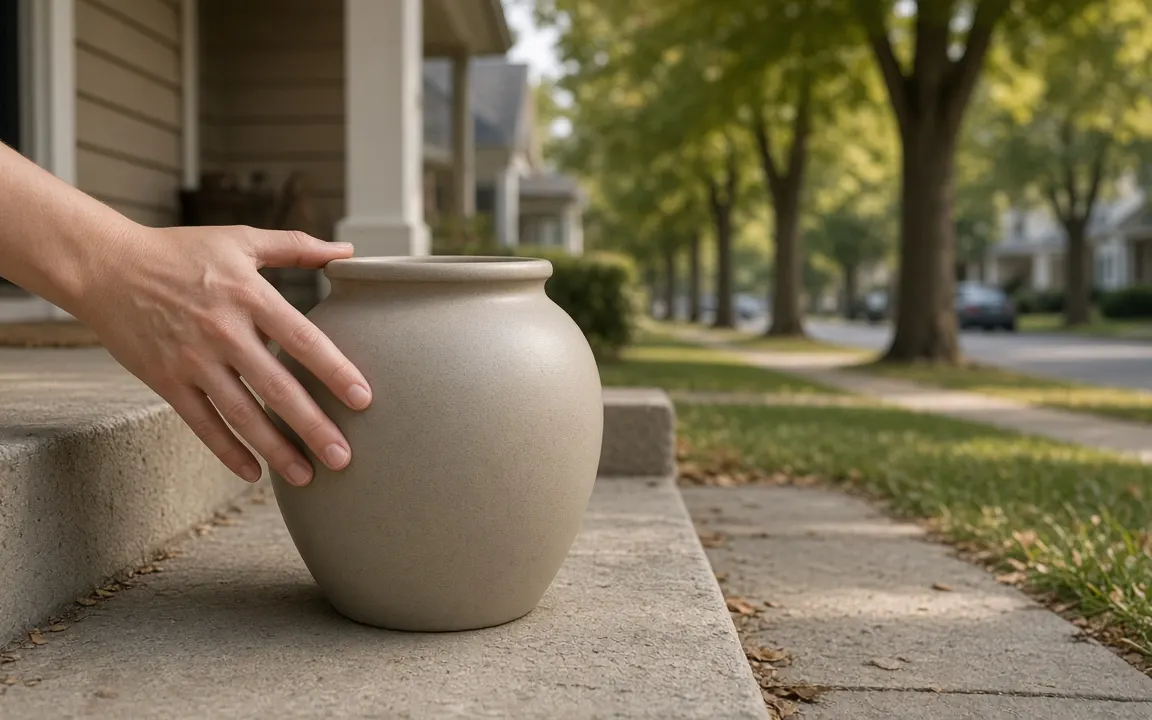
Durham, North Carolina
Bio urns, trees and water in Durham
Outdoor memorials in Durham face humid summers, heavy rain and occasional ice rather than long frozen winters. Granite, bronze and glazed ceramic weather well, while painted wood and printed resin fade quickly. If a stone will sit under the tree canopy, expect some moss and choose deep, simple engraving so the name stays easy to read. Clean it gently once a year with water and a soft brush.
Durham's long growing season makes living memorials easy to keep: a dogwood, a redbud or a native shrub planted with or near the ashes, or a bio urn that starts a seedling. Pick a spot that gets some afternoon shade, water well through the first summer, and set a flat stone nearby with a name so the place is easy to find.
Local knowledge goes a long way in a place like Durham. A county extension office or a long-running garden center can tell you whether your soil is already alkaline, clay-heavy or sandy, which matters because ashes push soil further toward alkaline. If your soil is already high in lime, choose a lime-tolerant tree and use extra compost or composted bark when you mix. If it's acidic, the ash is easier to buffer. A cheap pH kit settles the question.
With roughly 305,561 residents, Durham is the 4th-largest of the 64 North Carolina communities we cover. Some of the providers who serve Durham are based about 20 miles away in Raleigh, the nearest larger centre, so collection times reflect that drive.
If you want to compare providers, look at Chapel Hill (10 miles), Morrisville (11 miles) and Carrboro (12 miles). Distance matters because pickup fees and the time until the ashes come back both grow with the drive.
Our estimate
110,000
Durham: dog- or cat-owning households, our estimate
How we calculated this
305,561 ÷ 2.5 = 122,224 households; × 53% (dog) + 39% (cat) = 110,000. Homes are counted once however many pets they keep.
Our estimate
9,350
Durham families who lose a dog or cat each year (estimate)
How we calculated this
110,000 dog/cat-owning homes ÷ average lifespan (dog: 12.69 yrs + cat: 11.18 yrs) ≈ 9,350 a year. The real figure is unlikely to be lower.
53%[1]
53% of US households own a dog, which is about 71 million households.
12.69 years[2]
US dogs have an average life expectancy at birth of 12.69 years.
39%[3]
39% of US households own a cat, which is about 53 million households.
11.18 years[4]
US cats seen at Banfield hospitals have an average life expectancy at birth of 11.18 years.
Where these figures come from: American Pet Products Association (APPA) 2025 State of the Industry and Montoya et al. 2023, Frontiers in Veterinary Science.
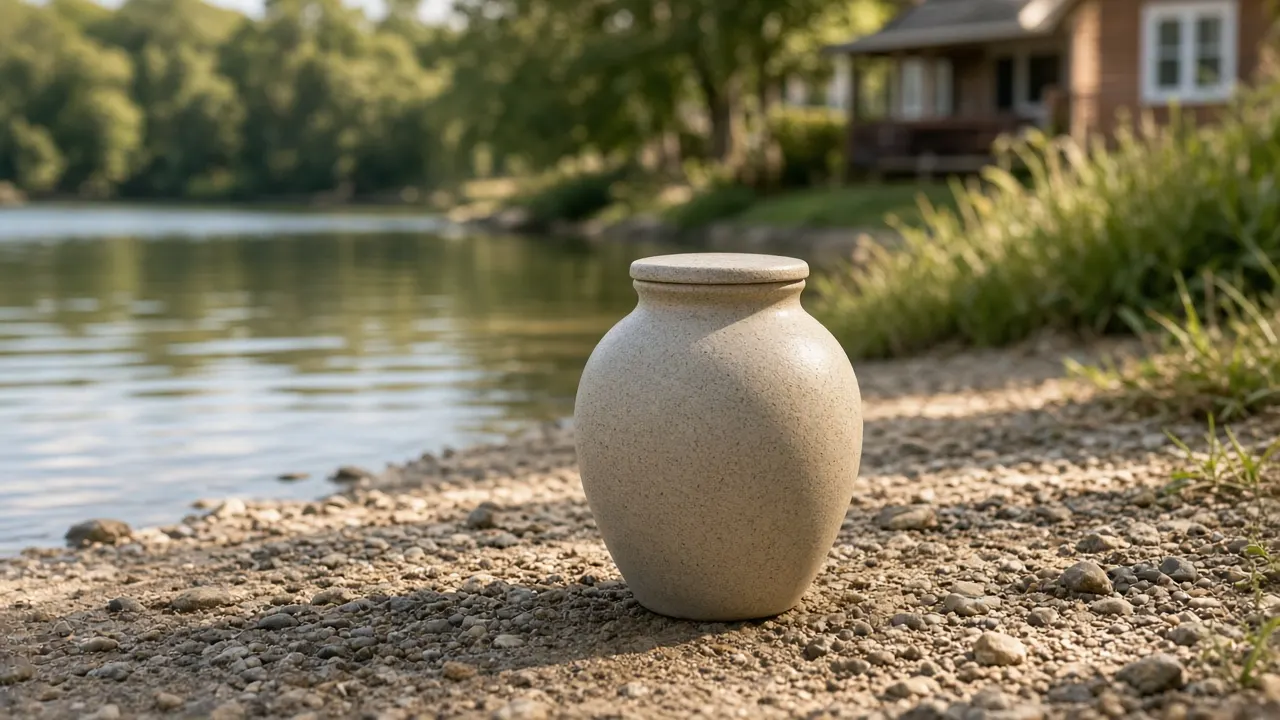
Cremation, burial and green choices in North Carolina
The share of people cremated in North Carolina, now about 57.3%[5], keeps inching up. For pet owners, that shift has brought more questions about what to do once the ashes come home. There's no need to decide on the day. Many families keep the ashes for a season, talk about what their pet loved, and only then settle on a tree, a pot or a lake.
Source for the North Carolina number: NFDA 2024 Cremation & Burial Report state projections (via Occasional Sage) (2024). Nobody publishes a pet cremation rate for Durham, so the human figure is the best local signal available.
What Durham's climate means for a living memorial
Summer water can be busy or unsafe in hot places. Around Durham, shorelines are crowded in July, and some lakes close for algae blooms in the heat. For a lake or river goodbye, pick a cooler month or go at first light, check for any water-quality notices, and choose a spot where you can reach the water easily without slipping.
In Durham's heat, containers dry out fast. If you're planting a memorial in a pot on a patio or balcony, choose a large, light-colored container, which heats up less than a small dark one, and place it where it gets afternoon shade in June, July and August. Use only a small share of the ashes in the pot, water until it drains freely so salts flush out, and check the soil every day in the hottest weeks.
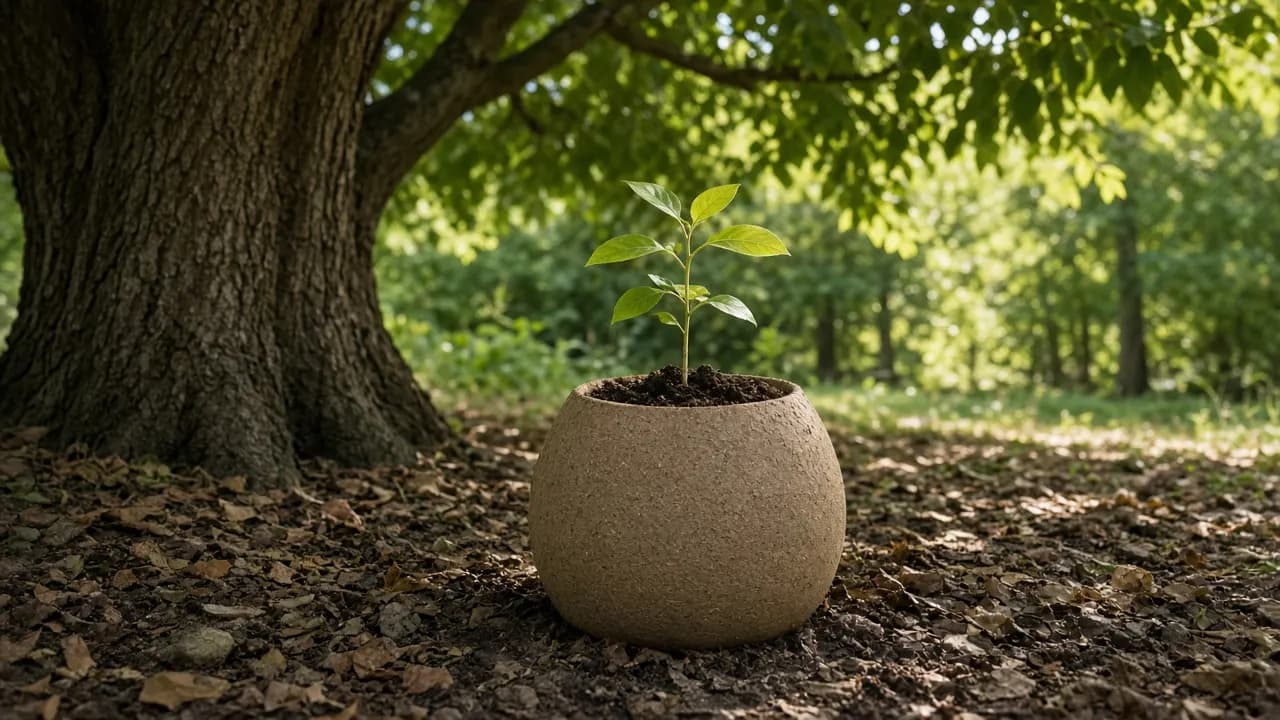
What a greener goodbye costs in Durham
Here's how the pieces add up for a Durham family. Private cremation of a dog averages about $260[6] nationally. A pet bio urn with a seed capsule is sold for about $99[7], and a planting system without the tree for $119[8]. Compost, pine bark and a pH kit add a few dollars more. Ask local providers for a written total before you choose.
The full price table by product is on our North Carolina page, and the services page explains what each option includes.

Free tool
Memorial budget planner
Add up cremation, urn, keepsakes and a farewell so the total holds no surprises.
Scattering and planting rules in North Carolina
What you plant can matter as much as where. Parks and nature reserves in North Carolina often forbid planting anything at all, and even on private land some trees and shrubs are listed as invasive in parts of the region. A local nursery or native plant society can steer you toward a species that won't spread into wild land.
The official North Carolina local government directory lists every county and city office, which is the quickest way to find who to ask in Durham.
The rules that apply across North Carolina (home burial, scattering and who oversees pet cremation) are summarized on our North Carolina page. Durham may add its own conditions, so check with the city or county before digging.
How to plan a living memorial, in order
- Decide what the memorial is for. Wanting somewhere to sit, a living plant, a release on water or simply the gentlest footprint each leads you toward a different kind of urn.
- If a greener cremation matters, ask about aquamation first, since no other choice in the process changes the environmental picture as much.
- Keep a small portion back in a keepsake if there's any chance you'll move or want a second planting later.
- Buy the tree locally. A young native tree from a grower around Durham tends to outgrow anything sprouted from a packet seed.
- Prepare the soil a season ahead if the timing allows, so the ash and compost blend is ready on planting day.
- Plant with the people who loved your pet; hand everyone a task of their own, whether blending, backfilling or watering.
Living memorials beyond the backyard
Many people in Durham are students, researchers and young families who may not stay in one house forever, so portable memorials are a sensible choice. An urn on a shelf, a pendant or ring holding a pinch of ashes, or a framed paw print move with you. If you'd also like to scatter or plant, ask for a keepsake portion to be kept aside first.
run the numbers with the free planning tools, For a plain comparison of the choices, open services, or look at how readers voted in our polls, there are guides for the big decisions and articles for the details. If you live between Durham and Cary, Charlotte, Greensboro and Fayetteville, either page applies. Every other community in North Carolina, and all of the United States, is listed too.

Reader polls
What would you choose?
Vote anonymously and see how other readers answered. The results are live counts from people who visit this site, so they show real opinions, not a scientific sample.
Would you consider releasing your pet's ashes in water?
Tap an answer to vote and see how others answered. Anonymous.
If water cremation (aquamation) were offered near you, would you choose it?
Tap an answer to vote and see how others answered. Anonymous.
If you had to decide today, which aftercare would you choose for your pet?
Tap an answer to vote and see how others answered. Anonymous.

Free tools to help you plan
Memorial budget planner
Add up cremation, urn, keepsakes and a farewell so the total holds no surprises.

Memorial tree finder
Pick a tree for a planting urn that suits your climate, space and pet.

Aftercare options compared
Compare private, communal and water cremation with burial on cost, timing and what comes home.
Questions people ask
Where are the providers that serve Durham actually based?
Some are local, and some run from Raleigh, about 20 miles away. That is normal for a city this size. What matters is the collection time they quote for Durham and whether the drive is priced into the total, so ask both up front.
Can a provider from a neighbouring town collect from Durham?
Usually yes. Chapel Hill is about 10 miles away, Morrisville is about 11 miles away and Carrboro is about 12 miles away, all inside a normal collection radius. Get the mileage written into the quote so there is no surprise on the day.
When is the hardest time of year to arrange a burial in Durham?
January: average lows are below freezing then, and frozen ground makes a home grave slow or impossible until it thaws. The other pressure point is July, when highs around 91°F mean a body needs cooling and collecting quickly.
Is Durham big enough to have several pet aftercare providers?
Probably, on the numbers. By our estimate about 110,000 Durham households keep a dog or cat and around 9,350 lose one each year, which is enough steady demand to support more than one provider. We derive that from population (about 305,561), household size and national ownership and lifespan figures.
Is water cremation better for the environment?
It uses much less energy: pet aquamation is claimed to use about 90%[10] less energy than flame cremation, and it uses about as much water as 1–3 pet baths[11] per pet. The strongest carbon figures come from studies of human funerals, not pets, so treat them as a direction rather than a promise. You still get ashes back for a bio urn.
How much does pet aquamation cost?
One US pet insurer's guide lists aquamation at $80 to $450 depending on size[12]. As a real example, a Delaware provider charges $150–$450[13] for private aquamation by weight, including a standard urn, and $50–$225[14] for communal. Prices in Durham depend on who offers it, so ask for a written total.


Sources and our estimates
- [1] 53% of US households own a dog, which is about 71 million households. American Pet Products Association (APPA) 2025 State of the Industry, 2025.
- [2] US dogs have an average life expectancy at birth of 12.69 years. Montoya et al. 2023, Frontiers in Veterinary Science - Banfield Pet Hospital life expectancy tables (13.3 million dogs, 2.4 million cats, 2013-2019), 2023.
- [3] 39% of US households own a cat, which is about 53 million households. American Pet Products Association (APPA) 2025 State of the Industry, 2025.
- [4] US cats seen at Banfield hospitals have an average life expectancy at birth of 11.18 years. Montoya et al. 2023, Frontiers in Veterinary Science - Banfield Pet Hospital life expectancy tables (13.3 million dogs, 2.4 million cats, 2013-2019), 2023.
- [5] The NFDA projected North Carolina's cremation rate at 57.3% for 2024. NFDA 2024 Cremation & Burial Report state projections (via Occasional Sage), 2024.
- [6] CareCredit's 2025 cost study put the US national average for private dog cremation at $260 (range $206-$473). CareCredit (Synchrony) - How Much Does It Cost To Euthanize a Dog? (2025 ASQ360 procedural cost study), 2025.
- [7] The Bios Urn for pets, a biodegradable urn with a seed capsule, costs $99. Bios Urn – Pets, 2026.
- [8] The Living Urn's pet bio-urn planting system (without a tree) costs $119. The Living Urn – Pet tree urn, 2026.
- [9] Each shelter-animal flame cremation emits about 31 kg CO2e on average. Our estimate: 19,000 t CO2e / 607,000 animals. How we calculate.
- [10] Pet aquamation is described as available across all 50 US states, and is claimed to use about 90% less energy than flame cremation. Be a Tree Cremation pet aquamation guide, 2025.
- [11] Aquamation uses about the same water per pet as 1–3 pet baths. Veterinary Sustainability Alliance — Aquamation, 2024.
- [12] Embrace Pet Insurance lists US communal cremation at $30-$200, partitioned at $50-$250, private at $100-$500+ and aquamation at $80-$450. Embrace Pet Insurance - Bury or Cremate Your Dog? Costs, Pros & Cons, 2025.
- [13] Delaware Pet Aquamation charges $150–$450 for private aquamation by weight, from under 10 lb to 150 lb and over, including a standard urn. Delaware Pet Aquamation – Pricing, 2026.
- [14] Communal aquamation at the same Delaware provider costs $50–$225 by weight. Delaware Pet Aquamation – Pricing, 2026.
Tell us about your pet and your garden
Tell us what you need and where you are. We'll reply by email with clear options and prices so you can decide in your own time.