Greener pet aftercare in Wilson, North Carolina
Roughly 1,500 Wilson families say goodbye to a dog or cat each year, by our count. A living memorial is one way to mark it. This guide explains how to make one that actually grows.
- Options for renters and apartments
- Water release rules in plain words
- No obligation, we reply by email

Wilson, North Carolina
Where a living memorial fits in Wilson
Some Wilson families scatter a portion of the ashes on the family farm, along a field edge or under a tree where their animal liked to lie. On your own land, the decision rests with you. For a creek, park or lake, check the rules first. A small amount kept back in a locket or keepsake means the memory stays with you if the land is ever sold.
The town's folk art tradition inspires some families to make their own memorial: painting a stepping stone, carving a wooden marker, or building a display case holding the tags and a favorite toy. These homemade pieces often mean more than anything bought. For outdoor use, seal paint and bare wood well, because Wilson's humid summers and afternoon storms wear them down fast.
In a town the size of Wilson, the nearest aquamation provider may be an hour or more away, and pet crematories often serve a wide rural area. That doesn't change what you can do with the ashes. A flame-cremated pet's ashes work just as well in a planting urn or water urn. If a lower-impact goodbye is the main reason you're here, the choice of cremation matters more than the urn, so ask about water cremation before you commit.
Wilson is home to about 49,572 people, the 24th-largest of the 64 North Carolina communities we cover. Raleigh, roughly 40 miles off, is the closest larger centre, and a share of the providers who cover Wilson run from there.
The closest communities we cover are Rocky Mount (18 miles), Wendell (24 miles) and Goldsboro (25 miles). Providers serving those towns often travel to Wilson too, so it can be worth asking them for a quote.
Our estimate
18,000
How many dog- or cat-owning households Wilson has (estimate)
How we calculated this
49,572 ÷ 2.5 = 19,829 households; × 53% (dog) + 39% (cat) = 18,000. A household with several pets counts once.
Our estimate
1,500
dog and cat deaths per year in Wilson, our estimate
How we calculated this
18,000 dog/cat-owning homes ÷ average lifespan (dog: 12.69 yrs + cat: 11.18 yrs) ≈ 1,500 a year. A floor, not a ceiling.
53%[1]
53% of US households own a dog, which is about 71 million households.
12.69 years[2]
US dogs have an average life expectancy at birth of 12.69 years.
39%[3]
39% of US households own a cat, which is about 53 million households.
11.18 years[4]
US cats seen at Banfield hospitals have an average life expectancy at birth of 11.18 years.
None of the figures on this this page are ours alone: they rest on Montoya et al. 2023, Frontiers in Veterinary Science and American Pet Products Association (APPA) 2025 State of the Industry.

Cremation habits in North Carolina, and what they mean for a bio urn
In North Carolina, roughly 57.3%[5] of people are cremated, a share that has been rising for years. That shift shows in pet aftercare too: more people now ask what to do with ashes, and bio urns are part of the answer. If some relatives prefer burial, a living memorial can be a good middle ground. The ashes go into the ground, just as a burial would, and the tree gives everyone a place to visit.
NFDA 2024 Cremation & Burial Report state projections (via Occasional Sage) (2024) is where the North Carolina figure comes from. It counts people; we use it because attitudes to cremating a pet in Wilson tend to follow attitudes to cremation generally.
Wilson seasons and your memorial tree
Biodegradable urns are made to break down, and heat and humidity can start that early. In Wilson, where July highs average about 90°F, keep a paper, cornstarch or coconut-fiber urn indoors, somewhere cool and dry, until the planting day. Don't leave it in a car, a hot shed or a garage through June, July and August, or it may soften or split before it reaches the ground.
In Wilson's heat, containers dry out fast. If you're planting a memorial in a pot on a patio or balcony, choose a large, light-colored container, which heats up less than a small dark one, and place it where it gets afternoon shade in June, July and August. Use only a small share of the ashes in the pot, water until it drains freely so salts flush out, and check the soil every day in the hottest weeks.
Eco memorial prices, from urn to tree
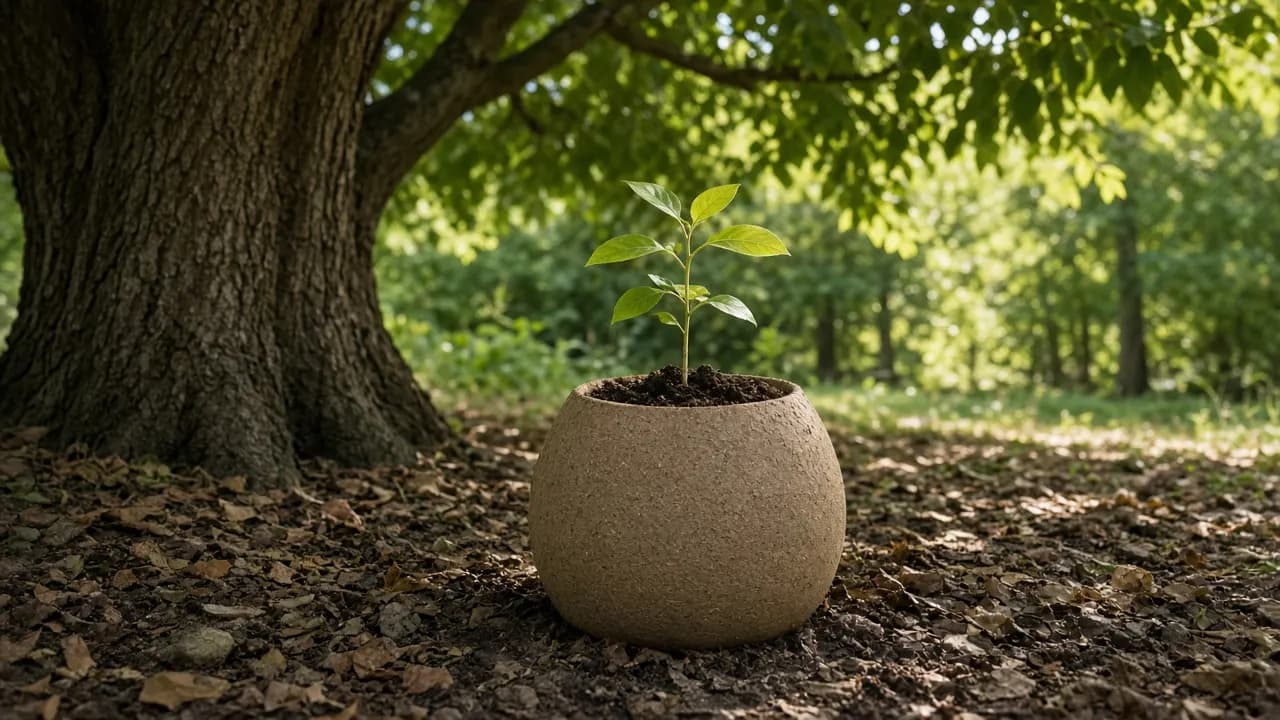
Bio urns vary more in price than you might expect. A national guide puts biodegradable urns at $70–$260[6], depending on material, size and whether a seed or tree system is included. For a lake or sea release, one water urn designed to float briefly and dissolve sells for $149[7]. In Wilson, the tree and the soil amendments are usually the cheapest part of the whole memorial.
We keep the detailed North Carolina price table on one page so it stays current: see North Carolina prices.

Free tool
Memorial budget planner
Add up cremation, urn, keepsakes and a farewell so the total holds no surprises.
Who to ask before you plant or scatter in North Carolina
Rules change more often than most people realise, and many local policies about ashes were never written down at all. Treat any general guide for North Carolina, including ours, as a starting point. Whoever looks after that particular field, park or shoreline is the one whose answer counts, so it's worth getting it by email where you can.
North Carolina keeps an official directory of local governments; use it to reach the county or city office that covers Wilson.
Home burial and scattering are governed at the North Carolina level first; our North Carolina rules summary has the detail. Then check whether Wilson or your HOA adds anything.
What to do first, and what can wait for the right season
- Talk it through with your household before deciding anything, since someone may quietly prefer the ashes to stay indoors.
- Measure your space. Trees spread more than people expect; in a smaller garden a shrub, a big pot or a border may be the kinder fit.
- Test the soil at the planting site. Ground that already reads alkaline calls for a species that tolerates lime, plus more compost or composted bark than usual.
- Spread the ashes through a wide planting area, never as a single layer under the roots.
- Water well for two summers. It's drought in the early years, not cold, that kills the majority of memorial trees that don't make it.
- Keep a record of the species, the date and what went into the soil, so you can care for it or move a cutting later.
Remembering your pet, in Wilson and wherever you go next
Wilson families often keep memorials close to the house: a marker under a magnolia, an urn beside the television, a paw print framed in the den. If you want to share with relatives, ordering two or three matching keepsakes at the start is simpler than trying to split ashes later, and it lets a sibling in Greenville or Raleigh have a piece too.
the planning tools turn your pet's details into figures, For a plain comparison of the choices, open services, read our guides and latest articles, or see what other families chose in the poll results. If you live between Wilson and Charlotte, Winston-Salem, Greensboro and Raleigh, either page applies. Every other community in North Carolina, and all of the United States, is listed too.

Reader polls
What would you choose?
Vote anonymously and see how other readers answered. The results are live counts from people who visit this site, so they show real opinions, not a scientific sample.
Would you consider releasing your pet's ashes in water?
Tap an answer to vote and see how others answered. Anonymous.
If you rent or might move, how would you handle a memorial planting?
Tap an answer to vote and see how others answered. Anonymous.
If you had to decide today, which aftercare would you choose for your pet?
Tap an answer to vote and see how others answered. Anonymous.

Free tools to help you plan
Memorial budget planner
Add up cremation, urn, keepsakes and a farewell so the total holds no surprises.

Memorial tree finder
Pick a tree for a planting urn that suits your climate, space and pet.

Aftercare options compared
Compare private, communal and water cremation with burial on cost, timing and what comes home.
Questions people ask
How does Wilson's weather affect pet aftercare?
July is the hottest month in Wilson, with average highs around 90°F, so prompt collection matters most then. Winters are mild, with average lows staying above freezing, so outdoor burial or scattering is usually possible year round.
How do North Carolina attitudes to cremation compare?
NFDA 2024 Cremation & Burial Report state projections (via Occasional Sage) (2024) puts the North Carolina human cremation rate at about 57.3%[5]. We show it on the Wilson page because pet aftercare choices tend to track it: where cremation is normal for people, communal and private pet cremation are both easy to find.
Will I have to travel to Raleigh to arrange things?
Not usually. Providers based in Raleigh (roughly 40 miles from Wilson) collect from here as a matter of routine, and the paperwork is done by email or phone. If you want to be present for a witnessed cremation, that is when the drive matters.
How many pet owners live in Wilson?
By our estimate, about 18,000 households in Wilson have at least one dog or cat, and around 1,500 are lost each year. We calculate this from the city's population of about 49,572, the average household size and national ownership and lifespan figures, so treat it as a floor rather than an exact count.
Can I scatter my pet's ashes in a park in Wilson?
Usually only with permission, and some parks don't allow it at all. Parks are managed by a city, county, state or national agency, each with its own policy, and many were written for human ashes. Contact the park office, explain it's a small amount of pet ash, and ask whether there's a preferred spot.
Which memorial plants are dangerous to cats and dogs?
Lilies are highly toxic to cats, even the pollen. Sago palm, oleander, yew, azalea and foxglove can poison dogs, and several of them harm cats and horses too. If you have pets at home in Wilson, ask a vet or nursery to confirm a plant is safe before you buy it. Grasses, many herbs and most fruit trees are safer choices, though large amounts of fallen fruit can still upset a dog's stomach.


Sources and our estimates
- [1] 53% of US households own a dog, which is about 71 million households. American Pet Products Association (APPA) 2025 State of the Industry, 2025.
- [2] US dogs have an average life expectancy at birth of 12.69 years. Montoya et al. 2023, Frontiers in Veterinary Science - Banfield Pet Hospital life expectancy tables (13.3 million dogs, 2.4 million cats, 2013-2019), 2023.
- [3] 39% of US households own a cat, which is about 53 million households. American Pet Products Association (APPA) 2025 State of the Industry, 2025.
- [4] US cats seen at Banfield hospitals have an average life expectancy at birth of 11.18 years. Montoya et al. 2023, Frontiers in Veterinary Science - Banfield Pet Hospital life expectancy tables (13.3 million dogs, 2.4 million cats, 2013-2019), 2023.
- [5] The NFDA projected North Carolina's cremation rate at 57.3% for 2024. NFDA 2024 Cremation & Burial Report state projections (via Occasional Sage), 2024.
- [6] Funeral.com cites U.S. Funerals Online that biodegradable urns typically cost about $70–$260. Funeral.com – How Much Do Cremation Urns Cost in 2025, 2025.
- [7] The Living Urn's Eco Water Urn for water burial costs $149 and holds up to 225 cubic inches; it floats for several minutes before dissolving. The Living Urn – Eco Water Urn, 2026.
- [8] About 59 million U.S. pet-owning households may be open to eco-friendly aftercare options. Our estimate: 86.9M pet households x 68% interested in green funeral options. How we calculate.
Tell us about your pet and your garden
Tell us what you need and where you are. We'll reply by email with clear options and prices so you can decide in your own time.