A living memorial for your pet in Penn Hills
About 1,200 dogs and cats are lost in Penn Hills each year, by our estimate. If you'd like your pet's ashes to grow into a tree or return to the water, this page covers the soil, the season and the cost.
- Options for renters and apartments
- Water release rules in plain words
- No obligation, we reply by email
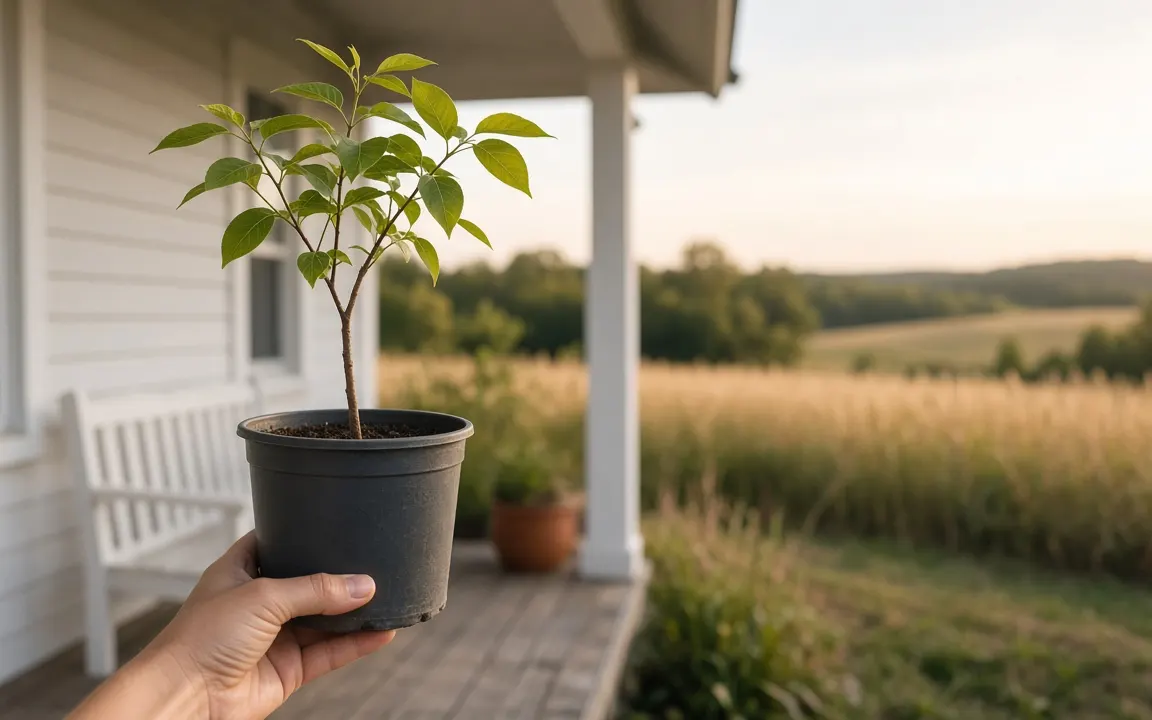
Penn Hills, Pennsylvania
What an eco memorial looks like in Penn Hills
In Penn Hills, a pet memorial often fits into a family home that has seen decades of birthdays: an urn on a bookshelf, a framed paw print in the hallway, a small garden stone by the back steps. Ashes can be shared between a main urn and smaller keepsakes if grown children in other suburbs want something of their own. Confirm capacity with the seller first.
Some Penn Hills households have lived with the same view of the hills for decades, and a memorial can reflect that long story: a name plaque by the porch, a photo urn, a keepsake box holding the collar and tags. If you want an ink or clay paw impression or some fur saved, ask for it on the first call, since it can't be made after cremation.
Most families in and around Penn Hills arrange cremation through their local vet, who works with a regional crematory, and then do the memorial themselves. That's a good split. Bio urns ship by mail, and the local feed store, nursery or hardware store usually has the compost, pine bark and a pH kit you need. The one thing worth buying locally is the tree, because a nursery near you already knows what survives your winters and summers.
With roughly 39,452 residents, Penn Hills is the 14th-largest of the 36 Pennsylvania communities we cover. Pittsburgh, roughly 9 miles off, is the closest larger centre, and a share of the providers who cover Penn Hills run from there.
Families in Penn Hills often end up using a provider from Plum (5 miles), Monroeville (5 miles) and Baldwin (9 miles). That is normal: crematories serve a radius, not a single town, and the drive is priced into collection.
Our estimate
14,500
How many dog- or cat-owning households Penn Hills has (estimate)
How we calculated this
39,452 ÷ 2.5 = 15,781 households; × 53% (dog) + 39% (cat) = 14,500. Homes are counted once however many pets they keep.
Our estimate
1,200
Estimated dog and cat losses in Penn Hills each year
How we calculated this
14,500 dog/cat-owning homes ÷ average lifespan (dog: 12.69 yrs + cat: 11.18 yrs) ≈ 1,200 a year. The real figure is unlikely to be lower.
53%[1]
53% of US households own a dog, which is about 71 million households.
12.69 years[2]
US dogs have an average life expectancy at birth of 12.69 years.
39%[3]
39% of US households own a cat, which is about 53 million households.
11.18 years[4]
US cats seen at Banfield hospitals have an average life expectancy at birth of 11.18 years.
None of the figures on this this page are ours alone: they rest on American Pet Products Association (APPA) 2025 State of the Industry and Montoya et al. 2023, Frontiers in Veterinary Science.
Cremation habits in Pennsylvania, and what they mean for a bio urn
Faith shapes these choices in Pennsylvania, where cremation covers about 61.3%[5] of deaths and burial much of the rest. Some traditions that prefer burial for people have no view on pets; others do. If this matters to anyone in your household, ask a faith leader you trust. A planting urn puts the ashes back into the ground, which many people find sits comfortably with a burial tradition.
NFDA 2024 Cremation & Burial Report state projections (via Occasional Sage) (2024) is where the Pennsylvania figure comes from. It counts people; we use it because attitudes to cremating a pet in Penn Hills tend to follow attitudes to cremation generally.
When to plant in Penn Hills's climate
A Penn Hills winter is a useful waiting room. With 4 months of freezing lows, you can mix the ashes with compost in a covered bin or tub in a garage or shed during the cold months and let the mix rest. One gardening guide suggests at least 90–120 days[6] before planting, which fits neatly between a winter loss and spring planting. Test the pH before the tree goes in.
Snow can hide a young memorial tree and the damage done around it. In Penn Hills, where lows average about 20°F in January, voles and rabbits chew bark under the snow line, and snowplows or shovels can snap a sapling. Put a tall stake beside the planting so you can find it, and fit a loose guard around the trunk before the first snow.
What bio urns and aquamation cost in Penn Hills
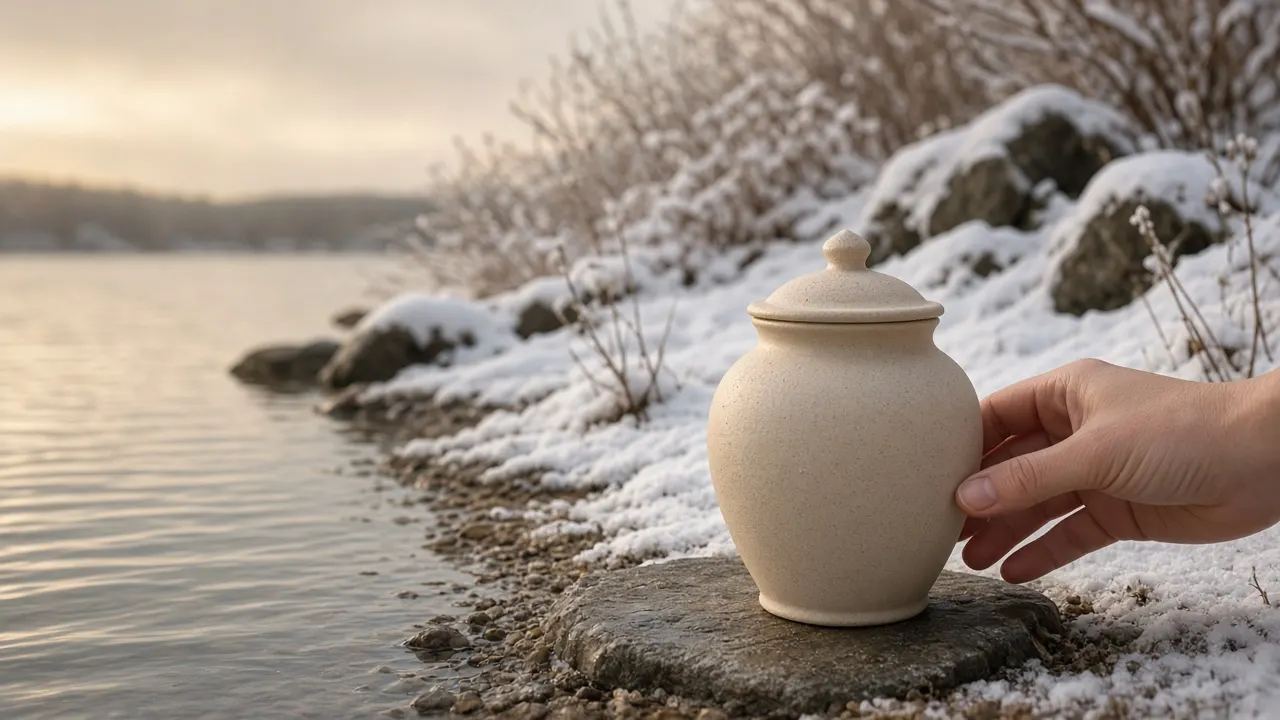
For a medium-size dog, published private aquamation prices at two US providers sit around $200–$259[7], and one Arizona provider's individual aquamation price of $75–$349[8] includes an urn, nameplate and ink paw print. Whether a Penn Hills provider bundles extras like that makes a real difference when you compare. Add the bio urn or tree separately, and use the planner below to see the total.
Rather than repeat the price table on every city page, we keep one for Pennsylvania: Pennsylvania costs. What each service includes is on the services page.

Free tool
Memorial budget planner
Add up cremation, urn, keepsakes and a farewell so the total holds no surprises.
Where you can plant or release ashes in Pennsylvania
Two questions cover most situations in Pennsylvania: who owns or manages this land or water, and have they said yes? For your own garden, the answer is you. For a rented home, it's your landlord, in writing. For parks and public water, it's the relevant agency. For a relative's garden, it's them, and it's worth agreeing that the tree stays even if the house is sold.
Not sure which office covers Penn Hills? The Pennsylvania local government directory is the official list.
Start with the Pennsylvania rules, which cover burial, scattering and oversight for the whole state, and treat Penn Hills's local ordinances as a possible extra layer.
How to plan a living memorial, in order
- Confirm the ashes will come back. Communal cremation usually means no ashes are returned, and you can't plant what you don't receive.
- Pick the type of bio urn: one that grows a tree, a simple biodegradable urn to bury in a quiet bed, or a floating urn meant for a lake, river or the coast.
- Ask permission from the landowner, landlord or park manager for anywhere that isn't yours.
- Plan for the weather. In Penn Hills, avoid frozen, baked or waterlogged ground; a calm, mild day is best for planting or a release.
- Release gently on water. Set the urn on the surface, let it float and sink on its own, and add only loose petals.
- Come back in a year. Replace mulch, check the tree's growth and take a photo to mark the anniversary.
Living memorials beyond the backyard
Western Pennsylvania's freeze-thaw cycle, combined with sloped yards, can tilt and crack outdoor markers faster than people expect. A solid granite stone set on compacted gravel stays level far longer than resin or soft stone. A memorial tree over a biodegradable urn is best set once the spring ground loosens, and pick a spot that won't wash out in heavy rain.
Compare every option on our services page, run the numbers with the free planning tools, or see how other readers answered in our polls, look through our guides and the blog. If you live between Penn Hills and Erie, Allentown, Philadelphia and Pittsburgh, either page applies. Every other community in Pennsylvania, and all of the United States, is listed too.

Reader polls
What would you choose?
Vote anonymously and see how other readers answered. The results are live counts from people who visit this site, so they show real opinions, not a scientific sample.
If you rent or might move, how would you handle a memorial planting?
Tap an answer to vote and see how others answered. Anonymous.
What kind of tree or plant would you choose?
Tap an answer to vote and see how others answered. Anonymous.
If you had to decide today, which aftercare would you choose for your pet?
Tap an answer to vote and see how others answered. Anonymous.

Free tools to help you plan
Memorial budget planner
Add up cremation, urn, keepsakes and a farewell so the total holds no surprises.

Memorial tree finder
Pick a tree for a planting urn that suits your climate, space and pet.

Aftercare options compared
Compare private, communal and water cremation with burial on cost, timing and what comes home.
Questions people ask
How many pet owners live in Penn Hills?
By our estimate, about 14,500 households in Penn Hills have at least one dog or cat, and around 1,200 are lost each year. We calculate this from the city's population of about 39,452, the average household size and national ownership and lifespan figures, so treat it as a floor rather than an exact count.
Which nearby towns can I compare with Penn Hills?
The closest communities we cover are Plum (about 5 miles), Monroeville (about 5 miles) and Baldwin (about 9 miles). Providers based in those places often serve Penn Hills too. Ask each one for a written total that includes collection, so the distance is priced in.
How does Penn Hills's weather affect pet aftercare?
July is the hottest month in Penn Hills, with average highs around 83°F, so prompt collection matters most then. Average lows drop below freezing in January, February, March and December, which can make digging a grave hard until spring.
Why does the Penn Hills page quote a human cremation rate?
Because it is the best local signal we have. NFDA 2024 Cremation & Burial Report state projections (via Occasional Sage) (2024) reports about 61.3%[5] of Pennsylvania residents are cremated. There is no official pet equivalent, and inventing one would be worse than quoting a real, clearly labelled number.
Can I bury pet ashes on a farm or rural land near Penn Hills?
On land you own, burying ashes is generally allowed. Keep the planting well away from wells, springs and streams, and away from ground where livestock graze or crops are grown. On someone else's land, including family land, ask the owner first and agree that the memorial can stay if the land changes hands.
How do I prepare pet ashes for planting?
Spread the ashes through a large volume of compost and soil rather than pouring them into the hole in one layer. Many gardeners add acidic material such as composted pine bark or leaf mould. One gardening guide suggests letting the mix rest for 90–120 days[6] before planting. A garden-center pH kit tells you when the mix is ready.


Sources and our estimates
- [1] 53% of US households own a dog, which is about 71 million households. American Pet Products Association (APPA) 2025 State of the Industry, 2025.
- [2] US dogs have an average life expectancy at birth of 12.69 years. Montoya et al. 2023, Frontiers in Veterinary Science - Banfield Pet Hospital life expectancy tables (13.3 million dogs, 2.4 million cats, 2013-2019), 2023.
- [3] 39% of US households own a cat, which is about 53 million households. American Pet Products Association (APPA) 2025 State of the Industry, 2025.
- [4] US cats seen at Banfield hospitals have an average life expectancy at birth of 11.18 years. Montoya et al. 2023, Frontiers in Veterinary Science - Banfield Pet Hospital life expectancy tables (13.3 million dogs, 2.4 million cats, 2013-2019), 2023.
- [5] The NFDA projected Pennsylvania's cremation rate at 61.3% for 2024. NFDA 2024 Cremation & Burial Report state projections (via Occasional Sage), 2024.
- [6] Gardening Know How advises letting an ash/soil-amendment mixture sit for at least 90 to 120 days before planting. Gardening Know How — Planting With Cremains: Is There a Safe Way to Bury Ashes, 2024.
- [7] Private aquamation for a 21–50 lb dog costs about $200–$259 at two posted US price lists. Our estimate: Delaware 10–49 lb $200; A Greener Place 21–50 lb $259. How we calculate.
- [8] A Greener Place in Mesa, Arizona, charges $75–$349 for individual pet aquamation by weight, including an urn, nameplate and ink paw print. A Greener Place Pet Aquamation – Pricing, 2026.
- [9] U.S. pet flame cremations emit on the order of 47,000 t CO2e a year. Our estimate: 1.5M pet cremations x 31.3 kg CO2e. How we calculate.
Tell us about your pet and your garden
Tell us what you need and where you are. We'll reply by email with clear options and prices so you can decide in your own time.