A living memorial for your pet in Greenville
About 2,300 dogs and cats are lost in Greenville each year, by our estimate. If you'd like your pet's ashes to grow into a tree or return to the water, this page covers the soil, the season and the cost.
- A memorial that moves with you
- Why pure ashes harm young roots
- Written prices you can compare

Greenville, South Carolina
What an eco memorial looks like in Greenville
Greenville's growth has brought in families from all over, so a household's relatives may be scattered from Florida to Michigan. Dividing ashes into small urns, lockets or glass keepsakes gives each branch a portion of its own. Mention the number of shares when first arranging things, and check turnaround for engraving or custom artwork, since hand-finished pieces can need several weeks.
Upstate humidity, summer storms and the occasional ice glaze put outdoor memorials through a lot. Soft cast stone cracks and streaks, cheap resin bleaches, and thin plated metal pits. In a Greenville yard, rely on granite, bronze or sealed concrete, set where rainwater runs away from the base. Inside, an urn or piece of jewelry faces none of those problems and can move house easily.
In rural areas around Greenville, family pets are sometimes buried whole on the property rather than cremated. If you'd prefer that, check local rules on depth and distance from water. If you'd like a tree above the grave, plant it beside the grave, not directly on it, so the roots aren't disturbed and the ground can settle. For cremated pets, a planting urn gives you the tree without a large grave, and it can be placed exactly where you want.
About 75,310 people live in Greenville, which makes it the 6th-largest of the 29 South Carolina communities we cover.
If you want to compare providers, look at Mauldin (7 miles), Greer (11 miles) and Easley (11 miles). Distance matters because pickup fees and the time until the ashes come back both grow with the drive.
Our estimate
27,500
Greenville: dog- or cat-owning households, our estimate
How we calculated this
75,310 ÷ 2.5 = 30,124 households; × 53% (dog) + 39% (cat) = 27,500. A household with several pets counts once.
Our estimate
2,300
Greenville families who lose a dog or cat each year (estimate)
How we calculated this
27,500 dog/cat-owning homes ÷ average lifespan (dog: 12.69 yrs + cat: 11.18 yrs) ≈ 2,300 a year. The real figure is unlikely to be lower.
53%[1]
53% of US households own a dog, which is about 71 million households.
12.69 years[2]
US dogs have an average life expectancy at birth of 12.69 years.
39%[3]
39% of US households own a cat, which is about 53 million households.
11.18 years[4]
US cats seen at Banfield hospitals have an average life expectancy at birth of 11.18 years.
Where these figures come from: American Pet Products Association (APPA) 2025 State of the Industry and Montoya et al. 2023, Frontiers in Veterinary Science.

Why cremation culture in South Carolina shapes your options
About 56.1%[5] of people who die in South Carolina are cremated. That's a human statistic, but it shapes local services: in places where cremation is common but not dominant, there are usually enough crematories to compare, while greener options like water cremation may be less widespread. It's worth asking any provider directly whether they offer aquamation, and whether the ashes come back in a simple container you can plant from.
For the South Carolina figure we rely on NFDA 2024 Cremation & Burial Report state projections (via Occasional Sage) (2024). Read it as a picture of local custom around death and remembrance in Greenville rather than as pet data.
When to plant in Greenville's climate
In a hot climate like Greenville's, with highs of about 90°F in July, salt is a bigger problem than in wetter places. Rain is what washes sodium from ashes down past the roots, and dry heat lets it build up near the surface. Mix the ashes through a much larger volume of soil and compost than you'd think necessary, and water deeply and slowly after planting so salts move down, not up.
Heat narrows the tree list in Greenville. Months like June, July and August bring sustained highs, so choose species that already cope locally: drought-tolerant natives, or trees a local nursery recommends for full sun. A seed from a planting kit, bred somewhere cooler, is a gamble here. Plant a sturdy nursery sapling instead, mulch a wide ring around it and plan to water it through its first two summers.
Price ranges for planting and water urns
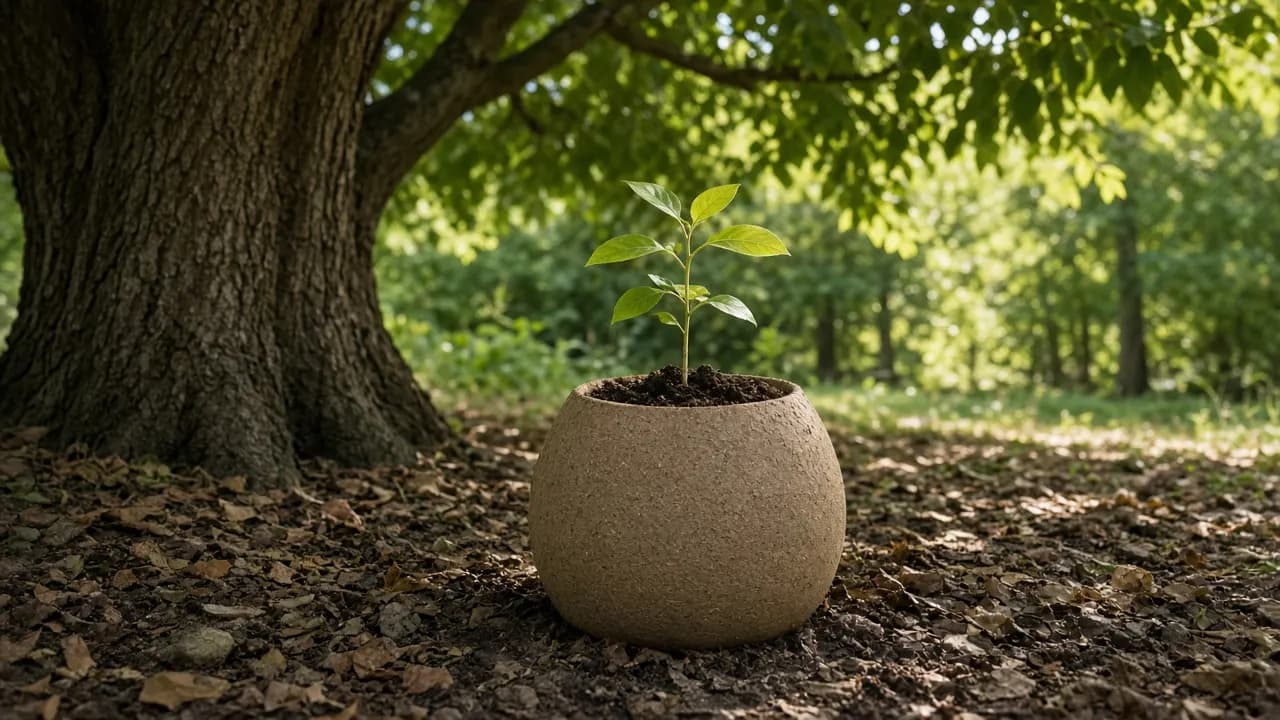
Bio urns vary more in price than you might expect. A national guide puts biodegradable urns at $70–$260[6], depending on material, size and whether a seed or tree system is included. For a lake or sea release, one water urn designed to float briefly and dissolve sells for $149[7]. In Greenville, the tree and the soil amendments are usually the cheapest part of the whole memorial.
The South Carolina price table breaks costs down by product; our services page explains what sits behind each line.

Free tool
Memorial budget planner
Add up cremation, urn, keepsakes and a farewell so the total holds no surprises.
What South Carolina allows for ashes, in general terms
What you plant can matter as much as where. Parks and nature reserves in South Carolina often forbid planting anything at all, and even on private land some trees and shrubs are listed as invasive in parts of the region. A local nursery or native plant society can steer you toward a species that won't spread into wild land.
To find your county or city office in South Carolina, start with the official South Carolina local government directory.
The South Carolina page sets out who oversees pet cremation and what the state says about burial and scattering. Greenville's own bylaws can sit on top of that, so ask before you dig.
From ashes to a growing tree: the steps
- If the pet belonged to a child, be straightforward about the death and explain cremation simply, pitched at a level they can understand.
- Let them choose the plant, from a short list you've already checked is safe, hardy and not poisonous to any animals at home.
- Use a pot for a small pet such as a hamster, rabbit or guinea pig: there's only a small amount of ash, and a pot keeps the memorial close.
- Give them real jobs on the day: blending the compost, scooping it into the pot, watering, picking a stone to paint.
- Explain the ashes honestly as part of their pet that's now feeding the plant, and answer questions as they come, even months later.
- Take a photo of the child with the plant on the same day every year; over time you'll have a record of the two of them growing up.
Keeping the memorial alive in Greenville
Greenville's downtown galleries and studios have given the city a strong local arts scene, so handmade memorials are a natural fit for many families: a wheel-thrown stoneware urn, a clay paw cast glazed in a favorite color, or a pendant made by a jeweler. Gardeners sometimes set a stone under a Japanese maple. Where the piece will sit usually decides the rest.
The services page is the place to compare what is included, use the free tools before you ring anyone, browse in-depth guides or recent articles, or see how other readers answered in our polls. If you live between Greenville and Mount Pleasant, Rock Hill, Charleston and Columbia, either page applies. Every other community in South Carolina, and all of the United States, is listed too.

Reader polls
What would you choose?
Vote anonymously and see how other readers answered. The results are live counts from people who visit this site, so they show real opinions, not a scientific sample.
What kind of tree or plant would you choose?
Tap an answer to vote and see how others answered. Anonymous.
If water cremation (aquamation) were offered near you, would you choose it?
Tap an answer to vote and see how others answered. Anonymous.
If you had to decide today, which aftercare would you choose for your pet?
Tap an answer to vote and see how others answered. Anonymous.

Free tools to help you plan
Memorial budget planner
Add up cremation, urn, keepsakes and a farewell so the total holds no surprises.

Memorial tree finder
Pick a tree for a planting urn that suits your climate, space and pet.

Aftercare options compared
Compare private, communal and water cremation with burial on cost, timing and what comes home.
Questions people ask
How many pet owners live in Greenville?
By our estimate, about 27,500 households in Greenville have at least one dog or cat, and around 2,300 are lost each year. We calculate this from the city's population of about 75,310, the average household size and national ownership and lifespan figures, so treat it as a floor rather than an exact count.
How do South Carolina attitudes to cremation compare?
NFDA 2024 Cremation & Burial Report state projections (via Occasional Sage) (2024) puts the South Carolina human cremation rate at about 56.1%[5]. We show it on the Greenville page because pet aftercare choices tend to track it: where cremation is normal for people, communal and private pet cremation are both easy to find.
Which nearby towns can I compare with Greenville?
The closest communities we cover are Mauldin (about 7 miles), Greer (about 11 miles) and Easley (about 11 miles). Providers based in those places often serve Greenville too. Ask each one for a written total that includes collection, so the distance is priced in.
When is the hardest time of year to arrange a burial in Greenville?
There is no frozen-ground season here; average lows stay above freezing all year. The other pressure point is July, when highs around 90°F mean a body needs cooling and collecting quickly.
When is the best time to plant a memorial tree in Greenville?
Avoid the hottest months. In a hot climate, the cooler part of the year gives roots time to grow before the next summer. Keep the ashes safely at home until then, use the time to prepare the soil mix, and plant a sturdy nursery sapling rather than a seed, which is a gamble in serious heat.
How long does it take to get ashes back for planting?
Most private cremations return ashes within one to two weeks, and water cremation cycles themselves take 12–20 hours[9], so allow a similar time. In a smaller place, if the cremation happens in a larger centre such as Greenville, it may take a little longer. Planting can wait, so there's no need to rush.


Sources and our estimates
- [1] 53% of US households own a dog, which is about 71 million households. American Pet Products Association (APPA) 2025 State of the Industry, 2025.
- [2] US dogs have an average life expectancy at birth of 12.69 years. Montoya et al. 2023, Frontiers in Veterinary Science - Banfield Pet Hospital life expectancy tables (13.3 million dogs, 2.4 million cats, 2013-2019), 2023.
- [3] 39% of US households own a cat, which is about 53 million households. American Pet Products Association (APPA) 2025 State of the Industry, 2025.
- [4] US cats seen at Banfield hospitals have an average life expectancy at birth of 11.18 years. Montoya et al. 2023, Frontiers in Veterinary Science - Banfield Pet Hospital life expectancy tables (13.3 million dogs, 2.4 million cats, 2013-2019), 2023.
- [5] The NFDA projected South Carolina's cremation rate at 56.1% for 2024. NFDA 2024 Cremation & Burial Report state projections (via Occasional Sage), 2024.
- [6] Funeral.com cites U.S. Funerals Online that biodegradable urns typically cost about $70–$260. Funeral.com – How Much Do Cremation Urns Cost in 2025, 2025.
- [7] The Living Urn's Eco Water Urn for water burial costs $149 and holds up to 225 cubic inches; it floats for several minutes before dissolving. The Living Urn – Eco Water Urn, 2026.
- [8] U.S. pet flame cremations emit on the order of 47,000 t CO2e a year. Our estimate: 1.5M pet cremations x 31.3 kg CO2e. How we calculate.
- [9] A PET-550 aquamation cycle takes 12–20 hours for a single pet and 14–20 hours for segregated or communal cycles, with up to 14 compartments. Bio-Response Solutions — PET-550 Aquamation System product page, 2026.
Plan a living memorial in Greenville
Tell us what you need and where you are. We'll reply by email with clear options and prices so you can decide in your own time.