A living memorial for your pet in Flower Mound
Flower Mound has an estimated 29,500 dog- or cat-owning households. When a planting or water memorial feels right for yours, here's what works in the local climate and what to ask before you buy.
- Trees matched to Flower Mound's climate
- Soil-safe planting method for ashes
- Real prices for bio urns and aquamation

Flower Mound, Texas
Your living memorial options around Flower Mound
The shoreline parks along Grapevine Lake and the town's trail network are favorite places for Flower Mound residents to walk and reflect. Leave no marker on public ground, and keep any scattering there to a discreet handful. Families on larger lots often choose a corner of their own yard, beneath a post oak or beside a garden bed, where nothing will disturb it.
Flower Mound households often have relatives spread across the Metroplex and in other states, and dividing a companion's remains means nobody goes without a keepsake. Share that plan before cremation so the remains are returned already portioned or easy to divide. A pendant, a small glass orb or a tiny urn uses little, so most of the ashes stay together at home.
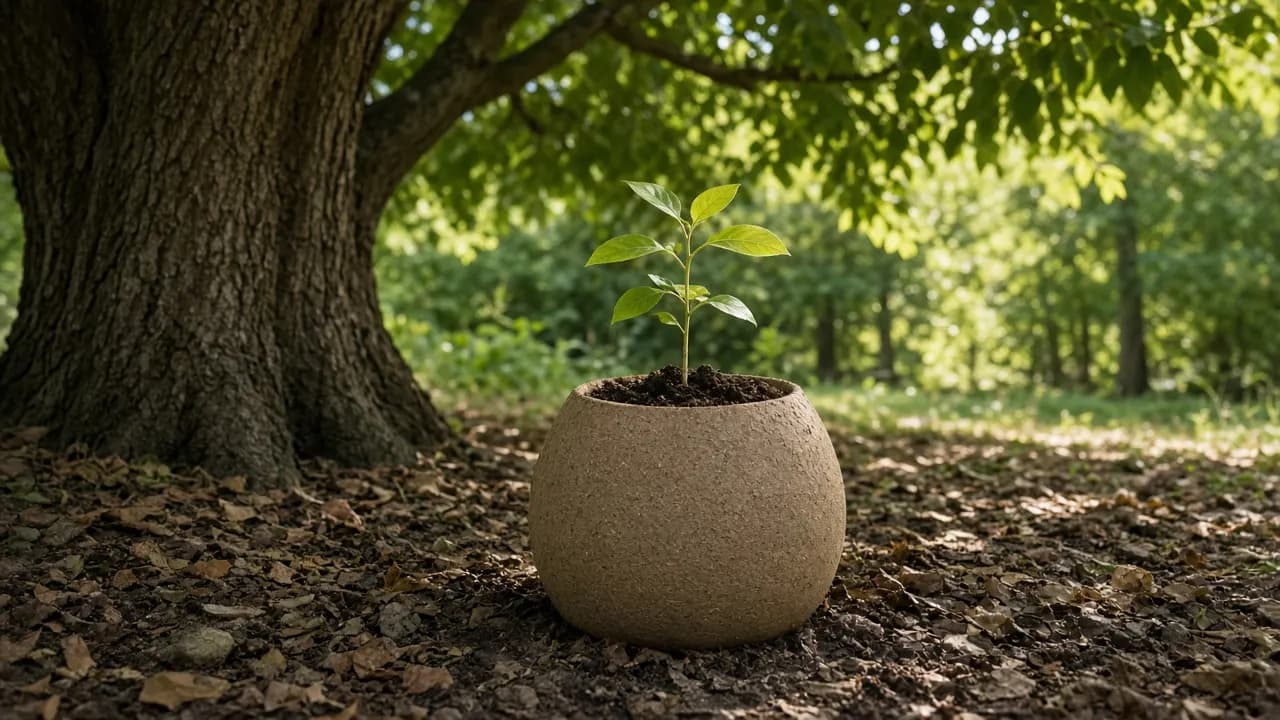
Getting a bio urn in Flower Mound is mostly a matter of ordering online, but getting the soil right is a local job. Ask a nursery or your county extension office whether the ground is chalky, clay or sandy. Clay holds salts near the roots and drains poorly, so dig a wider hole and mix in more compost. Sandy soil drains well but holds little, so water the young tree more often in its first summers.
About 79,540 people live in Flower Mound, which makes it the 50th-largest of the 325 Texas communities we cover. The nearest larger centre is Irving, about 16 miles (26 km) away, which is where some providers serving Flower Mound are based.
Families in Flower Mound often end up using a provider from Southlake (6 miles), Grapevine (6 miles) and Westlake (6 miles). That is normal: crematories serve a radius, not a single town, and the drive is priced into collection.
Our estimate
29,500
Flower Mound: dog- or cat-owning households, our estimate
How we calculated this
79,540 ÷ 2.5 = 31,816 households; × 53% (dog) + 39% (cat) = 29,500. Homes are counted once however many pets they keep.
Our estimate
2,450
Estimated dog and cat losses in Flower Mound each year
How we calculated this
29,500 dog/cat-owning homes ÷ average lifespan (dog: 12.69 yrs + cat: 11.18 yrs) ≈ 2,450 a year. Treat it as a minimum.
53%[1]
53% of US households own a dog, which is about 71 million households.
12.69 years[2]
US dogs have an average life expectancy at birth of 12.69 years.
39%[3]
39% of US households own a cat, which is about 53 million households.
11.18 years[4]
US cats seen at Banfield hospitals have an average life expectancy at birth of 11.18 years.
The numbers above come from Montoya et al. 2023, Frontiers in Veterinary Science and American Pet Products Association (APPA) 2025 State of the Industry, if you'd like to read the original sources.

What local attitudes to cremation mean in Texas
In Texas, roughly 55.7%[5] of people are cremated, a share that has been rising for years. That shift shows in pet aftercare too: more people now ask what to do with ashes, and bio urns are part of the answer. If some relatives prefer burial, a living memorial can be a good middle ground. The ashes go into the ground, just as a burial would, and the tree gives everyone a place to visit.
The Texas figure comes from NFDA 2024 Cremation & Burial Report state projections (via Occasional Sage) (2024). It describes people, not pets, so read it as a sign of local attitudes rather than a pet statistic.
Weather, soil and planting windows in Flower Mound
Summer water can be busy or unsafe in hot places. Around Flower Mound, shorelines are crowded in August, and some lakes close for algae blooms in the heat. For a lake or river goodbye, pick a cooler month or go at first light, check for any water-quality notices, and choose a spot where you can reach the water easily without slipping.
Hot weather in Flower Mound changes the plan for a planting ceremony too. With August highs near 96°F, an outdoor gathering at midday is uncomfortable and stressful for the new plant. Choose an early morning or evening in a cooler month, set out shade and water for guests, and water the tree in well straight after planting. A light, pale mulch helps keep the root zone cool.
What a greener goodbye costs in Flower Mound
For a medium-size dog, published private aquamation prices at two US providers sit around $200–$259[6], and one Arizona provider's individual aquamation price of $75–$349[7] includes an urn, nameplate and ink paw print. Whether a Flower Mound provider bundles extras like that makes a real difference when you compare. Add the bio urn or tree separately, and use the planner below to see the total.
For a line-by-line price table, see the Texas overview; for what's included in each option, see our services.

Free tool
Memorial budget planner
Add up cremation, urn, keepsakes and a farewell so the total holds no surprises.
Land, water and permission in Texas
Natural burial grounds and some pet cemeteries in Texas accept ashes in biodegradable urns, and a few ask for nothing else: no plastic, no metal, no varnish. If you're considering one, ask what the urn may be made of, whether a tree or marker is allowed above it, and whether the fee includes looking after the plot.
Texas keeps an official directory of local governments; use it to reach the county or city office that covers Flower Mound.
We keep Texas's burial and scattering rules in one place: the Texas rules summary. Before a home burial in Flower Mound, also ask the city whether local ordinances add anything.
How to plan a living memorial, in order
- Confirm the ashes will come back. With a communal cremation there's normally nothing to collect afterwards, which leaves you with nothing to put in an urn.
- Pick the type of bio urn: a planting urn for a tree, a plain burial urn for a garden corner, a water urn for a lake or the sea.
- Ask permission from the landowner, landlord or park manager for anywhere that isn't yours.
- Plan for the weather. In Flower Mound, avoid frozen, baked or waterlogged ground; a calm, mild day is best for planting or a release.
- Release gently on water. Rest the urn on the surface, leave it to drift and go under in its own time, and scatter only a few loose petals.
- Come back in a year. Top up the mulch, see how much the tree has put on, and photograph it to record the first anniversary.
Remembering your pet in Flower Mound
The wildflower-covered mound that gave the town its name is a fitting inspiration for a memorial here. Many Flower Mound families sow bluebonnets or Indian paintbrush, or plant a native shrub, around a small engraved stone in the backyard. Granite and bronze stand up best to North Texas hail and sun. Inside the house, a keepsake box or a framed nose print takes up almost no room.
go deeper with the guides or catch up on recent articles, Every option Flower Mound families choose between is on the services page, or see what other families chose in the poll results, try the free planning tools. More local pages: El Paso, San Antonio, Houston and Fort Worth, the Texas overview and every city in the United States.

Reader polls
What would you choose?
Vote anonymously and see how other readers answered. The results are live counts from people who visit this site, so they show real opinions, not a scientific sample.
What kind of tree or plant would you choose?
Tap an answer to vote and see how others answered. Anonymous.
Would you consider releasing your pet's ashes in water?
Tap an answer to vote and see how others answered. Anonymous.
If you had to decide today, which aftercare would you choose for your pet?
Tap an answer to vote and see how others answered. Anonymous.

Free tools to help you plan
Memorial budget planner
Add up cremation, urn, keepsakes and a farewell so the total holds no surprises.

Memorial tree finder
Pick a tree for a planting urn that suits your climate, space and pet.

Aftercare options compared
Compare private, communal and water cremation with burial on cost, timing and what comes home.
Questions people ask
How many pet owners live in Flower Mound?
By our estimate, about 29,500 households in Flower Mound have at least one dog or cat, and around 2,450 are lost each year. We calculate this from the city's population of about 79,540, the average household size and national ownership and lifespan figures, so treat it as a floor rather than an exact count.
Why does the Flower Mound page quote a human cremation rate?
Because it is the best local signal we have. NFDA 2024 Cremation & Burial Report state projections (via Occasional Sage) (2024) reports about 55.7%[5] of Texas residents are cremated. There is no official pet equivalent, and inventing one would be worse than quoting a real, clearly labelled number.
Does the Flower Mound climate change what I should do first?
Only the timing. In August, with highs near 96°F, cool the body and book collection the same day. Winters here are mild enough that burial or scattering is possible in any month.
Can a provider from a neighbouring town collect from Flower Mound?
Usually yes. Southlake is about 6 miles away, Grapevine is about 6 miles away and Westlake is about 6 miles away, all inside a normal collection radius. Get the mileage written into the quote so there is no surprise on the day.
Can I scatter my pet's ashes in a park in Flower Mound?
Usually only with permission, and some parks don't allow it at all. Parks are managed by a city, county, state or national agency, each with its own policy, and many were written for human ashes. Contact the park office, explain it's a small amount of pet ash, and ask whether there's a preferred spot.
Is there water cremation for pets near Flower Mound?
It depends on whether a provider nearby has invested in the equipment. Smaller places rarely have their own, but some aquamation providers in larger centres such as Irving collect from vets across a wide area. Ask your vet whether they work with one. If not, a flame cremation followed by a bio urn still gives you a living memorial.


Sources and our estimates
- [1] 53% of US households own a dog, which is about 71 million households. American Pet Products Association (APPA) 2025 State of the Industry, 2025.
- [2] US dogs have an average life expectancy at birth of 12.69 years. Montoya et al. 2023, Frontiers in Veterinary Science - Banfield Pet Hospital life expectancy tables (13.3 million dogs, 2.4 million cats, 2013-2019), 2023.
- [3] 39% of US households own a cat, which is about 53 million households. American Pet Products Association (APPA) 2025 State of the Industry, 2025.
- [4] US cats seen at Banfield hospitals have an average life expectancy at birth of 11.18 years. Montoya et al. 2023, Frontiers in Veterinary Science - Banfield Pet Hospital life expectancy tables (13.3 million dogs, 2.4 million cats, 2013-2019), 2023.
- [5] The NFDA projected Texas's cremation rate at 55.7% for 2024. NFDA 2024 Cremation & Burial Report state projections (via Occasional Sage), 2024.
- [6] Private aquamation for a 21–50 lb dog costs about $200–$259 at two posted US price lists. Our estimate: Delaware 10–49 lb $200; A Greener Place 21–50 lb $259. How we calculate.
- [7] A Greener Place in Mesa, Arizona, charges $75–$349 for individual pet aquamation by weight, including an urn, nameplate and ink paw print. A Greener Place Pet Aquamation – Pricing, 2026.
- [8] Switching one human-scale cremation to alkaline hydrolysis saves about 112 kg CO2e under TNO's accounting. Our estimate: 79.9 - (-31.8) kg CO2e. How we calculate.
Get bio urn options for Flower Mound
Tell us what you need and where you are. We'll reply by email with clear options and prices so you can decide in your own time.