Planting your pet's ashes in Magnolia
By our estimate, around 3,000 households in Magnolia share their home with a dog or cat, and roughly 250 of those pets die each year. More of those families now ask about planting or water memorials. Here's how to do it well.
- Planting, garden and water urns compared
- Honest notes on local rules
- Help choosing a native species

Magnolia, Texas
Your living memorial options around Magnolia
Many Magnolia families have wooded yards, and a memorial tucked among the trees can feel natural: a marker set beneath a loblolly, a bench on a pine-straw path or a bed of shade-loving ferns. Others prefer something indoors, like a keepsake box or a charm on a chain. Placing it near a path you use daily, such as the walk to the mailbox or barn, keeps it seen and cared for.
Moss, mildew and a steady fall of needles are the enemies of outdoor pieces in the Montgomery County woods. Glazed ceramic and bronze clean up easily; painted resin does not. Rake needles off flat markers in autumn. For a living tribute, the town's namesake southern magnolia or a flowering dogwood suits the sandy soil once established, and both bloom when the woods are at their prettiest.
Most families in and around Magnolia arrange cremation through their local vet, who works with a regional crematory, and then do the memorial themselves. That's a good split. Bio urns ship by mail, and the local feed store, nursery or hardware store usually has the compost, pine bark and a pH kit you need. The one thing worth buying locally is the tree, because a nursery near you already knows what survives your winters and summers.
With roughly 8,095 residents, Magnolia is the 214th-largest of the 325 Texas communities we cover. Some of the providers who serve Magnolia are based about 39 miles away in Houston, the nearest larger centre, so collection times reflect that drive.
The closest communities we cover are Tomball (11 miles), Montgomery (13 miles) and Waller (15 miles). Providers serving those towns often travel to Magnolia too, so it can be worth asking them for a quote.
Our estimate
3,000
Estimated dog- or cat-owning households in Magnolia
How we calculated this
8,095 ÷ 2.5 = 3,238 households; × 53% (dog) + 39% (cat) = 3,000. Multi-pet homes count once.
Our estimate
250
Estimated dog and cat losses in Magnolia each year
How we calculated this
3,000 dog/cat-owning homes ÷ average lifespan (dog: 12.69 yrs + cat: 11.18 yrs) ≈ 250 a year. A floor, not a ceiling.
53%[1]
53% of US households own a dog, which is about 71 million households.
12.69 years[2]
US dogs have an average life expectancy at birth of 12.69 years.
39%[3]
39% of US households own a cat, which is about 53 million households.
11.18 years[4]
US cats seen at Banfield hospitals have an average life expectancy at birth of 11.18 years.
The numbers above come from Montoya et al. 2023, Frontiers in Veterinary Science and American Pet Products Association (APPA) 2025 State of the Industry, if you'd like to read the original sources.

The local attitude to ashes and memorials
Cremation and burial are both familiar in Texas, where about 55.7%[5] of people are cremated. For many families that means a pet's aftercare starts with a question of tradition: bury in the yard as earlier generations did, or cremate and keep the ashes. A bio urn sits happily between the two. It returns the ashes to the earth like a burial, but without a large grave, and it can be planted in a spot you choose later.
Source for the Texas number: NFDA 2024 Cremation & Burial Report state projections (via Occasional Sage) (2024). Nobody publishes a pet cremation rate for Magnolia, so the human figure is the best local signal available.
When to plant in Magnolia's climate
Heat narrows the tree list in Magnolia. Months like May, June, July, August and September bring sustained highs, so choose species that already cope locally: drought-tolerant natives, or trees a local nursery recommends for full sun. A seed from a planting kit, bred somewhere cooler, is a gamble here. Plant a sturdy nursery sapling instead, mulch a wide ring around it and plan to water it through its first two summers.
Magnolia summers are hard on young trees: August averages highs around 96°F. Don't plant a memorial tree in the hottest months. Aim for the cooler part of the year, when roots can grow before the next summer arrives. Ashes don't need to go into the ground quickly, so keeping them safely at home for a few months is completely fine.
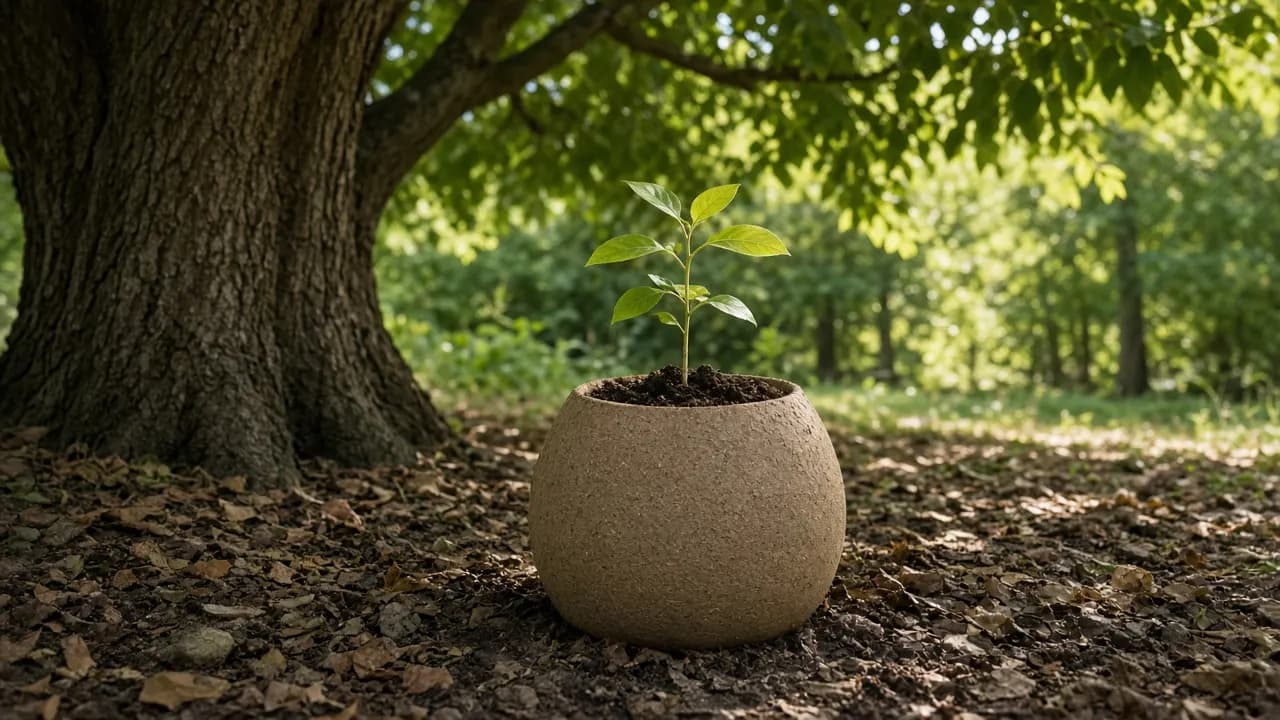
Budgeting for a living memorial in Magnolia
Bio urns vary more in price than you might expect. A national guide puts biodegradable urns at $70–$260[6], depending on material, size and whether a seed or tree system is included. For a lake or sea release, one water urn designed to float briefly and dissolve sells for $149[7]. In Magnolia, the tree and the soil amendments are usually the cheapest part of the whole memorial.
The Texas price table breaks costs down by product; our services page explains what sits behind each line.

Free tool
Memorial budget planner
Add up cremation, urn, keepsakes and a farewell so the total holds no surprises.
Where you can plant or release ashes in Texas
Rules change more often than most people realise, and many local policies about ashes were never written down at all. Treat any general guide for Texas, including ours, as a starting point. Whoever looks after that particular field, park or shoreline is the one whose answer counts, so it's worth getting it by email where you can.
Texas keeps an official directory of local governments; use it to reach the county or city office that covers Magnolia.
The rules that apply across Texas (home burial, scattering and who oversees pet cremation) are summarized on our Texas page. Magnolia may add its own conditions, so check with the city or county before digging.
Your next steps, whatever your situation
- Talk it through with your household first, especially if anyone would rather keep the ashes at home.
- Measure your space. Trees spread more than people expect; in a smaller garden a shrub, a big pot or a border may be the kinder fit.
- Test the soil where you plan to plant. If it's already alkaline, choose a lime-tolerant species and add extra compost or composted bark.
- Spread the ashes through a wide planting area, never as a single layer under the roots.
- Water well for two summers. It's drought in the early years, not cold, that kills the majority of memorial trees that don't make it.
- Keep a record of the species, the date and what went into the soil, so you can care for it or move a cutting later.
Remembering your pet, in Magnolia and wherever you go next
Families in Magnolia often have relatives spread across Houston and beyond, and dividing the cremated remains means several homes can keep a portion. Ask for the ashes to come back already divided, one main container plus smaller ones, and label each with your pet's name. A charm or small vessel travels easily for relatives who live out of state or overseas.
there are guides for the big decisions and articles for the details, use the free tools before you ring anyone, or compare your instinct with the poll results, See what each option includes on our services page. Close to Magnolia we also cover San Antonio, Houston, Dallas and El Paso; the full list for Texas and for the United States is a click away.

Reader polls
What would you choose?
Vote anonymously and see how other readers answered. The results are live counts from people who visit this site, so they show real opinions, not a scientific sample.
Would you consider releasing your pet's ashes in water?
Tap an answer to vote and see how others answered. Anonymous.
If water cremation (aquamation) were offered near you, would you choose it?
Tap an answer to vote and see how others answered. Anonymous.
If you had to decide today, which aftercare would you choose for your pet?
Tap an answer to vote and see how others answered. Anonymous.

Free tools to help you plan
Memorial budget planner
Add up cremation, urn, keepsakes and a farewell so the total holds no surprises.

Memorial tree finder
Pick a tree for a planting urn that suits your climate, space and pet.

Aftercare options compared
Compare private, communal and water cremation with burial on cost, timing and what comes home.
Questions people ask
How does Magnolia's weather affect pet aftercare?
August is the hottest month in Magnolia, with average highs around 96°F, so prompt collection matters most then. Winters are mild, with average lows staying above freezing, so outdoor burial or scattering is usually possible year round.
Will I have to travel to Houston to arrange things?
Not usually. Providers based in Houston (roughly 39 miles from Magnolia) collect from here as a matter of routine, and the paperwork is done by email or phone. If you want to be present for a witnessed cremation, that is when the drive matters.
Why does the Magnolia page quote a human cremation rate?
Because it is the best local signal we have. NFDA 2024 Cremation & Burial Report state projections (via Occasional Sage) (2024) reports about 55.7%[5] of Texas residents are cremated. There is no official pet equivalent, and inventing one would be worse than quoting a real, clearly labelled number.
Can a provider from a neighbouring town collect from Magnolia?
Usually yes. Tomball is about 11 miles away, Montgomery is about 13 miles away and Waller is about 15 miles away, all inside a normal collection radius. Get the mileage written into the quote so there is no surprise on the day.
Do bio urns work with ashes from flame cremation?
Yes. A bio urn works with ashes from flame cremation or water cremation. Both leave mineral-rich, alkaline ash, so the soil advice is the same either way: dilute the ashes well through compost and soil, let the mix rest if you can, and test the pH before a young tree goes in.
Can I scatter my pet's ashes in a park in Magnolia?
Usually only with permission, and some parks don't allow it at all. Parks are managed by a city, county, state or national agency, each with its own policy, and many were written for human ashes. Contact the park office, explain it's a small amount of pet ash, and ask whether there's a preferred spot.


Sources and our estimates
- [1] 53% of US households own a dog, which is about 71 million households. American Pet Products Association (APPA) 2025 State of the Industry, 2025.
- [2] US dogs have an average life expectancy at birth of 12.69 years. Montoya et al. 2023, Frontiers in Veterinary Science - Banfield Pet Hospital life expectancy tables (13.3 million dogs, 2.4 million cats, 2013-2019), 2023.
- [3] 39% of US households own a cat, which is about 53 million households. American Pet Products Association (APPA) 2025 State of the Industry, 2025.
- [4] US cats seen at Banfield hospitals have an average life expectancy at birth of 11.18 years. Montoya et al. 2023, Frontiers in Veterinary Science - Banfield Pet Hospital life expectancy tables (13.3 million dogs, 2.4 million cats, 2013-2019), 2023.
- [5] The NFDA projected Texas's cremation rate at 55.7% for 2024. NFDA 2024 Cremation & Burial Report state projections (via Occasional Sage), 2024.
- [6] Funeral.com cites U.S. Funerals Online that biodegradable urns typically cost about $70–$260. Funeral.com – How Much Do Cremation Urns Cost in 2025, 2025.
- [7] The Living Urn's Eco Water Urn for water burial costs $149 and holds up to 225 cubic inches; it floats for several minutes before dissolving. The Living Urn – Eco Water Urn, 2026.
- [8] Switching one human-scale cremation to alkaline hydrolysis saves about 112 kg CO2e under TNO's accounting. Our estimate: 79.9 - (-31.8) kg CO2e. How we calculate.
Tell us about your pet and your garden
Tell us what you need and where you are. We'll reply by email with clear options and prices so you can decide in your own time.