Bio Urns & Eco Memorials in Grand Est
Bio urns go into soil or water and slowly disappear. Choosing one in Grand Est means thinking about your weather, your space and whether you might move. We'll walk you through it.
- A memorial that moves with you
- Why pure ashes harm young roots
- Written prices you can compare
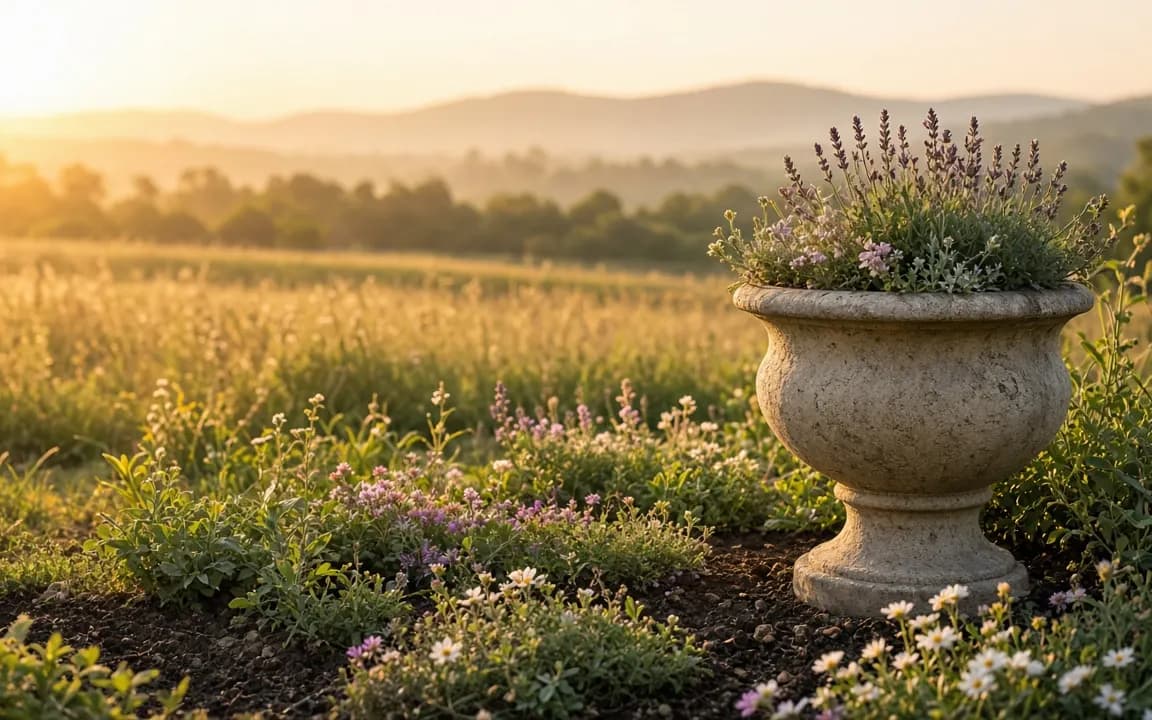
Grand Est, France
Bio Urns & Eco Memorials in Grand Est: what to know
Rules for ashes in Grand Est are mostly written for people, and pet ashes often fall into a grey area. On your own land, planting is generally fine. Parks, beaches, rivers and lakes are managed by different public bodies with their own policies, so it's worth a short email before a scattering or release. We keep our notes general and suggest who to ask.
The trees that suit a memorial change across Grand Est. Native species handle local weather and pests best, and nurseries, extension services and native plant societies can usually recommend a few that tolerate the slightly alkaline soil ashes leave behind. Our memorial tree finder narrows the list by space, sun and climate.
We cover 2 communities in Grand Est, from Strasbourg and Reims.

Every Grand Est community we cover
Choose your city or town for local prices, weather and timing, and rules. 2 communities in Grand Est, largest first below.
Cremation, burial and green choices in Grand Est
Only around 44.91%[1] of deaths in Grand Est end in cremation, so there may be fewer pet crematories close by, and the ashes can take longer to come back. Ask your vet how long it usually takes and whether the ashes are returned to the clinic or to your door. That wait is a chance to pick a tree and plan the planting in the right season.
We take the Grand Est percentage from ICI (France Bleu), citing the Fédération française de crémation (2023). It refers to people; attitudes to cremating a pet tend to follow it.
Eco memorial prices, from urn to tree
In Ireland, one pet crematorium lists individual cremation from EUR 150 for pets under 2 kg and EUR 250 for cats or dogs up to 10 kg[2]. In Norway, separate cremation runs NOK 3,790 to 4,990 by weight[3]. Prices in Grand Est will differ, but the pattern holds: ask for individual cremation and a simple container, then order the biodegradable urn on its own.
Across Europe, pet cremation is priced by weight and bio urns are usually bought separately. In Germany, collective cremation is listed at about €85 to €205 and individual at €165 to €375[4]. Only individual cremation returns your own pet's ashes, so choose it if you plan to plant. The table shows published European cremation prices; bio urns sold online are usually a modest extra.
| Country | Collective (no ashes back) | Individual (ashes back) |
|---|---|---|
| Germany | €85 to €205[4] | €165 to €375 |
| France (20 kg dog) | €70 to €120[5] | €150 to €250 |
| Netherlands (dog, average) | about €200[6] | about €300 |
| Bio urn | Not needed: no ashes come back | Bought separately, sized for the ashes |
None of the figures on this this page are ours alone: they rest on deine and Overstappen.nl.

Free tool
Memorial budget planner
Add up cremation, urn, keepsakes and a farewell so the total holds no surprises.
Rules worth knowing in Grand Est before you scatter
Burying ashes, scattering them loose and releasing them on water are often treated as three different things. In Grand Est, a place that welcomes a scattering may forbid digging, and a lake that allows a release may not allow a gathering on the shore. When you ask permission, say exactly which one you have in mind.
In France, individual pet cremation typically costs €150 to €250 for a 20 kg dog[5], and the ashes can be kept, buried on your own land or scattered in nature with care. Pet water cremation is rare. Much of France has chalky, alkaline soil, so if you plant ashes, choose a lime-tolerant tree and be generous with compost.
What to do first, and what can wait for the right season
- Take your time. There's no clock running on a bio urn. Sort out the cremation, bring the ashes home once they're released, and plant whenever you're ready, even months later.
- Ask for individual cremation, flame or water, so the ashes you plant are your pet's own. Ask for them in a plain container if you won't keep a display urn.
- Check how much ash you have. Most kits hold a fixed amount, so the remains of a big dog can overflow what the urn was designed for.
- Choose the place and the tree together. Think about sun, space, underground pipes and whether you'll still live there in ten years.
- Mix, don't layer. Work the ashes evenly into plenty of soil and compost, give it a few weeks to settle where possible, and check the pH.
- Plant in the right season for Grand Est, water deeply and mulch a wide ring around the base.
- Mark the spot using a modest stone or a garden tag, and write the planting date down where it won't get lost.
Keeping the memorial alive in Grand Est
A memorial doesn't have to be private. Some people in Grand Est donate a tree or a planting day to a local shelter, rescue or community garden in their pet's name, without any ashes involved. It gives the memory a public, living form and helps other animals at the same time.
From here: services and prices, the free tools, what readers voted in the polls, or the map of every location.

Reader polls
What would you choose?
Vote anonymously and see how other readers answered. The results are live counts from people who visit this site, so they show real opinions, not a scientific sample.
If you rent or might move, how would you handle a memorial planting?
Tap an answer to vote and see how others answered. Anonymous.
If water cremation (aquamation) were offered near you, would you choose it?
Tap an answer to vote and see how others answered. Anonymous.
If you had to decide today, which aftercare would you choose for your pet?
Tap an answer to vote and see how others answered. Anonymous.

Free tools to help you plan
Memorial budget planner
Add up cremation, urn, keepsakes and a farewell so the total holds no surprises.

Memorial tree finder
Pick a tree for a planting urn that suits your climate, space and pet.

Aftercare options compared
Compare private, communal and water cremation with burial on cost, timing and what comes home.
Questions people ask
Which trees make a good pet memorial in Grand Est?
Choose a native tree or shrub that already grows well near you and fits the space in twenty years. Species that tolerate slightly alkaline soil cope best with ashes. A local nursery or extension service can suggest a few, and the tree finder tool on this site sorts options by mature size, light and climate.
Is pet aquamation available in Grand Est?
In some places, most often in and around larger cities. Pet providers have adopted water cremation faster than human funeral homes, but availability depends on whether a provider near you has the equipment. Ask local pet crematories directly, or tell us your town and we'll check which providers serve it.
How many communities do you cover in Grand Est?
We have local living-memorial guides for 2 communities in Grand Est, including Strasbourg and Reims. Each covers local weather and planting seasons, soil advice, prices for bio urns and aquamation where we have sourced figures, and general notes on scattering and water releases.
Can I plant a memorial if I rent in Grand Est?
Yes. A large pot with a dwarf tree or shrub moves with you, and only a small share of the ashes should go in it. You could also plant at a relative's home, or choose a water release. If you'd like to plant in a rented garden, ask your landlord in writing first.
Can I release pet ashes at sea off Grand Est?
Coastal and inland waters are managed by different authorities, and many rules were written for human ashes. In general, choose a quiet spot away from swimmers and anglers, use a water-soluble urn or loose ashes only, and let nothing plastic float away. Check with the relevant authority before you go.
Where can I get a bio urn in Grand Est?
Most bio urns are ordered online and ship across Grand Est, and some pet crematories stock a biodegradable option. The more important purchase is local: a young native tree from a nursery that knows your climate. If you tell us where you are, we'll email options for urns, crematories and, where it's offered, water cremation.

Sources and our estimates
- [1] In 2023, 44.91% of deaths in France led to cremation. ICI (France Bleu), citing the Fédération française de crémation, 2023.
- [2] An Irish pet crematorium lists individual cremation from EUR 150 for pets under 2 kg and EUR 250 for cats or dogs up to 10 kg. Donegal Pet Crematorium - How Much is Pet Cremation in Ireland?, 2026.
- [3] A Norwegian pet crematorium lists separate cremation at NOK 3,790 (1-20 kg) to NOK 4,990 (51-90 kg) and communal at NOK 1,190 to NOK 1,895, VAT included. Hjertedyr (Norway) - Prisliste, 2026.
- [4] A German consumer guide lists collective pet cremation at EUR 85-205 and individual cremation at EUR 165-375. deine-tierwelt.de - Tierbestattung: Diese Moeglichkeiten gibt es und das kosten sie (Nov 2023), 2023.
- [5] SantéVet lists French dog cremation at EUR 70-120 collective vs EUR 150-250 individual for a 20 kg dog, and EUR 130-180 vs EUR 300-400 for a 50 kg dog. SantéVet - Quel est le prix pour incinérer un chien? (updated Mar 2026), 2026.
- [6] A Dutch comparison site lists collective dog cremation at EUR 49-330 (average EUR 200) and individual at EUR 70-700 (average EUR 300), across 31 Dutch pet crematoria. Overstappen.nl - Kosten crematie hond (updated Jan 2026), 2026.
- [7] U.S. pet flame cremations emit on the order of 47,000 t CO2e a year. Our estimate: 1.5M pet cremations x 31.3 kg CO2e. How we calculate.
Plan a living memorial in Grand Est
Tell us what you need and where you are. We'll reply by email with clear options and prices so you can decide in your own time.