Bio urns and eco memorials in Hiroshima
Interested in a lower-impact goodbye in Hiroshima? From water cremation to a native tree, here's what's realistic locally and what to ask before you buy anything.
- Planting, garden and water urns compared
- Honest notes on local rules
- Help choosing a native species
Hiroshima, Japan
What an eco memorial looks like in Hiroshima
In Hiroshima homes, a pet's urn often sits on a small shelf or next to the family altar, where it may stay until the family feels ready to decide on anything more permanent. Compact ceramic urns, wooden memorial boxes and photo frames are popular, and many families divide the bones between an urn at home and a temple's shared memorial. Ask for any paw print or fur clipping before the cremation.
Hiroshima has a deep tradition of remembrance, visible in the lanterns floated on the river each August and in the paper cranes left in the city's memorial spaces. Some families borrow from these customs for their pets, folding cranes, lighting a lantern or placing flowers by the urn on an anniversary. Such gestures make a memorial personal without needing anything elaborate.
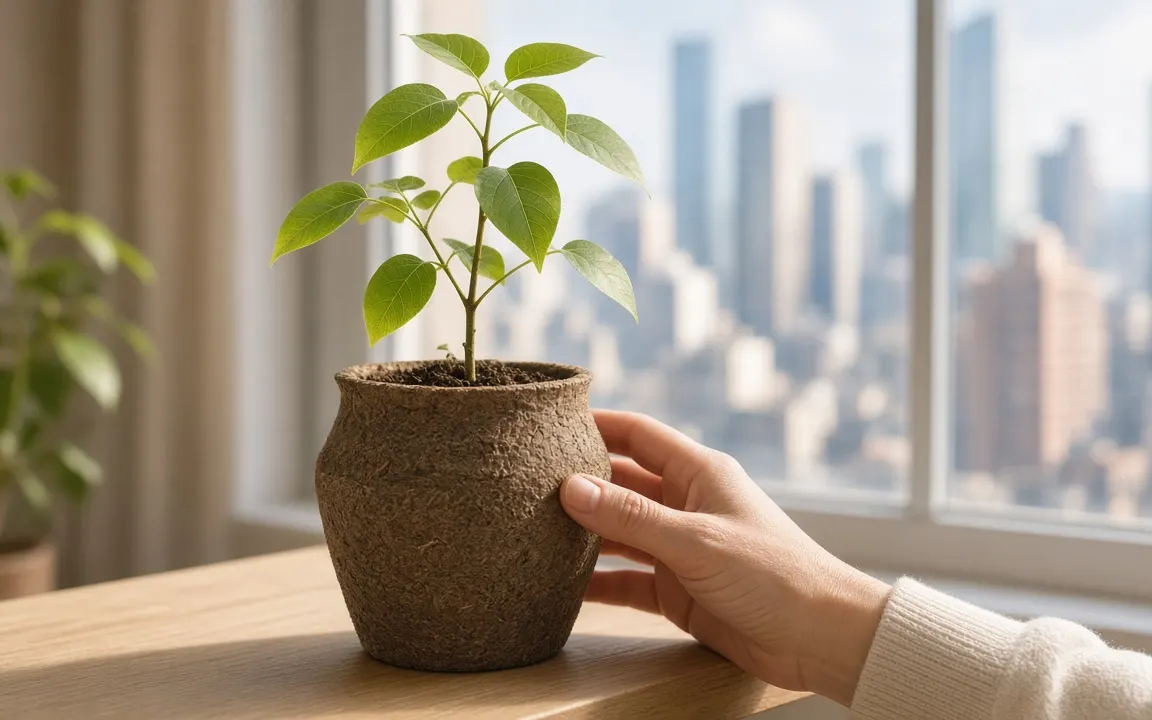
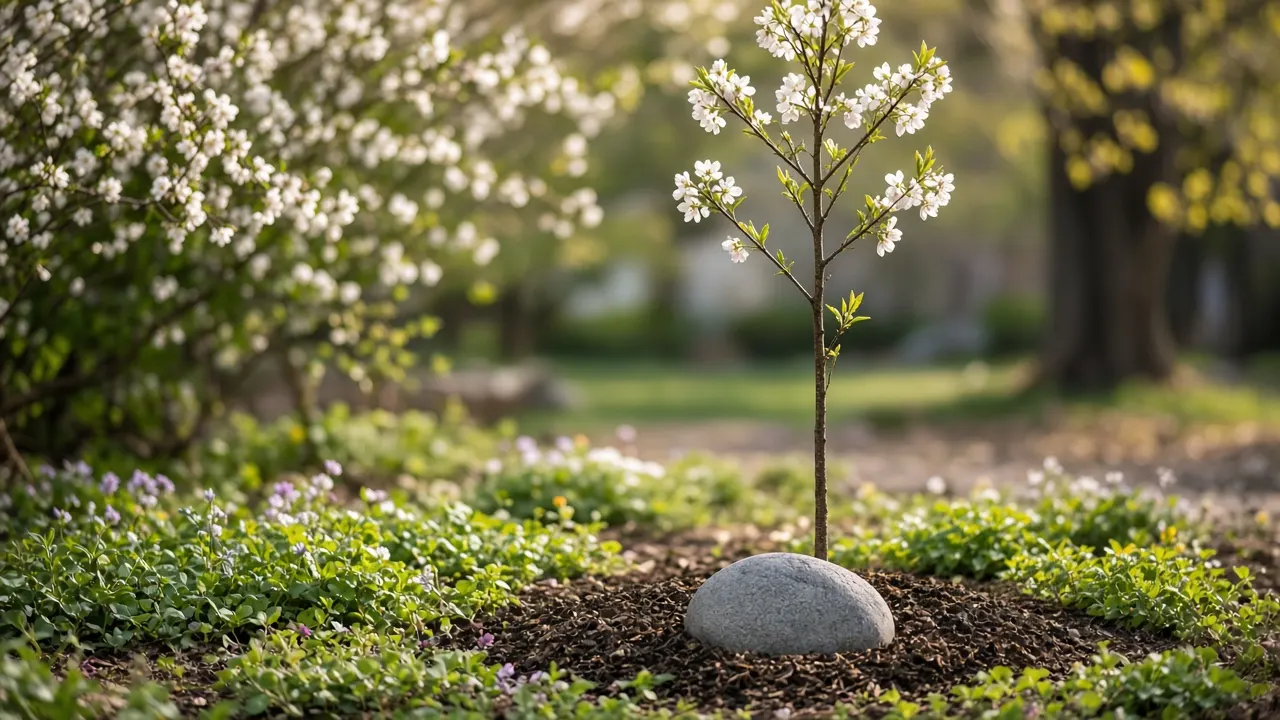
A big city like Hiroshima has one advantage for a living memorial: choice. Several nurseries, extension offices or master gardener programs are usually within reach, and staff can tell you which trees handle local heat, cold and soil without being babied. Take that advice seriously. A native species bought as a two-year-old sapling will almost always outlive the seed that came with an online planting kit, and it will look like a tree far sooner.
About 1,194,000 people live in Hiroshima.
Hiroshima sits within easy reach of Fukuoka (130 miles). A provider based in any of them will usually collect from Hiroshima; ask what the mileage adds to the bill.
99.97%[1]
In 2023, 99.97% of deaths in Japan were cremated (1364 crematoria).
$15–$80[2]
Memorials.com's pet urn cost guide puts biodegradable pet urns at $15–$80.
$119[3]
The Living Urn's pet bio-urn planting system (without a tree) costs $119.
communal $30-200; private $100-500+[4]
Embrace Pet Insurance lists US communal cremation at $30-$200, partitioned at $50-$250, private at $100-$500+ and aquamation at $80-$450.
The published sources behind those figures are Embrace Pet Insurance and The Living Urn.
Cremation, burial and green choices in Japan
Cremation accounts for roughly 99.97%[1] of human deaths in Japan, and a lot of those ashes end up waiting on a shelf. That's true of pets as well. If you already have an urn at home from an earlier pet, a bio urn can be a way to finish that story: the older ashes and the new can go into one planting, or two trees side by side, whenever you feel ready.
We take the Japan rate from Cremation Society of Great Britain, International Cremation Statistics 2023 (2023). It is a human statistic; there is no equivalent pet figure for Hiroshima, and we would rather show a real number than invent one.
Weather, soil and planting windows in Hiroshima
Whatever Hiroshima's weather, the soil step is the same. Mix the ashes through a generous amount of compost and soil, let the mix rest if you can, and test the pH before planting. Hot, dry places need more dilution and deeper watering; cold places may need to wait for thawed ground. A local gardener can tell you which applies.
Budgeting for a living memorial in Hiroshima
Tokyo shows how wide the spread can be. Shinjuku City collects pets under 25 kg for JPY 3,000, but the ashes are not returned[5]; by our estimate, a private communal cremation for a small pet costs about 4.8 times that[6]. Individual cremation under 5 kg is JPY 22,000 at one memorial park[7]. Only the individual service returns ashes you can plant in Hiroshima.
Prices for Hiroshima track the wider Japan market, so use the Japan price table as your baseline and the services page to see what is included.

Free tool
Memorial budget planner
Add up cremation, urn, keepsakes and a farewell so the total holds no surprises.
Scattering and planting rules in Japan
Burying ashes, scattering them loose and releasing them on water are often treated as three different things. In Japan, a place that welcomes a scattering may forbid digging, and a lake that allows a release may not allow a gathering on the shore. When you ask permission, say exactly which one you have in mind.
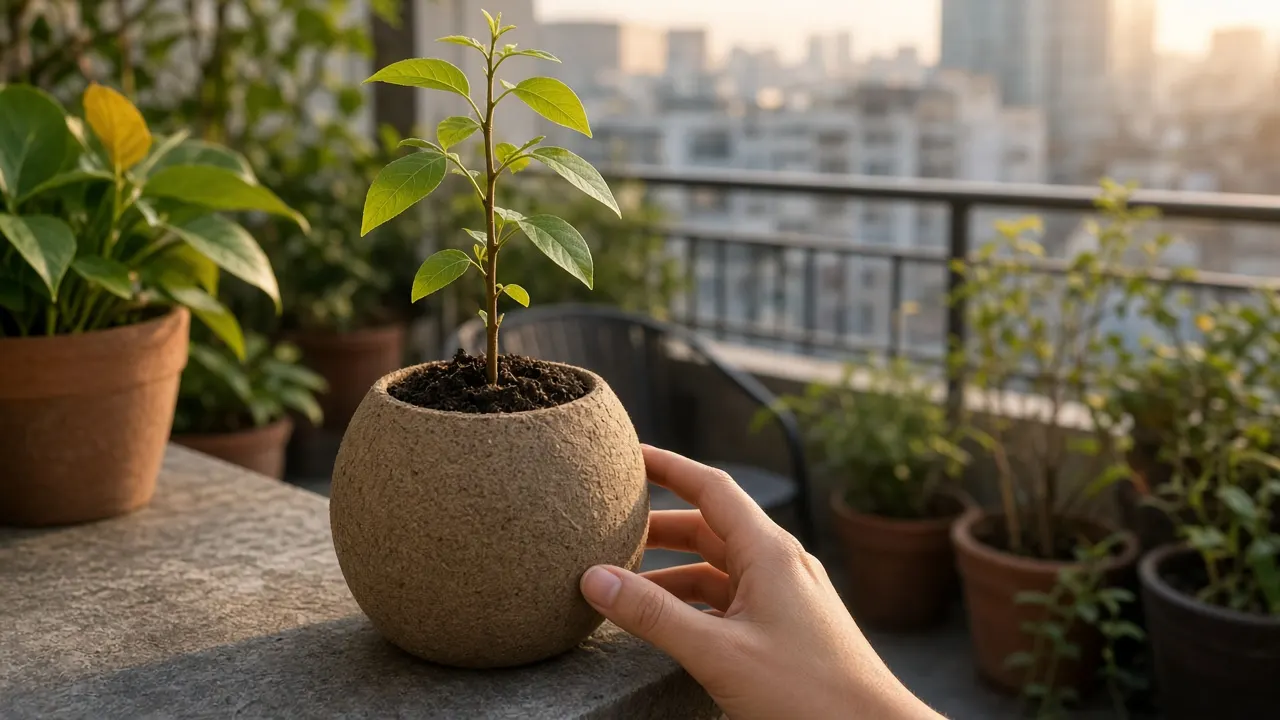
In Japan, burying animals in public places such as parks or forests is illegal[9], so a planting memorial usually means a private garden or a pot on a balcony. Pet temples and memorial parks are common, and many families keep some ashes in a columbarium while planting a small share. Seeds in imported urns may face plant-quarantine checks.
How to plan a living memorial, in order
- If your pet dies while you're away from Hiroshima, ask a local vet near where it happened to arrange individual cremation there. Bringing a body home over a long distance is rarely practical.
- Ask how the ashes can reach you: you might collect them yourself, have them shipped by tracked courier, or have them delivered to your vet.
- Flying home with the ashes? Keep them in your carry-on, inside a container security can scan, and pack the crematory's paperwork alongside them.
- Don't buy the bio urn on the road. Hold off until you're back and have settled on a location, then choose an urn that suits it.
- Plant somewhere that links both places if you like: a tree from the region where your pet died, or one from your own garden, if it suits the climate in Hiroshima.
- Write down the date and place of your pet's death and the name of the crematory. Memories of those particulars slip away sooner than most people think.
Keeping the memorial alive in Hiroshima
If you are thinking of scattering ashes, the Seto Inland Sea coast and the islands off Hiroshima are beautiful, but they are also working waters, with oyster rafts, ferries and busy shores. A tree or bio urn in a family garden, or a portion kept in jewellery, are gentler alternatives. Keeping a small keepsake before any scattering avoids regret later, especially if you might one day move away from the Inland Sea.
use the free tools before you ring anyone, or see what other families chose in the poll results, Our services overview lays out every option side by side, go deeper with the guides or catch up on recent articles. Every other community in Japan, and all of Japan, is listed too.

Reader polls
What would you choose?
Vote anonymously and see how other readers answered. The results are live counts from people who visit this site, so they show real opinions, not a scientific sample.
Would you consider releasing your pet's ashes in water?
Tap an answer to vote and see how others answered. Anonymous.
If you rent or might move, how would you handle a memorial planting?
Tap an answer to vote and see how others answered. Anonymous.
If you had to decide today, which aftercare would you choose for your pet?
Tap an answer to vote and see how others answered. Anonymous.

Free tools to help you plan
Memorial budget planner
Add up cremation, urn, keepsakes and a farewell so the total holds no surprises.

Memorial tree finder
Pick a tree for a planting urn that suits your climate, space and pet.

Aftercare options compared
Compare private, communal and water cremation with burial on cost, timing and what comes home.
Questions people ask
Why does the Hiroshima page quote a human cremation rate?
Because it is the best local signal we have. Cremation Society of Great Britain, International Cremation Statistics 2023 (2023) reports about 99.97%[1] of Japan residents are cremated. There is no official pet equivalent, and inventing one would be worse than quoting a real, clearly labelled number.
Can I plant my pet's ashes in a community garden in Hiroshima?
Only with the garden's permission, and many don't allow it because members grow food and share the soil. Ask the coordinator first. If burying isn't allowed, a potted plant beside your plot, a flowering perennial grown in your pet's name without ashes, or a small marker stone are gentler ways to make the space meaningful.
How much ash will my pet leave, and will it fit a bio urn?
Cremated remains typically weigh about 3-5% of body weight[10], so a cat returns a few ounces and a large dog several pounds. Many planting kits are designed for a set volume, and a big dog's ashes may not all fit. Use our urn size calculator, and plan to mix any extra into the wider planting bed or keep it for a second memorial.
Can I plant my pet's ashes if I live in an apartment in Hiroshima?
Yes, in a container. A small tree, herb or flowering shrub in a large pot on a balcony can hold a small, well-mixed share of the ashes. Because salts can't drain away as they would in the ground, use only a spoonful or two, water until it drains freely and keep the rest in a keepsake or plant it later.
How do I prepare pet ashes for planting?
Spread the ashes through a large volume of compost and soil rather than pouring them into the hole in one layer. Many gardeners add acidic material such as composted pine bark or leaf mould. One gardening guide suggests letting the mix rest for 90–120 days[11] before planting. A garden-center pH kit tells you when the mix is ready.
Is water cremation better for the environment?
It uses much less energy: pet aquamation is claimed to use about 90%[12] less energy than flame cremation, and it uses about as much water as 1–3 pet baths[13] per pet. The strongest carbon figures come from studies of human funerals, not pets, so treat them as a direction rather than a promise. You still get ashes back for a bio urn.


Sources and our estimates
- [1] In 2023, 99.97% of deaths in Japan were cremated (1364 crematoria). Cremation Society of Great Britain, International Cremation Statistics 2023, 2023.
- [2] Memorials.com's pet urn cost guide puts biodegradable pet urns at $15–$80. Memorials.com – Pet Urn Cost Guide, 2025.
- [3] The Living Urn's pet bio-urn planting system (without a tree) costs $119. The Living Urn – Pet tree urn, 2026.
- [4] Embrace Pet Insurance lists US communal cremation at $30-$200, partitioned at $50-$250, private at $100-$500+ and aquamation at $80-$450. Embrace Pet Insurance - Bury or Cremate Your Dog? Costs, Pros & Cons, 2025.
- [5] Tokyo's Shinjuku City collects dead pets under 25 kg for a fee of JPY 3,000 per animal; they receive communal cremation and burial at a pet cemetery and ashes are not returned. Shinjuku City (Tokyo) - Animal carcass collection (動物死体の引き取り), 2025.
- [6] In Tokyo, private communal pet cremation for a small pet (JPY 14,300) costs about 4.8x the ward's municipal collection fee (JPY 3,000). Our estimate: 14,300 / 3,000 = 4.77. How we calculate.
- [7] Tokyo Animal Memorial Park charges JPY 14,300 for communal and JPY 22,000 for individual cremation of a pet under 5 kg (tax incl.). Tokyo Animal Memorial Park (東京動物霊園) - Price list, 2026.
- [8] If just 10% of U.S. pet cremations moved to aquamation, about 4,200 t CO2e a year would be avoided. Our estimate: 1.5M x 10% x 31.3 kg x 90% reduction. How we calculate.
- [9] In Japan, communal (goudou) pet cremation is often about half the price of higher-tier individual services, and it is illegal to bury animals in public places such as parks or forests. GaijinPot - When Your Pet Dies in Japan (Feb 2024), 2024.
- [10] Embrace notes cremated remains typically weigh about 3-5% of the pet's original body weight. Embrace Pet Insurance - Bury or Cremate Your Dog? Costs, Pros & Cons, 2025.
- [11] Gardening Know How advises letting an ash/soil-amendment mixture sit for at least 90 to 120 days before planting. Gardening Know How — Planting With Cremains: Is There a Safe Way to Bury Ashes, 2024.
- [12] Pet aquamation is described as available across all 50 US states, and is claimed to use about 90% less energy than flame cremation. Be a Tree Cremation pet aquamation guide, 2025.
- [13] Aquamation uses about the same water per pet as 1–3 pet baths. Veterinary Sustainability Alliance — Aquamation, 2024.
Get eco memorial ideas by email
Tell us what you need and where you are. We'll reply by email with clear options and prices so you can decide in your own time.