Growing something from the goodbye in Mesa
By our estimate, around 190,000 households in Mesa share their home with a dog or cat, and roughly 15,500 of those pets die each year. More of those families now ask about planting or water memorials. Here's how to do it well.
- Trees matched to Mesa's climate
- Soil-safe planting method for ashes
- Real prices for bio urns and aquamation
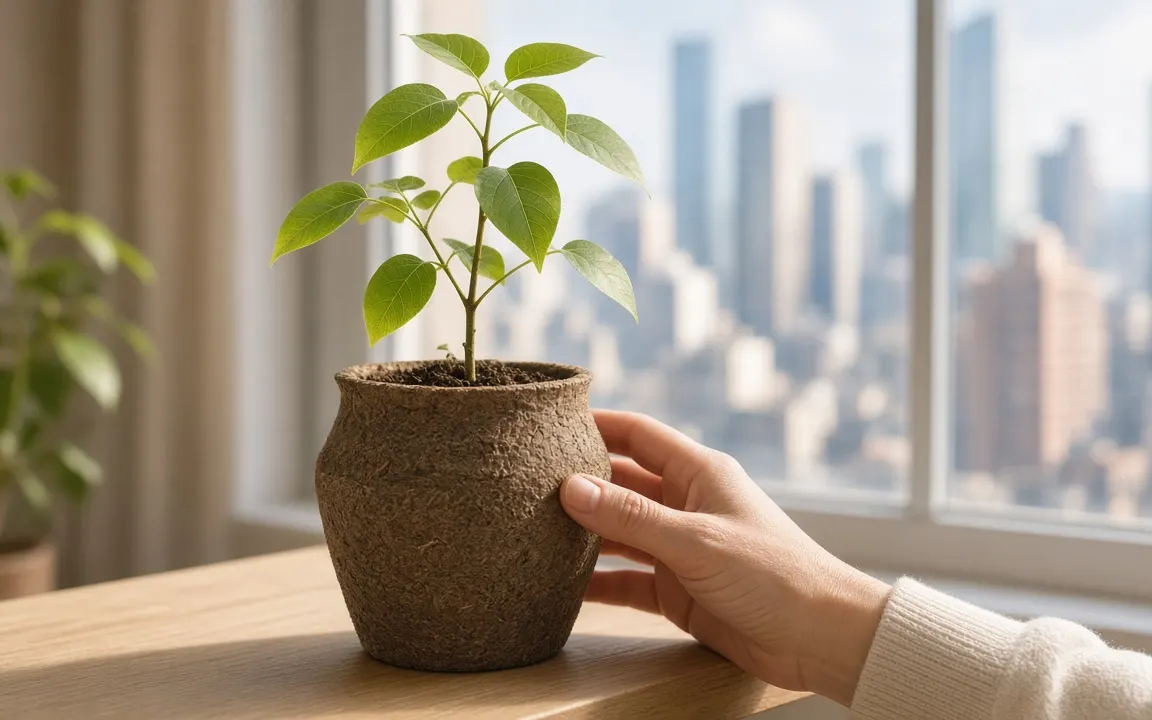
Mesa, Arizona
Planning a greener goodbye in Mesa
Arizona has one of the higher cremation rates for people in the country, and many Mesa families are comfortable keeping ashes at home or scattering them. For a pet, you can keep ashes in an urn, bury them in the garden, scatter part of them in a meaningful place, or share them among family. If you have a favourite desert trail in mind, check the land's rules first.
Mesa's intense sun is hard on outdoor memorials. Painted wood and many plastics fade and crack quickly, while natural stone, metal and glazed ceramic hold up better. If you want to plant something, a native desert tree such as a palo verde or mesquite suits the climate and needs little water once established. A shaded patio corner makes a good spot for a memorial.
Public space in Mesa is shared by a lot of people, and that shapes where a memorial can go. City parks, riverbanks and beaches are managed by someone, and most expect you to ask before scattering or planting anything. Rather than planting a tree in a park without asking, look at the places you control: your own yard, a large pot, a family member's garden, or a quiet release on water where it's allowed. Our local notes below explain who to ask.
Mesa's population is around 513,656, the 3rd-largest of the 29 Arizona communities we cover.
Nearby, we also have local pages for Gilbert (5 miles), Tempe (6 miles) and Chandler (8 miles), which can help if your vet or the provider you prefer is based there.
Our estimate
190,000
Estimated dog- or cat-owning households in Mesa
How we calculated this
513,656 ÷ 2.5 = 205,462 households; × 53% (dog) + 39% (cat) = 190,000. Homes are counted once however many pets they keep.
Our estimate
15,500
Mesa families who lose a dog or cat each year (estimate)
How we calculated this
190,000 dog/cat-owning homes ÷ average lifespan (dog: 12.69 yrs + cat: 11.18 yrs) ≈ 15,500 a year. Treat it as a minimum.
53%[1]
53% of US households own a dog, which is about 71 million households.
12.69 years[2]
US dogs have an average life expectancy at birth of 12.69 years.
39%[3]
39% of US households own a cat, which is about 53 million households.
11.18 years[4]
US cats seen at Banfield hospitals have an average life expectancy at birth of 11.18 years.
If a number here surprises you, the primary material is American Pet Products Association (APPA) 2025 State of the Industry and Montoya et al. 2023, Frontiers in Veterinary Science; we only apply it to this.
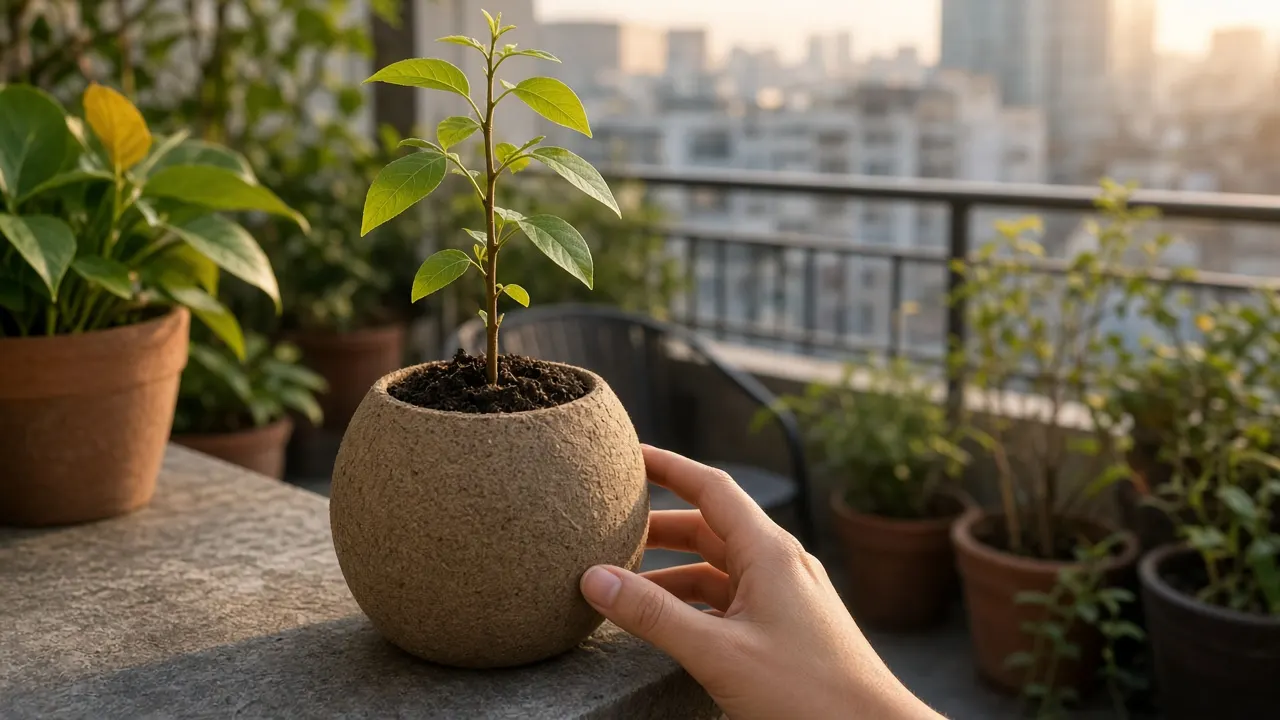
Cremation, burial and green choices in Arizona
With roughly 80.7%[5] of people in Arizona cremated, the local funeral culture leans firmly toward ashes rather than graves. That has a practical upside for a living memorial. Nurseries, crematories and even some parks departments are used to questions about ashes, and you'll usually get a straight answer. It's still worth asking before you plant or scatter anywhere you don't own, because common practice isn't the same as permission.
That Arizona rate is a human one, published by NFDA 2024 Cremation & Burial Report state projections (via Occasional Sage) (2024). We quote it for Mesa only as a pointer to how families here already think about cremation.
Seasons, soil and weather for a memorial in Mesa
In a hot climate like Mesa's, with highs of about 107°F in July, salt is a bigger problem than in wetter places. Rain is what washes sodium from ashes down past the roots, and dry heat lets it build up near the surface. Mix the ashes through a much larger volume of soil and compost than you'd think necessary, and water deeply and slowly after planting so salts move down, not up.
Mesa summers are hard on young trees: July averages highs around 107°F. Don't plant a memorial tree in the hottest months. Aim for the cooler part of the year, when roots can grow before the next summer arrives. Ashes don't need to go into the ground quickly, so keeping them safely at home for a few months is completely fine.
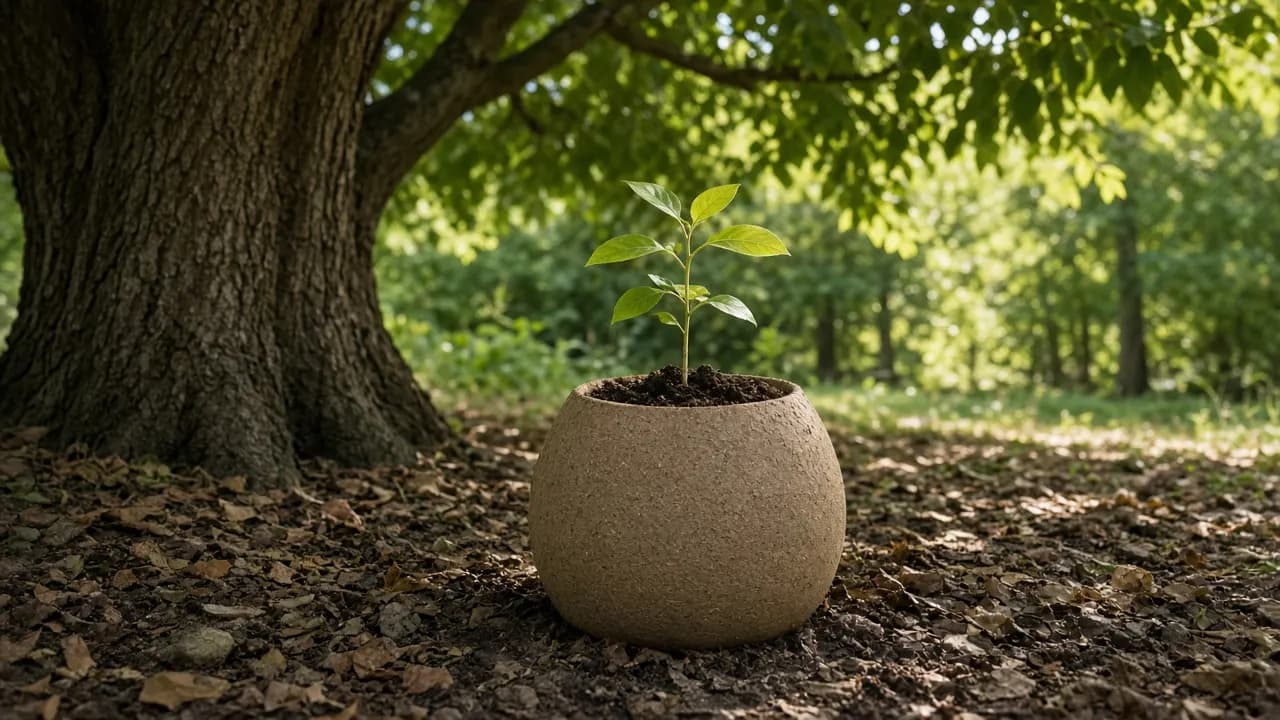
What a greener goodbye costs in Mesa
Here's how the pieces add up for a Mesa family. Private cremation of a dog averages about $260[6] nationally. A pet bio urn with a seed capsule is sold for about $99[7], and a planting system without the tree for $119[8]. Compost, pine bark and a pH kit add a few dollars more. Ask local providers for a written total before you choose.
Rather than repeat the price table on every city page, we keep one for Arizona: Arizona costs. What each service includes is on the services page.

Free tool
Memorial budget planner
Add up cremation, urn, keepsakes and a farewell so the total holds no surprises.
Who to ask before you plant or scatter in Arizona
Rules about ashes were mostly written for people, and pet ashes often sit in a grey area. That's a reason to ask, not a reason to assume. On land you own, planting or burying ashes is generally fine. Anywhere else in Arizona, from parks to beaches to a friend's field, the land manager or owner decides, so ask first.
Mesa's own guidance is published by City of Mesa Police Department; it covers public collection, which is separate from arranging a private cremation. Arizona keeps an official directory of local governments; use it to reach the county or city office that covers Mesa.
The Arizona page sets out who oversees pet cremation and what the state says about burial and scattering. Mesa's own bylaws can sit on top of that, so ask before you dig.
Planting a memorial in Mesa, step by step
- Confirm the ashes will come back. With a communal cremation there's normally nothing to collect afterwards, which leaves you with nothing to put in an urn.
- Pick the type of bio urn: a planting urn for a tree, a plain burial urn for a garden corner, a water urn for a lake or the sea.
- Ask permission before using ground you don't own, whether that's a landlord, a farmer or whoever runs the park.
- Plan for the weather. Around Mesa, skip days when the soil is rock-hard, frozen or sodden, and wait for still, gentle conditions to plant or release.
- Release gently on water. Set the urn on the surface, let it float and sink on its own, and add only loose petals.
- Come back in a year. Replace mulch, check the tree's growth and take a photo to mark the anniversary.
Living memorials beyond the backyard
Many Mesa residents are retirees or winter visitors whose children and grandchildren live in other states, and a portable memorial often makes more sense than a garden stone. A small urn, a paw print keepsake or a pendant holding a little ash can travel easily between a winter home here and a summer home up north. Dividing ashes among relatives in different places lets each household keep a piece of the memory.
or see what other families chose in the poll results, read our guides and latest articles, run the numbers with the free planning tools, For a plain comparison of the choices, open services. You can also browse every city in the United States. Nearby, we also cover Phoenix, Gilbert, Glendale and Tucson, and every city in Arizona.

Reader polls
What would you choose?
Vote anonymously and see how other readers answered. The results are live counts from people who visit this site, so they show real opinions, not a scientific sample.
What kind of tree or plant would you choose?
Tap an answer to vote and see how others answered. Anonymous.
If you rent or might move, how would you handle a memorial planting?
Tap an answer to vote and see how others answered. Anonymous.
If you had to decide today, which aftercare would you choose for your pet?
Tap an answer to vote and see how others answered. Anonymous.

Free tools to help you plan
Memorial budget planner
Add up cremation, urn, keepsakes and a farewell so the total holds no surprises.

Memorial tree finder
Pick a tree for a planting urn that suits your climate, space and pet.

Aftercare options compared
Compare private, communal and water cremation with burial on cost, timing and what comes home.
Questions people ask
How does Mesa's weather affect pet aftercare?
July is the hottest month in Mesa, with average highs around 107°F, so prompt collection matters most then. Winters are mild, with average lows staying above freezing, so outdoor burial or scattering is usually possible year round.
Why does the Mesa page quote a human cremation rate?
Because it is the best local signal we have. NFDA 2024 Cremation & Burial Report state projections (via Occasional Sage) (2024) reports about 80.7%[5] of Arizona residents are cremated. There is no official pet equivalent, and inventing one would be worse than quoting a real, clearly labelled number.
Is Mesa big enough to have several pet aftercare providers?
Probably, on the numbers. By our estimate about 190,000 Mesa households keep a dog or cat and around 15,500 lose one each year, which is enough steady demand to support more than one provider. We derive that from population (about 513,656), household size and national ownership and lifespan figures.
Which nearby towns can I compare with Mesa?
The closest communities we cover are Gilbert (about 5 miles), Tempe (about 6 miles) and Chandler (about 8 miles). Providers based in those places often serve Mesa too. Ask each one for a written total that includes collection, so the distance is priced in.
How do I keep a memorial tree alive in the Mesa heat?
Choose a drought-tolerant species that already grows well locally, plant in the cooler months, and water deeply and slowly rather than little and often, so salts from the ashes move down past the roots. A wide ring of mulch keeps the soil cooler. Expect to water through the first two summers.
Is pet aquamation available in Mesa?
Quite possibly. Large cities are where pet water cremation is most often offered, because the equipment is a big investment and providers set up where demand is highest. Ask local pet crematories directly, or tell us you're in Mesa and we'll let you know which providers serve the area. Ashes from aquamation work in any bio urn.


Sources and our estimates
- [1] 53% of US households own a dog, which is about 71 million households. American Pet Products Association (APPA) 2025 State of the Industry, 2025.
- [2] US dogs have an average life expectancy at birth of 12.69 years. Montoya et al. 2023, Frontiers in Veterinary Science - Banfield Pet Hospital life expectancy tables (13.3 million dogs, 2.4 million cats, 2013-2019), 2023.
- [3] 39% of US households own a cat, which is about 53 million households. American Pet Products Association (APPA) 2025 State of the Industry, 2025.
- [4] US cats seen at Banfield hospitals have an average life expectancy at birth of 11.18 years. Montoya et al. 2023, Frontiers in Veterinary Science - Banfield Pet Hospital life expectancy tables (13.3 million dogs, 2.4 million cats, 2013-2019), 2023.
- [5] The NFDA projected Arizona's cremation rate at 80.7% for 2024. NFDA 2024 Cremation & Burial Report state projections (via Occasional Sage), 2024.
- [6] CareCredit's 2025 cost study put the US national average for private dog cremation at $260 (range $206-$473). CareCredit (Synchrony) - How Much Does It Cost To Euthanize a Dog? (2025 ASQ360 procedural cost study), 2025.
- [7] The Bios Urn for pets, a biodegradable urn with a seed capsule, costs $99. Bios Urn – Pets, 2026.
- [8] The Living Urn's pet bio-urn planting system (without a tree) costs $119. The Living Urn – Pet tree urn, 2026.
- [9] About 59 million U.S. pet-owning households may be open to eco-friendly aftercare options. Our estimate: 86.9M pet households x 68% interested in green funeral options. How we calculate.
Plan a living memorial in Mesa
Tell us what you need and where you are. We'll reply by email with clear options and prices so you can decide in your own time.