Planting your pet's ashes in Tucson
About 17,000 dogs and cats are lost in Tucson each year, by our estimate. If you'd like your pet's ashes to grow into a tree or return to the water, this page covers the soil, the season and the cost.
- A memorial that moves with you
- Why pure ashes harm young roots
- Written prices you can compare
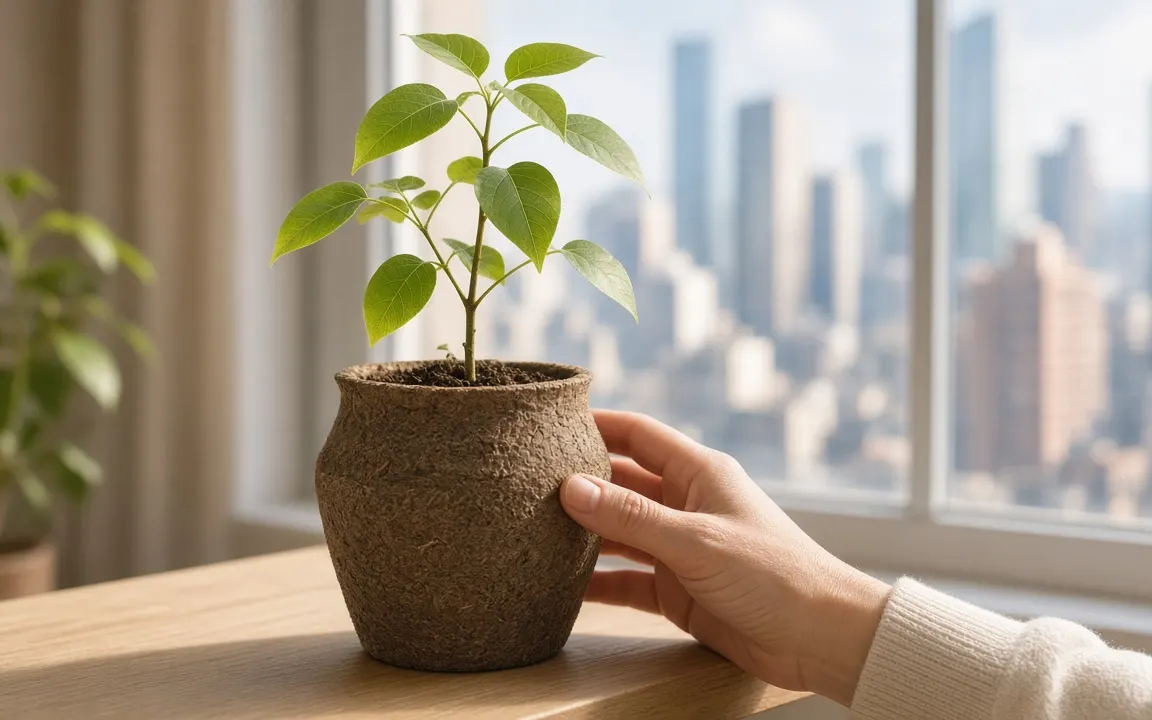
Tucson, Arizona
Planning a greener goodbye in Tucson
Tucson has a visible culture of remembrance, from roadside descansos to the All Souls Procession each autumn, where people carry photos and tributes for those they have lost. Many families bring that same spirit to a pet. A small urn on an ofrenda-style shelf, a photo with flowers, or a keepsake with a paw print can be part of that tradition.
With a high cremation rate among people in Arizona, returning ashes to a family is a familiar idea in Tucson. For a pet, you can keep the ashes at home, bury them in a garden, scatter part of them in a meaningful place, or share them among family members with small keepsakes. If you have a favourite desert trail in mind, check the land's rules before scattering.
Plenty of people in Tucson don't drive, and a living memorial can still work. Many nurseries deliver saplings and bags of compost, bio urns arrive by post, and a small pot on a windowsill needs no transport at all. For a water release, a light water-soluble urn fits in a tote bag on a train or bus. Pick a quieter time of day and a stop near the shore.
Tucson is home to about 548,371 people, the 2nd-largest of the 29 Arizona communities we cover.
The closest communities we cover are Oro Valley (14 miles), Marana (19 miles) and Sahuarita (20 miles). Providers serving those towns often travel to Tucson too, so it can be worth asking them for a quote.
Our estimate
200,000
How many dog- or cat-owning households Tucson has (estimate)
How we calculated this
548,371 ÷ 2.5 = 219,348 households; × 53% (dog) + 39% (cat) = 200,000. Homes are counted once however many pets they keep.
Our estimate
17,000
Tucson families who lose a dog or cat each year (estimate)
How we calculated this
200,000 dog/cat-owning homes ÷ average lifespan (dog: 12.69 yrs + cat: 11.18 yrs) ≈ 17,000 a year. A floor, not a ceiling.
53%[1]
53% of US households own a dog, which is about 71 million households.
12.69 years[2]
US dogs have an average life expectancy at birth of 12.69 years.
39%[3]
39% of US households own a cat, which is about 53 million households.
11.18 years[4]
US cats seen at Banfield hospitals have an average life expectancy at birth of 11.18 years.
Sources for the statistics above: American Pet Products Association (APPA) 2025 State of the Industry and Montoya et al. 2023, Frontiers in Veterinary Science.
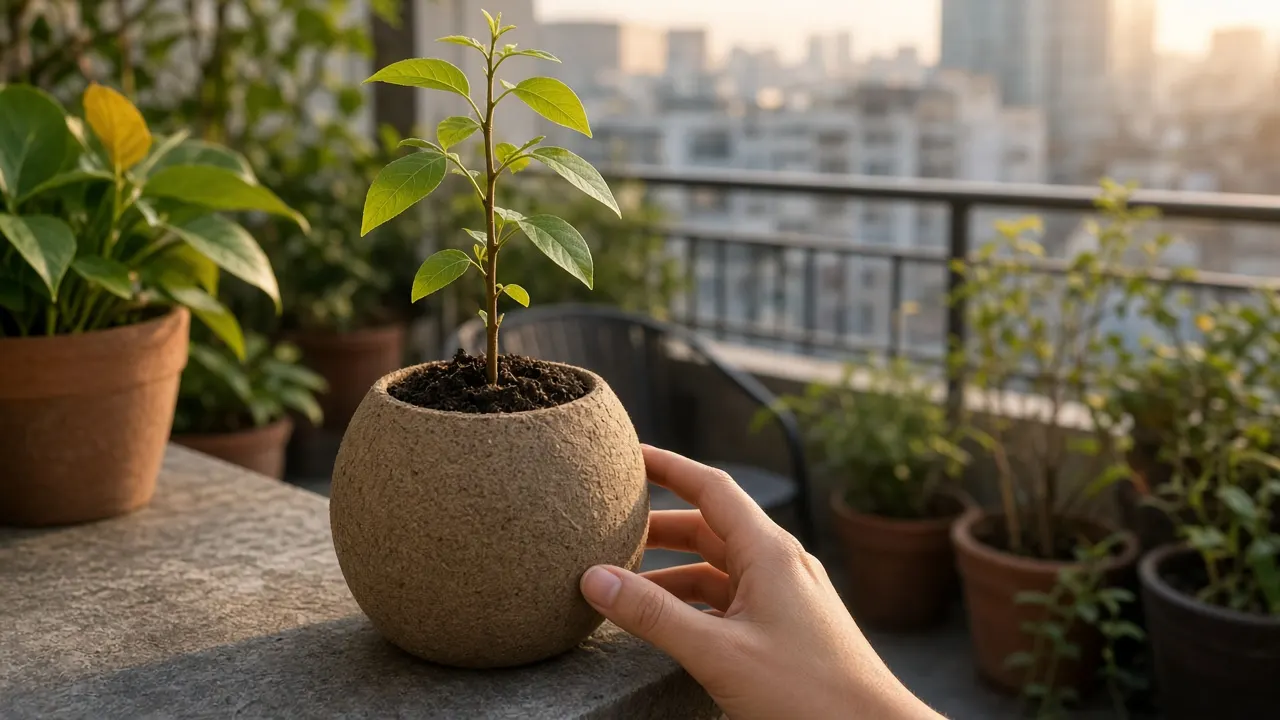
Cremation, burial and green choices in Arizona
About 80.7%[5] of people in Arizona are cremated, so ashes are part of everyday life here in a way they aren't everywhere. Many families have already scattered or planted a grandparent's ashes and know how it felt. If you did, you'll recognise much of the process for a pet, with one difference worth knowing: a pet's ashes are a much smaller amount, which makes mixing them safely into soil far easier.
The Arizona figure comes from NFDA 2024 Cremation & Burial Report state projections (via Occasional Sage) (2024). It describes people, not pets, so read it as a sign of local attitudes rather than a pet statistic.
Weather, soil and planting windows in Tucson
In Tucson's heat, containers dry out fast. If you're planting a memorial in a pot on a patio or balcony, choose a large, light-colored container, which heats up less than a small dark one, and place it where it gets afternoon shade in May, June, July, August, September and October. Use only a small share of the ashes in the pot, water until it drains freely so salts flush out, and check the soil every day in the hottest weeks.
Biodegradable urns are made to break down, and heat and humidity can start that early. In Tucson, where June highs average about 101°F, keep a paper, cornstarch or coconut-fiber urn indoors, somewhere cool and dry, until the planting day. Don't leave it in a car, a hot shed or a garage through May, June, July, August, September and October, or it may soften or split before it reaches the ground.
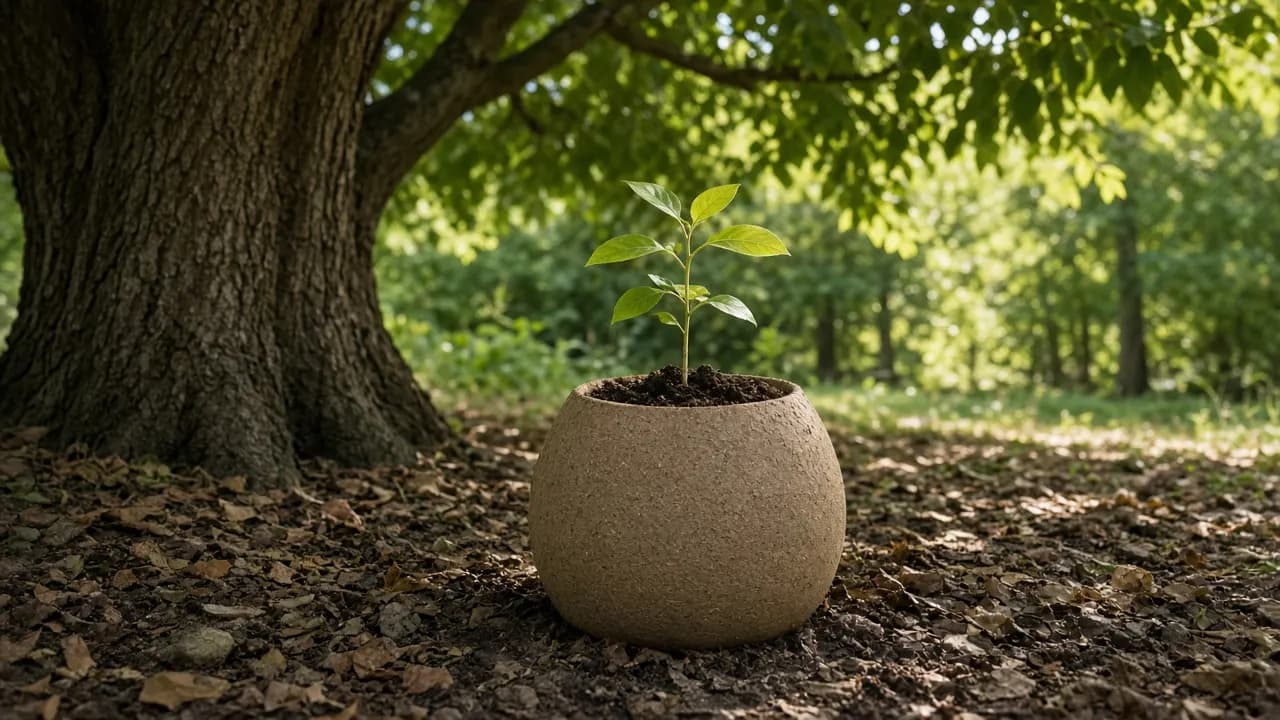
What bio urns and aquamation cost in Tucson
It helps to compare a planted memorial with the alternatives. A pet cemetery burial for a dog averages about $831[6] in the US, which by our estimate is around 3.2 times the national average for private cremation[7]. Private cremation plus a bio urn and a sapling in your own Tucson garden usually comes in far below a cemetery plot, and there are no yearly maintenance fees.
For a line-by-line price table, see the Arizona overview; for what's included in each option, see our services.

Free tool
Memorial budget planner
Add up cremation, urn, keepsakes and a farewell so the total holds no surprises.
Rules worth knowing in Arizona before you scatter
Water releases need a little more care than a garden planting. Rivers, lakes, reservoirs and coastal waters in Arizona are managed by different bodies, and drinking-water sources are often off-limits. Wherever you release, use only a water-soluble urn or loose ashes, add nothing but loose flower petals, and let no plastic, ribbon or wreath wire float away.
To find your county or city office in Arizona, start with the official Arizona local government directory.
We keep Arizona's burial and scattering rules in one place: the Arizona rules summary. Before a home burial in Tucson, also ask the city whether local ordinances add anything.
Planting a memorial in Tucson, step by step
- Confirm the ashes will come back. With a communal cremation there's normally nothing to collect afterwards, which leaves you with nothing to put in an urn.
- Pick the type of bio urn: one that grows a tree, a simple biodegradable urn to bury in a quiet bed, or a floating urn meant for a lake, river or the coast.
- Ask permission before using ground you don't own, whether that's a landlord, a farmer or whoever runs the park.
- Plan for the weather. In Tucson, avoid frozen, baked or waterlogged ground; a calm, mild day is best for planting or a release.
- Release gently on water. Set the urn on the surface, let it float and sink on its own, and add only loose petals.
- Come back in a year. Top up the mulch, see how much the tree has put on, and photograph it to record the first anniversary.
Remembering your pet, in Tucson and wherever you go next
Outdoor memorials in Tucson need to handle strong sun and heat. Painted wood and some plastics fade and crack quickly, while natural stone, metal and glazed ceramic last longer. If you want to plant something, a native desert tree or shrub such as a palo verde or mesquite is well suited to the climate and needs little water once established.
there are guides for the big decisions and articles for the details, use the free tools before you ring anyone, or see how other readers answered in our polls, For a plain comparison of the choices, open services. You can also browse every city in the United States. Nearby, we also cover Glendale, Gilbert, Phoenix and Mesa, and every city in Arizona.

Reader polls
What would you choose?
Vote anonymously and see how other readers answered. The results are live counts from people who visit this site, so they show real opinions, not a scientific sample.
What kind of tree or plant would you choose?
Tap an answer to vote and see how others answered. Anonymous.
If you rent or might move, how would you handle a memorial planting?
Tap an answer to vote and see how others answered. Anonymous.
If you had to decide today, which aftercare would you choose for your pet?
Tap an answer to vote and see how others answered. Anonymous.

Free tools to help you plan
Memorial budget planner
Add up cremation, urn, keepsakes and a farewell so the total holds no surprises.

Memorial tree finder
Pick a tree for a planting urn that suits your climate, space and pet.

Aftercare options compared
Compare private, communal and water cremation with burial on cost, timing and what comes home.
Questions people ask
Roughly how many pets die in Tucson each year?
Our estimate is around 17,000. It comes from Tucson's population (about 548,371), the average household size, the share of homes with a dog or cat (about 200,000 households here) and the average lifespan. It is arithmetic, not a count, so read it as a rough floor.
Which nearby towns can I compare with Tucson?
The closest communities we cover are Oro Valley (about 14 miles), Marana (about 19 miles) and Sahuarita (about 20 miles). Providers based in those places often serve Tucson too. Ask each one for a written total that includes collection, so the distance is priced in.
Does the Tucson climate change what I should do first?
Only the timing. In June, with highs near 101°F, cool the body and book collection the same day. Winters here are mild enough that burial or scattering is possible in any month.
Is cremation common in Arizona?
For people, yes: about 80.7%[5] of Arizona deaths end in cremation, according to NFDA 2024 Cremation & Burial Report state projections (via Occasional Sage) (2024). Nobody publishes the same figure for pets, but in our experience pet choices in Tucson follow the human pattern closely, so cremation is the default most families here start from.
How long does a water-soluble urn take to dissolve?
Most are made from salt, sand, paper or gelatin and dissolve within minutes to hours once they sink. Some float briefly first, long enough for a few words: one maker's water urn floats for several minutes before dissolving[9]. Calm water gives the best result, so check the forecast for wind before you go.
When is the best time to plant a memorial tree in Tucson?
Avoid the hottest months. In a hot climate, the cooler part of the year gives roots time to grow before the next summer. Keep the ashes safely at home until then, use the time to prepare the soil mix, and plant a sturdy nursery sapling rather than a seed, which is a gamble in serious heat.


Sources and our estimates
- [1] 53% of US households own a dog, which is about 71 million households. American Pet Products Association (APPA) 2025 State of the Industry, 2025.
- [2] US dogs have an average life expectancy at birth of 12.69 years. Montoya et al. 2023, Frontiers in Veterinary Science - Banfield Pet Hospital life expectancy tables (13.3 million dogs, 2.4 million cats, 2013-2019), 2023.
- [3] 39% of US households own a cat, which is about 53 million households. American Pet Products Association (APPA) 2025 State of the Industry, 2025.
- [4] US cats seen at Banfield hospitals have an average life expectancy at birth of 11.18 years. Montoya et al. 2023, Frontiers in Veterinary Science - Banfield Pet Hospital life expectancy tables (13.3 million dogs, 2.4 million cats, 2013-2019), 2023.
- [5] The NFDA projected Arizona's cremation rate at 80.7% for 2024. NFDA 2024 Cremation & Burial Report state projections (via Occasional Sage), 2024.
- [6] CareCredit's 2025 cost study put the US national average for pet cemetery burial of a dog at $831 (range $659-$1,513). CareCredit (Synchrony) - How Much Does It Cost To Euthanize a Dog? (2025 ASQ360 procedural cost study), 2025.
- [7] US pet cemetery burial for a dog costs about 3.2x a private cremation ($831 vs $260 national averages). Our estimate: 831 / 260 = 3.20. How we calculate.
- [8] Each shelter-animal flame cremation emits about 31 kg CO2e on average. Our estimate: 19,000 t CO2e / 607,000 animals. How we calculate.
- [9] The Living Urn's Eco Water Urn for water burial costs $149 and holds up to 225 cubic inches; it floats for several minutes before dissolving. The Living Urn – Eco Water Urn, 2026.
Ask about aquamation near Tucson
Tell us what you need and where you are. We'll reply by email with clear options and prices so you can decide in your own time.