Greener pet aftercare in Arcata, California
Roughly 580 Arcata families say goodbye to a dog or cat each year, by our count. A living memorial is one way to mark it. This guide explains how to make one that actually grows.
- A memorial that moves with you
- Why pure ashes harm young roots
- Written prices you can compare

Arcata, California
Living memorials in Arcata: the local picture
Arcata has a strong craft culture, and memorials here often come from people you might meet at the Saturday market on the plaza: a carved redwood box, a hand-thrown ceramic vessel, a painted portrait, a silver pendant sealed around a little ash. Handmade pieces take time. Ask each maker for a realistic finish date, and whether they need ashes or only a photo.
Arcata Marsh and the trails of the community forest are where many locals spent time with their animals among herons, egrets and old redwoods. Both are managed lands with their own expectations about what is left there, so ask before scattering. Keeping the remains at home and going back to the marsh on the anniversary is a gentle alternative that leaves nothing behind.
Horses, cattle, goats and sheep often share the land in the country around Arcata, and some trees are dangerous to them. Wilted red maple leaves are toxic to horses, and yew is poisonous to most livestock. If the memorial will stand near a pasture or fence line, ask a vet or the local extension office which species are safe for the animals that graze nearby.
About 19,047 people live in Arcata, which makes it the 266th-largest of the 307 California communities we cover.
Arcata sits within easy reach of Eureka (6 miles), Redding (90 miles, a larger centre) and Ashland (116 miles). A provider based in any of them will usually collect from Arcata; ask what the mileage adds to the bill.
Our estimate
7,000
Arcata: dog- or cat-owning households, our estimate
How we calculated this
19,047 ÷ 2.5 = 7,619 households; × 53% (dog) + 39% (cat) = 7,000. Multi-pet homes count once.
Our estimate
580
Estimated dog and cat losses in Arcata each year
How we calculated this
7,000 dog/cat-owning homes ÷ average lifespan (dog: 12.69 yrs + cat: 11.18 yrs) ≈ 580 a year. The real figure is unlikely to be lower.
53%[1]
53% of US households own a dog, which is about 71 million households.
12.69 years[2]
US dogs have an average life expectancy at birth of 12.69 years.
39%[3]
39% of US households own a cat, which is about 53 million households.
11.18 years[4]
US cats seen at Banfield hospitals have an average life expectancy at birth of 11.18 years.
The numbers above come from American Pet Products Association (APPA) 2025 State of the Industry and Montoya et al. 2023, Frontiers in Veterinary Science, if you'd like to read the original sources.

Cremation, burial and green choices in California
Cremation is the usual choice for people in California: about 70.5%[5] of those who die there are cremated. That figure is about people, not pets, but it tells you something useful. Where cremation is ordinary, families already think about what to do with ashes, and planting or scattering is a familiar next step. You're less likely to have to explain a bio urn to relatives, and more likely to find a crematory nearby that returns ashes promptly.
Source for the California number: NFDA 2024 Cremation & Burial Report state projections (via Occasional Sage) (2024). Nobody publishes a pet cremation rate for Arcata, so the human figure is the best local signal available.
What Arcata's climate means for a living memorial
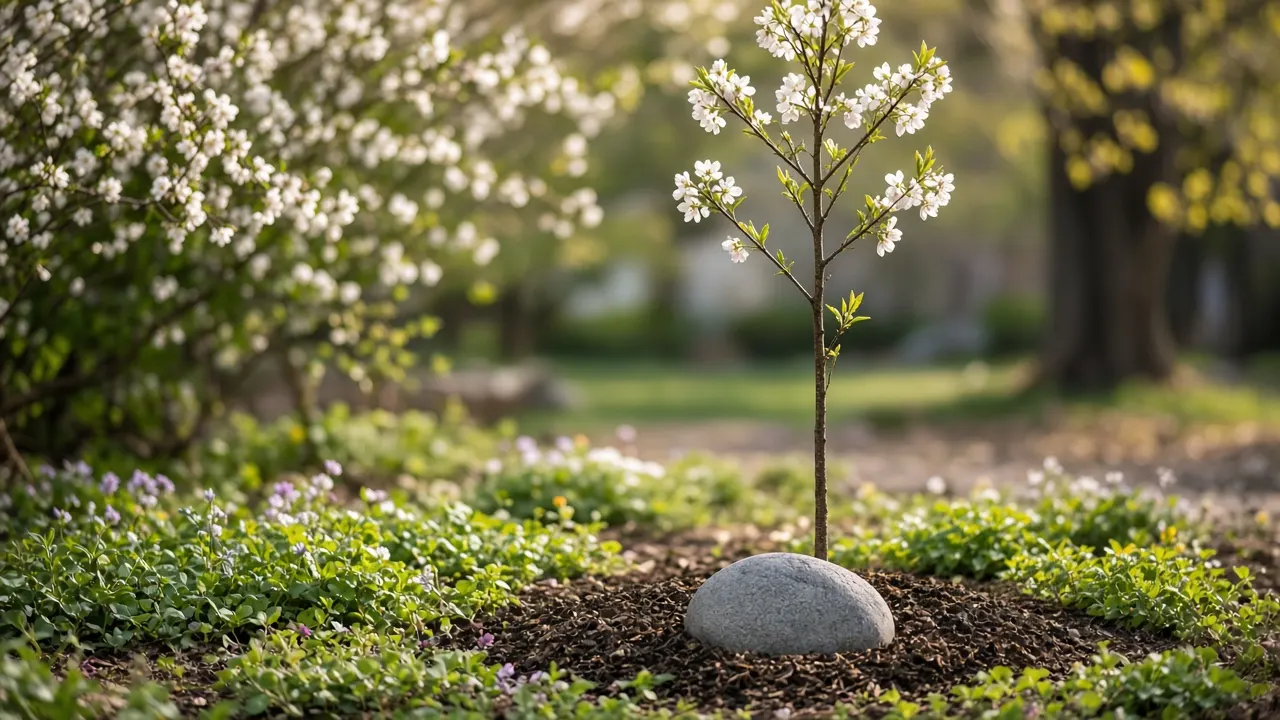
Wet winters are the main hazard for a memorial planting in Arcata. Around December, heavy soils can stay waterlogged for weeks, and roots sitting in cold, salty water rot easily. If your ground drains slowly, plant on a low mound, raised a little above the surrounding soil, so excess water runs away from the ash blend rather than pooling in it.
A mild climate like Arcata's gives you a wide choice of trees and shrubs, and that's where the risk lies: it's tempting to choose something that looks lovely but is short-lived or grows too big. Think about the spot in twenty years. A small flowering tree, a fruit tree on a dwarfing rootstock or a native shrub suits most yards far better than a forest tree planted beside the house.
What a greener goodbye costs in Arcata
Bio urns vary more in price than you might expect. A national guide puts biodegradable urns at $70–$260[6], depending on material, size and whether a seed or tree system is included. For a lake or sea release, one water urn designed to float briefly and dissolve sells for $149[7]. In Arcata, the tree and the soil amendments are usually the cheapest part of the whole memorial.
For a line-by-line price table, see the California overview; for what's included in each option, see our services.

Free tool
Memorial budget planner
Add up cremation, urn, keepsakes and a farewell so the total holds no surprises.
Scattering and planting rules in California
Burying ashes, scattering them loose and releasing them on water are often treated as three different things. In California, a place that welcomes a scattering may forbid digging, and a lake that allows a release may not allow a gathering on the shore. When you ask permission, say exactly which one you have in mind.
To find your county or city office in California, start with the official California local government directory.
The rules that apply across California (home burial, scattering and who oversees pet cremation) are summarized on our California page. Arcata may add its own conditions, so check with the city or county before digging.
How to plan a living memorial, in order
- Confirm the ashes will come back. With a communal cremation there's normally nothing to collect afterwards, which leaves you with nothing to put in an urn.
- Pick the type of bio urn: a planting urn for a tree, a plain burial urn for a garden corner, a water urn for a lake or the sea.
- Ask permission from the landowner, landlord or park manager for anywhere that isn't yours.
- Plan for the weather. In Arcata, avoid frozen, baked or waterlogged ground; a calm, mild day is best for planting or a release.
- Release gently on water. Rest the urn on the surface, leave it to drift and go under in its own time, and scatter only a few loose petals.
- Come back in a year. Replace mulch, check the tree's growth and take a photo to mark the anniversary.
Keeping the memorial alive in Arcata
Many Arcata families want a memorial rooted in the North Coast landscape: a sword fern or rhododendron planted over a biodegradable urn, a stone set among redwood sorrel, or ashes worked back into garden soil. Cool summers and wet winters suit most native plants. Pick a spot with decent drainage, and plant in autumn so the rains do the watering for you.
or compare your instinct with the poll results, the guides answer the longer questions and the blog the newer ones, run the numbers with the free planning tools, The services page is the place to compare what is included. More local pages: Fresno, San Jose, San Francisco and San Diego, the California overview and every city in the United States.

Reader polls
What would you choose?
Vote anonymously and see how other readers answered. The results are live counts from people who visit this site, so they show real opinions, not a scientific sample.
If you rent or might move, how would you handle a memorial planting?
Tap an answer to vote and see how others answered. Anonymous.
What kind of tree or plant would you choose?
Tap an answer to vote and see how others answered. Anonymous.
If you had to decide today, which aftercare would you choose for your pet?
Tap an answer to vote and see how others answered. Anonymous.

Free tools to help you plan
Memorial budget planner
Add up cremation, urn, keepsakes and a farewell so the total holds no surprises.

Memorial tree finder
Pick a tree for a planting urn that suits your climate, space and pet.

Aftercare options compared
Compare private, communal and water cremation with burial on cost, timing and what comes home.
Questions people ask
Is Arcata big enough to have several pet aftercare providers?
Probably, on the numbers. By our estimate about 7,000 Arcata households keep a dog or cat and around 580 lose one each year, which is enough steady demand to support more than one provider. We derive that from population (about 19,047), household size and national ownership and lifespan figures.
How do California attitudes to cremation compare?
NFDA 2024 Cremation & Burial Report state projections (via Occasional Sage) (2024) puts the California human cremation rate at about 70.5%[5]. We show it on the Arcata page because pet aftercare choices tend to track it: where cremation is normal for people, communal and private pet cremation are both easy to find.
Does the Arcata climate change what I should do first?
Only the timing. In August, with highs near 64°F, cool the body and book collection the same day. Winters here are mild enough that burial or scattering is possible in any month.
Can a provider from a neighbouring town collect from Arcata?
Usually yes. Eureka is about 6 miles away, Redding is about 90 miles away and Ashland is about 116 miles away, all inside a normal collection radius. Get the mileage written into the quote so there is no surprise on the day.
Can I take my pet's ashes on a plane to plant them somewhere else?
Usually, yes. Most airlines let you carry cremated remains in hand luggage, but security staff need to be able to X-ray the container, so a wooden, plastic or cardboard container is easier than a metal urn. Keep the certificate from the crematory with you. Leave any seed pod at home if you're crossing a border that restricts plant material.
How long does it take to get ashes back for planting?
Most private cremations return ashes within one to two weeks, and water cremation cycles themselves take 12–20 hours[9], so allow a similar time. In a smaller place, if the cremation happens in a larger centre such as Arcata, it may take a little longer. Planting can wait, so there's no need to rush.


Sources and our estimates
- [1] 53% of US households own a dog, which is about 71 million households. American Pet Products Association (APPA) 2025 State of the Industry, 2025.
- [2] US dogs have an average life expectancy at birth of 12.69 years. Montoya et al. 2023, Frontiers in Veterinary Science - Banfield Pet Hospital life expectancy tables (13.3 million dogs, 2.4 million cats, 2013-2019), 2023.
- [3] 39% of US households own a cat, which is about 53 million households. American Pet Products Association (APPA) 2025 State of the Industry, 2025.
- [4] US cats seen at Banfield hospitals have an average life expectancy at birth of 11.18 years. Montoya et al. 2023, Frontiers in Veterinary Science - Banfield Pet Hospital life expectancy tables (13.3 million dogs, 2.4 million cats, 2013-2019), 2023.
- [5] The NFDA projected California's cremation rate at 70.5% for 2024. NFDA 2024 Cremation & Burial Report state projections (via Occasional Sage), 2024.
- [6] Funeral.com cites U.S. Funerals Online that biodegradable urns typically cost about $70–$260. Funeral.com – How Much Do Cremation Urns Cost in 2025, 2025.
- [7] The Living Urn's Eco Water Urn for water burial costs $149 and holds up to 225 cubic inches; it floats for several minutes before dissolving. The Living Urn – Eco Water Urn, 2026.
- [8] If just 10% of U.S. pet cremations moved to aquamation, about 4,200 t CO2e a year would be avoided. Our estimate: 1.5M x 10% x 31.3 kg x 90% reduction. How we calculate.
- [9] A PET-550 aquamation cycle takes 12–20 hours for a single pet and 14–20 hours for segregated or communal cycles, with up to 14 compartments. Bio-Response Solutions — PET-550 Aquamation System product page, 2026.
Get eco memorial ideas by email
Tell us what you need and where you are. We'll reply by email with clear options and prices so you can decide in your own time.