A living memorial for your pet in San Jose
Roughly 30,500 San Jose families say goodbye to a dog or cat each year, by our count. A living memorial is one way to mark it. This guide explains how to make one that actually grows.
- Trees matched to San Jose's climate
- Soil-safe planting method for ashes
- Real prices for bio urns and aquamation
San Jose, California
What an eco memorial looks like in San Jose
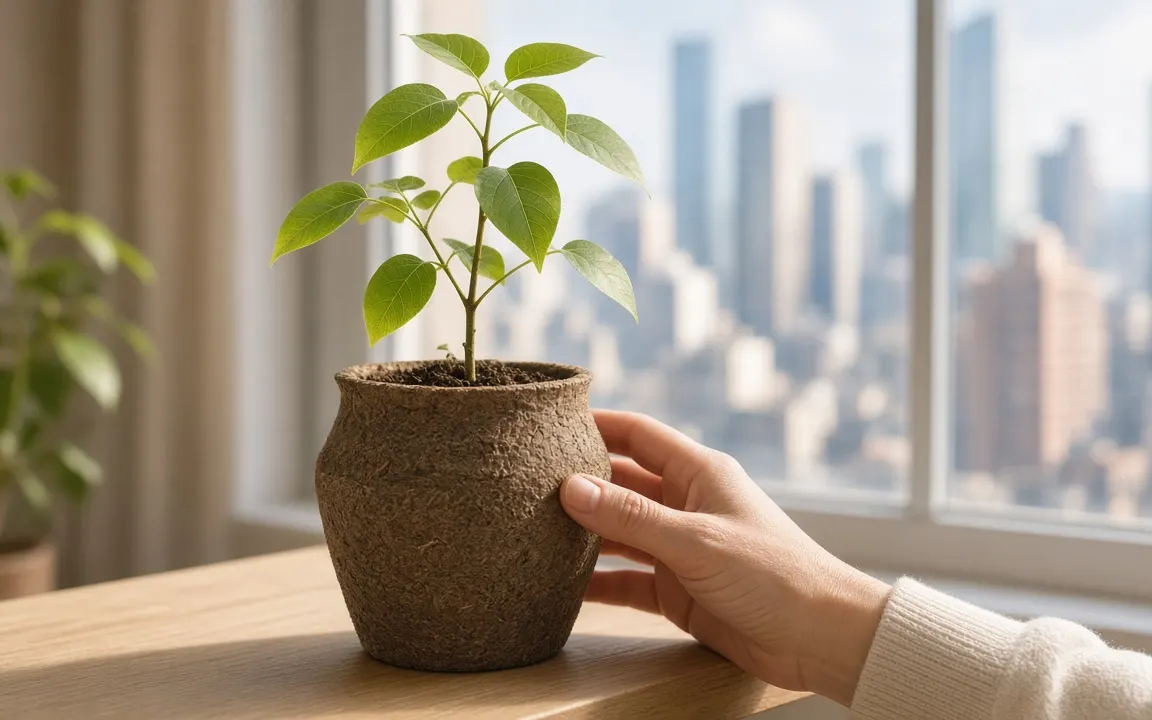
The Santa Clara Valley was once orchard country, famous for apricots and plums, and some families like the idea of planting a fruit tree or flowering shrub with a bio urn in the backyard. The mild climate means planting can happen most of the year. If you rent, a memorial stone in a large pot or a keepsake that moves with you may be more practical.
San Jose's households bring memorial traditions from around the world, from home altars with incense to candles and framed photos. Pet memorials follow the same range: a small urn on a shelf, a pendant holding a trace of ashes, a memorial stone for a patio planter, or a paw print framed beside a photo. Choose what fits your family's customs, and ask for prints or clippings before collection.
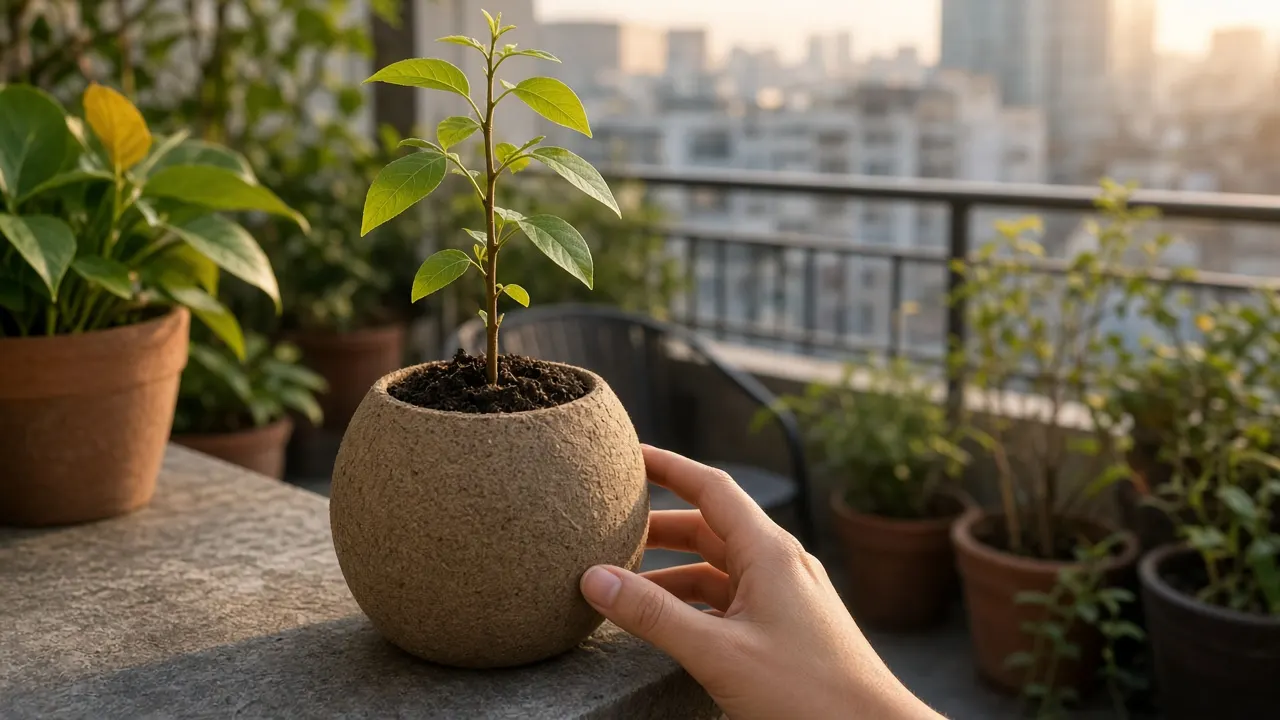
In a city the size of San Jose, the question is rarely whether you can find a bio urn. It's where the memorial will live. Many people here rent, share a yard or live several floors up, so the most useful living memorial is often a large container: a dwarf tree or flowering shrub in a half-barrel on a patio or balcony, which comes with you when you move. Garden centers in big metros usually stock a wide range of natives, which makes matching the plant to your climate much easier than ordering a seed from a kit.
With roughly 989,814 residents, San Jose is the 3rd-largest of the 307 California communities we cover.
Nearby, we also have local pages for Santa Clara (4 miles), Campbell (5 miles) and Milpitas (7 miles), which can help if your vet or the provider you prefer is based there.
Our estimate
365,000
How many dog- or cat-owning households San Jose has (estimate)
How we calculated this
989,814 ÷ 2.5 = 395,926 households; × 53% (dog) + 39% (cat) = 365,000. Homes are counted once however many pets they keep.
Our estimate
30,500
dog and cat deaths per year in San Jose, our estimate
How we calculated this
365,000 dog/cat-owning homes ÷ average lifespan (dog: 12.69 yrs + cat: 11.18 yrs) ≈ 30,500 a year. The real figure is unlikely to be lower.
53%[1]
53% of US households own a dog, which is about 71 million households.
12.69 years[2]
US dogs have an average life expectancy at birth of 12.69 years.
39%[3]
39% of US households own a cat, which is about 53 million households.
11.18 years[4]
US cats seen at Banfield hospitals have an average life expectancy at birth of 11.18 years.
None of the figures on this this page are ours alone: they rest on American Pet Products Association (APPA) 2025 State of the Industry and Montoya et al. 2023, Frontiers in Veterinary Science.
Cremation habits in California, and what they mean for a bio urn
In California, about 70.5%[5] of people are cremated, one of the higher rates around. When most human funerals end with ashes, the question "what shall we do with them?" comes up in nearly every family, and a tree, a garden bed or a lake release is a common answer. That familiarity carries over to pets. It also means more crematories to choose from, and more chance that one of them offers water cremation.
The California figure comes from NFDA 2024 Cremation & Burial Report state projections (via Occasional Sage) (2024). It describes people, not pets, so read it as a sign of local attitudes rather than a pet statistic.
When to plant in San Jose's climate
San Jose's climate is kind to a new tree. Summers stay moderate and winter lows are mostly above freezing, so you can plant in most months. The best time is usually autumn or early spring, when soil is moist and roots can grow before any summer dry spell. Avoid planting into waterlogged ground, which can happen around January: wait for a few drier days so the soil crumbles in your hand.
Wet winters are the main hazard for a memorial planting in San Jose. Around January, heavy soils can stay waterlogged for weeks, and roots sitting in cold, salty water rot easily. If your ground drains slowly, plant on a low mound, raised a little above the surrounding soil, so excess water runs away from the ash blend rather than pooling in it.
What bio urns and aquamation cost in San Jose
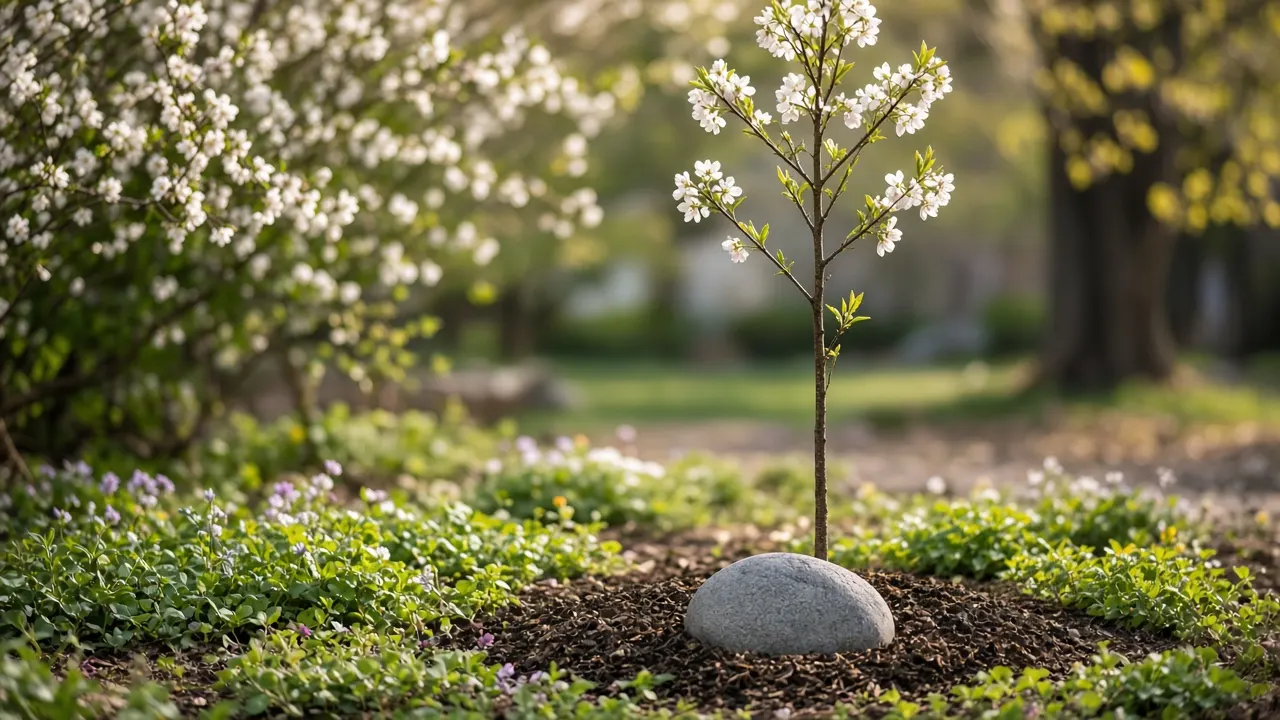
It helps to compare a planted memorial with the alternatives. A pet cemetery burial for a dog averages about $831[6] in the US, which by our estimate is around 3.2 times the national average for private cremation[7]. Private cremation plus a bio urn and a sapling in your own San Jose garden usually comes in far below a cemetery plot, and there are no yearly maintenance fees.
We keep the detailed California price table on one page so it stays current: see California prices.

Free tool
Memorial budget planner
Add up cremation, urn, keepsakes and a farewell so the total holds no surprises.
Who to ask before you plant or scatter in California
If you live under a homeowners' association, a co-op board or a tenancy agreement in California, its rules can matter more than any public law. Many restrict new trees, digging near shared pipes or heavy pots on balconies. A quick read of the rules, or one email to the manager, tells you whether a tree, a shrub bed or a container memorial is the right fit.
City of San José Animal Care Services publishes San Jose's official guidance. Note that it deals with public collection, not with booking a private cremation. The official California local government directory lists every county and city office, which is the quickest way to find who to ask in San Jose.
For California's rules on burying a pet at home or scattering ashes, see the California guide. Local rules in San Jose can be stricter than the state's, especially in homeowners' associations and rentals.
How to plan a living memorial, in order
- Confirm the ashes will come back. With a communal cremation there's normally nothing to collect afterwards, which leaves you with nothing to put in an urn.
- Pick the type of bio urn: one that grows a tree, a simple biodegradable urn to bury in a quiet bed, or a floating urn meant for a lake, river or the coast.
- Ask permission before using ground you don't own, whether that's a landlord, a farmer or whoever runs the park.
- Plan for the weather. Around San Jose, skip days when the soil is rock-hard, frozen or sodden, and wait for still, gentle conditions to plant or release.
- Release gently on water. Set the urn on the surface, let it float and sink on its own, and add only loose petals.
- Come back in a year. Top up the mulch, see how much the tree has put on, and photograph it to record the first anniversary.
Remembering your pet in San Jose
If you are thinking of scattering ashes, many San Jose owners think of the foothill parks or the coast over the hill at Santa Cruz. Public parks are shared spaces and may have their own rules, so check before you go and choose a quiet moment. Keeping a small portion in a keepsake, jewelry or a small urn before any scattering is wise.
the guides answer the longer questions and the blog the newer ones, or compare your instinct with the poll results, Our services overview lays out every option side by side, try the free planning tools. If you live between San Jose and Fresno, Sacramento, San Francisco and Los Angeles, either page applies. Every other community in California, and all of the United States, is listed too.

Reader polls
What would you choose?
Vote anonymously and see how other readers answered. The results are live counts from people who visit this site, so they show real opinions, not a scientific sample.
What kind of tree or plant would you choose?
Tap an answer to vote and see how others answered. Anonymous.
Would you consider releasing your pet's ashes in water?
Tap an answer to vote and see how others answered. Anonymous.
If you had to decide today, which aftercare would you choose for your pet?
Tap an answer to vote and see how others answered. Anonymous.

Free tools to help you plan
Memorial budget planner
Add up cremation, urn, keepsakes and a farewell so the total holds no surprises.

Memorial tree finder
Pick a tree for a planting urn that suits your climate, space and pet.

Aftercare options compared
Compare private, communal and water cremation with burial on cost, timing and what comes home.
Questions people ask
How does San Jose's weather affect pet aftercare?
July is the hottest month in San Jose, with average highs around 79°F, so prompt collection matters most then. Winters are mild, with average lows staying above freezing, so outdoor burial or scattering is usually possible year round.
Is San Jose big enough to have several pet aftercare providers?
Probably, on the numbers. By our estimate about 365,000 San Jose households keep a dog or cat and around 30,500 lose one each year, which is enough steady demand to support more than one provider. We derive that from population (about 989,814), household size and national ownership and lifespan figures.
Can a provider from a neighbouring town collect from San Jose?
Usually yes. Santa Clara is about 4 miles away, Campbell is about 5 miles away and Milpitas is about 7 miles away, all inside a normal collection radius. Get the mileage written into the quote so there is no surprise on the day.
Why does the San Jose page quote a human cremation rate?
Because it is the best local signal we have. NFDA 2024 Cremation & Burial Report state projections (via Occasional Sage) (2024) reports about 70.5%[5] of California residents are cremated. There is no official pet equivalent, and inventing one would be worse than quoting a real, clearly labelled number.
How many dogs and cats are there in San Jose?
By our estimate, about 365,000 households in San Jose have a dog or a cat, and around 30,500 of those pets die each year. We calculate this from the city's population, average household size and national pet ownership and lifespan figures. The method is shown on this page, and the real number of animals is higher.
Is water cremation better for the environment?
It uses much less energy: pet aquamation is claimed to use about 90%[9] less energy than flame cremation, and it uses about as much water as 1–3 pet baths[10] per pet. The strongest carbon figures come from studies of human funerals, not pets, so treat them as a direction rather than a promise. You still get ashes back for a bio urn.


Sources and our estimates
- [1] 53% of US households own a dog, which is about 71 million households. American Pet Products Association (APPA) 2025 State of the Industry, 2025.
- [2] US dogs have an average life expectancy at birth of 12.69 years. Montoya et al. 2023, Frontiers in Veterinary Science - Banfield Pet Hospital life expectancy tables (13.3 million dogs, 2.4 million cats, 2013-2019), 2023.
- [3] 39% of US households own a cat, which is about 53 million households. American Pet Products Association (APPA) 2025 State of the Industry, 2025.
- [4] US cats seen at Banfield hospitals have an average life expectancy at birth of 11.18 years. Montoya et al. 2023, Frontiers in Veterinary Science - Banfield Pet Hospital life expectancy tables (13.3 million dogs, 2.4 million cats, 2013-2019), 2023.
- [5] The NFDA projected California's cremation rate at 70.5% for 2024. NFDA 2024 Cremation & Burial Report state projections (via Occasional Sage), 2024.
- [6] CareCredit's 2025 cost study put the US national average for pet cemetery burial of a dog at $831 (range $659-$1,513). CareCredit (Synchrony) - How Much Does It Cost To Euthanize a Dog? (2025 ASQ360 procedural cost study), 2025.
- [7] US pet cemetery burial for a dog costs about 3.2x a private cremation ($831 vs $260 national averages). Our estimate: 831 / 260 = 3.20. How we calculate.
- [8] If just 10% of U.S. pet cremations moved to aquamation, about 4,200 t CO2e a year would be avoided. Our estimate: 1.5M x 10% x 31.3 kg x 90% reduction. How we calculate.
- [9] Pet aquamation is described as available across all 50 US states, and is claimed to use about 90% less energy than flame cremation. Be a Tree Cremation pet aquamation guide, 2025.
- [10] Aquamation uses about the same water per pet as 1–3 pet baths. Veterinary Sustainability Alliance — Aquamation, 2024.
Get eco memorial ideas by email
Tell us what you need and where you are. We'll reply by email with clear options and prices so you can decide in your own time.