Planting your pet's ashes in Corona
Roughly 4,950 Corona families say goodbye to a dog or cat each year, by our count. A living memorial is one way to mark it. This guide explains how to make one that actually grows.
- Options for renters and apartments
- Water release rules in plain words
- No obligation, we reply by email
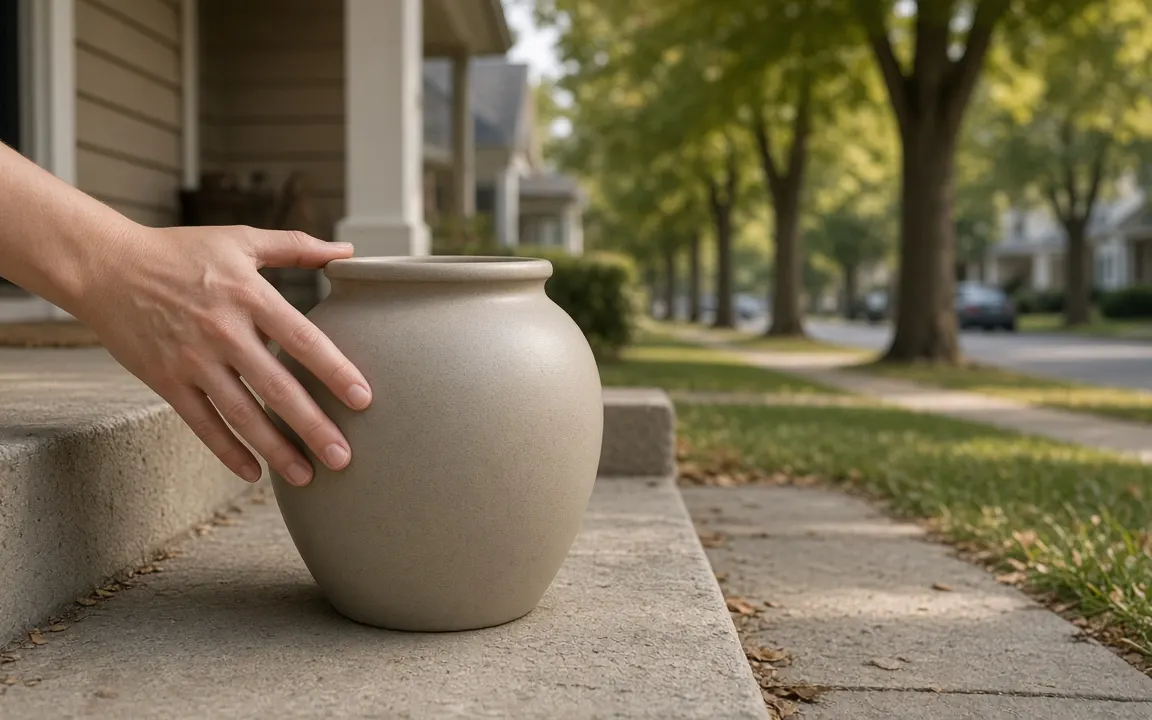
Corona, California
Where a living memorial fits in Corona
The Santa Ana River trail and the foothills of the Santa Ana Mountains are places many Corona families share with their animals. If you'd like to scatter some ashes in a place like that, pick a quiet spot away from busy trailheads and water intakes, and keep a portion back. A little saved for a keepsake means part of your pet stays with you if you move.
Outdoor memorials in Corona face strong sun and dry heat most of the year. Granite and bronze keep their look, while painted resin fades quickly. For a memorial plant, drought-tolerant natives or citrus, a nod to the orange groves Corona was once known for, can do well with little water. Planting in the cooler months gives roots a better start before summer.
Local knowledge goes a long way in a place like Corona. A county extension office or a long-running garden center can tell you whether your soil is already alkaline, clay-heavy or sandy, which matters because ashes push soil further toward alkaline. If your soil is already high in lime, choose a lime-tolerant tree and use extra compost or composted bark when you mix. If it's acidic, the ash is easier to buffer. A cheap pH kit settles the question.
Corona is home to about 161,734 people, the 33rd-largest of the 307 California communities we cover. Some of the providers who serve Corona are based about 11 miles away in Riverside, the nearest larger centre, so collection times reflect that drive.
If you want to compare providers, look at Norco (4 miles), Eastvale (6 miles) and Chino (9 miles). Distance matters because pickup fees and the time until the ashes come back both grow with the drive.
Our estimate
59,500
How many dog- or cat-owning households Corona has (estimate)
How we calculated this
161,734 ÷ 2.5 = 64,694 households; × 53% (dog) + 39% (cat) = 59,500. A household with several pets counts once.
Our estimate
4,950
Corona families who lose a dog or cat each year (estimate)
How we calculated this
59,500 dog/cat-owning homes ÷ average lifespan (dog: 12.69 yrs + cat: 11.18 yrs) ≈ 4,950 a year. Treat it as a minimum.
53%[1]
53% of US households own a dog, which is about 71 million households.
12.69 years[2]
US dogs have an average life expectancy at birth of 12.69 years.
39%[3]
39% of US households own a cat, which is about 53 million households.
11.18 years[4]
US cats seen at Banfield hospitals have an average life expectancy at birth of 11.18 years.
None of the figures on this this page are ours alone: they rest on American Pet Products Association (APPA) 2025 State of the Industry and Montoya et al. 2023, Frontiers in Veterinary Science.
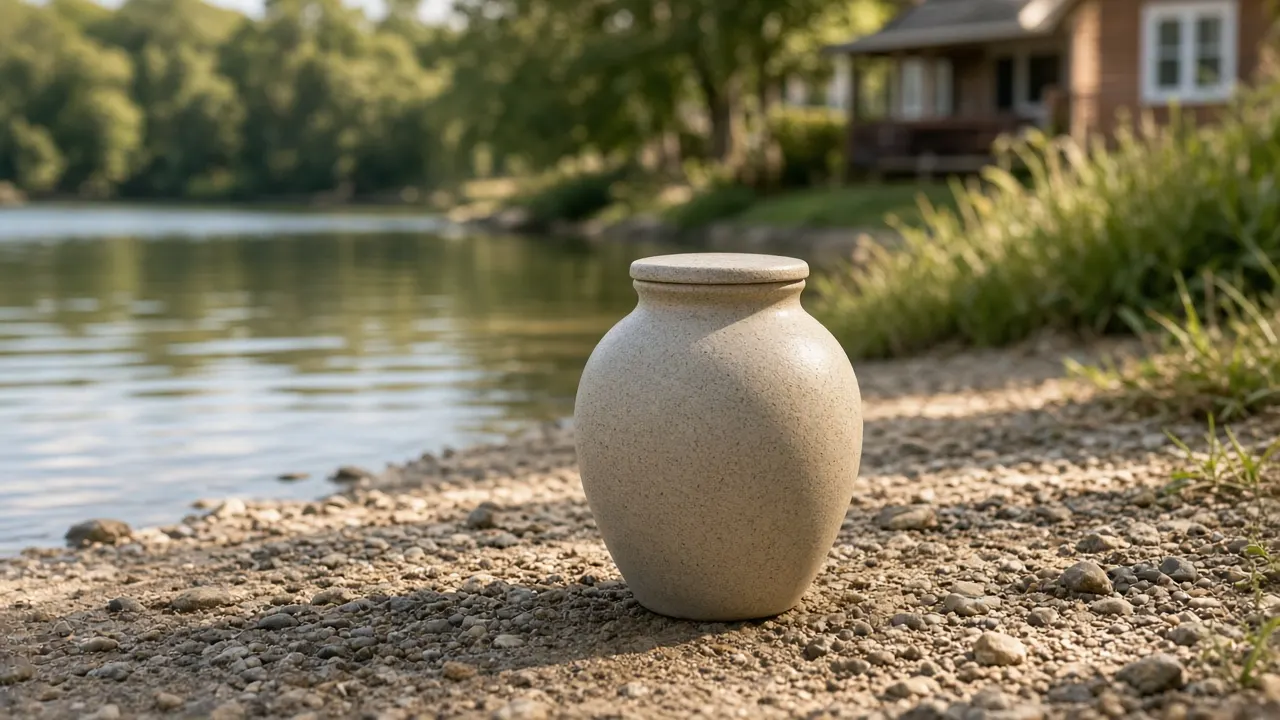
Why cremation culture in California shapes your options
Cremation is the usual choice for people in California: about 70.5%[5] of those who die there are cremated. That figure is about people, not pets, but it tells you something useful. Where cremation is ordinary, families already think about what to do with ashes, and planting or scattering is a familiar next step. You're less likely to have to explain a bio urn to relatives, and more likely to find a crematory nearby that returns ashes promptly.
Source for the California number: NFDA 2024 Cremation & Burial Report state projections (via Occasional Sage) (2024). Nobody publishes a pet cremation rate for Corona, so the human figure is the best local signal available.
Seasons, soil and weather for a memorial in Corona
Corona's climate is kind to a new tree. Summers stay moderate and winter lows are mostly above freezing, so you can plant in most months. The best time is usually autumn or early spring, when soil is moist and roots can grow before any summer dry spell. Avoid planting into waterlogged ground, which can happen around February: wait for a few drier days so the soil crumbles in your hand.
In Corona, winters are gentle, with December lows around 48°F, and summers are warm rather than scorching. That opens up evergreen choices, such as a native evergreen shrub or a small conifer, which give you a green memorial all year. Whatever you choose, water through the first summer, keep grass away from the base and replace mulch each spring.
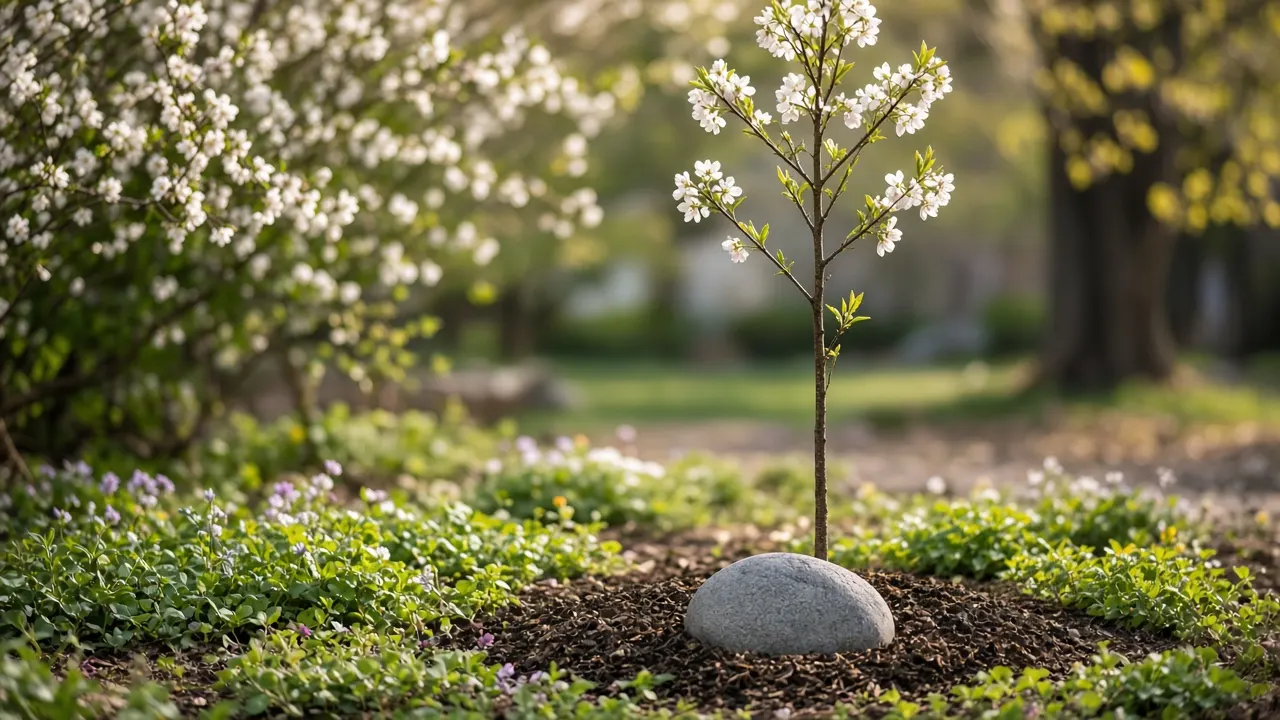
Eco memorial prices, from urn to tree
Add up every part before you commit. Beyond the cremation, a living memorial in Corona can include the bio urn, compost and bark, a pH kit, the tree or shrub, a guard against deer or rabbits, and perhaps a marker. Our memorial budget planner lists each line so nothing surprises you. Most families find the tree is the cheapest part and the cremation the most expensive.
For a line-by-line price table, see the California overview; for what's included in each option, see our services.

Free tool
Memorial budget planner
Add up cremation, urn, keepsakes and a farewell so the total holds no surprises.
Scattering and planting rules in California
What you plant can matter as much as where. Parks and nature reserves in California often forbid planting anything at all, and even on private land some trees and shrubs are listed as invasive in parts of the region. A local nursery or native plant society can steer you toward a species that won't spread into wild land.
Not sure which office covers Corona? The California local government directory is the official list.
For California's rules on burying a pet at home or scattering ashes, see the California guide. Local rules in Corona can be stricter than the state's, especially in homeowners' associations and rentals.
From ashes to a growing tree: the steps
- If you're remembering more than one animal, settle at the start on one shared planting or separate ones. Either works, but once the ashes are combined there's no undoing it.
- Label each container clearly the moment it arrives, name and date on the lid, which matters most when the sets come home a long way apart.
- Choose a bigger planting area for several sets of ashes: a hedge, a group of shrubs or a small orchard spreads the mineral load across more soil.
- Keep a spoonful of each in separate keepsakes if anyone in the family wants to remember one animal on its own.
- Plan for the pets still living with you. A new planting that smells of bone attracts diggers, so protect it for the first few months.
- Add a marker for each name, or one stone that lists them all, so visitors know who the planting is for.
Living memorials beyond the backyard
In Corona, many families keep a pet's memorial indoors or in a shaded corner of the yard, out of the strong sun. An urn on the mantel, a framed paw print or a small pendant are all common choices. If you'd like more than one, ask for part of the ashes to be kept separately, so you can add a garden stone or planter later without opening a sealed urn.
Compare every option on our services page, or look at how readers voted in our polls, look through our guides and the blog, use the free tools before you ring anyone. You can also browse every city in the United States. Nearby, we also cover San Diego, Sacramento, San Jose and Fresno, and every city in California.

Reader polls
What would you choose?
Vote anonymously and see how other readers answered. The results are live counts from people who visit this site, so they show real opinions, not a scientific sample.
If you rent or might move, how would you handle a memorial planting?
Tap an answer to vote and see how others answered. Anonymous.
Would you consider releasing your pet's ashes in water?
Tap an answer to vote and see how others answered. Anonymous.
If you had to decide today, which aftercare would you choose for your pet?
Tap an answer to vote and see how others answered. Anonymous.

Free tools to help you plan
Memorial budget planner
Add up cremation, urn, keepsakes and a farewell so the total holds no surprises.

Memorial tree finder
Pick a tree for a planting urn that suits your climate, space and pet.

Aftercare options compared
Compare private, communal and water cremation with burial on cost, timing and what comes home.
Questions people ask
Where are the providers that serve Corona actually based?
Some are local, and some run from Riverside, about 11 miles away. That is normal for a city this size. What matters is the collection time they quote for Corona and whether the drive is priced into the total, so ask both up front.
How do California attitudes to cremation compare?
NFDA 2024 Cremation & Burial Report state projections (via Occasional Sage) (2024) puts the California human cremation rate at about 70.5%[5]. We show it on the Corona page because pet aftercare choices tend to track it: where cremation is normal for people, communal and private pet cremation are both easy to find.
How many pet owners live in Corona?
By our estimate, about 59,500 households in Corona have at least one dog or cat, and around 4,950 are lost each year. We calculate this from the city's population of about 161,734, the average household size and national ownership and lifespan figures, so treat it as a floor rather than an exact count.
Can a provider from a neighbouring town collect from Corona?
Usually yes. Norco is about 4 miles away, Eastvale is about 6 miles away and Chino is about 9 miles away, all inside a normal collection radius. Get the mileage written into the quote so there is no surprise on the day.
Is it safe to plant a fruit tree with my pet's ashes?
Cremated remains are mostly bone minerals, and once they're thoroughly blended into plenty of compost and garden soil, many gardeners grow fruit trees over them. The high pH and salt are the real concern for the tree, so dilute generously and test the pH. If eating fruit from the memorial feels wrong to anyone in your family, choose an ornamental tree instead.
Can I plant a tree directly on my pet's ashes in Corona?
It's better not to. Cremated remains have a very high pH, around 11.7[7], and they're high in sodium, so a solid layer of ash under the roots can yellow or kill a young tree. Mix the ashes through plenty of compost and soil across a wider area, test the pH, and plant once it has come down. There's no single mixing ratio that suits every pet and every soil.


Sources and our estimates
- [1] 53% of US households own a dog, which is about 71 million households. American Pet Products Association (APPA) 2025 State of the Industry, 2025.
- [2] US dogs have an average life expectancy at birth of 12.69 years. Montoya et al. 2023, Frontiers in Veterinary Science - Banfield Pet Hospital life expectancy tables (13.3 million dogs, 2.4 million cats, 2013-2019), 2023.
- [3] 39% of US households own a cat, which is about 53 million households. American Pet Products Association (APPA) 2025 State of the Industry, 2025.
- [4] US cats seen at Banfield hospitals have an average life expectancy at birth of 11.18 years. Montoya et al. 2023, Frontiers in Veterinary Science - Banfield Pet Hospital life expectancy tables (13.3 million dogs, 2.4 million cats, 2013-2019), 2023.
- [5] The NFDA projected California's cremation rate at 70.5% for 2024. NFDA 2024 Cremation & Burial Report state projections (via Occasional Sage), 2024.
- [6] If just 10% of U.S. pet cremations moved to aquamation, about 4,200 t CO2e a year would be avoided. Our estimate: 1.5M x 10% x 31.3 kg x 90% reduction. How we calculate.
- [7] Cremated remains have a very high pH of approximately 11.7, which is toxic to plants without amendment. Larkspur Conservation — Giving Cremated Remains a New Life Through Science, 2024.
Tell us about your pet and your garden
Tell us what you need and where you are. We'll reply by email with clear options and prices so you can decide in your own time.