Bio urns and eco memorials in Los Angeles
Los Angeles has an estimated 1,425,000 dog- or cat-owning households. When a planting or water memorial feels right for yours, here's what works in the local climate and what to ask before you buy.
- Trees matched to Los Angeles's climate
- Soil-safe planting method for ashes
- Real prices for bio urns and aquamation
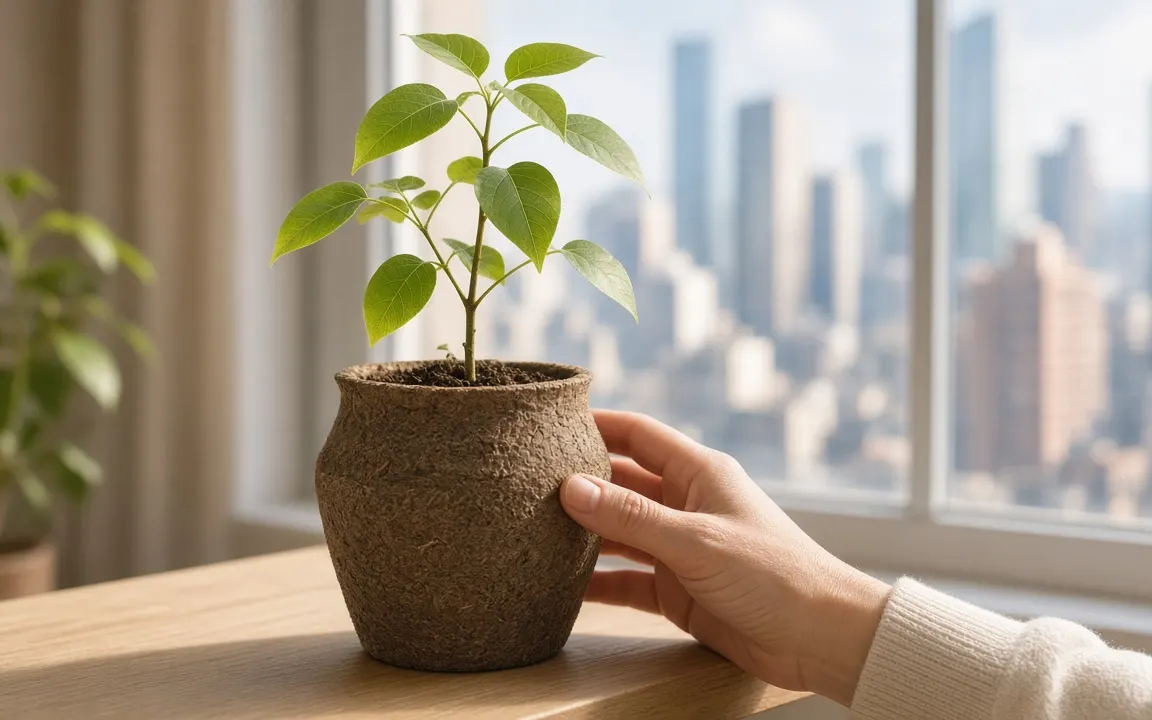
Los Angeles, California
Bio urns, trees and water in Los Angeles
In Los Angeles, garden memorials are easy to keep year-round because the mild climate rarely damages stone or plants. A memorial stone, engraved plaque or small statue beneath a shade tree or among succulents makes a lasting spot you can visit every day. For apartment dwellers in places like Koreatown or Santa Monica, compact urns, photo urns and keepsake jewelry are popular. Engraving your pet's name and dates keeps it simple and personal.
Tree and bio urns suit LA gardens if you choose a drought-tolerant plant that can cope with long dry summers, such as a native sage or a small oak. Renters can plant in a large container that moves house with them. Some families scatter ashes at a favorite beach or trail, so check the rules of whoever manages the land first. Paw prints and fur keepsakes taken before cremation are also meaningful and easy to store.
Many people in Los Angeles want a memorial they can visit without owning land. A water release is one answer, since it needs no plot at all, though it leaves no spot to return to. Another is to plant with someone else: a sibling with a yard, a parent's garden, a friend's farm outside the city. Ask them in person, explain that ashes are mixed well with compost and that the tree will be theirs to keep, and agree on where it will go before the day.
Los Angeles's population is around 3,869,089, the largest of the 307 California communities we cover.
Our pages for Huntington Park (5 miles), Maywood (5 miles) and Bell (6 miles) describe the same choices from those towns' point of view, and the providers overlap, so a quote from one often covers Los Angeles as well.
Our estimate
1,425,000
How many dog- or cat-owning households Los Angeles has (estimate)
How we calculated this
3,869,089 ÷ 2.5 = 1,547,636 households; × 53% (dog) + 39% (cat) = 1,425,000. Homes are counted once however many pets they keep.
Our estimate
120,000
Los Angeles families who lose a dog or cat each year (estimate)
How we calculated this
1,425,000 dog/cat-owning homes ÷ average lifespan (dog: 12.69 yrs + cat: 11.18 yrs) ≈ 120,000 a year. Treat it as a minimum.
53%[1]
53% of US households own a dog, which is about 71 million households.
12.69 years[2]
US dogs have an average life expectancy at birth of 12.69 years.
39%[3]
39% of US households own a cat, which is about 53 million households.
11.18 years[4]
US cats seen at Banfield hospitals have an average life expectancy at birth of 11.18 years.
The published sources behind those figures are Montoya et al. 2023, Frontiers in Veterinary Science and American Pet Products Association (APPA) 2025 State of the Industry.
How California feels about cremation
Because cremation is the norm in California, at roughly 70.5%[5] of deaths, green ideas about ashes are easy to raise without raised eyebrows. In the US, 68%[6] of people in NFDA's 2024 consumer survey expressed interest in green funeral or natural burial options. If you'd like the lower-impact route for a pet, start with the cremation method, then choose an urn that breaks down and a native plant.
That California rate is a human one, published by NFDA 2024 Cremation & Burial Report state projections (via Occasional Sage) (2024). We quote it for Los Angeles only as a pointer to how families here already think about cremation.
Choosing the right month to plant in Los Angeles
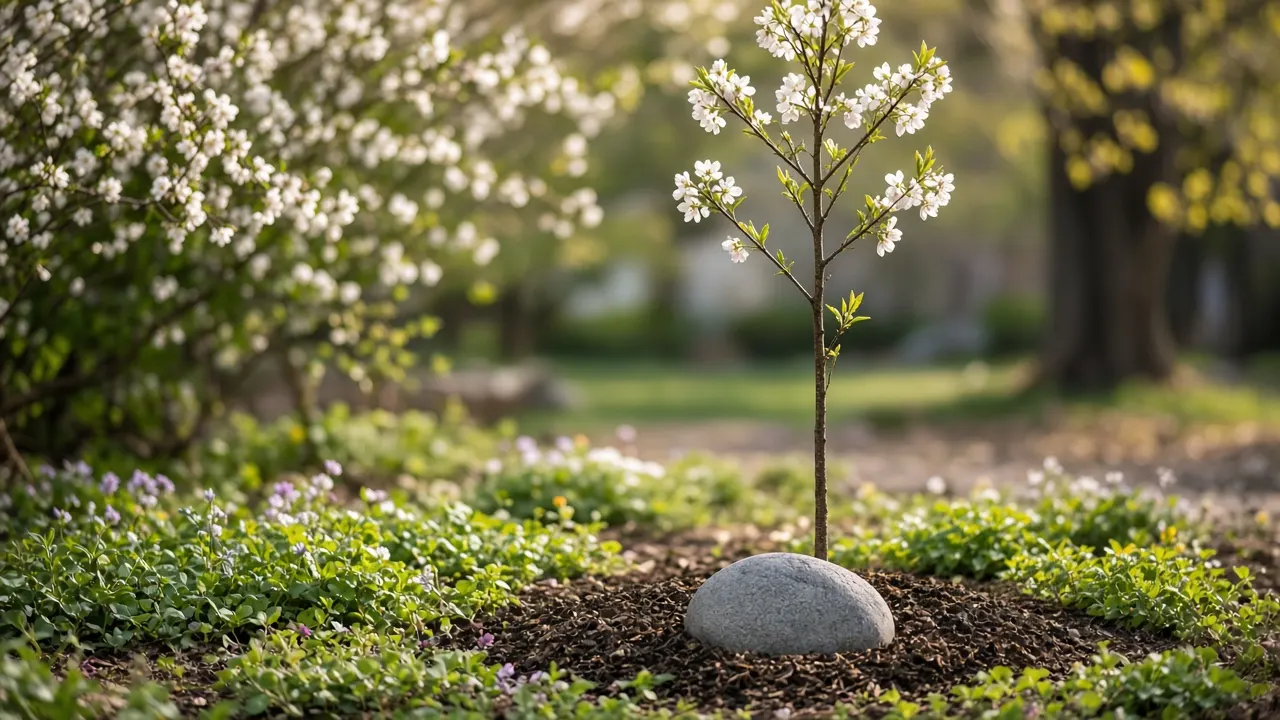
Wet winters are the main hazard for a memorial planting in Los Angeles. Around February, heavy soils can stay waterlogged for weeks, and roots sitting in cold, salty water rot easily. If your ground drains slowly, plant on a low mound, raised a little above the surrounding soil, so excess water runs away from the ash blend rather than pooling in it.
In Los Angeles, winters are gentle, with February lows around 51°F, and summers are warm rather than scorching. That opens up evergreen choices, such as a native evergreen shrub or a small conifer, which give you a green memorial all year. Whatever you choose, water through the first summer, keep grass away from the base and replace mulch each spring.
Adding up the cost of a bio urn memorial in Los Angeles
Bio urns vary more in price than you might expect. A national guide puts biodegradable urns at $70–$260[7], depending on material, size and whether a seed or tree system is included. For a lake or sea release, one water urn designed to float briefly and dissolve sells for $149[8]. In Los Angeles, the tree and the soil amendments are usually the cheapest part of the whole memorial.
For a line-by-line price table, see the California overview; for what's included in each option, see our services.

Free tool
Memorial budget planner
Add up cremation, urn, keepsakes and a farewell so the total holds no surprises.
Rules worth knowing in California before you scatter
Rules about ashes were mostly written for people, and pet ashes often sit in a grey area. That's a reason to ask, not a reason to assume. On land you own, planting or burying ashes is generally fine. Anywhere else in California, from parks to beaches to a friend's field, the land manager or owner decides, so ask first.
Los Angeles's own guidance is published by Los Angeles Sanitation & Environment; it covers public collection, which is separate from arranging a private cremation. To find your county or city office in California, start with the official California local government directory.
For California's rules on burying a pet at home or scattering ashes, see the California guide. Local rules in Los Angeles can be stricter than the state's, especially in homeowners' associations and rentals.
What to do first, and what can wait for the right season
- Talk it through with your household first, especially if anyone would rather keep the ashes at home.
- Measure your space. Trees spread more than people expect; in a smaller garden a shrub, a big pot or a border may be the kinder fit.
- Test the soil at the planting site. Ground that already reads alkaline calls for a species that tolerates lime, plus more compost or composted bark than usual.
- Spread the ashes through a wide planting area, not in one band directly beneath the root ball.
- Water well for two summers. It's drought in the early years, not cold, that kills the majority of memorial trees that don't make it.
- Keep a record noting which species you planted, when, and how the soil was mixed, so future care or taking a cutting is straightforward.
Ways to mark the spot and the date
Día de los Muertos is widely celebrated in Los Angeles, and many families include pets on their home ofrendas with photos, marigolds, candles and favorite treats. A small urn or keepsake box can become part of that altar every autumn, bringing your pet back into the family's remembering each year. Keep a little ash aside for a pendant or ring if you'd like to carry your pet with you.
look through our guides and the blog, Our services overview lays out every option side by side, or see what other families chose in the poll results, the planning tools turn your pet's details into figures. If you live between Los Angeles and Long Beach, Sacramento, San Jose and Fresno, either page applies. Every other community in California, and all of the United States, is listed too.

Reader polls
What would you choose?
Vote anonymously and see how other readers answered. The results are live counts from people who visit this site, so they show real opinions, not a scientific sample.
What kind of tree or plant would you choose?
Tap an answer to vote and see how others answered. Anonymous.
If water cremation (aquamation) were offered near you, would you choose it?
Tap an answer to vote and see how others answered. Anonymous.
If you had to decide today, which aftercare would you choose for your pet?
Tap an answer to vote and see how others answered. Anonymous.

Free tools to help you plan
Memorial budget planner
Add up cremation, urn, keepsakes and a farewell so the total holds no surprises.

Memorial tree finder
Pick a tree for a planting urn that suits your climate, space and pet.

Aftercare options compared
Compare private, communal and water cremation with burial on cost, timing and what comes home.
Questions people ask
Can a provider from a neighbouring town collect from Los Angeles?
Usually yes. Huntington Park is about 5 miles away, Maywood is about 5 miles away and Bell is about 6 miles away, all inside a normal collection radius. Get the mileage written into the quote so there is no surprise on the day.
How does Los Angeles's weather affect pet aftercare?
August is the hottest month in Los Angeles, with average highs around 79°F, so prompt collection matters most then. Winters are mild, with average lows staying above freezing, so outdoor burial or scattering is usually possible year round.
Is cremation common in California?
For people, yes: about 70.5%[5] of California deaths end in cremation, according to NFDA 2024 Cremation & Burial Report state projections (via Occasional Sage) (2024). Nobody publishes the same figure for pets, but in our experience pet choices in Los Angeles follow the human pattern closely, so cremation is the default most families here start from.
How many pet owners live in Los Angeles?
By our estimate, about 1,425,000 households in Los Angeles have at least one dog or cat, and around 120,000 are lost each year. We calculate this from the city's population of about 3,869,089, the average household size and national ownership and lifespan figures, so treat it as a floor rather than an exact count.
I rent in Los Angeles. Can I still have a living memorial?
Yes. Plant in a large container, such as a half-barrel or a big pot with a dwarf tree or flowering shrub, and it moves with you. Use only a small share of the ashes in the pot, well mixed with compost. If you'd like to plant in a rented yard, get the landlord's permission in writing, and remember the tree stays when you leave.
Is water cremation better for the environment?
It uses much less energy: pet aquamation is claimed to use about 90%[10] less energy than flame cremation, and it uses about as much water as 1–3 pet baths[11] per pet. The strongest carbon figures come from studies of human funerals, not pets, so treat them as a direction rather than a promise. You still get ashes back for a bio urn.


Sources and our estimates
- [1] 53% of US households own a dog, which is about 71 million households. American Pet Products Association (APPA) 2025 State of the Industry, 2025.
- [2] US dogs have an average life expectancy at birth of 12.69 years. Montoya et al. 2023, Frontiers in Veterinary Science - Banfield Pet Hospital life expectancy tables (13.3 million dogs, 2.4 million cats, 2013-2019), 2023.
- [3] 39% of US households own a cat, which is about 53 million households. American Pet Products Association (APPA) 2025 State of the Industry, 2025.
- [4] US cats seen at Banfield hospitals have an average life expectancy at birth of 11.18 years. Montoya et al. 2023, Frontiers in Veterinary Science - Banfield Pet Hospital life expectancy tables (13.3 million dogs, 2.4 million cats, 2013-2019), 2023.
- [5] The NFDA projected California's cremation rate at 70.5% for 2024. NFDA 2024 Cremation & Burial Report state projections (via Occasional Sage), 2024.
- [6] 68% of respondents to NFDA's 2024 Consumer Awareness and Preferences Survey expressed interest in green funeral or natural burial options. NFDA — Green Burial Resources for Funeral Professionals, 2024.
- [7] Funeral.com cites U.S. Funerals Online that biodegradable urns typically cost about $70–$260. Funeral.com – How Much Do Cremation Urns Cost in 2025, 2025.
- [8] The Living Urn's Eco Water Urn for water burial costs $149 and holds up to 225 cubic inches; it floats for several minutes before dissolving. The Living Urn – Eco Water Urn, 2026.
- [9] About 59 million U.S. pet-owning households may be open to eco-friendly aftercare options. Our estimate: 86.9M pet households x 68% interested in green funeral options. How we calculate.
- [10] Pet aquamation is described as available across all 50 US states, and is claimed to use about 90% less energy than flame cremation. Be a Tree Cremation pet aquamation guide, 2025.
- [11] Aquamation uses about the same water per pet as 1–3 pet baths. Veterinary Sustainability Alliance — Aquamation, 2024.
Plan a living memorial in Los Angeles
Tell us what you need and where you are. We'll reply by email with clear options and prices so you can decide in your own time.