Growing something from the goodbye in Boulder
About 3,250 dogs and cats are lost in Boulder each year, by our estimate. If you'd like your pet's ashes to grow into a tree or return to the water, this page covers the soil, the season and the cost.
- Planting, garden and water urns compared
- Honest notes on local rules
- Help choosing a native species
Boulder, Colorado
Your living memorial options around Boulder
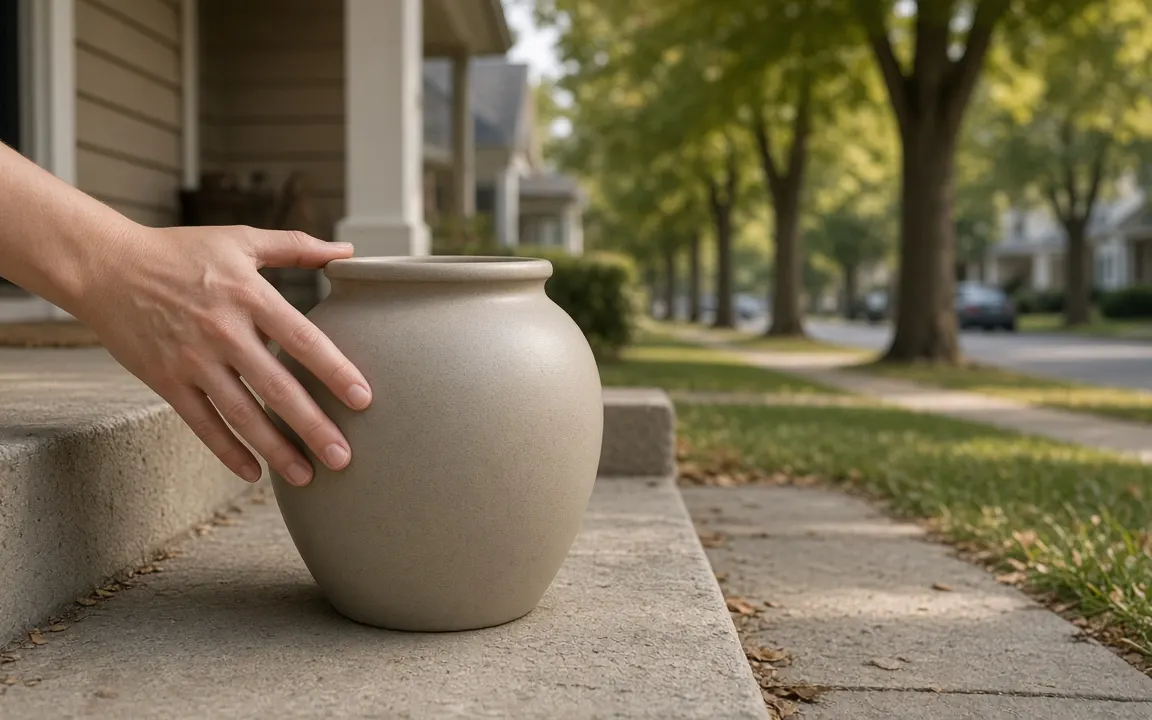
Many Boulder residents prefer memorials that sit lightly on the land: a biodegradable urn, a tree planted in the garden, a natural stone rather than a polished one. Others choose jewelry or a small urn for indoors. There is no right answer. If you rent, which many people in Boulder do, a portable memorial means your pet can move with you.
Anything placed outdoors in Boulder faces strong sun, dry air, heavy spring snow and winds that can topple light objects. Stone, bronze and well-sealed wood last best. For a tree urn, pick a species suited to the Front Range, plant it in spring and water it through the first dry summers. Wildlife such as deer may browse young trees, so protect them.
Many Boulder households have a yard, which opens up the classic option: a memorial tree in the ground. Before you pick a spot, think ten or twenty years ahead. A tree needs distance from the house, sewer lines and overhead wires, and it stays with the property when you sell. If a move is likely, a large container, a relative's garden or a shrub bed that a future owner won't mind are all kinder choices than a shade tree you'll have to leave behind.
Boulder's population is around 105,689, the 12th-largest of the 36 Colorado communities we cover. The nearest larger centre is Denver, about 24 miles (39 km) away, which is where some providers serving Boulder are based.
Families in Boulder often end up using a provider from Louisville (7 miles), Lafayette (9 miles) and Broomfield (12 miles). That is normal: crematories serve a radius, not a single town, and the drive is priced into collection.
Our estimate
39,000
Estimated dog- or cat-owning households in Boulder
How we calculated this
105,689 ÷ 2.5 = 42,276 households; × 53% (dog) + 39% (cat) = 39,000. Homes are counted once however many pets they keep.
Our estimate
3,250
Estimated dog and cat losses in Boulder each year
How we calculated this
39,000 dog/cat-owning homes ÷ average lifespan (dog: 12.69 yrs + cat: 11.18 yrs) ≈ 3,250 a year. The real figure is unlikely to be lower.
53%[1]
53% of US households own a dog, which is about 71 million households.
12.69 years[2]
US dogs have an average life expectancy at birth of 12.69 years.
39%[3]
39% of US households own a cat, which is about 53 million households.
11.18 years[4]
US cats seen at Banfield hospitals have an average life expectancy at birth of 11.18 years.
If a number here surprises you, the primary material is Montoya et al. 2023, Frontiers in Veterinary Science and American Pet Products Association (APPA) 2025 State of the Industry; we only apply it to this.
Cremation habits in Colorado, and what they mean for a bio urn
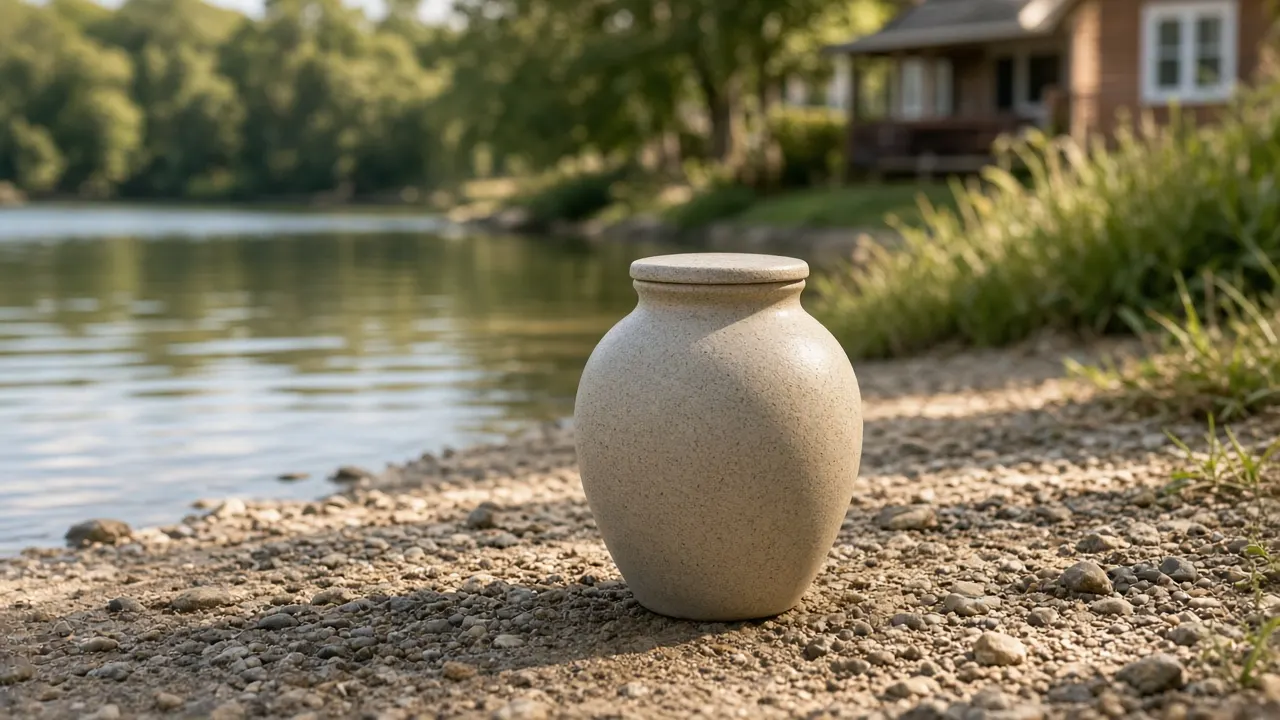
About 77.4%[5] of people in Colorado are cremated, so ashes are part of everyday life here in a way they aren't everywhere. Many families have already scattered or planted a grandparent's ashes and know how it felt. If you did, you'll recognise much of the process for a pet, with one difference worth knowing: a pet's ashes are a much smaller amount, which makes mixing them safely into soil far easier.
Source for the Colorado number: NFDA 2024 Cremation & Burial Report state projections (via Occasional Sage) (2024). Nobody publishes a pet cremation rate for Boulder, so the human figure is the best local signal available.
Weather, soil and planting windows in Boulder
In places like Boulder, driveways and sidewalks are often salted in January, February, March, November and December. Ashes already add sodium to the soil, and road salt splashed onto the same bed doubles the load. Keep a memorial planting well back from salted paths and the edge of the road, and away from where snow gets piled. A spot uphill from the drive is better than one downhill of it.
Early spring in Boulder is when nurseries sell bare-root trees, often at a lower price than trees in pots. They need planting quickly, as soon as the ground can be dug after January, February, March, November and December, which fits well with ashes that have waited through the winter. Have the soil blend ready beforehand, soak the roots for an hour, and plant on a calm, overcast day.

Price ranges for planting and water urns
Water cremation prices overlap with flame cremation. One Delaware provider charges $150–$450[6] for private aquamation by weight, including a standard urn, and $50–$225[7] for communal. That makes private about 2.5 times the shared price[8]. Prices in Boulder depend on who offers it locally, so ask for a written quote that says whether the ashes come back and in what container.
The full price table by product is on our Colorado page, and the services page explains what each option includes.

Free tool
Memorial budget planner
Add up cremation, urn, keepsakes and a farewell so the total holds no surprises.
What Colorado allows for ashes, in general terms
Two questions cover most situations in Colorado: who owns or manages this land or water, and have they said yes? For your own garden, the answer is you. For a rented home, it's your landlord, in writing. For parks and public water, it's the relevant agency. For a relative's garden, it's them, and it's worth agreeing that the tree stays even if the house is sold.
Not sure which office covers Boulder? The Colorado local government directory is the official list.
The Colorado page sets out who oversees pet cremation and what the state says about burial and scattering. Boulder's own bylaws can sit on top of that, so ask before you dig.
What to do first, and what can wait for the right season
- If euthanasia is planned, find out from the practice beforehand which crematory handles their aftercare and whether aquamation is available through them.
- Book the aftercare before the appointment, which leaves the day free for nothing but sitting with your pet.
- Ask for a paw print or nose print before cremation if you'd like one. It can't be made afterwards.
- Choose the plant in advance if that helps you. Some families find it comforting to know exactly where their pet will rest.
- Skip the display urn. A simple box or tube from the crematory is all a planting needs, and the saving can go toward the tree or shrub.
- Prepare the soil blend while you wait for the crematory to return the ashes, and the planting can happen within a few months instead of slipping year after year.
Ways to mark the spot and the date
Boulder has a strong arts and crafts community, and some families commission custom pieces: a hand-thrown urn, a small sculpture, a portrait painted from a photo. Others prefer something simple and bought ready-made. Either can be meaningful. Commissioned work takes time, and that delay can be a gift: by the time the piece is finished, you often know better what you want it to say.
the planning tools turn your pet's details into figures, See what each option includes on our services page, the guides answer the longer questions and the blog the newer ones, or see how other readers answered in our polls. More local pages: Denver, Aurora, Colorado Springs and Thornton, the Colorado overview and every city in the United States.

Reader polls
What would you choose?
Vote anonymously and see how other readers answered. The results are live counts from people who visit this site, so they show real opinions, not a scientific sample.
What kind of tree or plant would you choose?
Tap an answer to vote and see how others answered. Anonymous.
Would you consider releasing your pet's ashes in water?
Tap an answer to vote and see how others answered. Anonymous.
If you had to decide today, which aftercare would you choose for your pet?
Tap an answer to vote and see how others answered. Anonymous.

Free tools to help you plan
Memorial budget planner
Add up cremation, urn, keepsakes and a farewell so the total holds no surprises.

Memorial tree finder
Pick a tree for a planting urn that suits your climate, space and pet.

Aftercare options compared
Compare private, communal and water cremation with burial on cost, timing and what comes home.
Questions people ask
How does Boulder's weather affect pet aftercare?
July is the hottest month in Boulder, with average highs around 88°F, so prompt collection matters most then. Average lows drop below freezing in January, February, March, November and December, which can make digging a grave hard until spring.
Is Boulder big enough to have several pet aftercare providers?
Probably, on the numbers. By our estimate about 39,000 Boulder households keep a dog or cat and around 3,250 lose one each year, which is enough steady demand to support more than one provider. We derive that from population (about 105,689), household size and national ownership and lifespan figures.
Will I have to travel to Denver to arrange things?
Not usually. Providers based in Denver (roughly 24 miles from Boulder) collect from here as a matter of routine, and the paperwork is done by email or phone. If you want to be present for a witnessed cremation, that is when the drive matters.
Which nearby towns can I compare with Boulder?
The closest communities we cover are Louisville (about 7 miles), Lafayette (about 9 miles) and Broomfield (about 12 miles). Providers based in those places often serve Boulder too. Ask each one for a written total that includes collection, so the distance is priced in.
Is it safe to plant a fruit tree with my pet's ashes?
Cremated remains are mostly bone minerals, and once they're thoroughly blended into plenty of compost and garden soil, many gardeners grow fruit trees over them. The high pH and salt are the real concern for the tree, so dilute generously and test the pH. If eating fruit from the memorial feels wrong to anyone in your family, choose an ornamental tree instead.
Is water cremation better for the environment?
It uses much less energy: pet aquamation is claimed to use about 90%[10] less energy than flame cremation, and it uses about as much water as 1–3 pet baths[11] per pet. The strongest carbon figures come from studies of human funerals, not pets, so treat them as a direction rather than a promise. You still get ashes back for a bio urn.


Sources and our estimates
- [1] 53% of US households own a dog, which is about 71 million households. American Pet Products Association (APPA) 2025 State of the Industry, 2025.
- [2] US dogs have an average life expectancy at birth of 12.69 years. Montoya et al. 2023, Frontiers in Veterinary Science - Banfield Pet Hospital life expectancy tables (13.3 million dogs, 2.4 million cats, 2013-2019), 2023.
- [3] 39% of US households own a cat, which is about 53 million households. American Pet Products Association (APPA) 2025 State of the Industry, 2025.
- [4] US cats seen at Banfield hospitals have an average life expectancy at birth of 11.18 years. Montoya et al. 2023, Frontiers in Veterinary Science - Banfield Pet Hospital life expectancy tables (13.3 million dogs, 2.4 million cats, 2013-2019), 2023.
- [5] The NFDA projected Colorado's cremation rate at 77.4% for 2024. NFDA 2024 Cremation & Burial Report state projections (via Occasional Sage), 2024.
- [6] Delaware Pet Aquamation charges $150–$450 for private aquamation by weight, from under 10 lb to 150 lb and over, including a standard urn. Delaware Pet Aquamation – Pricing, 2026.
- [7] Communal aquamation at the same Delaware provider costs $50–$225 by weight. Delaware Pet Aquamation – Pricing, 2026.
- [8] Private pet aquamation costs about 2.5 times communal aquamation at the same provider. Our estimate: mean of tier ratios 150/50, 200/75, 250/100, 350/150, 450/225. How we calculate.
- [9] Each shelter-animal flame cremation emits about 31 kg CO2e on average. Our estimate: 19,000 t CO2e / 607,000 animals. How we calculate.
- [10] Pet aquamation is described as available across all 50 US states, and is claimed to use about 90% less energy than flame cremation. Be a Tree Cremation pet aquamation guide, 2025.
- [11] Aquamation uses about the same water per pet as 1–3 pet baths. Veterinary Sustainability Alliance — Aquamation, 2024.
Plan a living memorial in Boulder
Tell us what you need and where you are. We'll reply by email with clear options and prices so you can decide in your own time.