Bio urns and eco memorials in Lakewood
Roughly 4,800 Lakewood families say goodbye to a dog or cat each year, by our count. A living memorial is one way to mark it. This guide explains how to make one that actually grows.
- A memorial that moves with you
- Why pure ashes harm young roots
- Written prices you can compare
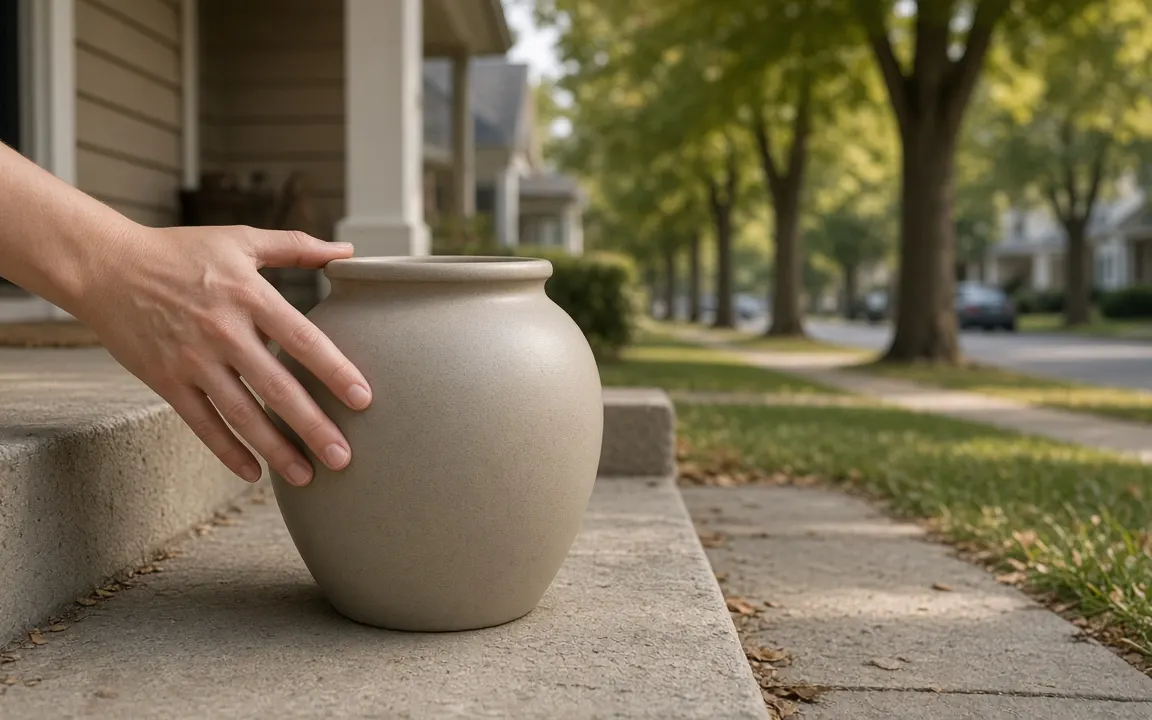
Lakewood, Colorado
Living memorials in Lakewood: the local picture
Many Lakewood families keep a pet's memorial close: an urn on a mantel, a paw print cast, or a pendant holding a small amount of ashes. If you'd like to scatter some ashes in the mountains later, ask for the ashes to be divided before they're returned, so part stays home in a keepsake urn and part is ready for a trip into the foothills.
Colorado's intense sun, dry air and freeze-thaw winters are hard on outdoor memorials. Granite and bronze hold up well, while softer stone and painted resin can crack or fade. If you'd like a memorial tree, native species that handle dry summers and cold winters do better. Planting in spring gives roots a full season to settle before the first hard freeze.
Suburban yards around Lakewood often hide sprinkler lines, cables and gas pipes just below the grass. Before you dig a wide planting hole, use the free call-before-you-dig service where you live, and check where any irrigation runs. A tree planted over a sprinkler line will eventually find it. Marking the spot a week before the ceremony avoids a last-minute scramble.
Lakewood is home to about 156,927 people, the 5th-largest of the 36 Colorado communities we cover. Some of the providers who serve Lakewood are based about 6 miles away in Denver, the nearest larger centre, so collection times reflect that drive.
Families in Lakewood often end up using a provider from Wheat Ridge (5 miles), Denver (5 miles, a larger centre) and Englewood (6 miles). That is normal: crematories serve a radius, not a single town, and the drive is priced into collection.
Our estimate
57,500
Lakewood: dog- or cat-owning households, our estimate
How we calculated this
156,927 ÷ 2.5 = 62,771 households; × 53% (dog) + 39% (cat) = 57,500. Multi-pet homes count once.
Our estimate
4,800
Estimated dog and cat losses in Lakewood each year
How we calculated this
57,500 dog/cat-owning homes ÷ average lifespan (dog: 12.69 yrs + cat: 11.18 yrs) ≈ 4,800 a year. Treat it as a minimum.
53%[1]
53% of US households own a dog, which is about 71 million households.
12.69 years[2]
US dogs have an average life expectancy at birth of 12.69 years.
39%[3]
39% of US households own a cat, which is about 53 million households.
11.18 years[4]
US cats seen at Banfield hospitals have an average life expectancy at birth of 11.18 years.
The numbers above come from American Pet Products Association (APPA) 2025 State of the Industry and Montoya et al. 2023, Frontiers in Veterinary Science, if you'd like to read the original sources.
Cremation, burial and green choices in Colorado
Cremation accounts for roughly 77.4%[5] of human deaths in Colorado, and a lot of those ashes end up waiting on a shelf. That's true of pets as well. If you already have an urn at home from an earlier pet, a bio urn can be a way to finish that story: the older ashes and the new can go into one planting, or two trees side by side, whenever you feel ready.
NFDA 2024 Cremation & Burial Report state projections (via Occasional Sage) (2024) is where the Colorado figure comes from. It counts people; we use it because attitudes to cremating a pet in Lakewood tend to follow attitudes to cremation generally.
When to plant in Lakewood's climate
Cold winters narrow the choice of tree in Lakewood, where December lows average about 17°F. Pick species that are fully hardy locally: native trees, or ornamentals a nearby nursery rates for your zone. A tender tree from a warmer region may survive one mild winter and die in the next. Hardy flowering shrubs are a good fallback if you have less space.
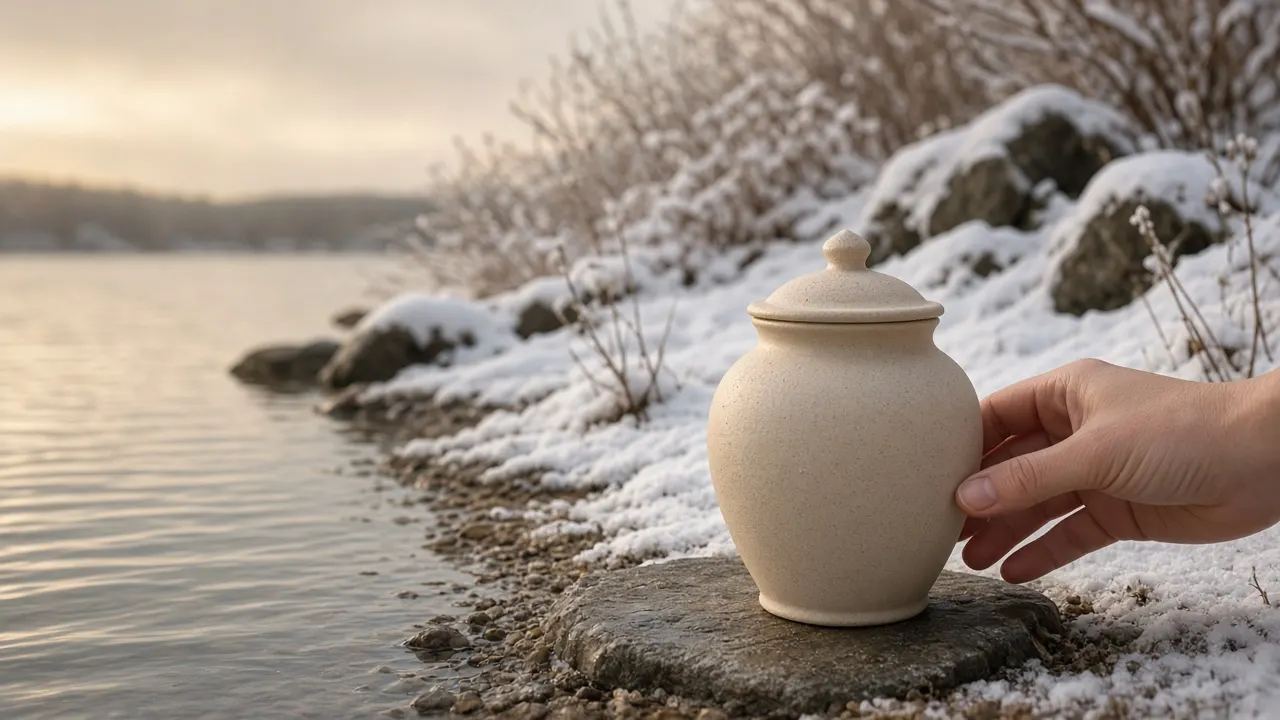
Snow can hide a young memorial tree and the damage done around it. In Lakewood, where lows average about 17°F in December, voles and rabbits chew bark under the snow line, and snowplows or shovels can snap a sapling. Put a tall stake beside the planting so you can find it, and fit a loose guard around the trunk before the first snow.
Eco memorial prices, from urn to tree
Add up every part before you commit. Beyond the cremation, a living memorial in Lakewood can include the bio urn, compost and bark, a pH kit, the tree or shrub, a guard against deer or rabbits, and perhaps a marker. Our memorial budget planner lists each line so nothing surprises you. Most families find the tree is the cheapest part and the cremation the most expensive.
The full price table by product is on our Colorado page, and the services page explains what each option includes.

Free tool
Memorial budget planner
Add up cremation, urn, keepsakes and a farewell so the total holds no surprises.
What Colorado allows for ashes, in general terms
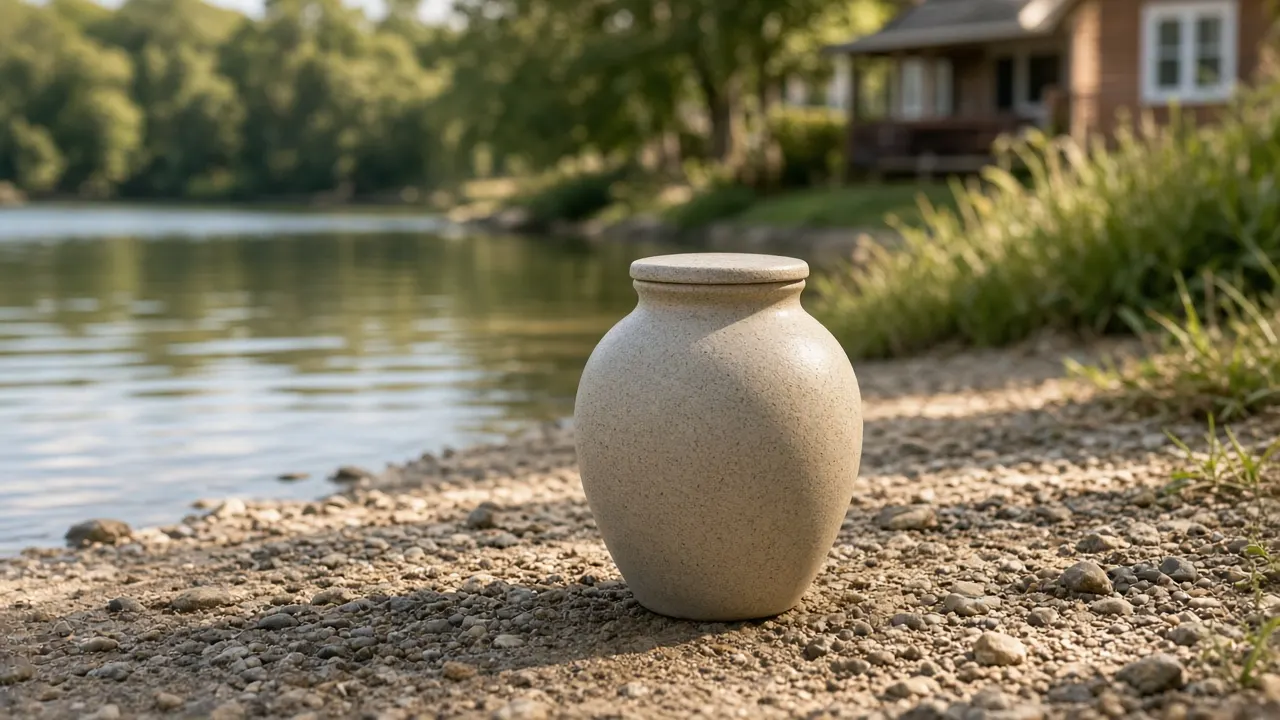
Water releases need a little more care than a garden planting. Rivers, lakes, reservoirs and coastal waters in Colorado are managed by different bodies, and drinking-water sources are often off-limits. Wherever you release, use only a water-soluble urn or loose ashes, add nothing but loose flower petals, and let no plastic, ribbon or wreath wire float away.
Colorado keeps an official directory of local governments; use it to reach the county or city office that covers Lakewood.
The rules that apply across Colorado (home burial, scattering and who oversees pet cremation) are summarized on our Colorado page. Lakewood may add its own conditions, so check with the city or county before digging.
A simple plan for your pet's eco memorial
- Confirm the ashes will come back. With a communal cremation there's normally nothing to collect afterwards, which leaves you with nothing to put in an urn.
- Pick the type of bio urn: one that grows a tree, a simple biodegradable urn to bury in a quiet bed, or a floating urn meant for a lake, river or the coast.
- Ask permission before using ground you don't own, whether that's a landlord, a farmer or whoever runs the park.
- Plan for the weather. Around Lakewood, skip days when the soil is rock-hard, frozen or sodden, and wait for still, gentle conditions to plant or release.
- Release gently on water. Set the urn on the surface, let it float and sink on its own, and add only loose petals.
- Come back in a year. Top up the mulch, see how much the tree has put on, and photograph it to record the first anniversary.
Ways to mark the spot and the date
Bear Creek Lake Park, Green Mountain and the foothills trails around Red Rocks and Morrison are places many Lakewood families link with good times outdoors. If you'd like to scatter some ashes somewhere like that, choose a quiet, private spot and check the rules for any park or open space. Keeping a small portion aside means you'll always have a keepsake at home.
look through our guides and the blog, the planning tools turn your pet's details into figures, or look at how readers voted in our polls, The services page is the place to compare what is included. More local pages: Denver, Aurora, Thornton and Arvada, the Colorado overview and every city in the United States.

Reader polls
What would you choose?
Vote anonymously and see how other readers answered. The results are live counts from people who visit this site, so they show real opinions, not a scientific sample.
If water cremation (aquamation) were offered near you, would you choose it?
Tap an answer to vote and see how others answered. Anonymous.
If you rent or might move, how would you handle a memorial planting?
Tap an answer to vote and see how others answered. Anonymous.
If you had to decide today, which aftercare would you choose for your pet?
Tap an answer to vote and see how others answered. Anonymous.

Free tools to help you plan
Memorial budget planner
Add up cremation, urn, keepsakes and a farewell so the total holds no surprises.

Memorial tree finder
Pick a tree for a planting urn that suits your climate, space and pet.

Aftercare options compared
Compare private, communal and water cremation with burial on cost, timing and what comes home.
Questions people ask
How do Colorado attitudes to cremation compare?
NFDA 2024 Cremation & Burial Report state projections (via Occasional Sage) (2024) puts the Colorado human cremation rate at about 77.4%[5]. We show it on the Lakewood page because pet aftercare choices tend to track it: where cremation is normal for people, communal and private pet cremation are both easy to find.
Which nearby towns can I compare with Lakewood?
The closest communities we cover are Wheat Ridge (about 5 miles), Denver (about 5 miles) and Englewood (about 6 miles). Providers based in those places often serve Lakewood too. Ask each one for a written total that includes collection, so the distance is priced in.
Where are the providers that serve Lakewood actually based?
Some are local, and some run from Denver, about 6 miles away. That is normal for a city this size. What matters is the collection time they quote for Lakewood and whether the drive is priced into the total, so ask both up front.
Does the Lakewood climate change what I should do first?
Only the timing. In July, with highs near 88°F, cool the body and book collection the same day. In January, February, March, November and December, when lows sit below freezing, a home burial may have to wait for a thaw, so cremation with ashes returned keeps your options open.
Is it safe to plant a fruit tree with my pet's ashes?
Cremated remains are mostly bone minerals, and once they're thoroughly blended into plenty of compost and garden soil, many gardeners grow fruit trees over them. The high pH and salt are the real concern for the tree, so dilute generously and test the pH. If eating fruit from the memorial feels wrong to anyone in your family, choose an ornamental tree instead.
Which memorial plants are dangerous to cats and dogs?
Lilies are highly toxic to cats, even the pollen. Sago palm, oleander, yew, azalea and foxglove can poison dogs, and several of them harm cats and horses too. If you have pets at home in Lakewood, ask a vet or nursery to confirm a plant is safe before you buy it. Grasses, many herbs and most fruit trees are safer choices, though large amounts of fallen fruit can still upset a dog's stomach.


Sources and our estimates
- [1] 53% of US households own a dog, which is about 71 million households. American Pet Products Association (APPA) 2025 State of the Industry, 2025.
- [2] US dogs have an average life expectancy at birth of 12.69 years. Montoya et al. 2023, Frontiers in Veterinary Science - Banfield Pet Hospital life expectancy tables (13.3 million dogs, 2.4 million cats, 2013-2019), 2023.
- [3] 39% of US households own a cat, which is about 53 million households. American Pet Products Association (APPA) 2025 State of the Industry, 2025.
- [4] US cats seen at Banfield hospitals have an average life expectancy at birth of 11.18 years. Montoya et al. 2023, Frontiers in Veterinary Science - Banfield Pet Hospital life expectancy tables (13.3 million dogs, 2.4 million cats, 2013-2019), 2023.
- [5] The NFDA projected Colorado's cremation rate at 77.4% for 2024. NFDA 2024 Cremation & Burial Report state projections (via Occasional Sage), 2024.
- [6] Each shelter-animal flame cremation emits about 31 kg CO2e on average. Our estimate: 19,000 t CO2e / 607,000 animals. How we calculate.
Ask about aquamation near Lakewood
Tell us what you need and where you are. We'll reply by email with clear options and prices so you can decide in your own time.