Tree, garden and water memorials in Daytona Beach
About 2,700 dogs and cats are lost in Daytona Beach each year, by our estimate. If you'd like your pet's ashes to grow into a tree or return to the water, this page covers the soil, the season and the cost.
- Trees matched to Daytona Beach's climate
- Soil-safe planting method for ashes
- Real prices for bio urns and aquamation

Daytona Beach, Florida
Planning a greener goodbye in Daytona Beach
Some Daytona Beach families choose to return a pet's ashes to the ocean. Burial at sea for human remains requires a distance of three nautical miles from shore under federal rules; there is no single national rule for pets, so ask before you go. Water-soluble urns made of salt or paper dissolve gently and suit a scattering from a boat or a quiet shoreline moment.
Many residents are retirees or seasonal visitors who split their year between Daytona Beach and somewhere up north. If that is you, choose a memorial that can travel: a small sealed urn, a pendant, or a set of mini keepsake urns so family in different states can each hold a share. Before ordering, have the seller confirm cost and turnaround by email.
Many people near Daytona Beach have a lake, pond or river they walked with their dog every day. A water-soluble urn released there can feel exactly right. Before you do it, check who owns or manages the water: a private pond needs the owner's say-so, a public lake is usually managed by a state or county agency, and some reservoirs supply drinking water and don't allow anything to be released. Choose a quiet time and let nothing float away.
Daytona Beach's population is around 88,471, the 32nd-largest of the 235 Florida communities we cover. Orlando, roughly 51 miles off, is the closest larger centre, and a share of the providers who cover Daytona Beach run from there.
Our pages for Port Orange (7 miles), Ormond Beach (7 miles) and New Smyrna Beach (13 miles) describe the same choices from those towns' point of view, and the providers overlap, so a quote from one often covers Daytona Beach as well.
Our estimate
32,500
Daytona Beach: dog- or cat-owning households, our estimate
How we calculated this
88,471 ÷ 2.5 = 35,388 households; × 53% (dog) + 39% (cat) = 32,500. Homes are counted once however many pets they keep.
Our estimate
2,700
Daytona Beach families who lose a dog or cat each year (estimate)
How we calculated this
32,500 dog/cat-owning homes ÷ average lifespan (dog: 12.69 yrs + cat: 11.18 yrs) ≈ 2,700 a year. The real figure is unlikely to be lower.
53%[1]
53% of US households own a dog, which is about 71 million households.
12.69 years[2]
US dogs have an average life expectancy at birth of 12.69 years.
39%[3]
39% of US households own a cat, which is about 53 million households.
11.18 years[4]
US cats seen at Banfield hospitals have an average life expectancy at birth of 11.18 years.
Sources for the statistics above: American Pet Products Association (APPA) 2025 State of the Industry and Montoya et al. 2023, Frontiers in Veterinary Science.

Cremation habits in Florida, and what they mean for a bio urn
With roughly 72.5%[5] of people in Florida cremated, the local funeral culture leans firmly toward ashes rather than graves. That has a practical upside for a living memorial. Nurseries, crematories and even some parks departments are used to questions about ashes, and you'll usually get a straight answer. It's still worth asking before you plant or scatter anywhere you don't own, because common practice isn't the same as permission.
That Florida rate is a human one, published by NFDA 2024 Cremation & Burial Report state projections (via Occasional Sage) (2024). We quote it for Daytona Beach only as a pointer to how families here already think about cremation.
Seasons, soil and weather for a memorial in Daytona Beach
Heat narrows the tree list in Daytona Beach. Months like May, June, July, August and September bring sustained highs, so choose species that already cope locally: drought-tolerant natives, or trees a local nursery recommends for full sun. A seed from a planting kit, bred somewhere cooler, is a gamble here. Plant a sturdy nursery sapling instead, mulch a wide ring around it and plan to water it through its first two summers.
Watering is where most memorial trees in hot places succeed or fail. In Daytona Beach, give a new planting a slow, deep soak once or twice a week through May, June, July, August and September rather than a daily sprinkle. A drip line or a slow-release watering bag works well if you'll be away. A deep soak flushes salts from the ash blend below the root zone and coaxes roots to grow downward too.
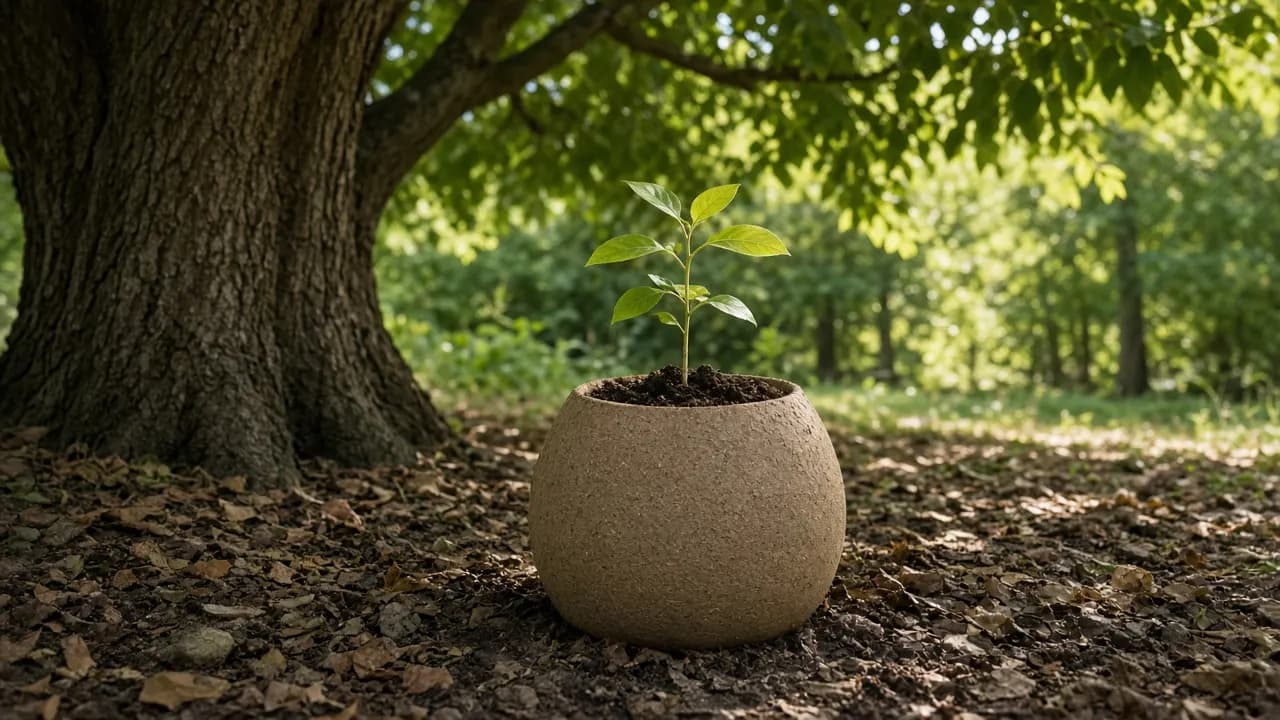
Adding up the cost of a bio urn memorial in Daytona Beach
Bio urns vary more in price than you might expect. A national guide puts biodegradable urns at $70–$260[6], depending on material, size and whether a seed or tree system is included. For a lake or sea release, one water urn designed to float briefly and dissolve sells for $149[7]. In Daytona Beach, the tree and the soil amendments are usually the cheapest part of the whole memorial.
The Florida price table breaks costs down by product; our services page explains what sits behind each line.

Free tool
Memorial budget planner
Add up cremation, urn, keepsakes and a farewell so the total holds no surprises.
Who to ask before you plant or scatter in Florida
Burying ashes, scattering them loose and releasing them on water are often treated as three different things. In Florida, a place that welcomes a scattering may forbid digging, and a lake that allows a release may not allow a gathering on the shore. When you ask permission, say exactly which one you have in mind.
To find your county or city office in Florida, start with the official Florida local government directory.
The rules that apply across Florida (home burial, scattering and who oversees pet cremation) are summarized on our Florida page. Daytona Beach may add its own conditions, so check with the city or county before digging.
Your next steps, whatever your situation
- Take your time. There's no clock running on a bio urn. Sort out the cremation, bring the ashes home once they're released, and plant whenever you're ready, even months later.
- Ask for individual cremation, by flame or by water, so you know the ashes going into the ground are your pet's alone. A plain box is enough when a display urn isn't part of the plan.
- Check how much ash you have. Many kits are sized for a set volume, and a large dog's ashes may not all fit.
- Choose the place and the tree together. Weigh up light, room to spread, buried pipes or cables, and whether you're likely to be at that address a decade from now.
- Mix, don't layer. Work the ashes evenly into plenty of soil and compost, give it a few weeks to settle where possible, and check the pH.
- Plant in the right season for Daytona Beach, water deeply and mulch a wide ring around the base.
- Mark the spot using a modest stone or a garden tag, and write the planting date down where it won't get lost.
Keeping your pet's memory growing in Daytona Beach
The beach and the river are central to life in Daytona Beach, and memorials here often draw on the water: a blue glass urn, a keepsake holding a few grains of sand from a favorite stretch of shore, or a small plaque fixed to a dock post. If you would like ashes incorporated into glass or jewelry, ask the maker how much they need and how long it will take.
Our services overview lays out every option side by side, use the free tools before you ring anyone, or compare your instinct with the poll results, browse in-depth guides or recent articles. You can also browse every city in the United States. Nearby, we also cover Jacksonville, Miami, Port St. Lucie and Tampa, and every city in Florida.

Reader polls
What would you choose?
Vote anonymously and see how other readers answered. The results are live counts from people who visit this site, so they show real opinions, not a scientific sample.
If you rent or might move, how would you handle a memorial planting?
Tap an answer to vote and see how others answered. Anonymous.
If water cremation (aquamation) were offered near you, would you choose it?
Tap an answer to vote and see how others answered. Anonymous.
If you had to decide today, which aftercare would you choose for your pet?
Tap an answer to vote and see how others answered. Anonymous.

Free tools to help you plan
Memorial budget planner
Add up cremation, urn, keepsakes and a farewell so the total holds no surprises.

Memorial tree finder
Pick a tree for a planting urn that suits your climate, space and pet.

Aftercare options compared
Compare private, communal and water cremation with burial on cost, timing and what comes home.
Questions people ask
Which nearby towns can I compare with Daytona Beach?
The closest communities we cover are Port Orange (about 7 miles), Ormond Beach (about 7 miles) and New Smyrna Beach (about 13 miles). Providers based in those places often serve Daytona Beach too. Ask each one for a written total that includes collection, so the distance is priced in.
Will I have to travel to Orlando to arrange things?
Not usually. Providers based in Orlando (roughly 51 miles from Daytona Beach) collect from here as a matter of routine, and the paperwork is done by email or phone. If you want to be present for a witnessed cremation, that is when the drive matters.
Roughly how many pets die in Daytona Beach each year?
Our estimate is around 2,700. It comes from Daytona Beach's population (about 88,471), the average household size, the share of homes with a dog or cat (about 32,500 households here) and the average lifespan. It is arithmetic, not a count, so read it as a rough floor.
When is the hardest time of year to arrange a burial in Daytona Beach?
There is no frozen-ground season here; average lows stay above freezing all year. The other pressure point is July, when highs around 90°F mean a body needs cooling and collecting quickly.
Is water cremation better for the environment?
It uses much less energy: pet aquamation is claimed to use about 90%[9] less energy than flame cremation, and it uses about as much water as 1–3 pet baths[10] per pet. The strongest carbon figures come from studies of human funerals, not pets, so treat them as a direction rather than a promise. You still get ashes back for a bio urn.
How do I keep a memorial tree alive in the Daytona Beach heat?
Choose a drought-tolerant species that already grows well locally, plant in the cooler months, and water deeply and slowly rather than little and often, so salts from the ashes move down past the roots. A wide ring of mulch keeps the soil cooler. Expect to water through the first two summers.


Sources and our estimates
- [1] 53% of US households own a dog, which is about 71 million households. American Pet Products Association (APPA) 2025 State of the Industry, 2025.
- [2] US dogs have an average life expectancy at birth of 12.69 years. Montoya et al. 2023, Frontiers in Veterinary Science - Banfield Pet Hospital life expectancy tables (13.3 million dogs, 2.4 million cats, 2013-2019), 2023.
- [3] 39% of US households own a cat, which is about 53 million households. American Pet Products Association (APPA) 2025 State of the Industry, 2025.
- [4] US cats seen at Banfield hospitals have an average life expectancy at birth of 11.18 years. Montoya et al. 2023, Frontiers in Veterinary Science - Banfield Pet Hospital life expectancy tables (13.3 million dogs, 2.4 million cats, 2013-2019), 2023.
- [5] The NFDA projected Florida's cremation rate at 72.5% for 2024. NFDA 2024 Cremation & Burial Report state projections (via Occasional Sage), 2024.
- [6] Funeral.com cites U.S. Funerals Online that biodegradable urns typically cost about $70–$260. Funeral.com – How Much Do Cremation Urns Cost in 2025, 2025.
- [7] The Living Urn's Eco Water Urn for water burial costs $149 and holds up to 225 cubic inches; it floats for several minutes before dissolving. The Living Urn – Eco Water Urn, 2026.
- [8] Each shelter-animal flame cremation emits about 31 kg CO2e on average. Our estimate: 19,000 t CO2e / 607,000 animals. How we calculate.
- [9] Pet aquamation is described as available across all 50 US states, and is claimed to use about 90% less energy than flame cremation. Be a Tree Cremation pet aquamation guide, 2025.
- [10] Aquamation uses about the same water per pet as 1–3 pet baths. Veterinary Sustainability Alliance — Aquamation, 2024.
Get bio urn options for Daytona Beach
Tell us what you need and where you are. We'll reply by email with clear options and prices so you can decide in your own time.