Growing something from the goodbye in Melbourne
Melbourne has an estimated 32,000 dog- or cat-owning households. When a planting or water memorial feels right for yours, here's what works in the local climate and what to ask before you buy.
- Planting, garden and water urns compared
- Honest notes on local rules
- Help choosing a native species

Melbourne, Florida
What an eco memorial looks like in Melbourne
Many Melbourne households came here for work at the Space Coast's aerospace employers and may move again. A portable memorial suits that: a compact urn, a ring or charm sealed with a few grains of remains, or a set of small keepsake urns for family members who live elsewhere. Request a written quote showing dimensions, finish and shipping date before you commit.
The Indian River Lagoon shapes everyday life in Melbourne, and some families like a memorial that reflects the water: a blue ceramic urn, glass with ashes swirled into it, or a small marker near the seawall behind the house. If you would like a scattering on the lagoon, a water-soluble urn is a gentle choice. Check any current rules before scattering in protected waters.
Many people near Melbourne have a lake, pond or river they walked with their dog every day. A water-soluble urn released there can feel exactly right. Before you do it, check who owns or manages the water: a private pond needs the owner's say-so, a public lake is usually managed by a state or county agency, and some reservoirs supply drinking water and don't allow anything to be released. Choose a quiet time and let nothing float away.
About 87,097 people live in Melbourne, which makes it the 33rd-largest of the 235 Florida communities we cover. Orlando, roughly 57 miles off, is the closest larger centre, and a share of the providers who cover Melbourne run from there.
If you want to compare providers, look at Indialantic (3 miles), Melbourne Beach (3 miles) and Palm Bay (4 miles). Distance matters because pickup fees and the time until the ashes come back both grow with the drive.
Our estimate
32,000
How many dog- or cat-owning households Melbourne has (estimate)
How we calculated this
87,097 ÷ 2.5 = 34,839 households; × 53% (dog) + 39% (cat) = 32,000. Homes are counted once however many pets they keep.
Our estimate
2,650
dog and cat deaths per year in Melbourne, our estimate
How we calculated this
32,000 dog/cat-owning homes ÷ average lifespan (dog: 12.69 yrs + cat: 11.18 yrs) ≈ 2,650 a year. Treat it as a minimum.
53%[1]
53% of US households own a dog, which is about 71 million households.
12.69 years[2]
US dogs have an average life expectancy at birth of 12.69 years.
39%[3]
39% of US households own a cat, which is about 53 million households.
11.18 years[4]
US cats seen at Banfield hospitals have an average life expectancy at birth of 11.18 years.
Where these figures come from: American Pet Products Association (APPA) 2025 State of the Industry and Montoya et al. 2023, Frontiers in Veterinary Science.

Why cremation culture in Florida shapes your options
Cremation accounts for roughly 72.5%[5] of human deaths in Florida, and a lot of those ashes end up waiting on a shelf. That's true of pets as well. If you already have an urn at home from an earlier pet, a bio urn can be a way to finish that story: the older ashes and the new can go into one planting, or two trees side by side, whenever you feel ready.
That Florida rate is a human one, published by NFDA 2024 Cremation & Burial Report state projections (via Occasional Sage) (2024). We quote it for Melbourne only as a pointer to how families here already think about cremation.
Weather, soil and planting windows in Melbourne
Biodegradable urns are made to break down, and heat and humidity can start that early. In Melbourne, where July highs average about 91°F, keep a paper, cornstarch or coconut-fiber urn indoors, somewhere cool and dry, until the planting day. Don't leave it in a car, a hot shed or a garage through May, June, July, August and September, or it may soften or split before it reaches the ground.
In Melbourne's heat, containers dry out fast. If you're planting a memorial in a pot on a patio or balcony, choose a large, light-colored container, which heats up less than a small dark one, and place it where it gets afternoon shade in May, June, July, August and September. Use only a small share of the ashes in the pot, water until it drains freely so salts flush out, and check the soil every day in the hottest weeks.
Price ranges for planting and water urns
Add up every part before you commit. Beyond the cremation, a living memorial in Melbourne can include the bio urn, compost and bark, a pH kit, the tree or shrub, a guard against deer or rabbits, and perhaps a marker. Our memorial budget planner lists each line so nothing surprises you. Most families find the tree is the cheapest part and the cremation the most expensive.
For a line-by-line price table, see the Florida overview; for what's included in each option, see our services.

Free tool
Memorial budget planner
Add up cremation, urn, keepsakes and a farewell so the total holds no surprises.
Who to ask before you plant or scatter in Florida
Natural burial grounds and some pet cemeteries in Florida accept ashes in biodegradable urns, and a few ask for nothing else: no plastic, no metal, no varnish. If you're considering one, ask what the urn may be made of, whether a tree or marker is allowed above it, and whether the fee includes looking after the plot.
The official Florida local government directory lists every county and city office, which is the quickest way to find who to ask in Melbourne.
Home burial and scattering are governed at the Florida level first; our Florida rules summary has the detail. Then check whether Melbourne or your HOA adds anything.
From ashes to a growing tree: the steps
- Talk it through with your household first, especially if anyone would rather keep the ashes at home.
- Measure your space. A tree needs room to grow; a shrub, a pot or a flower bed may suit your garden better.
- Test the soil where you plan to plant. If it's already alkaline, choose a lime-tolerant species and add extra compost or composted bark.
- Spread the ashes through a wide planting area, never as a single layer under the roots.
- Water well for two summers. Most memorial trees that fail do so in their first dry season, not their first winter.
- Keep a record noting which species you planted, when, and how the soil was mixed, so future care or taking a cutting is straightforward.
Keeping the memorial alive in Melbourne
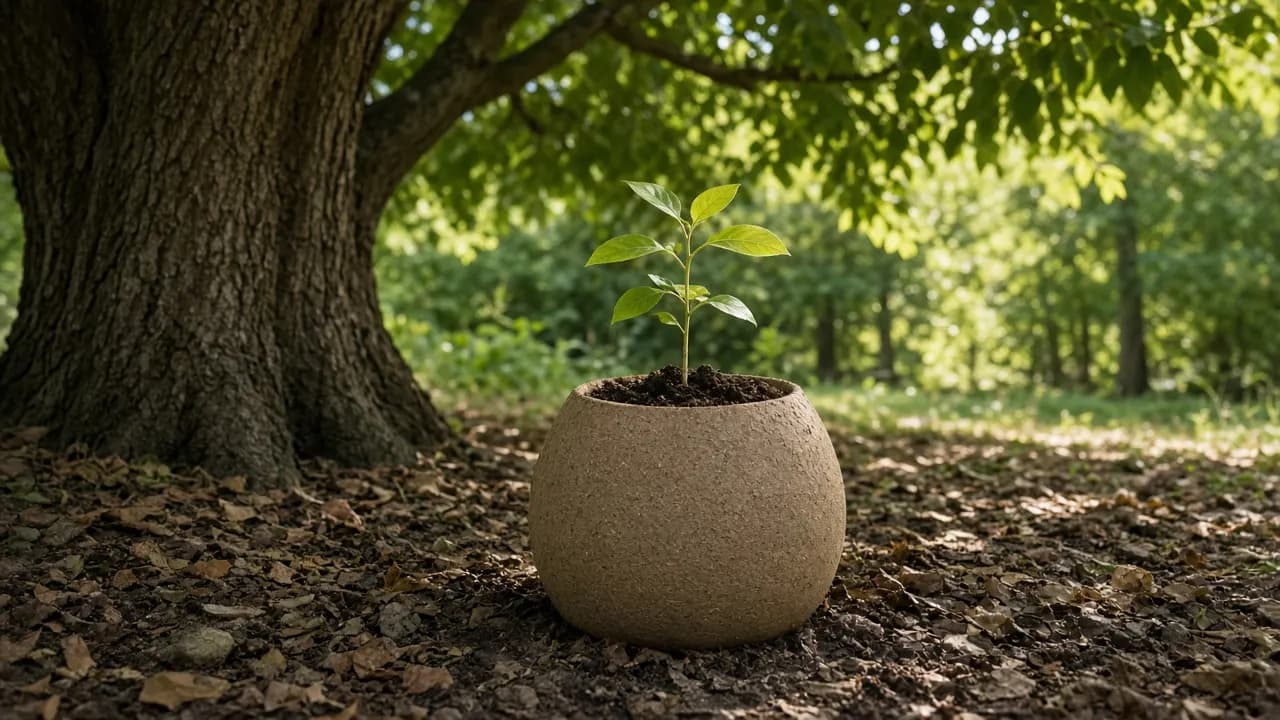
Some families in Melbourne plant something living in memory of a pet. A biodegradable urn placed in the soil under a native shrub or a small palm lets the garden hold the memory. Renters can use a deep planter on the lanai instead. For those who want something lasting outdoors, an engraved stone by the front walk is another choice.
the guides answer the longer questions and the blog the newer ones, the planning tools turn your pet's details into figures, See what each option includes on our services page, or see what other families chose in the poll results. If you live between Melbourne and Port St. Lucie, Jacksonville, Tampa and St. Petersburg, either page applies. Every other community in Florida, and all of the United States, is listed too.

Reader polls
What would you choose?
Vote anonymously and see how other readers answered. The results are live counts from people who visit this site, so they show real opinions, not a scientific sample.
If water cremation (aquamation) were offered near you, would you choose it?
Tap an answer to vote and see how others answered. Anonymous.
What kind of tree or plant would you choose?
Tap an answer to vote and see how others answered. Anonymous.
If you had to decide today, which aftercare would you choose for your pet?
Tap an answer to vote and see how others answered. Anonymous.

Free tools to help you plan
Memorial budget planner
Add up cremation, urn, keepsakes and a farewell so the total holds no surprises.

Memorial tree finder
Pick a tree for a planting urn that suits your climate, space and pet.

Aftercare options compared
Compare private, communal and water cremation with burial on cost, timing and what comes home.
Questions people ask
Which nearby towns can I compare with Melbourne?
The closest communities we cover are Indialantic (about 3 miles), Melbourne Beach (about 3 miles) and Palm Bay (about 4 miles). Providers based in those places often serve Melbourne too. Ask each one for a written total that includes collection, so the distance is priced in.
Will I have to travel to Orlando to arrange things?
Not usually. Providers based in Orlando (roughly 57 miles from Melbourne) collect from here as a matter of routine, and the paperwork is done by email or phone. If you want to be present for a witnessed cremation, that is when the drive matters.
How does Melbourne's weather affect pet aftercare?
July is the hottest month in Melbourne, with average highs around 91°F, so prompt collection matters most then. Winters are mild, with average lows staying above freezing, so outdoor burial or scattering is usually possible year round.
Is cremation common in Florida?
For people, yes: about 72.5%[5] of Florida deaths end in cremation, according to NFDA 2024 Cremation & Burial Report state projections (via Occasional Sage) (2024). Nobody publishes the same figure for pets, but in our experience pet choices in Melbourne follow the human pattern closely, so cremation is the default most families here start from.
Where can I buy a native tree for a pet memorial in Melbourne?
A local nursery or garden center is the best place, because staff know what survives local heat, cold and soil. Some county extension offices and native plant societies run plant sales too. Ask for a two-year-old sapling of a species that tolerates slightly alkaline soil, and ask how much water it needs in its first summer.
What if the soil in Melbourne is already alkaline?
Then ashes push it further, so be generous with compost and composted bark, choose a lime-tolerant tree or shrub, and test the pH before planting. Chalky and limestone soils are common in many regions. Plants that dislike lime, such as azaleas and blueberries, are a poor choice for an ash planting anywhere.


Sources and our estimates
- [1] 53% of US households own a dog, which is about 71 million households. American Pet Products Association (APPA) 2025 State of the Industry, 2025.
- [2] US dogs have an average life expectancy at birth of 12.69 years. Montoya et al. 2023, Frontiers in Veterinary Science - Banfield Pet Hospital life expectancy tables (13.3 million dogs, 2.4 million cats, 2013-2019), 2023.
- [3] 39% of US households own a cat, which is about 53 million households. American Pet Products Association (APPA) 2025 State of the Industry, 2025.
- [4] US cats seen at Banfield hospitals have an average life expectancy at birth of 11.18 years. Montoya et al. 2023, Frontiers in Veterinary Science - Banfield Pet Hospital life expectancy tables (13.3 million dogs, 2.4 million cats, 2013-2019), 2023.
- [5] The NFDA projected Florida's cremation rate at 72.5% for 2024. NFDA 2024 Cremation & Burial Report state projections (via Occasional Sage), 2024.
- [6] About 59 million U.S. pet-owning households may be open to eco-friendly aftercare options. Our estimate: 86.9M pet households x 68% interested in green funeral options. How we calculate.
Ask about aquamation near Melbourne
Tell us what you need and where you are. We'll reply by email with clear options and prices so you can decide in your own time.