Tree, garden and water memorials in Venice
About 930 dogs and cats are lost in Venice each year, by our estimate. If you'd like your pet's ashes to grow into a tree or return to the water, this page covers the soil, the season and the cost.
- Options for renters and apartments
- Water release rules in plain words
- No obligation, we reply by email

Venice, Florida
Your living memorial options around Venice
Water often shapes how Venice families remember a pet. A biodegradable urn released offshore, beyond the distance federal rules require, can be paired with a scattering at sunset from a small boat. Some people keep a tiny portion in a pendant or glass orb afterward. If you're dividing ashes among relatives up North, ask for the total amount before you promise shares.
Gulf salt air and August heat break down some materials fast. For an outdoor memorial in a Venice garden, choose stone or cast bronze, set flat among plantings where a mower won't catch it. Photo prints, wood and resin are happier indoors. A screened lanai counts as outdoors for this purpose: humidity there still does damage over a few summers, and storm shutters don't keep the damp out.
Space is often generous around Venice, so think about where you'll see the memorial every day. A tree framed in the kitchen window, beside the path to the barn or at the end of the drive becomes part of the daily routine. Planting it somewhere far from the house can mean it's only visited on anniversaries, which suits some families and not others.
About 30,477 people live in Venice, which makes it the 93rd-largest of the 235 Florida communities we cover. Some of the providers who serve Venice are based about 47 miles away in St. Petersburg, the nearest larger centre, so collection times reflect that drive.
The closest communities we cover are North Port (14 miles, a larger centre), Sarasota (17 miles) and Punta Gorda (26 miles). Providers serving those towns often travel to Venice too, so it can be worth asking them for a quote.
Our estimate
11,000
Venice: dog- or cat-owning households, our estimate
How we calculated this
30,477 ÷ 2.5 = 12,191 households; × 53% (dog) + 39% (cat) = 11,000. Multi-pet homes count once.
Our estimate
930
dog and cat deaths per year in Venice, our estimate
How we calculated this
11,000 dog/cat-owning homes ÷ average lifespan (dog: 12.69 yrs + cat: 11.18 yrs) ≈ 930 a year. Treat it as a minimum.
53%[1]
53% of US households own a dog, which is about 71 million households.
12.69 years[2]
US dogs have an average life expectancy at birth of 12.69 years.
39%[3]
39% of US households own a cat, which is about 53 million households.
11.18 years[4]
US cats seen at Banfield hospitals have an average life expectancy at birth of 11.18 years.
We built the this numbers from Montoya et al. 2023, Frontiers in Veterinary Science and American Pet Products Association (APPA) 2025 State of the Industry, and both are worth a look if you want the detail.

Cremation habits in Florida, and what they mean for a bio urn
Because cremation is the norm in Florida, at roughly 72.5%[5] of deaths, green ideas about ashes are easy to raise without raised eyebrows. In the US, 68%[6] of people in NFDA's 2024 consumer survey expressed interest in green funeral or natural burial options. If you'd like the lower-impact route for a pet, start with the cremation method, then choose an urn that breaks down and a native plant.
We take the Florida rate from NFDA 2024 Cremation & Burial Report state projections (via Occasional Sage) (2024). It is a human statistic; there is no equivalent pet figure for Venice, and we would rather show a real number than invent one.
Weather, soil and planting windows in Venice
In Venice's heat, containers dry out fast. If you're planting a memorial in a pot on a patio or balcony, choose a large, light-colored container, which heats up less than a small dark one, and place it where it gets afternoon shade in April, May, June, July, August, September and October. Use only a small share of the ashes in the pot, water until it drains freely so salts flush out, and check the soil every day in the hottest weeks.
Summer water can be busy or unsafe in hot places. Around Venice, shorelines are crowded in August, and some lakes close for algae blooms in the heat. For a lake or river goodbye, pick a cooler month or go at first light, check for any water-quality notices, and choose a spot where you can reach the water easily without slipping.
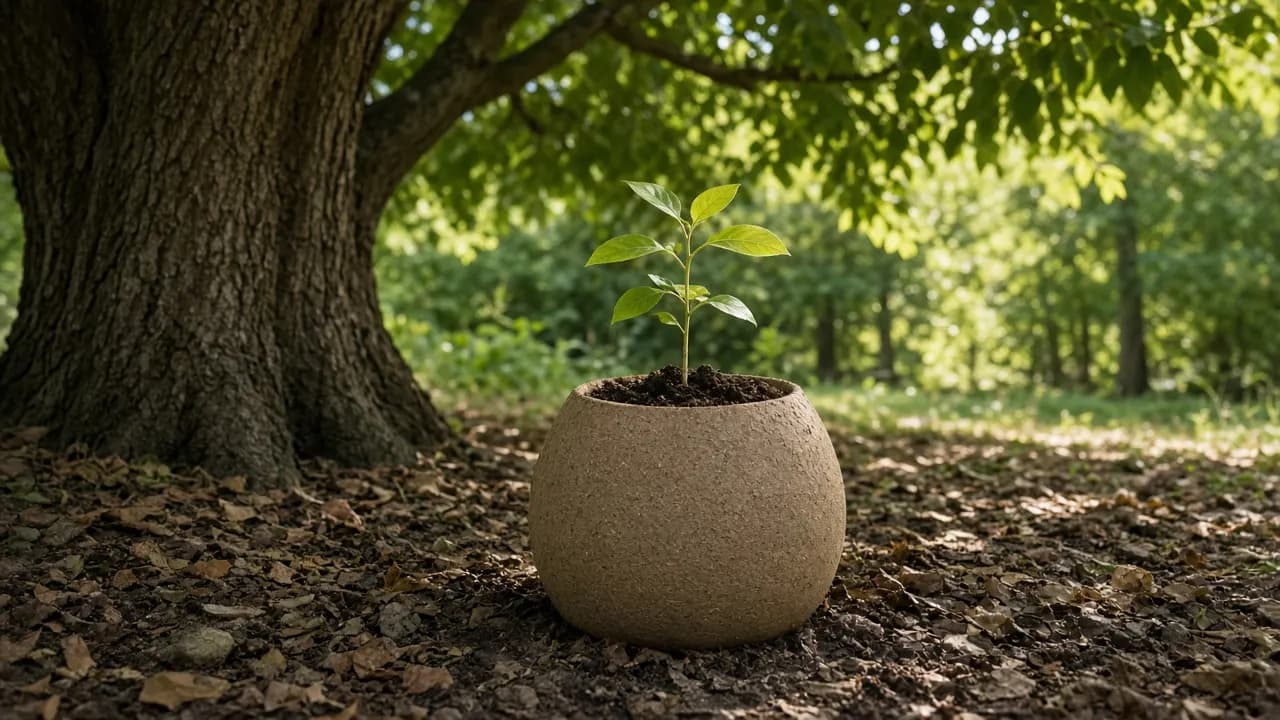
Adding up the cost of a bio urn memorial in Venice
For a medium-size dog, published private aquamation prices at two US providers sit around $200–$259[7], and one Arizona provider's individual aquamation price of $75–$349[8] includes an urn, nameplate and ink paw print. Whether a Venice provider bundles extras like that makes a real difference when you compare. Add the bio urn or tree separately, and use the planner below to see the total.
The Florida price table breaks costs down by product; our services page explains what sits behind each line.

Free tool
Memorial budget planner
Add up cremation, urn, keepsakes and a farewell so the total holds no surprises.
Who to ask before you plant or scatter in Florida
What you plant can matter as much as where. Parks and nature reserves in Florida often forbid planting anything at all, and even on private land some trees and shrubs are listed as invasive in parts of the region. A local nursery or native plant society can steer you toward a species that won't spread into wild land.
To find your county or city office in Florida, start with the official Florida local government directory.
For Florida's rules on burying a pet at home or scattering ashes, see the Florida guide. Local rules in Venice can be stricter than the state's, especially in homeowners' associations and rentals.
What to do first, and what can wait for the right season
- Confirm the ashes will come back. Communal cremation usually means no ashes are returned, and you can't plant what you don't receive.
- Pick the type of bio urn: one that grows a tree, a simple biodegradable urn to bury in a quiet bed, or a floating urn meant for a lake, river or the coast.
- Ask permission from the landowner, landlord or park manager for anywhere that isn't yours.
- Plan for the weather. In Venice, avoid frozen, baked or waterlogged ground; a calm, mild day is best for planting or a release.
- Release gently on water. Rest the urn on the surface, leave it to drift and go under in its own time, and scatter only a few loose petals.
- Come back in a year. Replace mulch, check the tree's growth and take a photo to mark the anniversary.
Ways to mark the spot and the date
Many Venice households are retirees who relocated from the North, and memorials often need to travel: a compact urn, a keepsake box or jewelry that can move with them or pass to grown children. If you're uncertain, bring the remains home in whatever simple box the provider uses and choose later. No deadline applies to the final memorial, and snowbirds often find the right piece only after spending a season back up North.
the planning tools turn your pet's details into figures, The services page is the place to compare what is included, or look at how readers voted in our polls, go deeper with the guides or catch up on recent articles. Close to Venice we also cover Tampa, Port St. Lucie, Miami and Jacksonville; the full list for Florida and for the United States is a click away.

Reader polls
What would you choose?
Vote anonymously and see how other readers answered. The results are live counts from people who visit this site, so they show real opinions, not a scientific sample.
If water cremation (aquamation) were offered near you, would you choose it?
Tap an answer to vote and see how others answered. Anonymous.
Would you consider releasing your pet's ashes in water?
Tap an answer to vote and see how others answered. Anonymous.
If you had to decide today, which aftercare would you choose for your pet?
Tap an answer to vote and see how others answered. Anonymous.

Free tools to help you plan
Memorial budget planner
Add up cremation, urn, keepsakes and a farewell so the total holds no surprises.

Memorial tree finder
Pick a tree for a planting urn that suits your climate, space and pet.

Aftercare options compared
Compare private, communal and water cremation with burial on cost, timing and what comes home.
Questions people ask
Which nearby towns can I compare with Venice?
The closest communities we cover are North Port (about 14 miles), Sarasota (about 17 miles) and Punta Gorda (about 26 miles). Providers based in those places often serve Venice too. Ask each one for a written total that includes collection, so the distance is priced in.
Where are the providers that serve Venice actually based?
Some are local, and some run from St. Petersburg, about 47 miles away. That is normal for a town this size. What matters is the collection time they quote for Venice and whether the drive is priced into the total, so ask both up front.
Is cremation common in Florida?
For people, yes: about 72.5%[5] of Florida deaths end in cremation, according to NFDA 2024 Cremation & Burial Report state projections (via Occasional Sage) (2024). Nobody publishes the same figure for pets, but in our experience pet choices in Venice follow the human pattern closely, so cremation is the default most families here start from.
How does Venice's weather affect pet aftercare?
August is the hottest month in Venice, with average highs around 93°F, so prompt collection matters most then. Winters are mild, with average lows staying above freezing, so outdoor burial or scattering is usually possible year round.
Can I plant a tree directly on my pet's ashes in Venice?
It's better not to. Cremated remains have a very high pH, around 11.7[10], and they're high in sodium, so a solid layer of ash under the roots can yellow or kill a young tree. Mix the ashes through plenty of compost and soil across a wider area, test the pH, and plant once it has come down. There's no single mixing ratio that suits every pet and every soil.
How do I prepare pet ashes for planting?
Spread the ashes through a large volume of compost and soil rather than pouring them into the hole in one layer. Many gardeners add acidic material such as composted pine bark or leaf mould. One gardening guide suggests letting the mix rest for 90–120 days[11] before planting. A garden-center pH kit tells you when the mix is ready.


Sources and our estimates
- [1] 53% of US households own a dog, which is about 71 million households. American Pet Products Association (APPA) 2025 State of the Industry, 2025.
- [2] US dogs have an average life expectancy at birth of 12.69 years. Montoya et al. 2023, Frontiers in Veterinary Science - Banfield Pet Hospital life expectancy tables (13.3 million dogs, 2.4 million cats, 2013-2019), 2023.
- [3] 39% of US households own a cat, which is about 53 million households. American Pet Products Association (APPA) 2025 State of the Industry, 2025.
- [4] US cats seen at Banfield hospitals have an average life expectancy at birth of 11.18 years. Montoya et al. 2023, Frontiers in Veterinary Science - Banfield Pet Hospital life expectancy tables (13.3 million dogs, 2.4 million cats, 2013-2019), 2023.
- [5] The NFDA projected Florida's cremation rate at 72.5% for 2024. NFDA 2024 Cremation & Burial Report state projections (via Occasional Sage), 2024.
- [6] 68% of respondents to NFDA's 2024 Consumer Awareness and Preferences Survey expressed interest in green funeral or natural burial options. NFDA — Green Burial Resources for Funeral Professionals, 2024.
- [7] Private aquamation for a 21–50 lb dog costs about $200–$259 at two posted US price lists. Our estimate: Delaware 10–49 lb $200; A Greener Place 21–50 lb $259. How we calculate.
- [8] A Greener Place in Mesa, Arizona, charges $75–$349 for individual pet aquamation by weight, including an urn, nameplate and ink paw print. A Greener Place Pet Aquamation – Pricing, 2026.
- [9] U.S. pet flame cremations emit on the order of 47,000 t CO2e a year. Our estimate: 1.5M pet cremations x 31.3 kg CO2e. How we calculate.
- [10] Cremated remains have a very high pH of approximately 11.7, which is toxic to plants without amendment. Larkspur Conservation — Giving Cremated Remains a New Life Through Science, 2024.
- [11] Gardening Know How advises letting an ash/soil-amendment mixture sit for at least 90 to 120 days before planting. Gardening Know How — Planting With Cremains: Is There a Safe Way to Bury Ashes, 2024.
Plan a living memorial in Venice
Tell us what you need and where you are. We'll reply by email with clear options and prices so you can decide in your own time.