Tree, garden and water memorials in Indianapolis
Roughly 27,000 Indianapolis families say goodbye to a dog or cat each year, by our count. A living memorial is one way to mark it. This guide explains how to make one that actually grows.
- A memorial that moves with you
- Why pure ashes harm young roots
- Written prices you can compare
Indianapolis, Indiana
Living memorials in Indianapolis: the local picture
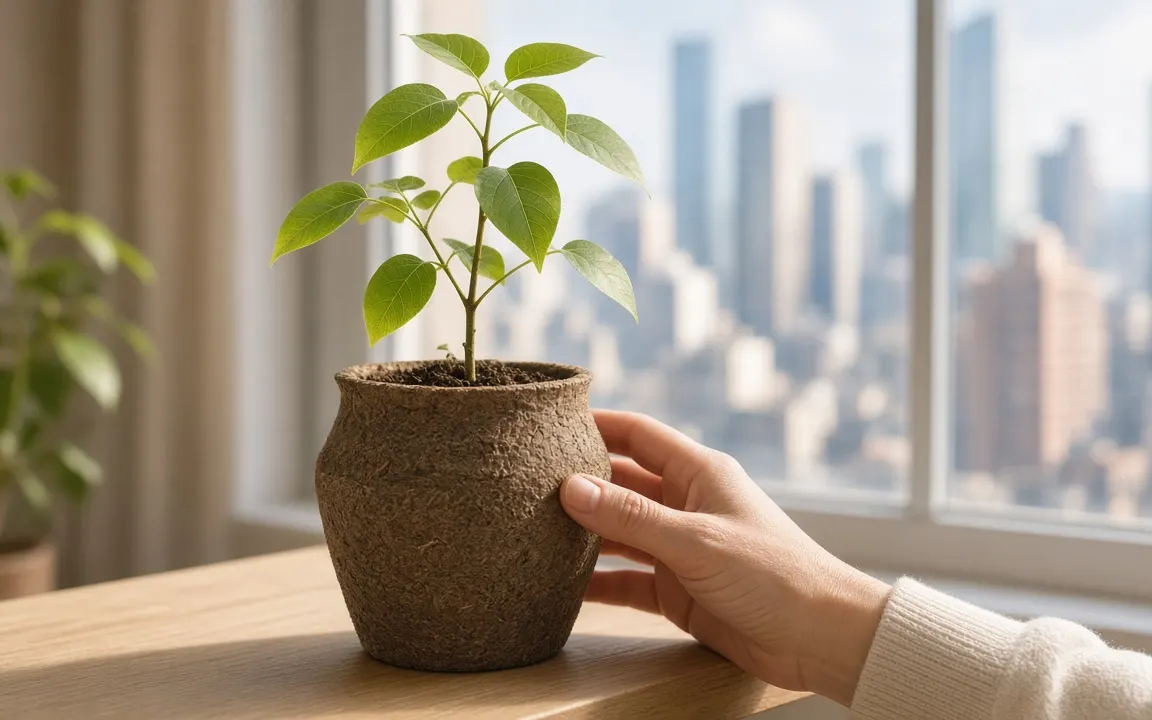
Central Indiana's seasons shape memorials: many families wait for spring to plant a tree or set a stone, and some choose a native species such as a redbud or a tulip tree, Indiana's state tree. A bio urn planted in autumn has time to settle before the summer heat. If you are not sure you will stay in the house, hold back a small portion of ashes in a pendant or keepsake before planting.
If you are thinking of scattering ashes, many Indianapolis owners think of the White River, the reservoir at Eagle Creek or a family farm out in the county. Public parks and reservoirs are shared spaces with their own rules, so check first and choose a quiet weekday morning. Scattering cannot be undone, so setting aside a spoonful in a pendant, keepsake box or small urn beforehand is a comfort many families are glad of later.
Plenty of people in Indianapolis don't drive, and a living memorial can still work. Many nurseries deliver saplings and bags of compost, bio urns arrive by post, and a small pot on a windowsill needs no transport at all. For a water release, a light water-soluble urn fits in a tote bag on a train or bus. Pick a quieter time of day and a stop near the shore.
With roughly 887,000 residents, Indianapolis is the largest of the 50 Indiana communities we cover.
Nearby, we also have local pages for Lawrence (11 miles), Greenwood (12 miles) and Avon (13 miles), which can help if your vet or the provider you prefer is based there.
Our estimate
325,000
Estimated dog- or cat-owning households in Indianapolis
How we calculated this
887,000 ÷ 2.5 = 354,800 households; × 53% (dog) + 39% (cat) = 325,000. A household with several pets counts once.
Our estimate
27,000
Indianapolis families who lose a dog or cat each year (estimate)
How we calculated this
325,000 dog/cat-owning homes ÷ average lifespan (dog: 12.69 yrs + cat: 11.18 yrs) ≈ 27,000 a year. A floor, not a ceiling.
53%[1]
53% of US households own a dog, which is about 71 million households.
12.69 years[2]
US dogs have an average life expectancy at birth of 12.69 years.
39%[3]
39% of US households own a cat, which is about 53 million households.
11.18 years[4]
US cats seen at Banfield hospitals have an average life expectancy at birth of 11.18 years.
The published sources behind those figures are American Pet Products Association (APPA) 2025 State of the Industry and Montoya et al. 2023, Frontiers in Veterinary Science.
Why cremation culture in Indiana shapes your options
The human cremation rate in Indiana sits around 56.5%[5], so many families have a foot in both camps, and generations can disagree. Grandparents may expect a grave in the yard; younger relatives may want ashes they can take with them. Talking it through before the vet asks you to choose saves a hard conversation on a hard day. A tree over buried ashes often satisfies both sides.
The Indiana percentage above is from NFDA 2024 Cremation & Burial Report state projections (via Occasional Sage) (2024) and refers to human funerals. Treat it as context for Indianapolis, not as a count of pets.
Indianapolis seasons and your memorial tree
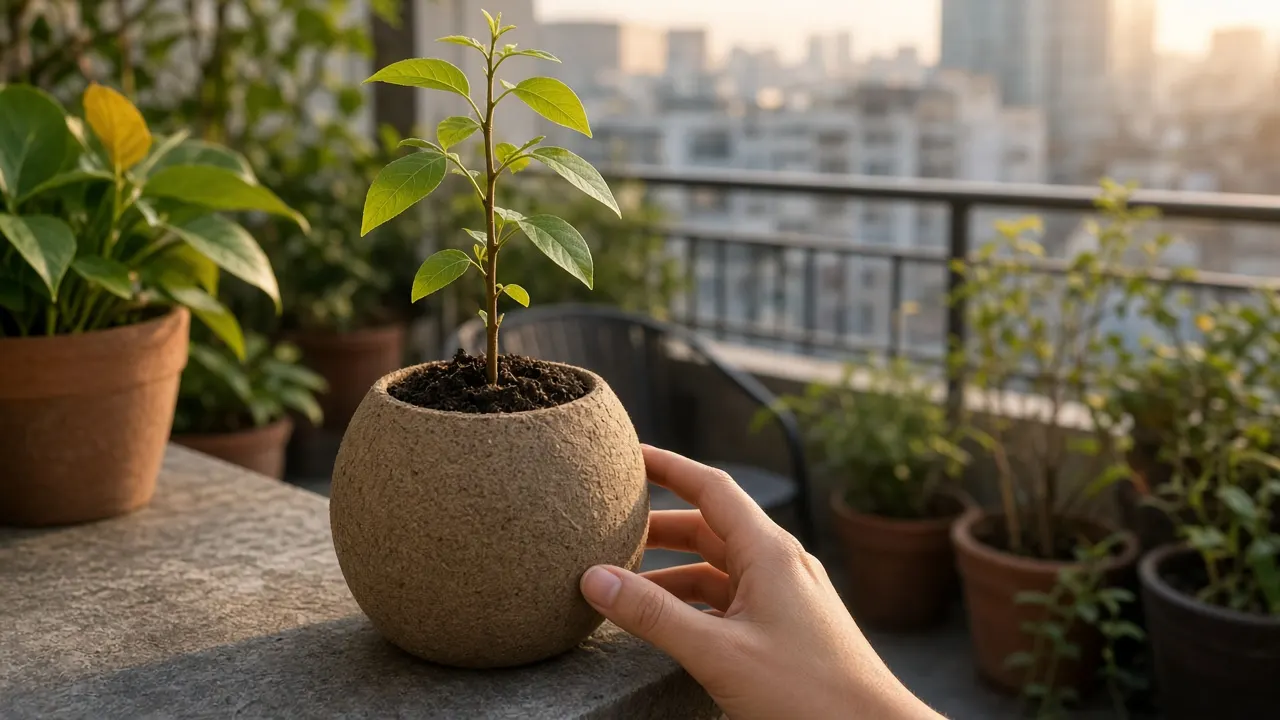
In Indianapolis, average lows fall below freezing in January, February and December, and frozen ground makes digging hard or impossible. That's no reason to rush. Ashes keep safely indoors for as long as you like, so many families wait for spring, once the soil has thawed and drained. Early autumn works too, as long as the tree has about six weeks of open ground to root in before the hard frosts.
In places like Indianapolis, driveways and sidewalks are often salted in January, February and December. Ashes already add sodium to the soil, and road salt splashed onto the same bed doubles the load. Keep a memorial planting well back from salted paths and the edge of the road, and away from where snow gets piled. A spot uphill from the drive is better than one downhill of it.

Price ranges for planting and water urns
Water cremation prices overlap with flame cremation. One Delaware provider charges $150–$450[6] for private aquamation by weight, including a standard urn, and $50–$225[7] for communal. That makes private about 2.5 times the shared price[8]. Prices in Indianapolis depend on who offers it locally, so ask for a written quote that says whether the ashes come back and in what container.
Prices for Indianapolis track the wider Indiana market, so use the Indiana price table as your baseline and the services page to see what is included.

Free tool
Memorial budget planner
Add up cremation, urn, keepsakes and a farewell so the total holds no surprises.
What Indiana allows for ashes, in general terms
Two questions cover most situations in Indiana: who owns or manages this land or water, and have they said yes? For your own garden, the answer is you. For a rented home, it's your landlord, in writing. For parks and public water, it's the relevant agency. For a relative's garden, it's them, and it's worth agreeing that the tree stays even if the house is sold.
To find your county or city office in Indiana, start with the official Indiana local government directory.
For Indiana's rules on burying a pet at home or scattering ashes, see the Indiana guide. Local rules in Indianapolis can be stricter than the state's, especially in homeowners' associations and rentals.
Planting a memorial in Indianapolis, step by step
- If euthanasia is planned, ask the vet a few days ahead which crematory they use and whether water cremation is one of the choices.
- Book the aftercare before the appointment, so on the day itself you only have to be with your pet.
- Ask for a paw print or nose print before cremation if you'd like one. It can't be made afterwards.
- Choose the plant in advance when that feels easier. Knowing the exact spot their pet is headed for brings some families real comfort.
- Skip the display urn. A simple box or tube from the crematory is all a planting needs, and the saving can go toward the tree or shrub.
- Prepare the soil blend while you wait for the ashes, so the planting can follow within a season rather than drifting on for years.
Remembering your pet in Indianapolis
Indianapolis households pick all sorts of memorials: an urn in walnut or ceramic for a shelf, a pendant holding a trace of ashes, a limestone marker for the garden, or a framed paw or nose print. Southern Indiana limestone is a local material with a long history in building, and a small carved stone suits the region. Whatever you choose, ask for prints or fur clippings at the first call, before your pet leaves home.
run the numbers with the free planning tools, look through our guides and the blog, or see what other families chose in the poll results, For a plain comparison of the choices, open services. You can also browse every city in the United States. Nearby, we also cover South Bend, Bloomington, Evansville and Carmel, and every city in Indiana.

Reader polls
What would you choose?
Vote anonymously and see how other readers answered. The results are live counts from people who visit this site, so they show real opinions, not a scientific sample.
If you rent or might move, how would you handle a memorial planting?
Tap an answer to vote and see how others answered. Anonymous.
Would you consider releasing your pet's ashes in water?
Tap an answer to vote and see how others answered. Anonymous.
If you had to decide today, which aftercare would you choose for your pet?
Tap an answer to vote and see how others answered. Anonymous.

Free tools to help you plan
Memorial budget planner
Add up cremation, urn, keepsakes and a farewell so the total holds no surprises.

Memorial tree finder
Pick a tree for a planting urn that suits your climate, space and pet.

Aftercare options compared
Compare private, communal and water cremation with burial on cost, timing and what comes home.
Questions people ask
Can a provider from a neighbouring town collect from Indianapolis?
Usually yes. Lawrence is about 11 miles away, Greenwood is about 12 miles away and Avon is about 13 miles away, all inside a normal collection radius. Get the mileage written into the quote so there is no surprise on the day.
Is Indianapolis big enough to have several pet aftercare providers?
Probably, on the numbers. By our estimate about 325,000 Indianapolis households keep a dog or cat and around 27,000 lose one each year, which is enough steady demand to support more than one provider. We derive that from population (about 887,000), household size and national ownership and lifespan figures.
How does Indianapolis's weather affect pet aftercare?
July is the hottest month in Indianapolis, with average highs around 85°F, so prompt collection matters most then. Average lows drop below freezing in January, February and December, which can make digging a grave hard until spring.
Why does the Indianapolis page quote a human cremation rate?
Because it is the best local signal we have. NFDA 2024 Cremation & Burial Report state projections (via Occasional Sage) (2024) reports about 56.5%[5] of Indiana residents are cremated. There is no official pet equivalent, and inventing one would be worse than quoting a real, clearly labelled number.
What if my pet dies when it's too hot or cold to plant?
Wait. Ashes don't need to go into the ground quickly, and a tree planted in the wrong season is more likely to fail. Keep them in the container from the crematory, use the time to choose a species and prepare the soil mix, and plant when the weather in Indianapolis is kind to young roots.
How many dogs and cats are there in Indianapolis?
By our estimate, about 325,000 households in Indianapolis have a dog or a cat, and around 27,000 of those pets die each year. We calculate this from the city's population, average household size and national pet ownership and lifespan figures. The method is shown on this page, and the real number of animals is higher.


Sources and our estimates
- [1] 53% of US households own a dog, which is about 71 million households. American Pet Products Association (APPA) 2025 State of the Industry, 2025.
- [2] US dogs have an average life expectancy at birth of 12.69 years. Montoya et al. 2023, Frontiers in Veterinary Science - Banfield Pet Hospital life expectancy tables (13.3 million dogs, 2.4 million cats, 2013-2019), 2023.
- [3] 39% of US households own a cat, which is about 53 million households. American Pet Products Association (APPA) 2025 State of the Industry, 2025.
- [4] US cats seen at Banfield hospitals have an average life expectancy at birth of 11.18 years. Montoya et al. 2023, Frontiers in Veterinary Science - Banfield Pet Hospital life expectancy tables (13.3 million dogs, 2.4 million cats, 2013-2019), 2023.
- [5] The NFDA projected Indiana's cremation rate at 56.5% for 2024. NFDA 2024 Cremation & Burial Report state projections (via Occasional Sage), 2024.
- [6] Delaware Pet Aquamation charges $150–$450 for private aquamation by weight, from under 10 lb to 150 lb and over, including a standard urn. Delaware Pet Aquamation – Pricing, 2026.
- [7] Communal aquamation at the same Delaware provider costs $50–$225 by weight. Delaware Pet Aquamation – Pricing, 2026.
- [8] Private pet aquamation costs about 2.5 times communal aquamation at the same provider. Our estimate: mean of tier ratios 150/50, 200/75, 250/100, 350/150, 450/225. How we calculate.
- [9] U.S. pet flame cremations emit on the order of 47,000 t CO2e a year. Our estimate: 1.5M pet cremations x 31.3 kg CO2e. How we calculate.
Tell us about your pet and your garden
Tell us what you need and where you are. We'll reply by email with clear options and prices so you can decide in your own time.