Bio urns and eco memorials in Junction City
Roughly 690 Junction City families say goodbye to a dog or cat each year, by our count. A living memorial is one way to mark it. This guide explains how to make one that actually grows.
- When to plant in your season
- How much ash your urn must hold
- Aquamation providers in your area

Junction City, Kansas
What an eco memorial looks like in Junction City
For families who move with the Army, a memorial that travels safely is often the most practical: a sturdy urn with a secure lid, a framed paw print packed with the photos, or a pendant worn every day under a uniform collar or on a chain. Older homes near downtown have more room for a garden marker, but renters generally skip anything permanent in the yard.
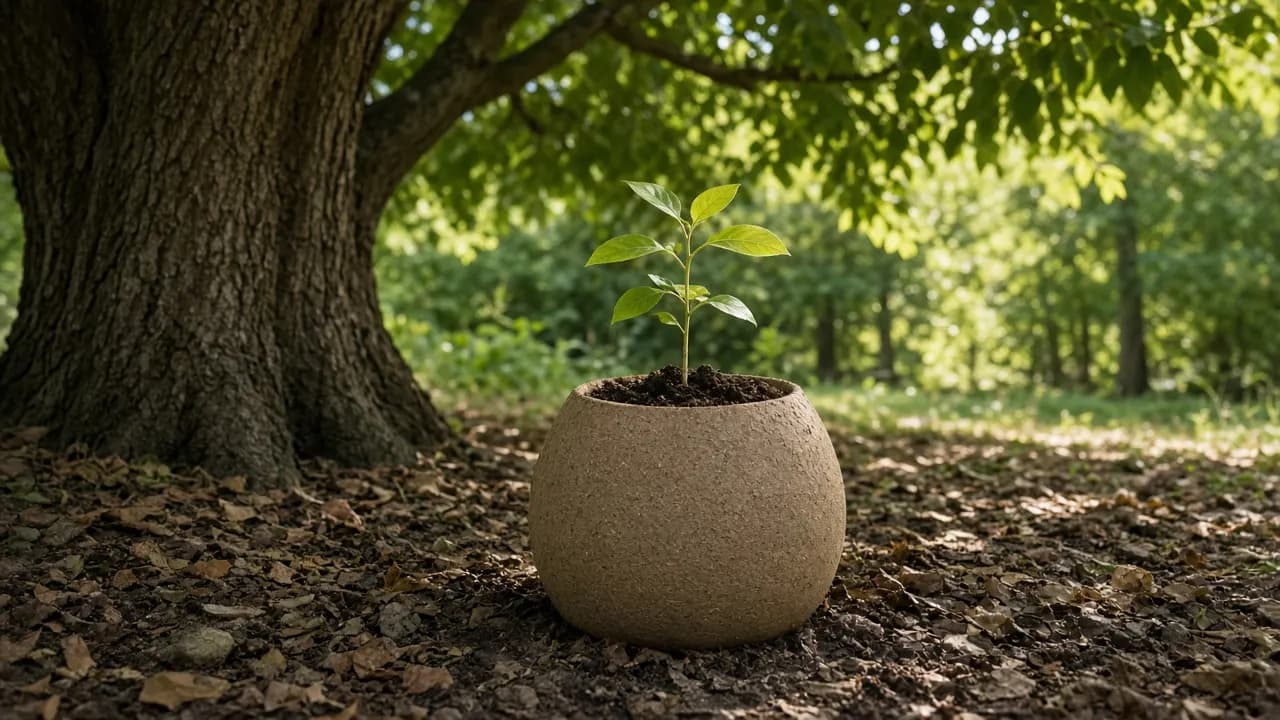
Junction City's weather is hard on outdoor pieces, from hail and ice to summer heat and prairie wind. Granite and bronze last; lightweight resin or painted items weather fast. If you plant a tree or shrub as a memorial, choose a hardy native, put it in the ground in spring, and water it deeply through the first hot summer, ideally at dawn.
Small towns tend to have long memories, and a memorial tree in Junction City is often planted with a lot of history around it: the same yard for decades, a family farm, a favorite fishing spot. If the land is likely to stay in the family, a long-lived native tree is a lovely choice. If it might be sold, consider a shrub bed, a portion of ashes kept back, or a water release that doesn't depend on who owns the ground in twenty years.
With roughly 22,583 residents, Junction City is the 19th-largest of the 23 Kansas communities we cover.
The closest communities we cover are Salina (44 miles, a larger centre), Emporia (56 miles) and Topeka (63 miles, a larger centre). Providers serving those towns often travel to Junction City too, so it can be worth asking them for a quote.
Our estimate
8,300
Junction City: dog- or cat-owning households, our estimate
How we calculated this
22,583 ÷ 2.5 = 9,033 households; × 53% (dog) + 39% (cat) = 8,300. A household with several pets counts once.
Our estimate
690
Estimated dog and cat losses in Junction City each year
How we calculated this
8,300 dog/cat-owning homes ÷ average lifespan (dog: 12.69 yrs + cat: 11.18 yrs) ≈ 690 a year. A floor, not a ceiling.
53%[1]
53% of US households own a dog, which is about 71 million households.
12.69 years[2]
US dogs have an average life expectancy at birth of 12.69 years.
39%[3]
39% of US households own a cat, which is about 53 million households.
11.18 years[4]
US cats seen at Banfield hospitals have an average life expectancy at birth of 11.18 years.
The numbers above come from Montoya et al. 2023, Frontiers in Veterinary Science and American Pet Products Association (APPA) 2025 State of the Industry, if you'd like to read the original sources.

How Kansas feels about cremation
Faith shapes these choices in Kansas, where cremation covers about 64.6%[5] of deaths and burial much of the rest. Some traditions that prefer burial for people have no view on pets; others do. If this matters to anyone in your household, ask a faith leader you trust. A planting urn puts the ashes back into the ground, which many people find sits comfortably with a burial tradition.
The Kansas percentage above is from NFDA 2024 Cremation & Burial Report state projections (via Occasional Sage) (2024) and refers to human funerals. Treat it as context for Junction City, not as a count of pets.
What Junction City's climate means for a living memorial
Junction City gets both extremes: highs near 94°F in July and freezing lows in January, February and December. That leaves two planting windows, spring after the ground thaws and early autumn once the heat breaks. Either works. Autumn planting gives roots time to settle before summer, as long as the tree has several weeks of open ground before the first hard frost.
Soil in Junction City cracks in the summer heat and heaves in the winter freeze, and a young planting feels both. A thick ring of wood-chip mulch evens things out, shading the soil through June, July and August and insulating it through January, February and December. Top it up each spring, keep it a hand's width away from the trunk, and check the tree has not lifted after the thaw.
What a greener goodbye costs in Junction City
Add up every part before you commit. Beyond the cremation, a living memorial in Junction City can include the bio urn, compost and bark, a pH kit, the tree or shrub, a guard against deer or rabbits, and perhaps a marker. Our memorial budget planner lists each line so nothing surprises you. Most families find the tree is the cheapest part and the cremation the most expensive.
The full price table by product is on our Kansas page, and the services page explains what each option includes.

Free tool
Memorial budget planner
Add up cremation, urn, keepsakes and a farewell so the total holds no surprises.
Rules worth knowing in Kansas before you scatter
Two questions cover most situations in Kansas: who owns or manages this land or water, and have they said yes? For your own garden, the answer is you. For a rented home, it's your landlord, in writing. For parks and public water, it's the relevant agency. For a relative's garden, it's them, and it's worth agreeing that the tree stays even if the house is sold.
Not sure which office covers Junction City? The Kansas local government directory is the official list.
Home burial and scattering are governed at the Kansas level first; our Kansas rules summary has the detail. Then check whether Junction City or your HOA adds anything.
Planting a memorial in Junction City, step by step
- If the ashes have been on a shelf for years, you can still plant them. Cremated remains don't spoil, so there's no deadline.
- Open the container carefully somewhere sheltered from wind, and check whether the ashes are in a sealed bag inside.
- Weigh or measure what you have, then use our urn size calculator to see which planting urn or water urn fits.
- Decide whether to keep any back. Having lived with the ashes so long, plenty of families choose to plant the bulk and hold on to a small amount.
- Pick a date that carries meaning, such as the anniversary or your pet's birthday, and invite anyone who knew them.
- Treat the old urn kindly afterwards. A ceramic or wooden urn often finds a second life holding a houseplant or small mementos.
Remembering your pet in Junction City
Some military families display a small flag, a unit coin or a patch beside the urn, marking an animal that shared their years of service. Others choose an engraved keepsake box with the pet's name and the places it lived. Double-check the spelling of names and places on any proof, and confirm the price before you order, especially if the piece must be ready before a move.
run the numbers with the free planning tools, or compare your instinct with the poll results, go deeper with the guides or catch up on recent articles, Our services overview lays out every option side by side. If you live between Junction City and Topeka, Overland Park, Lawrence and Wichita, either page applies. Every other community in Kansas, and all of the United States, is listed too.

Reader polls
What would you choose?
Vote anonymously and see how other readers answered. The results are live counts from people who visit this site, so they show real opinions, not a scientific sample.
What kind of tree or plant would you choose?
Tap an answer to vote and see how others answered. Anonymous.
If water cremation (aquamation) were offered near you, would you choose it?
Tap an answer to vote and see how others answered. Anonymous.
If you had to decide today, which aftercare would you choose for your pet?
Tap an answer to vote and see how others answered. Anonymous.

Free tools to help you plan
Memorial budget planner
Add up cremation, urn, keepsakes and a farewell so the total holds no surprises.

Memorial tree finder
Pick a tree for a planting urn that suits your climate, space and pet.

Aftercare options compared
Compare private, communal and water cremation with burial on cost, timing and what comes home.
Questions people ask
Is cremation common in Kansas?
For people, yes: about 64.6%[5] of Kansas deaths end in cremation, according to NFDA 2024 Cremation & Burial Report state projections (via Occasional Sage) (2024). Nobody publishes the same figure for pets, but in our experience pet choices in Junction City follow the human pattern closely, so cremation is the default most families here start from.
How many pet owners live in Junction City?
By our estimate, about 8,300 households in Junction City have at least one dog or cat, and around 690 are lost each year. We calculate this from the city's population of about 22,583, the average household size and national ownership and lifespan figures, so treat it as a floor rather than an exact count.
Which nearby towns can I compare with Junction City?
The closest communities we cover are Salina (about 44 miles), Emporia (about 56 miles) and Topeka (about 63 miles). Providers based in those places often serve Junction City too. Ask each one for a written total that includes collection, so the distance is priced in.
How does Junction City's weather affect pet aftercare?
July is the hottest month in Junction City, with average highs around 94°F, so prompt collection matters most then. Average lows drop below freezing in January, February and December, which can make digging a grave hard until spring.
What if the soil in Junction City is already alkaline?
Then ashes push it further, so be generous with compost and composted bark, choose a lime-tolerant tree or shrub, and test the pH before planting. Chalky and limestone soils are common in many regions. Plants that dislike lime, such as azaleas and blueberries, are a poor choice for an ash planting anywhere.
Which memorial plants are dangerous to cats and dogs?
Lilies are highly toxic to cats, even the pollen. Sago palm, oleander, yew, azalea and foxglove can poison dogs, and several of them harm cats and horses too. If you have pets at home in Junction City, ask a vet or nursery to confirm a plant is safe before you buy it. Grasses, many herbs and most fruit trees are safer choices, though large amounts of fallen fruit can still upset a dog's stomach.


Sources and our estimates
- [1] 53% of US households own a dog, which is about 71 million households. American Pet Products Association (APPA) 2025 State of the Industry, 2025.
- [2] US dogs have an average life expectancy at birth of 12.69 years. Montoya et al. 2023, Frontiers in Veterinary Science - Banfield Pet Hospital life expectancy tables (13.3 million dogs, 2.4 million cats, 2013-2019), 2023.
- [3] 39% of US households own a cat, which is about 53 million households. American Pet Products Association (APPA) 2025 State of the Industry, 2025.
- [4] US cats seen at Banfield hospitals have an average life expectancy at birth of 11.18 years. Montoya et al. 2023, Frontiers in Veterinary Science - Banfield Pet Hospital life expectancy tables (13.3 million dogs, 2.4 million cats, 2013-2019), 2023.
- [5] The NFDA projected Kansas's cremation rate at 64.6% for 2024. NFDA 2024 Cremation & Burial Report state projections (via Occasional Sage), 2024.
- [6] Each shelter-animal flame cremation emits about 31 kg CO2e on average. Our estimate: 19,000 t CO2e / 607,000 animals. How we calculate.
Get eco memorial ideas by email
Tell us what you need and where you are. We'll reply by email with clear options and prices so you can decide in your own time.