Will the planting urn hold all of your pet's ashes?
Plant and water urns list their capacity in cubic inches, and pets return roughly 3-5% of body weight[1] as ash. This calculator turns your pet's weight into the number to check.
- Volume in cubic inches and millilitres
- Small, medium, large or extra-large
- Splits for keepsakes and family
Urn size calculator
Enter your pet's healthy adult weight. We size the urn using the industry rule of 1 cubic inch per pound, plus 10% room to spare.
Recommended urn size
55 cu in (901 mL)
Look for: Medium (up to 60 cu in)
| Total ashes (by volume) | 50 cu in (819 mL) |
|---|---|
| Expected ash weight | 1.5 lb–2.5 lb |
| Urn with 10% margin | 55 cu in (901 mL) |
Standard sizes: small up to 20, medium up to 60, large up to 120 and extra large 200+ cubic inches. If you're between sizes, choose the larger one.
Source: Embrace Pet Insurance - Bury or Cremate Your Dog? Costs, Pros & Cons; Our estimate. 1 cu in per lb is an industry rule of thumb
Next step: Find urns and prices near you →
Using the calculator
How to use the calculator in under a minute
- Enter your pet's healthy adult weight in pounds or kilograms. If your pet lost weight during a long illness, use the weight they were before, since bone mass changes far less than body fat.
- Choose how many households are sharing. If a partner, a grown-up child or a friend would like a portion, set the number here.
- Tick keepsakes if you want them. Each keepsake urn is sized at about 3 cubic inches, which is taken out of the total before the main urn is sized.
- Read the result. You'll see the total ash volume, the expected ash weight, each person's share and a recommended urn size with 10% spare room.
Then compare that figure with the capacity printed on any tree, garden or water urn you're considering. If a maker doesn't list capacity, ask before you order. Our bio urn buying checklist has the other questions worth asking at the same time.
The maths
How the calculator works out urn size
The urn industry uses a simple rule of thumb: one cubic inch of urn space for every pound of body weight. It's not exact, but it holds up well across most cats and dogs because bone makes up a fairly steady share of body mass. On that rule, a typical cat and a large dog need 12 cu in (cat); 70 cu in (dog)[2].
We add a 10% margin, because ashes settle unevenly and a slightly roomy urn is easier to fill than a tight one. Then the result is matched to the size bands you'll see on product pages: small up to 20 cubic inches, medium up to 60, large up to 120, and extra large from about 200.
The ash weight shown is 3 to 5% of body weight. For a median giant-breed dog, that works out to about 3.8 lb[3] in our estimate, which is why the very largest dogs sometimes need two planting urns or a wider soil bed.
3-5% of body weight[1]
Embrace notes cremated remains typically weigh about 3-5% of the pet's original body weight.
6.7 oz[4]
A 12 lb cat would be expected to return about 6.7 oz (0.42 lb) of cremated remains.
0.9-1.5 kg[5]
A 30 kg (66 lb) dog typically leaves about 0.9-1.5 kg of cremated remains, which helps size urns on location pages.
Worked example
A 70 lb Labrador, a tree urn and a keepsake for a sister
Take a 70 lb Labrador whose family want to plant a memorial tree in the backyard, and whose owner's sister would like a small keepsake. Enter 70 lb, two people, keepsakes ticked.
- Total ash volume: about 70 cubic inches, or roughly 1,150 mL.
- Expected ash weight: about 2.1 to 3.5 lb.
- Two keepsakes at 3 cubic inches each: about 6 cubic inches set aside.
- Remaining after keepsakes: about 64 cubic inches, which the calculator splits into two shares of 32.
- Recommended urn for each person: about 35 cubic inches (577 mL) with the 10% margin, which it labels medium.
If the family want all the rest under the tree rather than split, set sharing back to one person and leave keepsakes ticked. The calculator then sets aside a single 3 cubic inch keepsake for the sister and recommends about 74 cubic inches (1,208 mL) for the main urn, a large. So they need a planting urn rated for large pets, or a medium urn plus a plan to mix the remainder into the surrounding soil bed.
Why volume matters for soil
What your number means for the soil around the tree
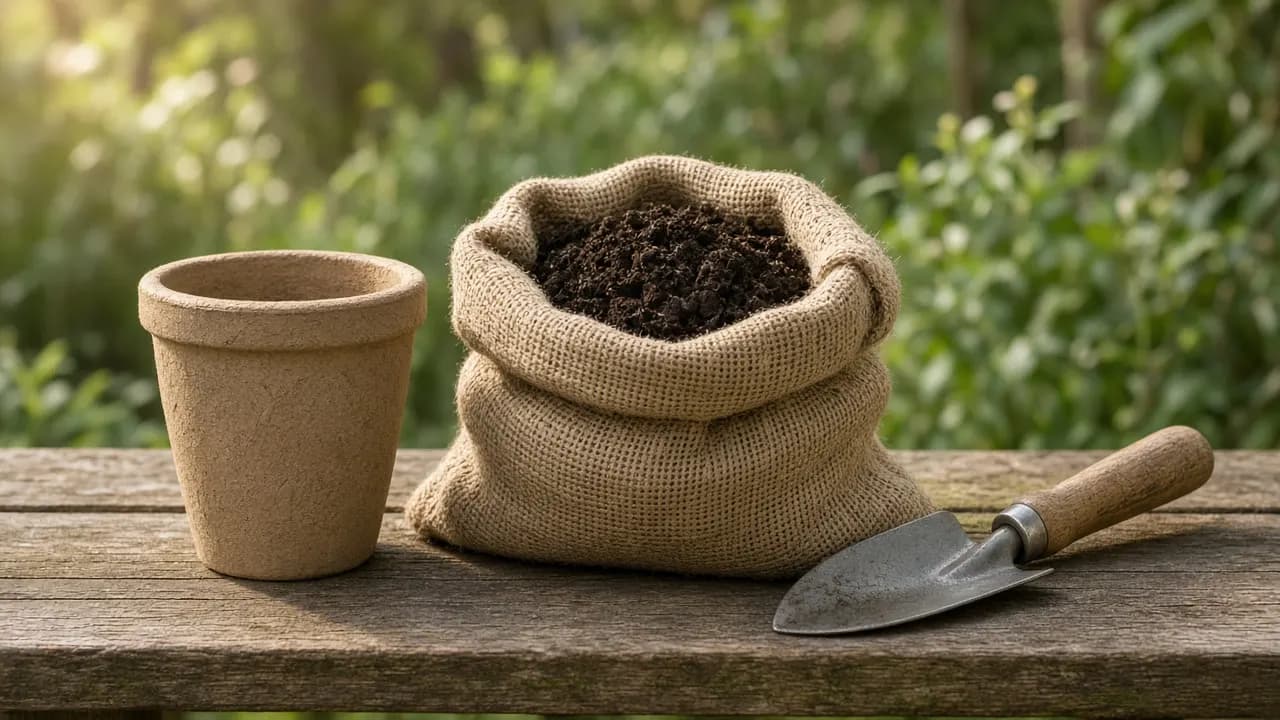
Volume isn't only about whether the ashes fit. It also tells you how much soil and compost you need to dilute them. Ash from cremation tests at a pH of about 11.7[6], and the more ash you have, the more material you need around it to bring the root zone back to a range young trees can tolerate. Colorado State University Extension points out that alkaline soil is hard to bring back down once it's there, so dilution at planting time is the practical fix.
For a pot, do the arithmetic. A 20-gallon container holds about 4,600 cubic inches, so 70 cubic inches of ash is under 2% of its volume. That sounds small, but in a pot the salts have nowhere to drain, so many people put only part of a large dog's ashes in a container and the rest in open ground. Our soil-mix guide covers amounts for different setups.
If you rent or might move, how would you handle a memorial planting?
Tap an answer to vote and see how others answered. Anonymous.
The fine print
What the urn size result can't tell you
The one-inch-per-pound rule is an average. Heavily muscled or big-boned breeds can return a little more; very lean or elderly pets sometimes return less. Water cremation often returns a finer, paler powder, and providers sometimes say the volume is a little higher than after flame, so leave extra room if your pet had aquamation. The Cremation Association of North America's overview of alkaline hydrolysis explains how that process works if you're comparing the two.
The calculator also can't check a maker's claimed capacity, the shape of the urn's chamber, or whether a seed pod or growing medium takes up part of the space. If you're within 10% of a size limit, go up a size or plan to mix the remainder into the planting area.
What next
From a number to the right urn
Once you know the size, pick the memorial. The memorial tree finder suggests trees for your climate and space, and the services page explains tree, garden, container and water urns side by side.

Free tool
Memorial tree finder
Pick a tree for a planting urn that suits your climate, space and pet.
If a water release appeals, check the permission questions before scattering first. Or send us your pet's weight and we'll reply with urns in the right size. Our soil vs water urn comparison helps if you're torn between the two, the location pages cover local rules, and the poll results show where other readers plan to put the ashes.

Reader polls
What would you choose?
Vote anonymously and see how other readers answered. The results are live counts from people who visit this site, so they show real opinions, not a scientific sample.
Which living memorial feels most like your pet?
Tap an answer to vote and see how others answered. Anonymous.
If you rent or might move, how would you handle a memorial planting?
Tap an answer to vote and see how others answered. Anonymous.
Where are (or will be) your pet's ashes?
Tap an answer to vote and see how others answered. Anonymous.

Free tools to help you plan
Urn size calculator
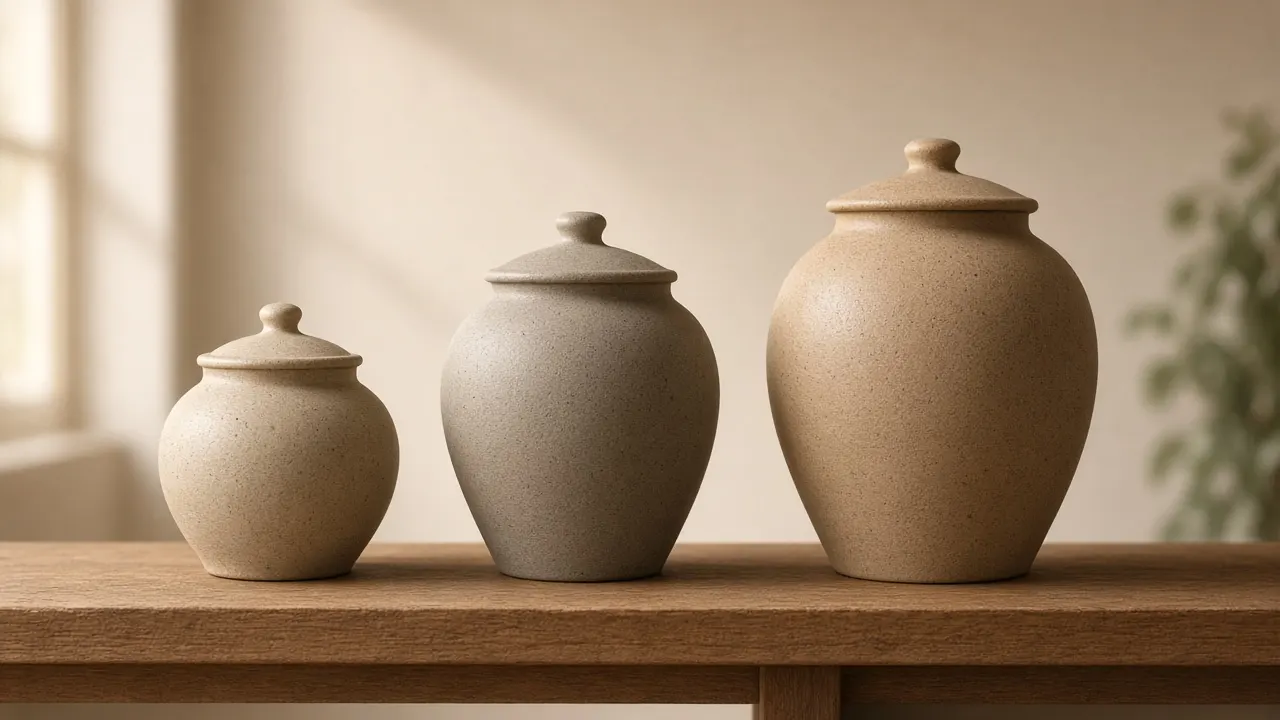
Find the urn volume you need from your pet's weight, plus keepsake and sharing options.
Memorial tree finder
Pick a tree for a planting urn that suits your climate, space and pet.

Memorial budget planner
Add up cremation, urn, keepsakes and a farewell so the total holds no surprises.
Questions people ask
How many cubic inches of urn does a cat need?
Using the one-inch-per-pound rule, a 10 lb cat needs about 10 cubic inches, and 11 with the calculator's margin. That's a small urn, and most small planting or water urns hold it easily with room to spare.
What if my dog's ashes don't fit the tree urn?
Mix the extra into the soil bed around the tree, well away from the trunk, or keep it for a keepsake or second planting. Don't pack it into the urn, since a dense layer of ash is harder for roots to grow through and more likely to stress the tree.
Should I use my pet's weight before or after illness?
Use their healthy adult weight if you know it. Ash is mostly bone, and bone mass changes much less than fat or muscle during an illness, so the healthy weight gives a better estimate of how much ash comes back.
Do water-soluble urns need the same volume?
Yes, they need to hold the ashes you want to release. Some families release only part of the ashes and keep the rest, in which case a smaller water urn works. Check the listed capacity and whether the urn is meant to float before sinking.
Does the calculator work for birds or reptiles?
It gives a rough figure, but very small animals can return only a pinch of ash, sometimes less than a teaspoon. For pets under about 2 lb, a keepsake-sized urn or a small pot is usually plenty.


Sources and our estimates
- [1] Embrace notes cremated remains typically weigh about 3-5% of the pet's original body weight. Embrace Pet Insurance - Bury or Cremate Your Dog? Costs, Pros & Cons, 2025.
- [2] Using the industry rule of thumb of 1 cubic inch of urn space per pound of body weight, a 12 lb cat needs an urn of about 12 cubic inches; a 70 lb dog needs about 70 cubic inches. Our estimate: urn cu in = body weight lb x 1 (industry rule of thumb, not a measured value). How we calculate.
- [3] A median-weight giant-breed dog (48.8 kg / 108 lb) would be expected to return about 1.71 kg (3.8 lb) of cremated remains, needing an urn of about 108 cubic inches. Our estimate: 48.8 kg x 3.5% x 2.2046 lb/kg; urn = 108 lb x 1 cu in/lb. How we calculate.
- [4] A 12 lb cat would be expected to return about 6.7 oz (0.42 lb) of cremated remains. Our estimate: 12 lb x 3.5% x 16 oz/lb. How we calculate.
- [5] A 30 kg (66 lb) dog typically leaves about 0.9-1.5 kg of cremated remains, which helps size urns on location pages. Our estimate: 30 kg x 3% = 0.9 kg; 30 kg x 5% = 1.5 kg. How we calculate.
- [6] Cremated remains have a very high pH of approximately 11.7, which is toxic to plants without amendment. Larkspur Conservation — Giving Cremated Remains a New Life Through Science, 2024.
Get planting urns that fit your pet
Tell us what you need and where you are. We'll reply by email with clear options and prices so you can decide in your own time.