A living memorial for your pet in Boston
By our estimate, around 250,000 households in Boston share their home with a dog or cat, and roughly 20,500 of those pets die each year. More of those families now ask about planting or water memorials. Here's how to do it well.
- Planting, garden and water urns compared
- Honest notes on local rules
- Help choosing a native species
Boston, Massachusetts
What an eco memorial looks like in Boston
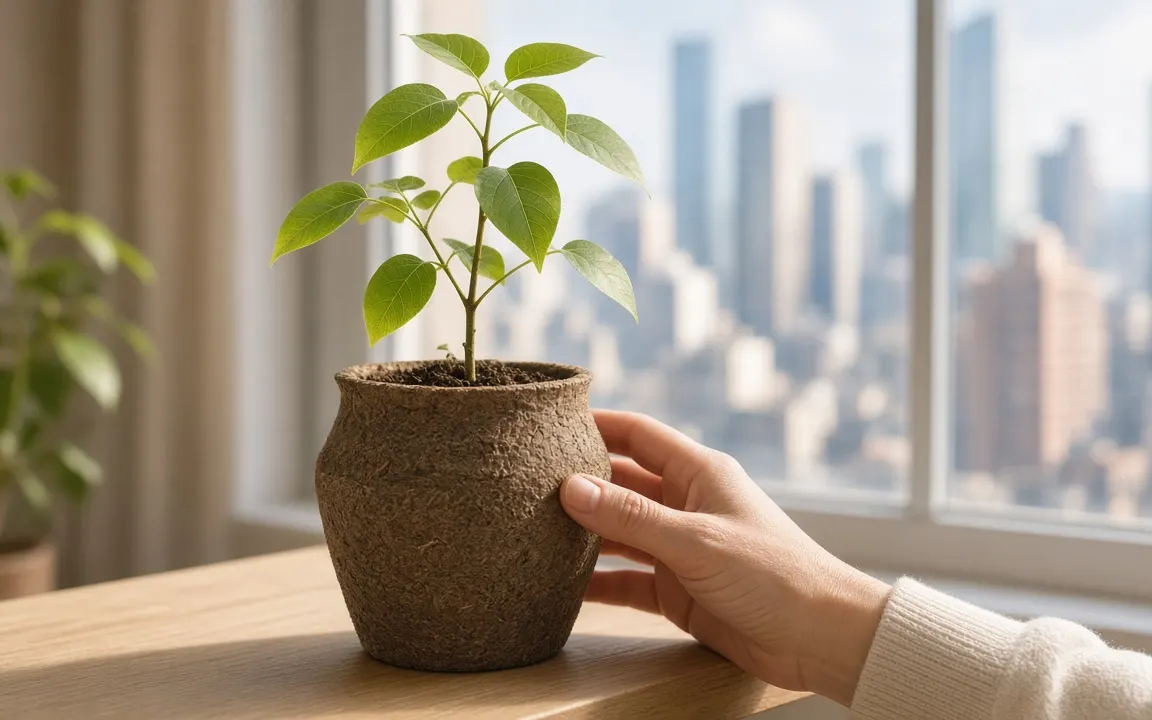
Space in a Boston apartment is precious, so small memorials are popular: a compact wooden or ceramic urn tucked between books, a pendant, a clay paw impression or a framed portrait by a local artist. If you rent and move often, choose pieces that pack easily. For a larger urn, ask how much ash to expect so you can plan where it will sit.
The Charles River Esplanade, the Arnold Arboretum and the Boston Harbor Islands are places many residents shared with their pets. Parkland and harbor waters have their own rules for scattering, so check before you go. Many families instead take a portion of ashes to a family place on Cape Cod or in New Hampshire, keep the rest in an urn, and add a small piece of jewelry.
Arboretums, botanic gardens and park foundations in large cities like Boston sometimes offer dedicated trees or benches in someone's memory. Most of them don't accept ashes, and a pet may or may not qualify, so ask. If they say yes to a dedication, you get a public place to visit, and the ashes can go into a pot or garden at home instead.
About 672,973 people live in Boston, which makes it the largest of the 61 Massachusetts communities we cover.
The closest communities we cover are Cambridge (3 miles), Chelsea (3 miles) and Somerville (3 miles). Providers serving those towns often travel to Boston too, so it can be worth asking them for a quote.
Our estimate
250,000
How many dog- or cat-owning households Boston has (estimate)
How we calculated this
672,973 ÷ 2.5 = 269,189 households; × 53% (dog) + 39% (cat) = 250,000. A household with several pets counts once.
Our estimate
20,500
dog and cat deaths per year in Boston, our estimate
How we calculated this
250,000 dog/cat-owning homes ÷ average lifespan (dog: 12.69 yrs + cat: 11.18 yrs) ≈ 20,500 a year. Treat it as a minimum.
53%[1]
53% of US households own a dog, which is about 71 million households.
12.69 years[2]
US dogs have an average life expectancy at birth of 12.69 years.
39%[3]
39% of US households own a cat, which is about 53 million households.
11.18 years[4]
US cats seen at Banfield hospitals have an average life expectancy at birth of 11.18 years.
To check the figures yourself, see American Pet Products Association (APPA) 2025 State of the Industry and Montoya et al. 2023, Frontiers in Veterinary Science.
Why cremation culture in Massachusetts shapes your options
The share of people cremated in Massachusetts, now about 55.9%[5], keeps inching up. For pet owners, that shift has brought more questions about what to do once the ashes come home. There's no need to decide on the day. Many families keep the ashes for a season, talk about what their pet loved, and only then settle on a tree, a pot or a lake.
NFDA 2024 Cremation & Burial Report state projections (via Occasional Sage) (2024) is where the Massachusetts figure comes from. It counts people; we use it because attitudes to cremating a pet in Boston tend to follow attitudes to cremation generally.
Seasons, soil and weather for a memorial in Boston
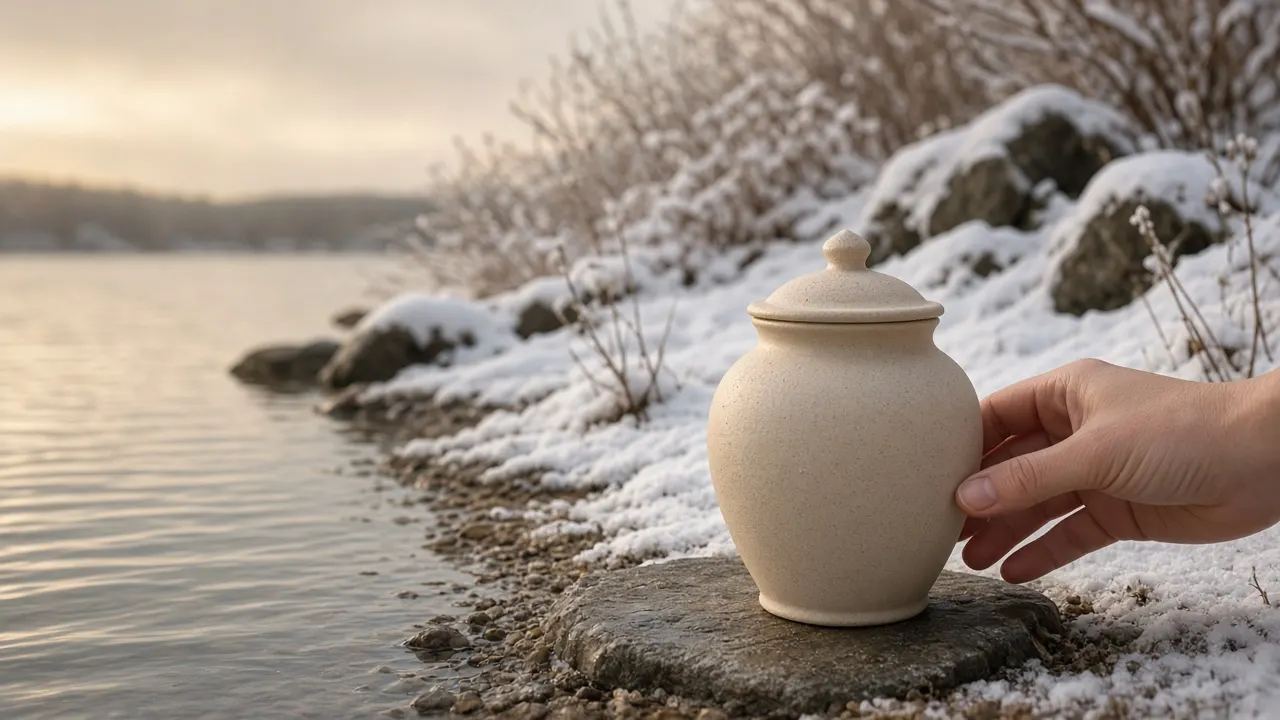
In Boston, average lows fall below freezing in January, February, March and December, and frozen ground makes digging hard or impossible. That's no reason to rush. Ashes keep safely indoors for as long as you like, so many families wait for spring, once the soil has thawed and drained. Early autumn works too, as long as the tree has about six weeks of open ground to root in before the hard frosts.
A Boston winter is a useful waiting room. With 4 months of freezing lows, you can mix the ashes with compost in a covered bin or tub in a garage or shed during the cold months and let the mix rest. One gardening guide suggests at least 90–120 days[6] before planting, which fits neatly between a winter loss and spring planting. Test the pH before the tree goes in.
What a greener goodbye costs in Boston
It helps to compare a planted memorial with the alternatives. A pet cemetery burial for a dog averages about $831[7] in the US, which by our estimate is around 3.2 times the national average for private cremation[8]. Private cremation plus a bio urn and a sapling in your own Boston garden usually comes in far below a cemetery plot, and there are no yearly maintenance fees.
We keep the detailed Massachusetts price table on one page so it stays current: see Massachusetts prices.

Free tool
Memorial budget planner
Add up cremation, urn, keepsakes and a farewell so the total holds no surprises.
Land, water and permission in Massachusetts
Rules change more often than most people realise, and many local policies about ashes were never written down at all. Treat any general guide for Massachusetts, including ours, as a starting point. Whoever looks after that particular field, park or shoreline is the one whose answer counts, so it's worth getting it by email where you can.
City of Boston Animal Care and Control publishes Boston's official guidance. Note that it deals with public collection, not with booking a private cremation. Massachusetts keeps an official directory of local governments; use it to reach the county or city office that covers Boston.
We keep Massachusetts's burial and scattering rules in one place: the Massachusetts rules summary. Before a home burial in Boston, also ask the city whether local ordinances add anything.
Planting a memorial in Boston, step by step
- If the ashes have been on a shelf for years, you can still plant them. Cremated remains don't spoil, so there's no deadline.
- Open the container carefully indoors or out of any breeze, and look to see if there's a sealed inner bag holding the ashes.
- Weigh or measure what you have, then use our urn size calculator to see which planting urn or water urn fits.
- Decide whether to keep any back. Having lived with the ashes so long, plenty of families choose to plant the bulk and hold on to a small amount.
- Pick a date that carries meaning, perhaps the day they died or the day they were born, and ask the people who loved them to come.
- Treat the old urn kindly afterwards. A ceramic or wooden urn often finds a second life holding a houseplant or small mementos.
Keeping your pet's memory growing in Boston
New England has a deep tradition of carved stone, and a granite marker with your pet's name fits a backyard in West Roxbury or a family plot in the country. For those without a yard, an engraved slate for a windowsill or a bio urn with a sapling planted at a relative's home offers a lasting place to return to.
Every option Boston families choose between is on the services page, run the numbers with the free planning tools, or compare your instinct with the poll results, there are guides for the big decisions and articles for the details. Close to Boston we also cover Cambridge, Springfield, Worcester and Lynn; the full list for Massachusetts and for the United States is a click away.

Reader polls
What would you choose?
Vote anonymously and see how other readers answered. The results are live counts from people who visit this site, so they show real opinions, not a scientific sample.
If you rent or might move, how would you handle a memorial planting?
Tap an answer to vote and see how others answered. Anonymous.
Would you consider releasing your pet's ashes in water?
Tap an answer to vote and see how others answered. Anonymous.
If you had to decide today, which aftercare would you choose for your pet?
Tap an answer to vote and see how others answered. Anonymous.

Free tools to help you plan
Memorial budget planner
Add up cremation, urn, keepsakes and a farewell so the total holds no surprises.

Memorial tree finder
Pick a tree for a planting urn that suits your climate, space and pet.

Aftercare options compared
Compare private, communal and water cremation with burial on cost, timing and what comes home.
Questions people ask
Is Boston big enough to have several pet aftercare providers?
Probably, on the numbers. By our estimate about 250,000 Boston households keep a dog or cat and around 20,500 lose one each year, which is enough steady demand to support more than one provider. We derive that from population (about 672,973), household size and national ownership and lifespan figures.
Why does the Boston page quote a human cremation rate?
Because it is the best local signal we have. NFDA 2024 Cremation & Burial Report state projections (via Occasional Sage) (2024) reports about 55.9%[5] of Massachusetts residents are cremated. There is no official pet equivalent, and inventing one would be worse than quoting a real, clearly labelled number.
Does the Boston climate change what I should do first?
Only the timing. In July, with highs near 82°F, cool the body and book collection the same day. In January, February, March and December, when lows sit below freezing, a home burial may have to wait for a thaw, so cremation with ashes returned keeps your options open.
Which nearby towns can I compare with Boston?
The closest communities we cover are Cambridge (about 3 miles), Chelsea (about 3 miles) and Somerville (about 3 miles). Providers based in those places often serve Boston too. Ask each one for a written total that includes collection, so the distance is priced in.
Can I plant a tree directly on my pet's ashes in Boston?
It's better not to. Cremated remains have a very high pH, around 11.7[10], and they're high in sodium, so a solid layer of ash under the roots can yellow or kill a young tree. Mix the ashes through plenty of compost and soil across a wider area, test the pH, and plant once it has come down. There's no single mixing ratio that suits every pet and every soil.
Can I plant my pet's ashes if I live in an apartment in Boston?
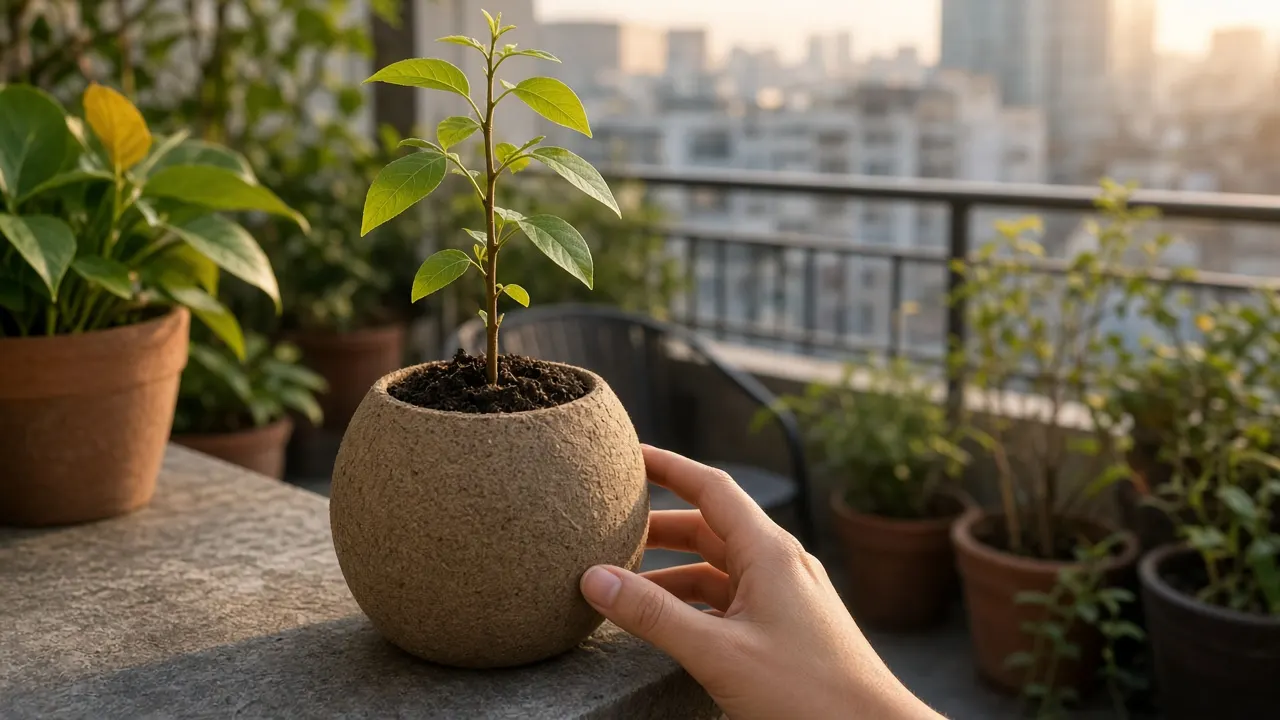
Yes, in a container. A small tree, herb or flowering shrub in a large pot on a balcony can hold a small, well-mixed share of the ashes. Because salts can't drain away as they would in the ground, use only a spoonful or two, water until it drains freely and keep the rest in a keepsake or plant it later.


Sources and our estimates
- [1] 53% of US households own a dog, which is about 71 million households. American Pet Products Association (APPA) 2025 State of the Industry, 2025.
- [2] US dogs have an average life expectancy at birth of 12.69 years. Montoya et al. 2023, Frontiers in Veterinary Science - Banfield Pet Hospital life expectancy tables (13.3 million dogs, 2.4 million cats, 2013-2019), 2023.
- [3] 39% of US households own a cat, which is about 53 million households. American Pet Products Association (APPA) 2025 State of the Industry, 2025.
- [4] US cats seen at Banfield hospitals have an average life expectancy at birth of 11.18 years. Montoya et al. 2023, Frontiers in Veterinary Science - Banfield Pet Hospital life expectancy tables (13.3 million dogs, 2.4 million cats, 2013-2019), 2023.
- [5] The NFDA projected Massachusetts's cremation rate at 55.9% for 2024. NFDA 2024 Cremation & Burial Report state projections (via Occasional Sage), 2024.
- [6] Gardening Know How advises letting an ash/soil-amendment mixture sit for at least 90 to 120 days before planting. Gardening Know How — Planting With Cremains: Is There a Safe Way to Bury Ashes, 2024.
- [7] CareCredit's 2025 cost study put the US national average for pet cemetery burial of a dog at $831 (range $659-$1,513). CareCredit (Synchrony) - How Much Does It Cost To Euthanize a Dog? (2025 ASQ360 procedural cost study), 2025.
- [8] US pet cemetery burial for a dog costs about 3.2x a private cremation ($831 vs $260 national averages). Our estimate: 831 / 260 = 3.20. How we calculate.
- [9] Switching one human-scale cremation to alkaline hydrolysis saves about 112 kg CO2e under TNO's accounting. Our estimate: 79.9 - (-31.8) kg CO2e. How we calculate.
- [10] Cremated remains have a very high pH of approximately 11.7, which is toxic to plants without amendment. Larkspur Conservation — Giving Cremated Remains a New Life Through Science, 2024.
Get bio urn options for Boston
Tell us what you need and where you are. We'll reply by email with clear options and prices so you can decide in your own time.