Bio urns and eco memorials in Rosemount
By our estimate, around 11,500 households in Rosemount share their home with a dog or cat, and roughly 980 of those pets die each year. More of those families now ask about planting or water memorials. Here's how to do it well.
- Options for renters and apartments
- Water release rules in plain words
- No obligation, we reply by email
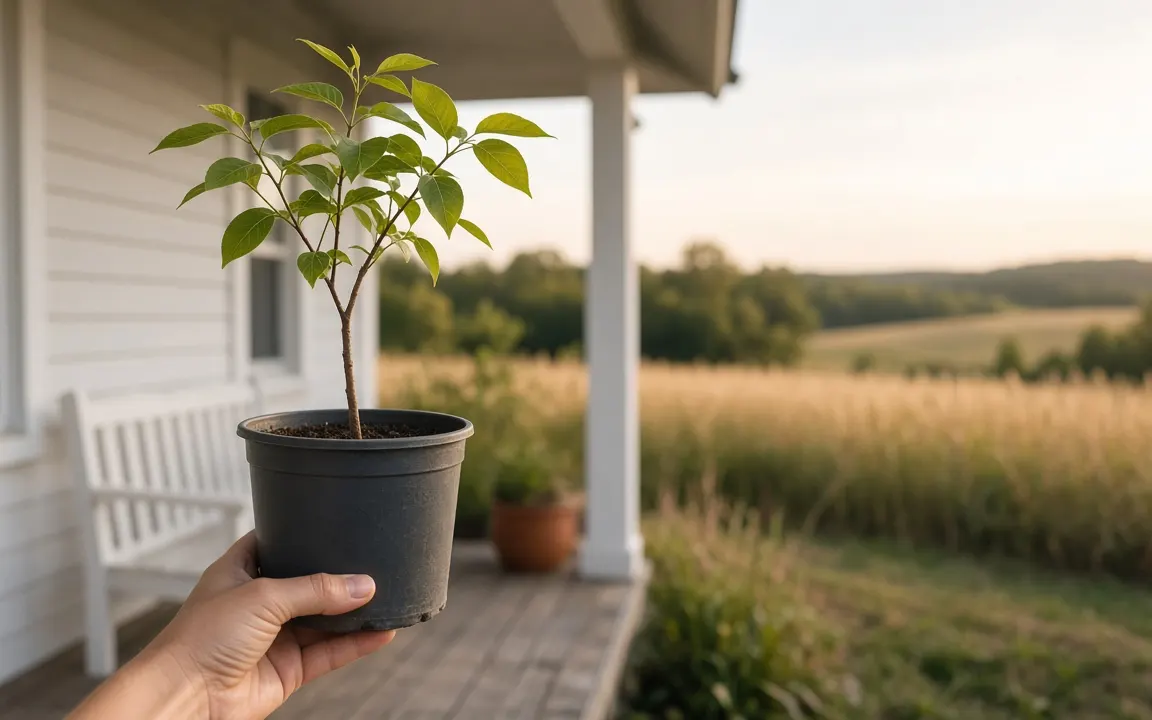
Rosemount, Minnesota
Planning a greener goodbye in Rosemount
Wind sweeps across the open ground around Rosemount in winter, drifting snow and driving frost deep into exposed lawns. A granite or bronze marker bedded on compacted gravel resists that heaving far better than resin or painted concrete. Setting it against a fence line or inside a shrub border shelters it from drifts, and a quick check each April will catch any tilt before it worsens.
Rosemount's newer homes usually come with real yards, and the edge-of-farmland setting suits natural memorials: a boulder engraved with a name, a split-rail corner planted with coneflowers, or a young tree set over a biodegradable urn. People in the townhomes and apartments near the downtown blocks often choose a compact tabletop urn or a framed photograph with a pawprint beneath it, both easy to pack if you move.
Many people near Rosemount have a lake, pond or river they walked with their dog every day. A water-soluble urn released there can feel exactly right. Before you do it, check who owns or manages the water: a private pond needs the owner's say-so, a public lake is usually managed by a state or county agency, and some reservoirs supply drinking water and don't allow anything to be released. Choose a quiet time and let nothing float away.
Rosemount's population is around 31,881, the 31st-largest of the 67 Minnesota communities we cover. Saint Paul, roughly 14 miles off, is the closest larger centre, and a share of the providers who cover Rosemount run from there.
If you want to compare providers, look at Inver Grove Heights (6 miles), Apple Valley (6 miles) and Eagan (7 miles, a larger centre). Distance matters because pickup fees and the time until the ashes come back both grow with the drive.
Our estimate
11,500
Rosemount: dog- or cat-owning households, our estimate
How we calculated this
31,881 ÷ 2.5 = 12,752 households; × 53% (dog) + 39% (cat) = 11,500. Homes are counted once however many pets they keep.
Our estimate
980
dog and cat deaths per year in Rosemount, our estimate
How we calculated this
11,500 dog/cat-owning homes ÷ average lifespan (dog: 12.69 yrs + cat: 11.18 yrs) ≈ 980 a year. The real figure is unlikely to be lower.
53%[1]
53% of US households own a dog, which is about 71 million households.
12.69 years[2]
US dogs have an average life expectancy at birth of 12.69 years.
39%[3]
39% of US households own a cat, which is about 53 million households.
11.18 years[4]
US cats seen at Banfield hospitals have an average life expectancy at birth of 11.18 years.
Sources for the statistics above: American Pet Products Association (APPA) 2025 State of the Industry and Montoya et al. 2023, Frontiers in Veterinary Science.

Cremation, burial and green choices in Minnesota
About 68.5%[5] of people in Minnesota are cremated, which puts it in the middle: cremation is common, but so is burial. For pets, that often means families weigh a planting urn against a whole-body burial in the yard. Both can grow a tree. The planting urn takes less space and can go almost anywhere; a whole-body grave needs more depth and distance from water, and the tree should go beside it rather than directly on top.
For the Minnesota figure we rely on NFDA 2024 Cremation & Burial Report state projections (via Occasional Sage) (2024). Read it as a picture of local custom around death and remembrance in Rosemount rather than as pet data.
Seasons, soil and weather for a memorial in Rosemount
A Rosemount winter is a useful waiting room. With 5 months of freezing lows, you can mix the ashes with compost in a covered bin or tub in a garage or shed during the cold months and let the mix rest. One gardening guide suggests at least 90–120 days[6] before planting, which fits neatly between a winter loss and spring planting. Test the pH before the tree goes in.
Freezing and thawing through January, February, March, November and December can heave a newly planted tree out of the ground in Rosemount. If you plant in autumn, mulch well after the first frost to keep the soil temperature steady, and check the base of the tree in spring. A spring planting avoids the problem entirely and gives roots a full growing season before the next winter.
Budgeting for a living memorial in Rosemount
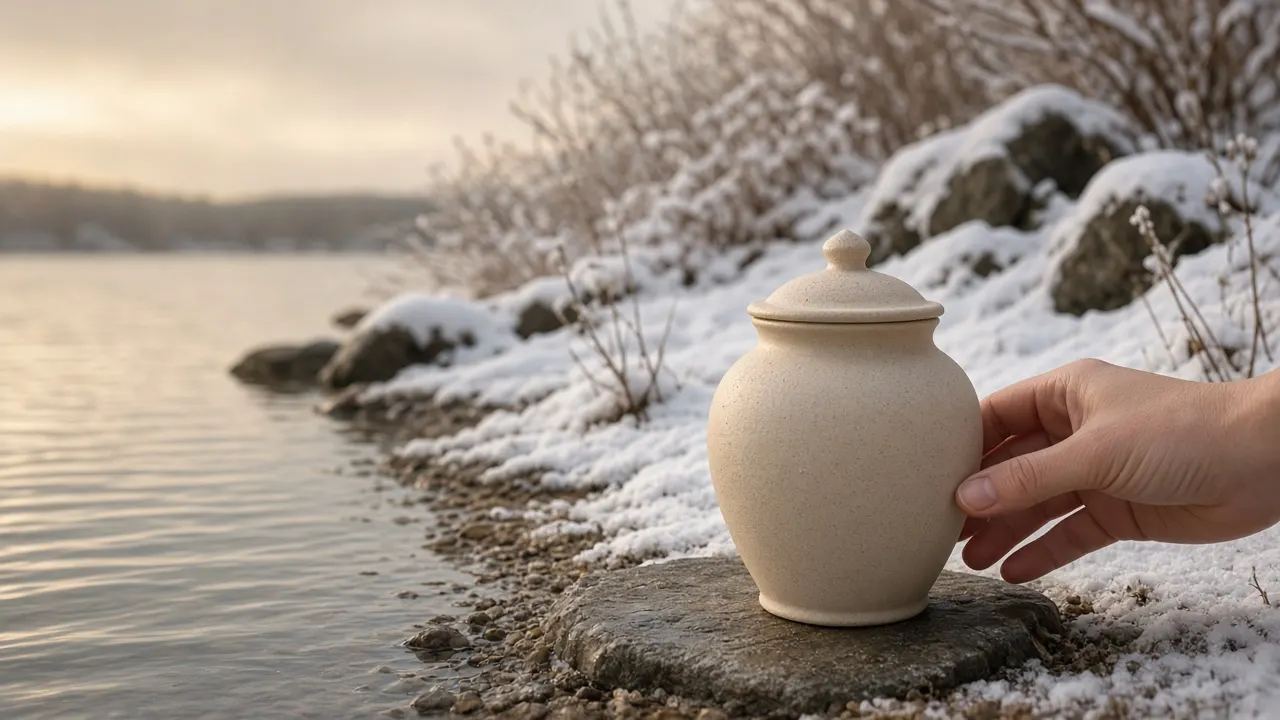
Bio urns vary more in price than you might expect. A national guide puts biodegradable urns at $70–$260[7], depending on material, size and whether a seed or tree system is included. For a lake or sea release, one water urn designed to float briefly and dissolve sells for $149[8]. In Rosemount, the tree and the soil amendments are usually the cheapest part of the whole memorial.
Prices for Rosemount track the wider Minnesota market, so use the Minnesota price table as your baseline and the services page to see what is included.

Free tool
Memorial budget planner
Add up cremation, urn, keepsakes and a farewell so the total holds no surprises.
What Minnesota allows for ashes, in general terms
Two questions cover most situations in Minnesota: who owns or manages this land or water, and have they said yes? For your own garden, the answer is you. For a rented home, it's your landlord, in writing. For parks and public water, it's the relevant agency. For a relative's garden, it's them, and it's worth agreeing that the tree stays even if the house is sold.
To find your county or city office in Minnesota, start with the official Minnesota local government directory.
For Minnesota's rules on burying a pet at home or scattering ashes, see the Minnesota guide. Local rules in Rosemount can be stricter than the state's, especially in homeowners' associations and rentals.
Your next steps, whatever your situation
- If the pet belonged to a child, tell them plainly what happened and what cremation means, in words that fit their age.
- Let them choose the plant, from a short list you've already checked is safe, hardy and not poisonous to any animals at home.
- Use a pot for a small pet like a guinea pig, rabbit or hamster: the ashes amount to very little, and a container keeps the memorial within reach.
- Give them real jobs on the day: filling the pot, mixing the soil, watering, choosing a painted stone.
- Explain the ashes honestly as part of their pet that's now feeding the plant, and answer questions as they come, even months later.
- Take a photo of the child with the plant on the same day every year; over time you'll have a record of the two of them growing up.
Remembering your pet, in Rosemount and wherever you go next
Some Rosemount families prefer a small token to a large urn: a vial of ashes worn on a chain, a sealed lock of fur, or an ink nose print pressed onto heavy paper and framed. Each of those has to be arranged before the cremation happens, so mention it at the first call. Anything left over can stay in the provider's plain container until a longer-term idea takes shape.
See what each option includes on our services page, or see what other families chose in the poll results, run the numbers with the free planning tools, look through our guides and the blog. If you live between Rosemount and Bloomington, Saint Paul, Minneapolis and Brooklyn Park, either page applies. Every other community in Minnesota, and all of the United States, is listed too.

Reader polls
What would you choose?
Vote anonymously and see how other readers answered. The results are live counts from people who visit this site, so they show real opinions, not a scientific sample.
Would you consider releasing your pet's ashes in water?
Tap an answer to vote and see how others answered. Anonymous.
If you rent or might move, how would you handle a memorial planting?
Tap an answer to vote and see how others answered. Anonymous.
If you had to decide today, which aftercare would you choose for your pet?
Tap an answer to vote and see how others answered. Anonymous.

Free tools to help you plan
Memorial budget planner
Add up cremation, urn, keepsakes and a farewell so the total holds no surprises.

Memorial tree finder
Pick a tree for a planting urn that suits your climate, space and pet.

Aftercare options compared
Compare private, communal and water cremation with burial on cost, timing and what comes home.
Questions people ask
When is the hardest time of year to arrange a burial in Rosemount?
January, February, March, November and December: average lows are below freezing then, and frozen ground makes a home grave slow or impossible until it thaws. The other pressure point is July, when highs around 83°F mean a body needs cooling and collecting quickly.
How do Minnesota attitudes to cremation compare?
NFDA 2024 Cremation & Burial Report state projections (via Occasional Sage) (2024) puts the Minnesota human cremation rate at about 68.5%[5]. We show it on the Rosemount page because pet aftercare choices tend to track it: where cremation is normal for people, communal and private pet cremation are both easy to find.
How many pet owners live in Rosemount?
By our estimate, about 11,500 households in Rosemount have at least one dog or cat, and around 980 are lost each year. We calculate this from the city's population of about 31,881, the average household size and national ownership and lifespan figures, so treat it as a floor rather than an exact count.
Where are the providers that serve Rosemount actually based?
Some are local, and some run from Saint Paul, about 14 miles away. That is normal for a town this size. What matters is the collection time they quote for Rosemount and whether the drive is priced into the total, so ask both up front.
How many families in Rosemount might want a planting memorial?
We don't know the exact number, but the scale is real: by our estimate, around 980 dogs and cats die in Rosemount each year. Interest in greener goodbyes is growing too; 61.4%[10] of US consumers say they'd like to explore green funeral options. If you're one of them, you're far from alone.
Can I plant my pet's ashes in winter in Rosemount?
Not usually, if the ground is frozen. Keep the ashes indoors until spring, when the soil has thawed and drained, or plant in early autumn with several weeks of open ground before hard frosts. Winter is a good time to mix the ashes with compost in a covered tub and let the blend rest before planting.


Sources and our estimates
- [1] 53% of US households own a dog, which is about 71 million households. American Pet Products Association (APPA) 2025 State of the Industry, 2025.
- [2] US dogs have an average life expectancy at birth of 12.69 years. Montoya et al. 2023, Frontiers in Veterinary Science - Banfield Pet Hospital life expectancy tables (13.3 million dogs, 2.4 million cats, 2013-2019), 2023.
- [3] 39% of US households own a cat, which is about 53 million households. American Pet Products Association (APPA) 2025 State of the Industry, 2025.
- [4] US cats seen at Banfield hospitals have an average life expectancy at birth of 11.18 years. Montoya et al. 2023, Frontiers in Veterinary Science - Banfield Pet Hospital life expectancy tables (13.3 million dogs, 2.4 million cats, 2013-2019), 2023.
- [5] The NFDA projected Minnesota's cremation rate at 68.5% for 2024. NFDA 2024 Cremation & Burial Report state projections (via Occasional Sage), 2024.
- [6] Gardening Know How advises letting an ash/soil-amendment mixture sit for at least 90 to 120 days before planting. Gardening Know How — Planting With Cremains: Is There a Safe Way to Bury Ashes, 2024.
- [7] Funeral.com cites U.S. Funerals Online that biodegradable urns typically cost about $70–$260. Funeral.com – How Much Do Cremation Urns Cost in 2025, 2025.
- [8] The Living Urn's Eco Water Urn for water burial costs $149 and holds up to 225 cubic inches; it floats for several minutes before dissolving. The Living Urn – Eco Water Urn, 2026.
- [9] Switching one human-scale cremation to alkaline hydrolysis saves about 112 kg CO2e under TNO's accounting. Our estimate: 79.9 - (-31.8) kg CO2e. How we calculate.
- [10] 61.4% of US consumers say they are interested in exploring green funeral options. NFDA 2025 Cremation & Burial Report (press release), 2025.
Tell us about your pet and your garden
Tell us what you need and where you are. We'll reply by email with clear options and prices so you can decide in your own time.