Tree, garden and water memorials in St. Cloud
By our estimate, around 26,500 households in St. Cloud share their home with a dog or cat, and roughly 2,250 of those pets die each year. More of those families now ask about planting or water memorials. Here's how to do it well.
- Options for renters and apartments
- Water release rules in plain words
- No obligation, we reply by email

St. Cloud, Minnesota
Planning a greener goodbye in St. Cloud
St. Cloud is known as the Granite City, and quarrying shaped its history, its buildings and the pools of water now sitting in the old pits west of town. It feels natural for many local families to choose granite for a pet's marker. The stone shrugs off central Minnesota's freeze-thaw cycles, and it takes engraving well, whether that is a name and dates or a small outline of a paw.
Stearns County has deep German Catholic roots, and some households here want a prayer or blessing when a pet's ashes are laid to rest. That might mean a grandparent reading a short verse in the garden, or a pastor who is a family friend stopping by after Sunday Mass. Nothing about it is required. Every family decides what feels fitting, whether religious, secular or somewhere in between.
In a smaller place like St. Cloud, a living memorial often starts with more space than city families have: a larger yard, family land or a farm. That makes a memorial tree in the ground realistic. The services, though, may be further away. Pet water cremation is rarely based in small towns, so if it matters to you, ask your vet whether they work with a provider in a larger centre such as Minneapolis, and how the ashes come back.
St. Cloud is home to about 72,647 people, the 12th-largest of the 67 Minnesota communities we cover. Minneapolis, roughly 58 miles off, is the closest larger centre, and a share of the providers who cover St. Cloud run from there.
St. Cloud sits within easy reach of Sartell (7 miles), Elk River (32 miles) and Otsego (32 miles). A provider based in any of them will usually collect from St. Cloud; ask what the mileage adds to the bill.
Our estimate
26,500
How many dog- or cat-owning households St. Cloud has (estimate)
How we calculated this
72,647 ÷ 2.5 = 29,059 households; × 53% (dog) + 39% (cat) = 26,500. Multi-pet homes count once.
Our estimate
2,250
dog and cat deaths per year in St. Cloud, our estimate
How we calculated this
26,500 dog/cat-owning homes ÷ average lifespan (dog: 12.69 yrs + cat: 11.18 yrs) ≈ 2,250 a year. A floor, not a ceiling.
53%[1]
53% of US households own a dog, which is about 71 million households.
12.69 years[2]
US dogs have an average life expectancy at birth of 12.69 years.
39%[3]
39% of US households own a cat, which is about 53 million households.
11.18 years[4]
US cats seen at Banfield hospitals have an average life expectancy at birth of 11.18 years.
If a number here surprises you, the primary material is American Pet Products Association (APPA) 2025 State of the Industry and Montoya et al. 2023, Frontiers in Veterinary Science; we only apply it to this.

The local attitude to ashes and memorials
In Minnesota, with a human cremation rate of roughly 68.5%[5], you'll often find pet cemeteries and pet crematories operating side by side. Some cemeteries now offer small plots for ashes, occasionally with a tree or shrub above them. That's worth comparing with a garden planting at home: a cemetery plot stays put if you move, while your own garden costs nothing and stays private.
NFDA 2024 Cremation & Burial Report state projections (via Occasional Sage) (2024) is where the Minnesota figure comes from. It counts people; we use it because attitudes to cremating a pet in St. Cloud tend to follow attitudes to cremation generally.
Choosing the right month to plant in St. Cloud
Cold winters narrow the choice of tree in St. Cloud, where January lows average about 3°F. Pick species that are fully hardy locally: native trees, or ornamentals a nearby nursery rates for your zone. A tender tree from a warmer region may survive one mild winter and die in the next. Hardy flowering shrubs are a good fallback if you have less space.
Freezing and thawing through January, February, March, November and December can heave a newly planted tree out of the ground in St. Cloud. If you plant in autumn, mulch well after the first frost to keep the soil temperature steady, and check the base of the tree in spring. A spring planting avoids the problem entirely and gives roots a full growing season before the next winter.
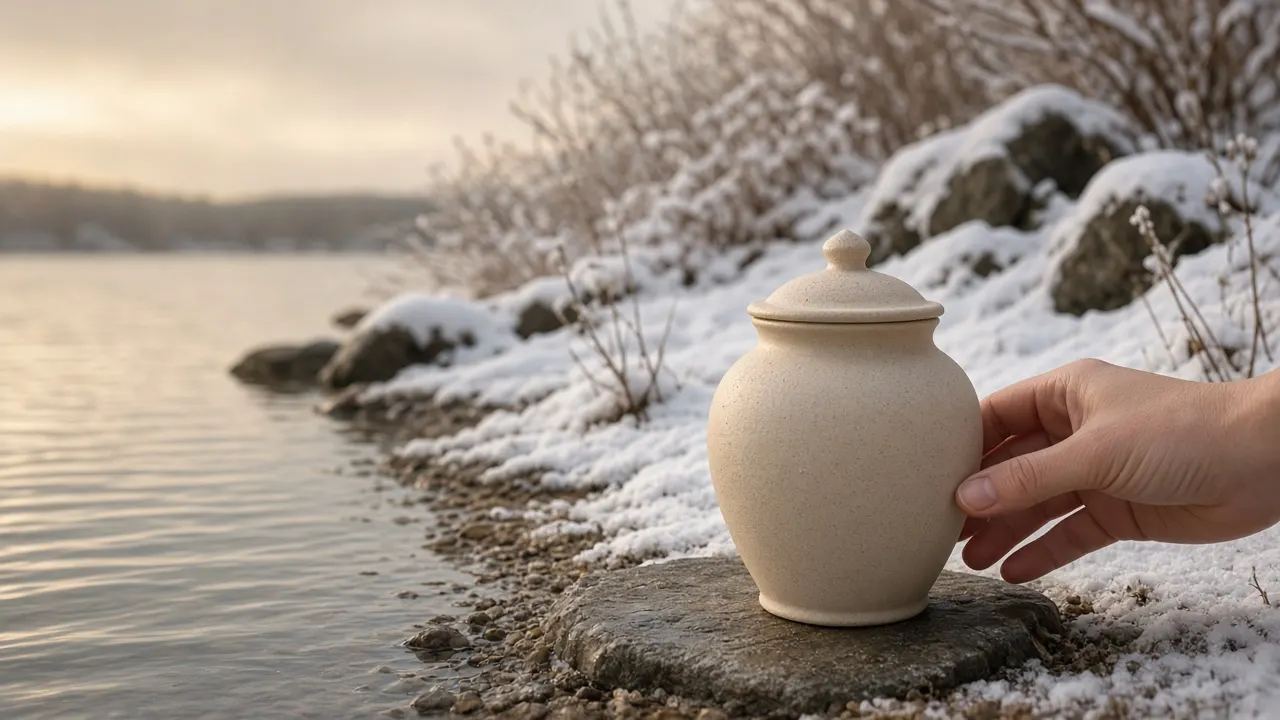
Budgeting for a living memorial in St. Cloud
It helps to compare a planted memorial with the alternatives. A pet cemetery burial for a dog averages about $831[6] in the US, which by our estimate is around 3.2 times the national average for private cremation[7]. Private cremation plus a bio urn and a sapling in your own St. Cloud garden usually comes in far below a cemetery plot, and there are no yearly maintenance fees.
For a line-by-line price table, see the Minnesota overview; for what's included in each option, see our services.

Free tool
Memorial budget planner
Add up cremation, urn, keepsakes and a farewell so the total holds no surprises.
Scattering and planting rules in Minnesota
Two questions cover most situations in Minnesota: who owns or manages this land or water, and have they said yes? For your own garden, the answer is you. For a rented home, it's your landlord, in writing. For parks and public water, it's the relevant agency. For a relative's garden, it's them, and it's worth agreeing that the tree stays even if the house is sold.
The official Minnesota local government directory lists every county and city office, which is the quickest way to find who to ask in St. Cloud.
The rules that apply across Minnesota (home burial, scattering and who oversees pet cremation) are summarized on our Minnesota page. St. Cloud may add its own conditions, so check with the city or county before digging.
From ashes to a growing tree: the steps
- If the pet belonged to a child, be straightforward about the death and explain cremation simply, pitched at a level they can understand.
- Let them choose the plant, from a short list you've already checked is safe, hardy and not poisonous to any animals at home.
- Use a pot for a small pet such as a hamster, rabbit or guinea pig: there's only a small amount of ash, and a pot keeps the memorial close.
- Give them real jobs on the day: filling the pot, mixing the soil, watering, choosing a painted stone.
- Explain the ashes honestly as what's left of their pet, now helping the plant to grow, and keep answering whatever they ask, however long afterwards it comes up.
- Take a photo of the child with the plant on the same day every year; over time you'll have a record of the two of them growing up.
Ways to mark the spot and the date
If you plan to bury ashes or set a stone in the yard, spring is usually the right season. The ground around St. Cloud stays frozen from late fall well into March, and trying to dig through it rarely ends well. Keep the ashes safely indoors over winter, then choose a mild weekend in April or May for a small gathering to place them together.
try the free planning tools, or compare your instinct with the poll results, read our guides and latest articles, The services page is the place to compare what is included. Close to St. Cloud we also cover Minneapolis, Duluth, Rochester and Brooklyn Park; the full list for Minnesota and for the United States is a click away.

Reader polls
What would you choose?
Vote anonymously and see how other readers answered. The results are live counts from people who visit this site, so they show real opinions, not a scientific sample.
If you rent or might move, how would you handle a memorial planting?
Tap an answer to vote and see how others answered. Anonymous.
Would you consider releasing your pet's ashes in water?
Tap an answer to vote and see how others answered. Anonymous.
If you had to decide today, which aftercare would you choose for your pet?
Tap an answer to vote and see how others answered. Anonymous.

Free tools to help you plan
Memorial budget planner
Add up cremation, urn, keepsakes and a farewell so the total holds no surprises.

Memorial tree finder
Pick a tree for a planting urn that suits your climate, space and pet.

Aftercare options compared
Compare private, communal and water cremation with burial on cost, timing and what comes home.
Questions people ask
Can a provider from a neighbouring town collect from St. Cloud?
Usually yes. Sartell is about 7 miles away, Elk River is about 32 miles away and Otsego is about 32 miles away, all inside a normal collection radius. Get the mileage written into the quote so there is no surprise on the day.
When is the hardest time of year to arrange a burial in St. Cloud?
January, February, March, November and December: average lows are below freezing then, and frozen ground makes a home grave slow or impossible until it thaws. The other pressure point is July, when highs around 82°F mean a body needs cooling and collecting quickly.
Why does the St. Cloud page quote a human cremation rate?
Because it is the best local signal we have. NFDA 2024 Cremation & Burial Report state projections (via Occasional Sage) (2024) reports about 68.5%[5] of Minnesota residents are cremated. There is no official pet equivalent, and inventing one would be worse than quoting a real, clearly labelled number.
Roughly how many pets die in St. Cloud each year?
Our estimate is around 2,250. It comes from St. Cloud's population (about 72,647), the average household size, the share of homes with a dog or cat (about 26,500 households here) and the average lifespan. It is arithmetic, not a count, so read it as a rough floor.
Can I plant a tree directly on my pet's ashes in St. Cloud?
It's better not to. Cremated remains have a very high pH, around 11.7[9], and they're high in sodium, so a solid layer of ash under the roots can yellow or kill a young tree. Mix the ashes through plenty of compost and soil across a wider area, test the pH, and plant once it has come down. There's no single mixing ratio that suits every pet and every soil.
I rent in St. Cloud. Can I still have a living memorial?
Yes. Plant in a large container, such as a half-barrel or a big pot with a dwarf tree or flowering shrub, and it moves with you. Use only a small share of the ashes in the pot, well mixed with compost. If you'd like to plant in a rented yard, get the landlord's permission in writing, and remember the tree stays when you leave.


Sources and our estimates
- [1] 53% of US households own a dog, which is about 71 million households. American Pet Products Association (APPA) 2025 State of the Industry, 2025.
- [2] US dogs have an average life expectancy at birth of 12.69 years. Montoya et al. 2023, Frontiers in Veterinary Science - Banfield Pet Hospital life expectancy tables (13.3 million dogs, 2.4 million cats, 2013-2019), 2023.
- [3] 39% of US households own a cat, which is about 53 million households. American Pet Products Association (APPA) 2025 State of the Industry, 2025.
- [4] US cats seen at Banfield hospitals have an average life expectancy at birth of 11.18 years. Montoya et al. 2023, Frontiers in Veterinary Science - Banfield Pet Hospital life expectancy tables (13.3 million dogs, 2.4 million cats, 2013-2019), 2023.
- [5] The NFDA projected Minnesota's cremation rate at 68.5% for 2024. NFDA 2024 Cremation & Burial Report state projections (via Occasional Sage), 2024.
- [6] CareCredit's 2025 cost study put the US national average for pet cemetery burial of a dog at $831 (range $659-$1,513). CareCredit (Synchrony) - How Much Does It Cost To Euthanize a Dog? (2025 ASQ360 procedural cost study), 2025.
- [7] US pet cemetery burial for a dog costs about 3.2x a private cremation ($831 vs $260 national averages). Our estimate: 831 / 260 = 3.20. How we calculate.
- [8] Switching one human-scale cremation to alkaline hydrolysis saves about 112 kg CO2e under TNO's accounting. Our estimate: 79.9 - (-31.8) kg CO2e. How we calculate.
- [9] Cremated remains have a very high pH of approximately 11.7, which is toxic to plants without amendment. Larkspur Conservation — Giving Cremated Remains a New Life Through Science, 2024.
Get eco memorial ideas by email
Tell us what you need and where you are. We'll reply by email with clear options and prices so you can decide in your own time.