Bio urns and eco memorials in Asheboro
By our estimate, around 10,500 households in Asheboro share their home with a dog or cat, and roughly 860 of those pets die each year. More of those families now ask about planting or water memorials. Here's how to do it well.
- Trees matched to Asheboro's climate
- Soil-safe planting method for ashes
- Real prices for bio urns and aquamation

Asheboro, North Carolina
Living memorials in Asheboro: the local picture
Many families in Asheboro split ashes between a principal vessel on the mantel and something smaller that can go with a grown child who has moved away. Lockets, glass pendants and palm-sized keepsake boxes all work. Decide on the main container last, after you know how much the smaller pieces will take, so the proportions come out right and nobody is short when a pendant arrives.
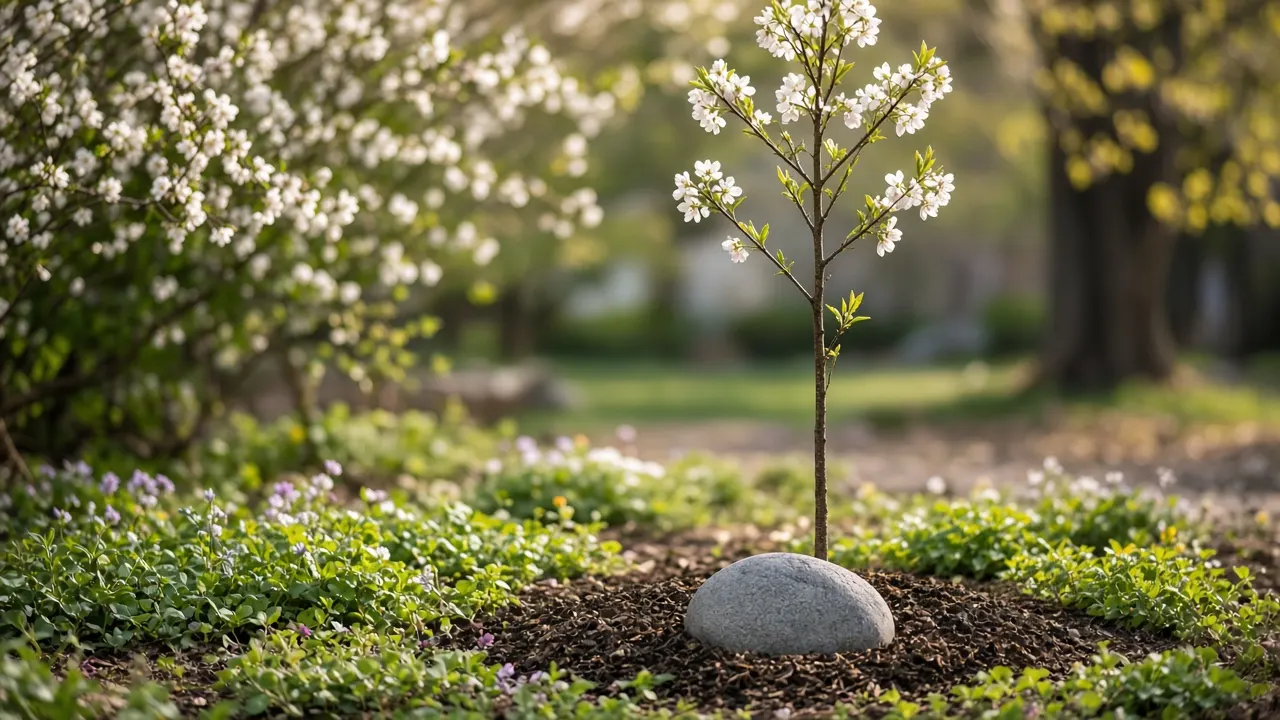
Asheboro's red clay and hardwood shade mean outdoor markers take a beating from moisture and leaf litter. Flat granite or fieldstone with carved lettering holds up well. For a planting, a native redbud, serviceberry or sourwood suits the Piedmont here. Favor a site that catches morning light, and plant in autumn so roots are established by the first hot July.
Deliveries can take longer to reach a place like Asheboro, and bio urns, water urns and mail-order saplings are no exception. Order the urn soon after you decide, rather than the week before the planting. If a nursery nearby carries hardy local trees, buy there instead, and check the root ball: a healthy tree has firm, pale roots that aren't circling tightly in the pot.
With roughly 27,990 residents, Asheboro is the 42nd-largest of the 64 North Carolina communities we cover. The nearest larger centre is Greensboro, about 25 miles (41 km) away, which is where some providers serving Asheboro are based.
Families in Asheboro often end up using a provider from Thomasville (20 miles), High Point (23 miles, a larger centre) and Greensboro (26 miles, a larger centre). That is normal: crematories serve a radius, not a single town, and the drive is priced into collection.
Our estimate
10,500
Asheboro: dog- or cat-owning households, our estimate
How we calculated this
27,990 ÷ 2.5 = 11,196 households; × 53% (dog) + 39% (cat) = 10,500. Homes are counted once however many pets they keep.
Our estimate
860
Estimated dog and cat losses in Asheboro each year
How we calculated this
10,500 dog/cat-owning homes ÷ average lifespan (dog: 12.69 yrs + cat: 11.18 yrs) ≈ 860 a year. Treat it as a minimum.
53%[1]
53% of US households own a dog, which is about 71 million households.
12.69 years[2]
US dogs have an average life expectancy at birth of 12.69 years.
39%[3]
39% of US households own a cat, which is about 53 million households.
11.18 years[4]
US cats seen at Banfield hospitals have an average life expectancy at birth of 11.18 years.
Where these figures come from: American Pet Products Association (APPA) 2025 State of the Industry and Montoya et al. 2023, Frontiers in Veterinary Science.

What local attitudes to cremation mean in North Carolina
Cremation and burial are both familiar in North Carolina, where about 57.3%[5] of people are cremated. For many families that means a pet's aftercare starts with a question of tradition: bury in the yard as earlier generations did, or cremate and keep the ashes. A bio urn sits happily between the two. It returns the ashes to the earth like a burial, but without a large grave, and it can be planted in a spot you choose later.
The North Carolina figure comes from NFDA 2024 Cremation & Burial Report state projections (via Occasional Sage) (2024). It describes people, not pets, so read it as a sign of local attitudes rather than a pet statistic.
Seasons, soil and weather for a memorial in Asheboro
A mild climate like Asheboro's gives you a wide choice of trees and shrubs, and that's where the risk lies: it's tempting to choose something that looks lovely but is short-lived or grows too big. Think about the spot in twenty years. A small flowering tree, a fruit tree on a dwarfing rootstock or a native shrub suits most yards far better than a forest tree planted beside the house.
Asheboro's climate is kind to a new tree. Summers stay moderate and winter lows are mostly above freezing, so you can plant in most months. The best time is usually autumn or early spring, when soil is moist and roots can grow before any summer dry spell. Avoid planting into waterlogged ground, which can happen around September: wait for a few drier days so the soil crumbles in your hand.
Budgeting for a living memorial in Asheboro
A living memorial in Asheboro has two costs: the cremation and the urn. Biodegradable pet urns are among the cheaper urns you can buy, listed at about $15–$80[6] in one national price guide, and a sapling from a local nursery often costs less than a decorative display urn. If you'd like water cremation, one pet insurer's guide lists aquamation at $80 to $450 depending on size[7]. The table shows published examples.
Rather than repeat the price table on every city page, we keep one for North Carolina: North Carolina costs. What each service includes is on the services page.

Free tool
Memorial budget planner
Add up cremation, urn, keepsakes and a farewell so the total holds no surprises.
Where you can plant or release ashes in North Carolina
Rules change more often than most people realise, and many local policies about ashes were never written down at all. Treat any general guide for North Carolina, including ours, as a starting point. Whoever looks after that particular field, park or shoreline is the one whose answer counts, so it's worth getting it by email where you can.
To find your county or city office in North Carolina, start with the official North Carolina local government directory.
Start with the North Carolina rules, which cover burial, scattering and oversight for the whole state, and treat Asheboro's local ordinances as a possible extra layer.
How to plan a living memorial, in order
- Confirm the ashes will come back. With a communal cremation there's normally nothing to collect afterwards, which leaves you with nothing to put in an urn.
- Pick the type of bio urn: a planting urn for a tree, a plain burial urn for a garden corner, a water urn for a lake or the sea.
- Ask permission before using ground you don't own, whether that's a landlord, a farmer or whoever runs the park.
- Plan for the weather. In Asheboro, avoid frozen, baked or waterlogged ground; a calm, mild day is best for planting or a release.
- Release gently on water. Set the urn on the surface, let it float and sink on its own, and add only loose petals.
- Come back in a year. Top up the mulch, see how much the tree has put on, and photograph it to record the first anniversary.
Keeping the memorial alive in Asheboro
Seagrove's centuries-old pottery tradition lies within Randolph County, so Asheboro families have easy access to hand-thrown stoneware made just down the road. A lidded jar or small covered vessel from a local potter makes a natural home for ashes. If you go that route, bring the approximate volume with you, since a potter can size a piece to fit rather than leaving it half empty.
Compare every option on our services page, use the free tools before you ring anyone, read our guides and latest articles, or see what other families chose in the poll results. You can also browse every city in the United States. Nearby, we also cover Raleigh, Greensboro, Charlotte and Durham, and every city in North Carolina.

Reader polls
What would you choose?
Vote anonymously and see how other readers answered. The results are live counts from people who visit this site, so they show real opinions, not a scientific sample.
If you rent or might move, how would you handle a memorial planting?
Tap an answer to vote and see how others answered. Anonymous.
Would you consider releasing your pet's ashes in water?
Tap an answer to vote and see how others answered. Anonymous.
If you had to decide today, which aftercare would you choose for your pet?
Tap an answer to vote and see how others answered. Anonymous.

Free tools to help you plan
Memorial budget planner
Add up cremation, urn, keepsakes and a farewell so the total holds no surprises.

Memorial tree finder
Pick a tree for a planting urn that suits your climate, space and pet.

Aftercare options compared
Compare private, communal and water cremation with burial on cost, timing and what comes home.
Questions people ask
Is cremation common in North Carolina?
For people, yes: about 57.3%[5] of North Carolina deaths end in cremation, according to NFDA 2024 Cremation & Burial Report state projections (via Occasional Sage) (2024). Nobody publishes the same figure for pets, but in our experience pet choices in Asheboro follow the human pattern closely, so cremation is the default most families here start from.
Will I have to travel to Greensboro to arrange things?
Not usually. Providers based in Greensboro (roughly 25 miles from Asheboro) collect from here as a matter of routine, and the paperwork is done by email or phone. If you want to be present for a witnessed cremation, that is when the drive matters.
Is Asheboro big enough to have several pet aftercare providers?
Probably, on the numbers. By our estimate about 10,500 Asheboro households keep a dog or cat and around 860 lose one each year, which is enough steady demand to support more than one provider. We derive that from population (about 27,990), household size and national ownership and lifespan figures.
How does Asheboro's weather affect pet aftercare?
July is the hottest month in Asheboro, with average highs around 88°F, so prompt collection matters most then. Average lows drop below freezing in January, which can make digging a grave hard until spring.
Which memorial plants are dangerous to cats and dogs?
Lilies are highly toxic to cats, even the pollen. Sago palm, oleander, yew, azalea and foxglove can poison dogs, and several of them harm cats and horses too. If you have pets at home in Asheboro, ask a vet or nursery to confirm a plant is safe before you buy it. Grasses, many herbs and most fruit trees are safer choices, though large amounts of fallen fruit can still upset a dog's stomach.
How long does it take to get ashes back for planting?
Most private cremations return ashes within one to two weeks, and water cremation cycles themselves take 12–20 hours[9], so allow a similar time. In a smaller place, if the cremation happens in a larger centre such as Greensboro, it may take a little longer. Planting can wait, so there's no need to rush.


Sources and our estimates
- [1] 53% of US households own a dog, which is about 71 million households. American Pet Products Association (APPA) 2025 State of the Industry, 2025.
- [2] US dogs have an average life expectancy at birth of 12.69 years. Montoya et al. 2023, Frontiers in Veterinary Science - Banfield Pet Hospital life expectancy tables (13.3 million dogs, 2.4 million cats, 2013-2019), 2023.
- [3] 39% of US households own a cat, which is about 53 million households. American Pet Products Association (APPA) 2025 State of the Industry, 2025.
- [4] US cats seen at Banfield hospitals have an average life expectancy at birth of 11.18 years. Montoya et al. 2023, Frontiers in Veterinary Science - Banfield Pet Hospital life expectancy tables (13.3 million dogs, 2.4 million cats, 2013-2019), 2023.
- [5] The NFDA projected North Carolina's cremation rate at 57.3% for 2024. NFDA 2024 Cremation & Burial Report state projections (via Occasional Sage), 2024.
- [6] Memorials.com's pet urn cost guide puts biodegradable pet urns at $15–$80. Memorials.com – Pet Urn Cost Guide, 2025.
- [7] Embrace Pet Insurance lists US communal cremation at $30-$200, partitioned at $50-$250, private at $100-$500+ and aquamation at $80-$450. Embrace Pet Insurance - Bury or Cremate Your Dog? Costs, Pros & Cons, 2025.
- [8] Switching one human-scale cremation to alkaline hydrolysis saves about 112 kg CO2e under TNO's accounting. Our estimate: 79.9 - (-31.8) kg CO2e. How we calculate.
- [9] A PET-550 aquamation cycle takes 12–20 hours for a single pet and 14–20 hours for segregated or communal cycles, with up to 14 compartments. Bio-Response Solutions — PET-550 Aquamation System product page, 2026.
Plan a living memorial in Asheboro
Tell us what you need and where you are. We'll reply by email with clear options and prices so you can decide in your own time.