Greener pet aftercare in Dayton, Ohio
By our estimate, around 50,500 households in Dayton share their home with a dog or cat, and roughly 4,200 of those pets die each year. More of those families now ask about planting or water memorials. Here's how to do it well.
- Planting, garden and water urns compared
- Honest notes on local rules
- Help choosing a native species
Dayton, Ohio
Where a living memorial fits in Dayton
Paw prints, nose prints and fur clippings can only be taken before cremation, so ask about them at the start. In families spread across Ohio and beyond, dividing ashes lets several people keep something: a mini urn, a pendant or a small vial. Engraving and memorial stones can be ordered later. A paw print tile is a simple, lasting piece many people choose.
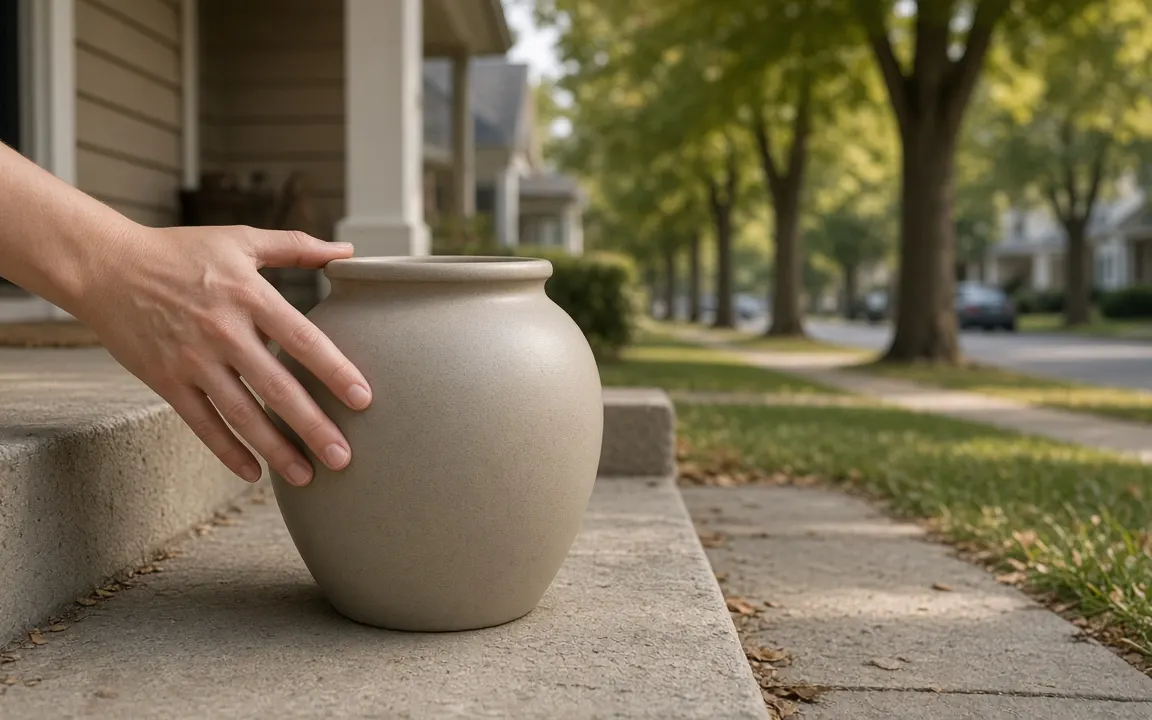
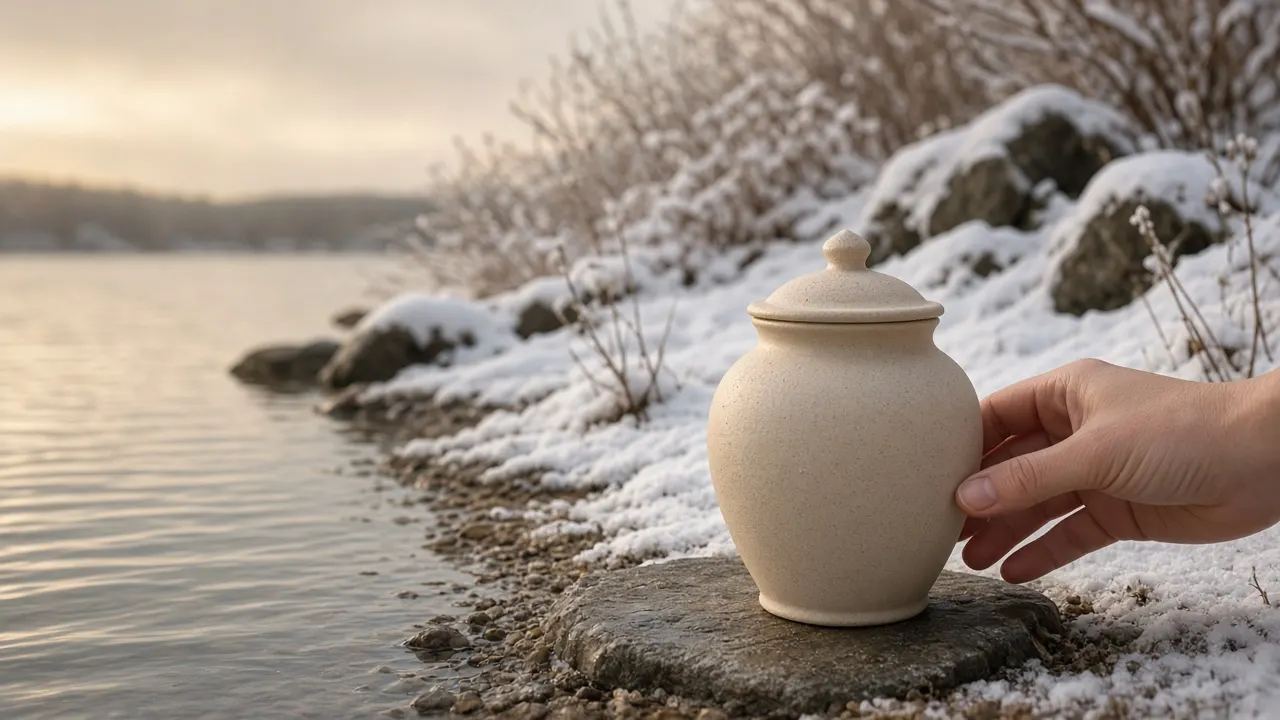
Many Dayton homes have yards, and families often choose a garden stone, a planted urn or a small marker under a tree, while those in apartments keep a compact urn or framed paw print indoors. Because the ground freezes in winter, some keep ashes inside until spring. Decide where the memory will live day to day, then choose a size and material that suits it.
Native plant sales are one of the best-kept secrets in places like Dayton. Conservation groups, garden clubs and parks departments often run them in spring and autumn, selling young native trees and shrubs at modest prices. A seedling bought there has been grown for local conditions and is small enough to settle in quickly. Check the local calendar, and time the planting to match.
About 136,688 people live in Dayton, which makes it the 6th-largest of the 106 Ohio communities we cover. The nearest larger centre is Cincinnati, about 48 miles (78 km) away, which is where some providers serving Dayton are based.
Nearby, we also have local pages for Riverside (4 miles), Kettering (5 miles) and Beavercreek (7 miles), which can help if your vet or the provider you prefer is based there.
Our estimate
50,500
Dayton: dog- or cat-owning households, our estimate
How we calculated this
136,688 ÷ 2.5 = 54,675 households; × 53% (dog) + 39% (cat) = 50,500. A household with several pets counts once.
Our estimate
4,200
Estimated dog and cat losses in Dayton each year
How we calculated this
50,500 dog/cat-owning homes ÷ average lifespan (dog: 12.69 yrs + cat: 11.18 yrs) ≈ 4,200 a year. A floor, not a ceiling.
53%[1]
53% of US households own a dog, which is about 71 million households.
12.69 years[2]
US dogs have an average life expectancy at birth of 12.69 years.
39%[3]
39% of US households own a cat, which is about 53 million households.
11.18 years[4]
US cats seen at Banfield hospitals have an average life expectancy at birth of 11.18 years.
None of the figures on this this page are ours alone: they rest on American Pet Products Association (APPA) 2025 State of the Industry and Montoya et al. 2023, Frontiers in Veterinary Science.
Cremation, burial and green choices in Ohio
Faith shapes these choices in Ohio, where cremation covers about 59.1%[5] of deaths and burial much of the rest. Some traditions that prefer burial for people have no view on pets; others do. If this matters to anyone in your household, ask a faith leader you trust. A planting urn puts the ashes back into the ground, which many people find sits comfortably with a burial tradition.
The Ohio percentage above is from NFDA 2024 Cremation & Burial Report state projections (via Occasional Sage) (2024) and refers to human funerals. Treat it as context for Dayton, not as a count of pets.
When to plant in Dayton's climate
Early spring in Dayton is when nurseries sell bare-root trees, often at a lower price than trees in pots. They need planting quickly, as soon as the ground can be dug after January, February, March and December, which fits well with ashes that have waited through the winter. Have the soil blend ready beforehand, soak the roots for an hour, and plant on a calm, overcast day.
Cold winters narrow the choice of tree in Dayton, where January lows average about 20°F. Pick species that are fully hardy locally: native trees, or ornamentals a nearby nursery rates for your zone. A tender tree from a warmer region may survive one mild winter and die in the next. Hardy flowering shrubs are a good fallback if you have less space.
Adding up the cost of a bio urn memorial in Dayton
A living memorial in Dayton has two costs: the cremation and the urn. Biodegradable pet urns are among the cheaper urns you can buy, listed at about $15–$80[6] in one national price guide, and a sapling from a local nursery often costs less than a decorative display urn. If you'd like water cremation, one pet insurer's guide lists aquamation at $80 to $450 depending on size[7]. The table shows published examples.
For a line-by-line price table, see the Ohio overview; for what's included in each option, see our services.

Free tool
Memorial budget planner
Add up cremation, urn, keepsakes and a farewell so the total holds no surprises.
What Ohio allows for ashes, in general terms
Natural burial grounds and some pet cemeteries in Ohio accept ashes in biodegradable urns, and a few ask for nothing else: no plastic, no metal, no varnish. If you're considering one, ask what the urn may be made of, whether a tree or marker is allowed above it, and whether the fee includes looking after the plot.
Ohio keeps an official directory of local governments; use it to reach the county or city office that covers Dayton.
Start with the Ohio rules, which cover burial, scattering and oversight for the whole state, and treat Dayton's local ordinances as a possible extra layer.
From ashes to a growing tree: the steps
- Decide what the memorial is for. A place to visit, something growing, a return to water or a lower-impact goodbye each point to a different choice.
- If a greener cremation matters, ask about aquamation first, since no other choice in the process changes the environmental picture as much.
- Keep a small portion back in a keepsake in case a house move or a second memorial is on the cards down the line.
- Buy the tree locally. A young native tree from a grower around Dayton tends to outgrow anything sprouted from a packet seed.
- Prepare the soil a season ahead if the timing allows, so the ash and compost blend is ready on planting day.
- Plant with the people who loved your pet, and give each of them a job: mixing, filling, watering.
Keeping the memorial alive in Dayton
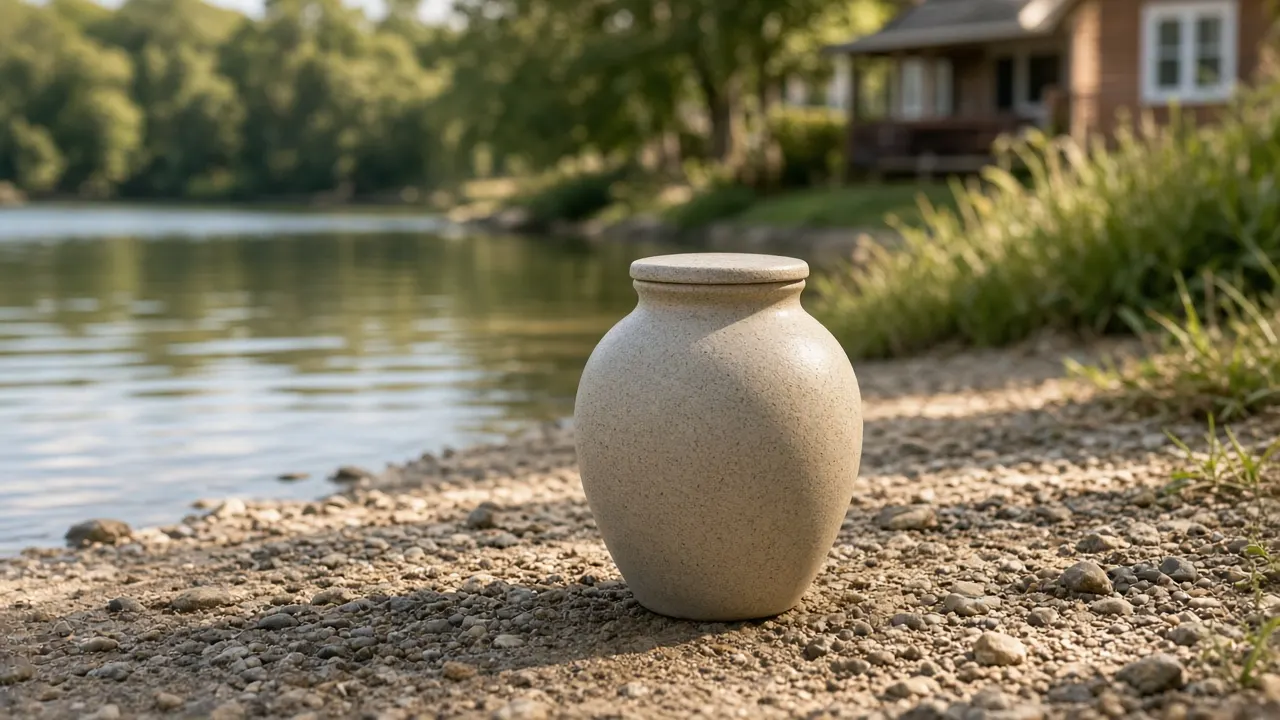
Dayton's rivers and the wooded parks and gorges nearby give many families places to reflect. Some choose a biodegradable urn to plant a tree at home; others keep all the ashes indoors and simply visit those places. Before scattering along a river or on land you do not own, ask the owner or managing authority first. Keeping a portion back leaves room for jewelry later.
the planning tools turn your pet's details into figures, Compare every option on our services page, or see what other families chose in the poll results, go deeper with the guides or catch up on recent articles. If you live between Dayton and Columbus, Cleveland, Cincinnati and Parma, either page applies. Every other community in Ohio, and all of the United States, is listed too.

Reader polls
What would you choose?
Vote anonymously and see how other readers answered. The results are live counts from people who visit this site, so they show real opinions, not a scientific sample.
If water cremation (aquamation) were offered near you, would you choose it?
Tap an answer to vote and see how others answered. Anonymous.
Would you consider releasing your pet's ashes in water?
Tap an answer to vote and see how others answered. Anonymous.
If you had to decide today, which aftercare would you choose for your pet?
Tap an answer to vote and see how others answered. Anonymous.

Free tools to help you plan
Memorial budget planner
Add up cremation, urn, keepsakes and a farewell so the total holds no surprises.

Memorial tree finder
Pick a tree for a planting urn that suits your climate, space and pet.

Aftercare options compared
Compare private, communal and water cremation with burial on cost, timing and what comes home.
Questions people ask
Which nearby towns can I compare with Dayton?
The closest communities we cover are Riverside (about 4 miles), Kettering (about 5 miles) and Beavercreek (about 7 miles). Providers based in those places often serve Dayton too. Ask each one for a written total that includes collection, so the distance is priced in.
Is Dayton big enough to have several pet aftercare providers?
Probably, on the numbers. By our estimate about 50,500 Dayton households keep a dog or cat and around 4,200 lose one each year, which is enough steady demand to support more than one provider. We derive that from population (about 136,688), household size and national ownership and lifespan figures.
Will I have to travel to Cincinnati to arrange things?
Not usually. Providers based in Cincinnati (roughly 48 miles from Dayton) collect from here as a matter of routine, and the paperwork is done by email or phone. If you want to be present for a witnessed cremation, that is when the drive matters.
Does the Dayton climate change what I should do first?
Only the timing. In July, with highs near 87°F, cool the body and book collection the same day. In January, February, March and December, when lows sit below freezing, a home burial may have to wait for a thaw, so cremation with ashes returned keeps your options open.
Can I plant my pet's ashes in winter in Dayton?
Not usually, if the ground is frozen. Keep the ashes indoors until spring, when the soil has thawed and drained, or plant in early autumn with several weeks of open ground before hard frosts. Winter is a good time to mix the ashes with compost in a covered tub and let the blend rest before planting.
How do I stop my other dog digging up the memorial?
Fresh soil with bone ash in it is interesting to dogs. Lay a piece of wire mesh just under the mulch, surround the planting with flat stones, or put up a short temporary fence for the first few months. Walk your dog past the spot on a lead a few times so it becomes familiar. Interest usually fades once the soil settles.


Sources and our estimates
- [1] 53% of US households own a dog, which is about 71 million households. American Pet Products Association (APPA) 2025 State of the Industry, 2025.
- [2] US dogs have an average life expectancy at birth of 12.69 years. Montoya et al. 2023, Frontiers in Veterinary Science - Banfield Pet Hospital life expectancy tables (13.3 million dogs, 2.4 million cats, 2013-2019), 2023.
- [3] 39% of US households own a cat, which is about 53 million households. American Pet Products Association (APPA) 2025 State of the Industry, 2025.
- [4] US cats seen at Banfield hospitals have an average life expectancy at birth of 11.18 years. Montoya et al. 2023, Frontiers in Veterinary Science - Banfield Pet Hospital life expectancy tables (13.3 million dogs, 2.4 million cats, 2013-2019), 2023.
- [5] The NFDA projected Ohio's cremation rate at 59.1% for 2024. NFDA 2024 Cremation & Burial Report state projections (via Occasional Sage), 2024.
- [6] Memorials.com's pet urn cost guide puts biodegradable pet urns at $15–$80. Memorials.com – Pet Urn Cost Guide, 2025.
- [7] Embrace Pet Insurance lists US communal cremation at $30-$200, partitioned at $50-$250, private at $100-$500+ and aquamation at $80-$450. Embrace Pet Insurance - Bury or Cremate Your Dog? Costs, Pros & Cons, 2025.
- [8] Switching one human-scale cremation to alkaline hydrolysis saves about 112 kg CO2e under TNO's accounting. Our estimate: 79.9 - (-31.8) kg CO2e. How we calculate.
Get eco memorial ideas by email
Tell us what you need and where you are. We'll reply by email with clear options and prices so you can decide in your own time.