A living memorial for your pet in Amarillo
Roughly 6,300 Amarillo families say goodbye to a dog or cat each year, by our count. A living memorial is one way to mark it. This guide explains how to make one that actually grows.
- When to plant in your season
- How much ash your urn must hold
- Aquamation providers in your area
Amarillo, Texas
What an eco memorial looks like in Amarillo
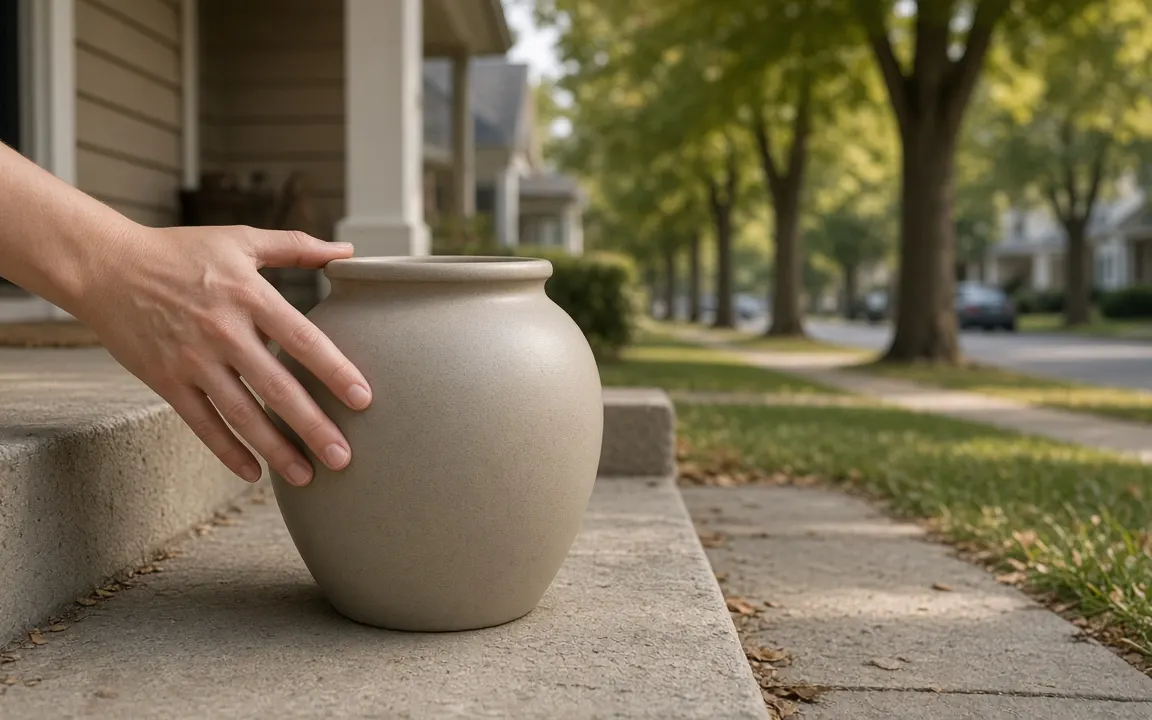
Palo Duro Canyon opens suddenly out of the flat plains just south of Amarillo, and its red and gold walls are a place many Panhandle families return to again and again, so it's natural to think of it when a pet dies. State park rules on scattering apply, so check first. Keeping a small portion of ashes in cremation jewelry or a keepsake urn lets you carry your pet with you when you visit.
A memorial in an Amarillo yard has to handle relentless wind, hail, intense sun and hard winter freezes. Granite with deep engraving holds up far better than painted or resin pieces, and a heavy stone won't blow over. Place it somewhere sheltered, perhaps on the lee side of the house or under a tree your pet liked, where you can see it from the kitchen window.
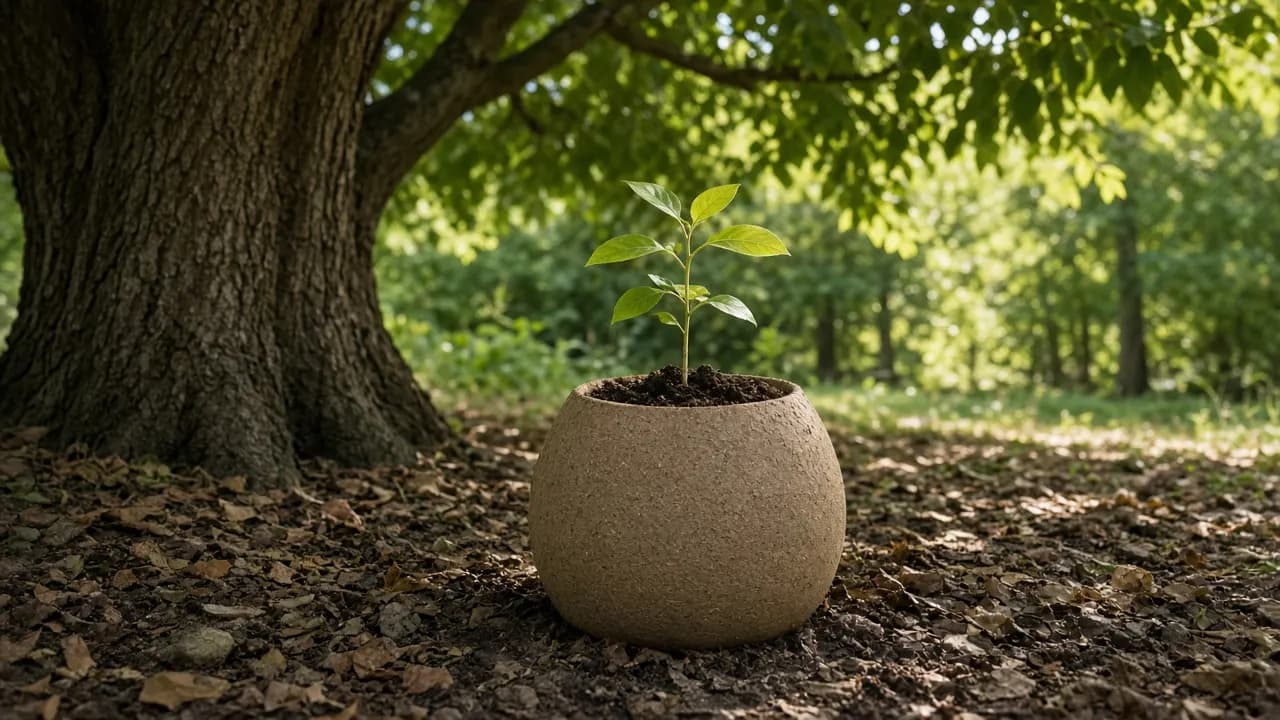
Many Amarillo households have a yard, which opens up the classic option: a memorial tree in the ground. Before you pick a spot, think ten or twenty years ahead. A tree needs distance from the house, sewer lines and overhead wires, and it stays with the property when you sell. If a move is likely, a large container, a relative's garden or a shrub bed that a future owner won't mind are all kinder choices than a shade tree you'll have to leave behind.
With roughly 205,130 residents, Amarillo is the 17th-largest of the 325 Texas communities we cover.
Families in Amarillo often end up using a provider from Plainview (71 miles), Clovis (94 miles) and Lubbock (114 miles). That is normal: crematories serve a radius, not a single town, and the drive is priced into collection.
Our estimate
75,500
Estimated dog- or cat-owning households in Amarillo
How we calculated this
205,130 ÷ 2.5 = 82,052 households; × 53% (dog) + 39% (cat) = 75,500. Homes are counted once however many pets they keep.
Our estimate
6,300
dog and cat deaths per year in Amarillo, our estimate
How we calculated this
75,500 dog/cat-owning homes ÷ average lifespan (dog: 12.69 yrs + cat: 11.18 yrs) ≈ 6,300 a year. Treat it as a minimum.
53%[1]
53% of US households own a dog, which is about 71 million households.
12.69 years[2]
US dogs have an average life expectancy at birth of 12.69 years.
39%[3]
39% of US households own a cat, which is about 53 million households.
11.18 years[4]
US cats seen at Banfield hospitals have an average life expectancy at birth of 11.18 years.
Where these figures come from: American Pet Products Association (APPA) 2025 State of the Industry and Montoya et al. 2023, Frontiers in Veterinary Science.
How Texas feels about cremation
The human cremation rate in Texas sits around 55.7%[5], so many families have a foot in both camps, and generations can disagree. Grandparents may expect a grave in the yard; younger relatives may want ashes they can take with them. Talking it through before the vet asks you to choose saves a hard conversation on a hard day. A tree over buried ashes often satisfies both sides.
That Texas rate is a human one, published by NFDA 2024 Cremation & Burial Report state projections (via Occasional Sage) (2024). We quote it for Amarillo only as a pointer to how families here already think about cremation.
Choosing the right month to plant in Amarillo
Amarillo gets both extremes: highs near 93°F in July and freezing lows in January, February and December. That leaves two planting windows, spring after the ground thaws and early autumn once the heat breaks. Either works. Autumn planting gives roots time to settle before summer, as long as the tree has several weeks of open ground before the first hard frost.
With freezing lows in January, February and December and hot months like June, July and August, an Amarillo memorial planting has a short list of good days. If a pet dies in midsummer or midwinter, keep the ashes at home and use the wait well: mix them with compost and let the blend rest, test the pH, and choose the tree. By the time the season turns, everything is ready and the planting day can be calm.
Adding up the cost of a bio urn memorial in Amarillo
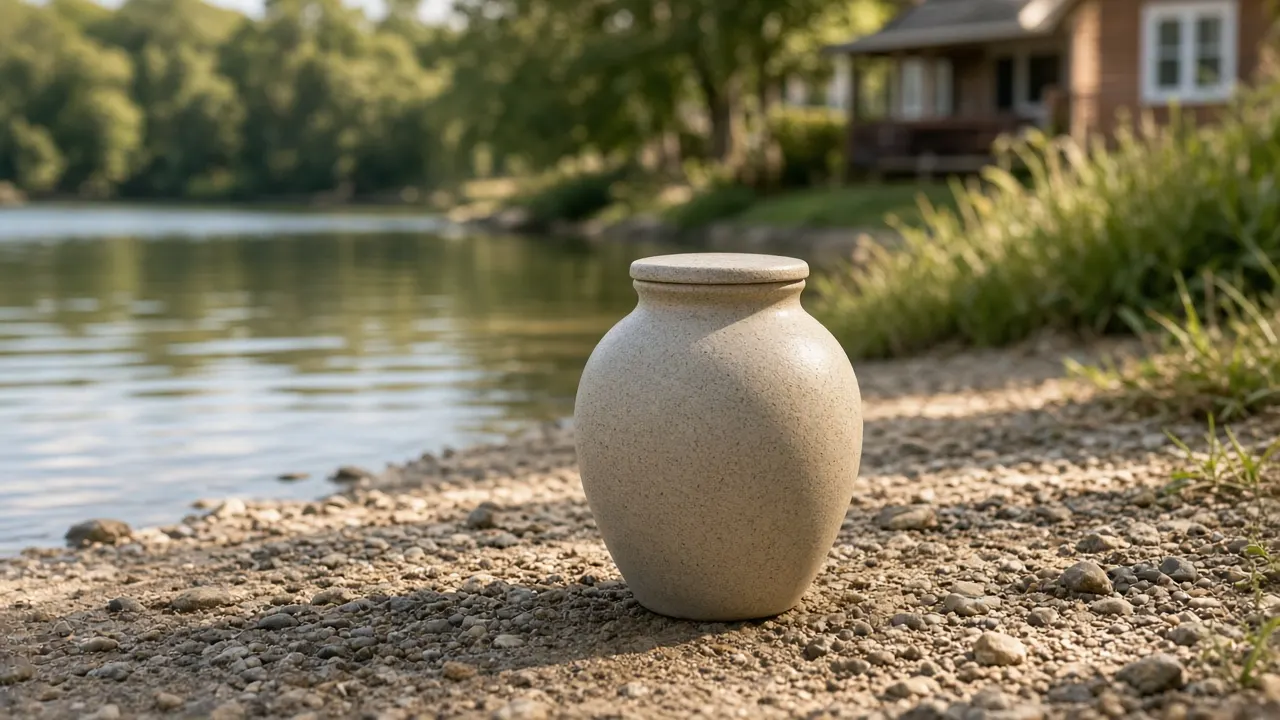
Bio urns vary more in price than you might expect. A national guide puts biodegradable urns at $70–$260[6], depending on material, size and whether a seed or tree system is included. For a lake or sea release, one water urn designed to float briefly and dissolve sells for $149[7]. In Amarillo, the tree and the soil amendments are usually the cheapest part of the whole memorial.
We keep the detailed Texas price table on one page so it stays current: see Texas prices.

Free tool
Memorial budget planner
Add up cremation, urn, keepsakes and a farewell so the total holds no surprises.
Land, water and permission in Texas
Rules about ashes were mostly written for people, and pet ashes often sit in a grey area. That's a reason to ask, not a reason to assume. On land you own, planting or burying ashes is generally fine. Anywhere else in Texas, from parks to beaches to a friend's field, the land manager or owner decides, so ask first.
Not sure which office covers Amarillo? The Texas local government directory is the official list.
Start with the Texas rules, which cover burial, scattering and oversight for the whole state, and treat Amarillo's local ordinances as a possible extra layer.
A simple plan for your pet's eco memorial
- If you're remembering more than one animal, settle at the start on one shared planting or separate ones. Either works, but once the ashes are combined there's no undoing it.
- Label each container clearly with the name and date as it comes back, especially if the ashes return months or years apart.
- Choose a bigger planting area for several sets of ashes: a hedge, a group of shrubs or a small orchard spreads the mineral load across more soil.
- Keep a spoonful of each in separate keepsakes if anyone in the family wants to remember one animal on its own.
- Plan for the pets still living with you. A new planting that smells of bone attracts diggers, so protect it for the first few months.
- Add a marker for each name, or one stone that lists them all, so visitors know who the planting is for.
Living memorials beyond the backyard
Panhandle families are often spread across ranches, small towns and cities from Dalhart to Dallas. Cremation jewelry, mini urns and clay paw print casts let everyone keep something of a family pet or ranch horse. If you'd like the ashes divided, ask when you order. Some families scatter a portion on the home place and keep the rest in an urn.
The services page is the place to compare what is included, read our guides and latest articles, or see what other families chose in the poll results, run the numbers with the free planning tools. You can also browse every city in the United States. Nearby, we also cover Austin, Houston, San Antonio and Fort Worth, and every city in Texas.

Reader polls
What would you choose?
Vote anonymously and see how other readers answered. The results are live counts from people who visit this site, so they show real opinions, not a scientific sample.
If you rent or might move, how would you handle a memorial planting?
Tap an answer to vote and see how others answered. Anonymous.
If water cremation (aquamation) were offered near you, would you choose it?
Tap an answer to vote and see how others answered. Anonymous.
If you had to decide today, which aftercare would you choose for your pet?
Tap an answer to vote and see how others answered. Anonymous.

Free tools to help you plan
Memorial budget planner
Add up cremation, urn, keepsakes and a farewell so the total holds no surprises.

Memorial tree finder
Pick a tree for a planting urn that suits your climate, space and pet.

Aftercare options compared
Compare private, communal and water cremation with burial on cost, timing and what comes home.
Questions people ask
When is the hardest time of year to arrange a burial in Amarillo?
January, February and December: average lows are below freezing then, and frozen ground makes a home grave slow or impossible until it thaws. The other pressure point is July, when highs around 93°F mean a body needs cooling and collecting quickly.
Which nearby towns can I compare with Amarillo?
The closest communities we cover are Plainview (about 71 miles), Clovis (about 94 miles) and Lubbock (about 114 miles). Providers based in those places often serve Amarillo too. Ask each one for a written total that includes collection, so the distance is priced in.
Why does the Amarillo page quote a human cremation rate?
Because it is the best local signal we have. NFDA 2024 Cremation & Burial Report state projections (via Occasional Sage) (2024) reports about 55.7%[5] of Texas residents are cremated. There is no official pet equivalent, and inventing one would be worse than quoting a real, clearly labelled number.
Is Amarillo big enough to have several pet aftercare providers?
Probably, on the numbers. By our estimate about 75,500 Amarillo households keep a dog or cat and around 6,300 lose one each year, which is enough steady demand to support more than one provider. We derive that from population (about 205,130), household size and national ownership and lifespan figures.
Which memorial plants are dangerous to cats and dogs?
Lilies are highly toxic to cats, even the pollen. Sago palm, oleander, yew, azalea and foxglove can poison dogs, and several of them harm cats and horses too. If you have pets at home in Amarillo, ask a vet or nursery to confirm a plant is safe before you buy it. Grasses, many herbs and most fruit trees are safer choices, though large amounts of fallen fruit can still upset a dog's stomach.
How long does it take to get ashes back for planting?
Most private cremations return ashes within one to two weeks, and water cremation cycles themselves take 12–20 hours[9], so allow a similar time. In a smaller place, if the cremation happens in a larger centre such as Amarillo, it may take a little longer. Planting can wait, so there's no need to rush.


Sources and our estimates
- [1] 53% of US households own a dog, which is about 71 million households. American Pet Products Association (APPA) 2025 State of the Industry, 2025.
- [2] US dogs have an average life expectancy at birth of 12.69 years. Montoya et al. 2023, Frontiers in Veterinary Science - Banfield Pet Hospital life expectancy tables (13.3 million dogs, 2.4 million cats, 2013-2019), 2023.
- [3] 39% of US households own a cat, which is about 53 million households. American Pet Products Association (APPA) 2025 State of the Industry, 2025.
- [4] US cats seen at Banfield hospitals have an average life expectancy at birth of 11.18 years. Montoya et al. 2023, Frontiers in Veterinary Science - Banfield Pet Hospital life expectancy tables (13.3 million dogs, 2.4 million cats, 2013-2019), 2023.
- [5] The NFDA projected Texas's cremation rate at 55.7% for 2024. NFDA 2024 Cremation & Burial Report state projections (via Occasional Sage), 2024.
- [6] Funeral.com cites U.S. Funerals Online that biodegradable urns typically cost about $70–$260. Funeral.com – How Much Do Cremation Urns Cost in 2025, 2025.
- [7] The Living Urn's Eco Water Urn for water burial costs $149 and holds up to 225 cubic inches; it floats for several minutes before dissolving. The Living Urn – Eco Water Urn, 2026.
- [8] About 59 million U.S. pet-owning households may be open to eco-friendly aftercare options. Our estimate: 86.9M pet households x 68% interested in green funeral options. How we calculate.
- [9] A PET-550 aquamation cycle takes 12–20 hours for a single pet and 14–20 hours for segregated or communal cycles, with up to 14 compartments. Bio-Response Solutions — PET-550 Aquamation System product page, 2026.
Plan a living memorial in Amarillo
Tell us what you need and where you are. We'll reply by email with clear options and prices so you can decide in your own time.